• KGS/USD = 0.01144 0%
  • KZT/USD = 0.00192 -0%
  • TJS/USD = 0.10866 0.18%
  • UZS/USD = 0.00008 0%
  • TMT/USD = 0.28571 0%
  • KGS/USD = 0.01144 0%
  • KZT/USD = 0.00192 -0%
  • TJS/USD = 0.10866 0.18%
  • UZS/USD = 0.00008 0%
  • TMT/USD = 0.28571 0%
  • KGS/USD = 0.01144 0%
  • KZT/USD = 0.00192 -0%
  • TJS/USD = 0.10866 0.18%
  • UZS/USD = 0.00008 0%
  • TMT/USD = 0.28571 0%
  • KGS/USD = 0.01144 0%
  • KZT/USD = 0.00192 -0%
  • TJS/USD = 0.10866 0.18%
  • UZS/USD = 0.00008 0%
  • TMT/USD = 0.28571 0%
  • KGS/USD = 0.01144 0%
  • KZT/USD = 0.00192 -0%
  • TJS/USD = 0.10866 0.18%
  • UZS/USD = 0.00008 0%
  • TMT/USD = 0.28571 0%
  • KGS/USD = 0.01144 0%
  • KZT/USD = 0.00192 -0%
  • TJS/USD = 0.10866 0.18%
  • UZS/USD = 0.00008 0%
  • TMT/USD = 0.28571 0%
  • KGS/USD = 0.01144 0%
  • KZT/USD = 0.00192 -0%
  • TJS/USD = 0.10866 0.18%
  • UZS/USD = 0.00008 0%
  • TMT/USD = 0.28571 0%
  • KGS/USD = 0.01144 0%
  • KZT/USD = 0.00192 -0%
  • TJS/USD = 0.10866 0.18%
  • UZS/USD = 0.00008 0%
  • TMT/USD = 0.28571 0%
12 December 2025

Uzbekistan-EU Trade Reaches 5.13 billion Euros

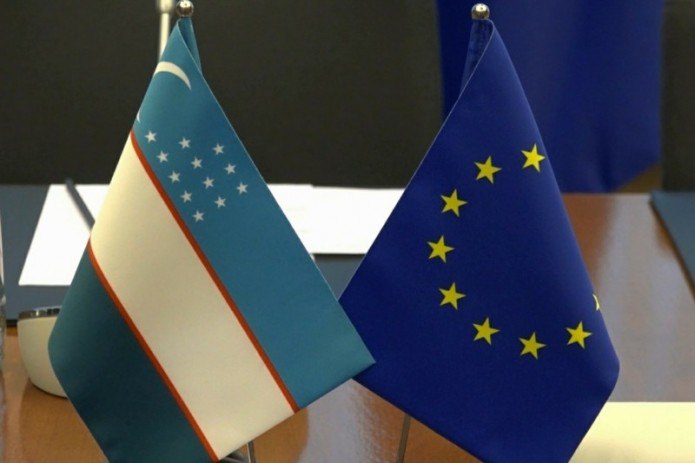
In 2023, the trade turnover between Uzbekistan and the European Union increased by 11% to 5.13 billion euros.

As reported by  EU Ambassador to Uzbekistan, Charlotte Adrian, exports from the EU to the Republic of Uzbekistan amounted to 4.35 billion euros, and imports from Uzbekistan to the EU,  780 million euros.

By way of comparison, she then stated that in 2022,  EU exports to Uzbekistan reached 3.77 billion euros, an increase of 63.9%, and imports from Uzbekistan to the EU rose by 77.1% to 845 million euros, resulting in around 70%  growth of trade turnover.

“Behind these figures,” announced Adrian, ” are stories of how our businesses have made bold decisions to invest in Uzbekistan.”

  This year celebrates the 30th anniversary of diplomatic relations between Uzbekistan and the European Union and on behalf of the EU, the ambassador praised  Uzbekistan’s “ambitious path of reforms” and pledged:   “We will continue to assist Uzbekistan using all the instruments at our disposal, including the Generalized Scheme of Preferences Plus (GSP+). We will also continue to support Uzbekistan’s accession to the World Trade Organization or EPCA (European Petrochemical Association), which will open a new chapter of our partnership.”

She added that by following its the path of reforms, Uzbekistan will create a level playing field which she hoped would encourage more interest from European companies.

Kazakhstan’s Constitution Now Published in Braille

The Kazakh Constitutional Court has presented the first edition of the country’s Constitution printed in Braille, making it accessible to the visually-impaired.

The initiative to translate copy of Kazakhstan’s Basic Law into Braille (relief-dot tactile font) was realized with support from the OSCE Program Office in Astana and the Ministry of Culture and Information.

Welcoming the move, Chair of the Constitutional Court of Kazakhstan Elvira Azimova stated: “The Constitutional Court will continue to promote equality, dignity, and justice for everyone according to the Constitution of Kazakhstan and the Universal Declaration of Human Rights. The publication of the Braille text of the Constitution is our joint contribution to promoting this policy.”

Volker Frobart, Head of the OSCE Programme Office in Astana, emphasized the Kazakh authorities’ commitment to valuing human rights  and demonstrating an inclusive approach to ensure equal access to information.

Publications in Braille will be distributed  to 56 institutions, including national and regional libraries, training centers, and specialized schools.

According to the World Health Organization,  Kazakhstan is currently home to 160 thousand visually- impaired citizens.

British Magazine Ranks Kazakhstan’s Katon-Karagay Top Travel Destination  

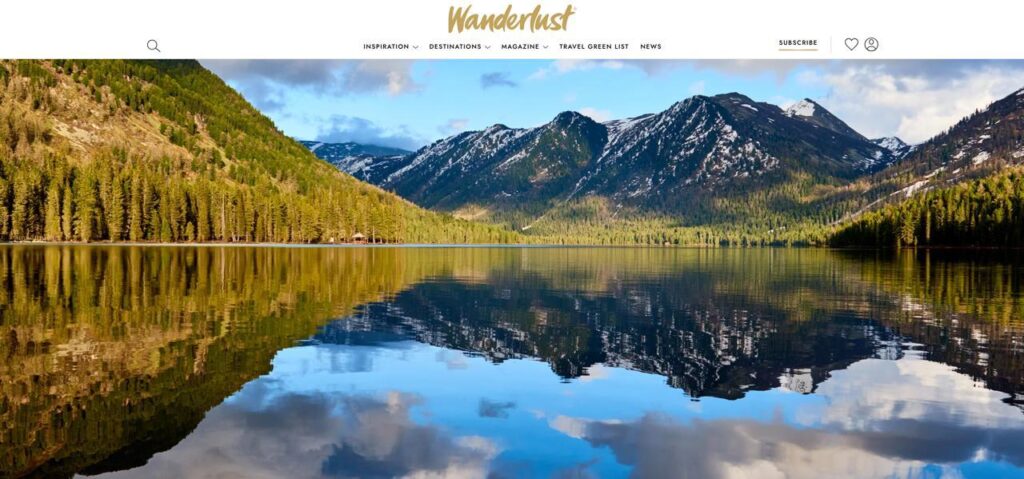
The Katon-Karagay district in Eastern Kazakhstan has been included in Asia & the Middle East’s top sustainable travel destinations for 2024 by the British magazine Wanderlust.

The district is home to Katon-Karagay National Park. Spanning over 643,000 hectares, the park was designated a Kazakh-Russian transboundary biosphere reserve in 2017 by the UNESCO World Network of Biosphere Reserves.

In promoting the reserve, Wanderlust stated: “Five years ago, residents of the Katon-Karagay district – a sweep of lonely steppe, mountains and forests in far eastern Kazakhstan – faced a dilemma. Though home to the country’s largest national park and around 275 bird species, its 48 villages attracted few visitors, and there was little work available. As a result, its population had almost halved since the turn of the century, many residents having moved to cities in search of employment.

So in 2019 the Sustainable Rural Development Fund was launched, with the aim of improving the quality of life in three remote districts, including Katon-Karagay. Key to this effort was the creation of sustainable community tourism opportunities, including training guesthouse owners and opening a hospitality school. Money has also been allocated to trail maintenance, signs and a tourist information centre, making it easier for travellers to explore a region whose communities and culture are finally being appreciated.”


Kazakhstan-Russia Relations in Focus at St. Petersburg

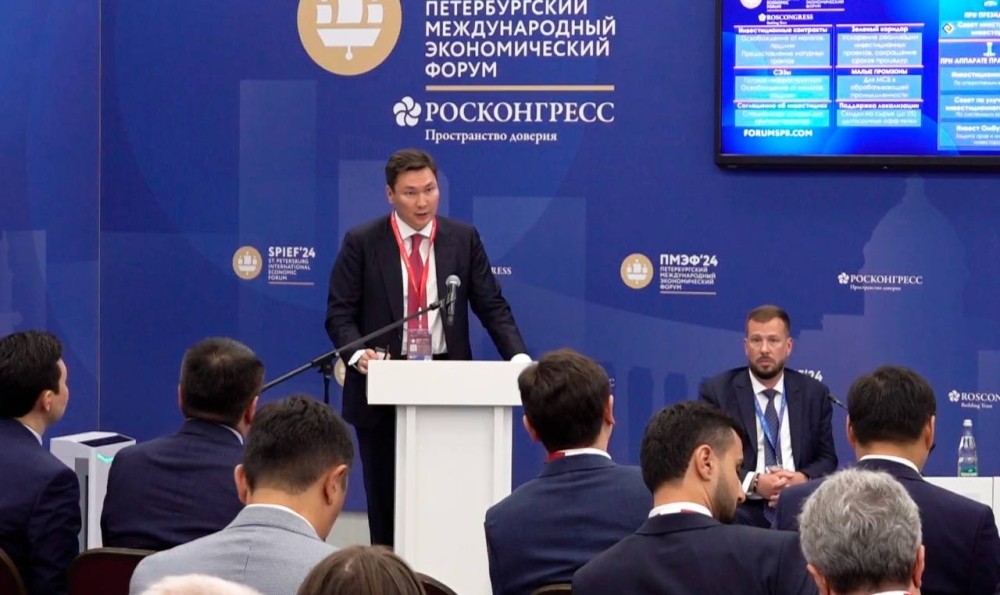
As part of the 27th St. Petersburg International Economic Forum on 5 June, delegates engaged in a panel discussion themed “Russia-Kazakhstan.”

The panel comprised representatives of both countries’ public and private sectors, including Deputy Prime Minister of Kazakhstan Serik Zhumangarin, Kazakh Ambassador to Russia Dauren Abayev, and Chairman of the Board of national company Kazakh Invest Yerzhan Yelekeev.

As reported by Kazakh Invest, Ambassador Abayev emphasized the strategic importance of Kazakhstan-Russia relations by stating: “Today, Kazakhstan and Russia are implementing 135 joint investment projects worth over $26 billion, creating 28,000 jobs, which is a record figure in recent years. We expect these numbers to continue growing.”

Kazakh Invest’s Yelekeev focused on the growing potential for developing bilateral relations, the need to increase investment in joint projects, and favorable changes in Kazakhstan’s investment environment.

“Over 19,000 enterprises are successfully operating with Russian participation in Kazakhstan,” announced Yelekeev. “Good results have been achieved through leading projects and very promising initiatives in the investment sector. Russia remains one of the largest investors in our economy. Joint projects contribute to the development of technologies, the opening of new markets, and the creation of jobs. Last year saw a record gross inflow of Russian investments approaching the $3 billion mark.”

Yelekeev also presented prospective niches to Russian businesses for potential investment projects in the mining and metallurgical sector, petrochemicals, and the automotive industry.


Kazakhstan Actions ‘Lifelong Learning’

On 5 June, the Ministry of Labor and Social Protection of the Population of Kazakhstan issued a report on the success of courses delivered by the Skills Enbek vocational training platform.

Since the beginning of 2024, 53.5 thousand citizens, including 27.2 thousand unemployed, have completed online courses conducted by Skills Enbek and a total of 427.2 thousand Kazakhs are now registered on the platform.

Of the 27.2 thousand unemployed who have completed their training, around 8 thousand are youths based mainly in the regions of Aktobe, Turkestan, Kyzylorda, and Zhambyl regions, and the city of Shymkent.

The platform offers 490 wide-ranging courses, lasting between 1-72 hours.

The most popular courses last May, included: “Organizing a sales department in a hotel”, “Salesperson”, “Insurance agent”, “Individual assistant to accompany people with limited mobility,” and “Fundamentals of social entrepreneurship”.

At present, 254 of the courses are free and the platform now plans to waive charges for training in various sectors including accommodation, food, construction, housing and communal services, social services, finance and accounting, and information technology.

By expanding levels of education and professionalism in the country’s population, the platform aims to both stimulate career development and promote the concept of “lifelong learning.”


Kazakhstan Reports Another Big Jump in Saiga Antelope Numbers

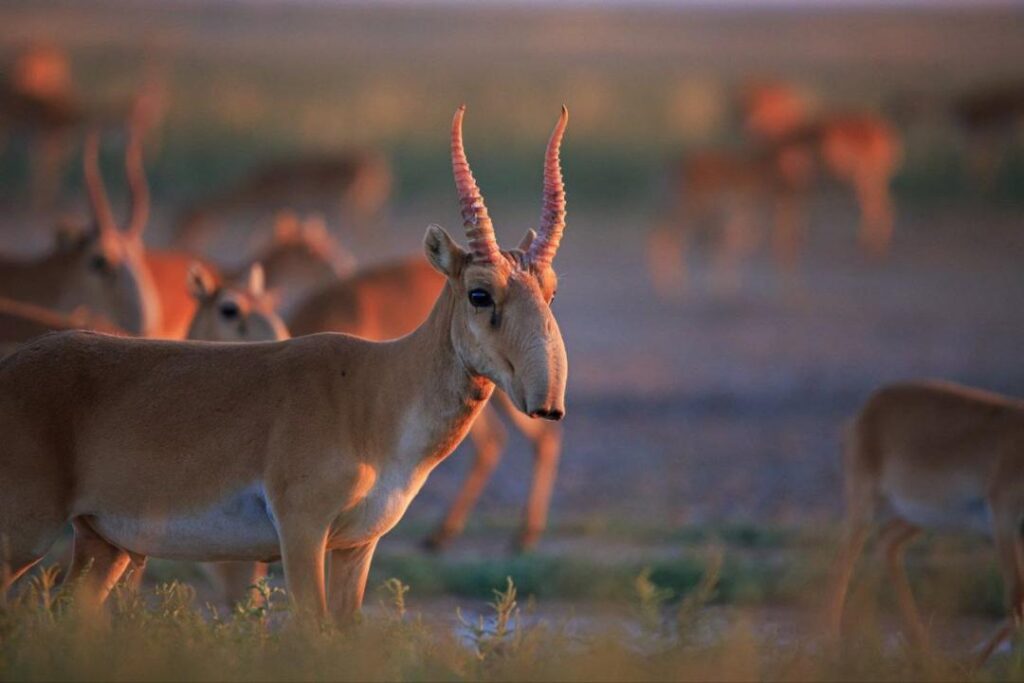
The number of saiga antelopes in Kazakhstan has surged to an estimated 2,833,600, an increase of well over 40% since last year, according to an aerial survey conducted between mid-April and May 1. The total number is likely to be much higher because the study was done before the calving season in May

The new data represents another step in the extraordinary comeback of a species whose numbers were estimated at 20,000 in 2003 and then, after a period of growth, suffered another big population crash because of a bacterial disease outbreak in 2015. A reduction in poaching and the expansion of land earmarked for conservation helped the species recover in Kazakhstan, though saigas are vulnerable to several diseases and extreme weather. Some farmers say ballooning saiga numbers threaten their crops and the government has explored mass kills and other ways to regulate the population.

Helicopters were used to count the antelopes over an area of about 150,000 square kilometers this year, logging 215 flight hours as they flew at a steady altitude of 120 meters, according to the Altyn Dala Conservation Initiative, which aims to restore the Kazakh steppe ecosystem. It said state agencies were involved and the science – survey route plans, data collection and result processing – was carried out by the Association for the Conservation of Biodiversity of Kazakhstan.

“These annual figures are made using the same methodology which is well established,” the conservation initiative said on June 3. “They are derived by extrapolation and primarily reflect the trend in the species’ numbers, i.e. an increase of over 40%, and the approximate number. These data were obtained in April 2024, before calving, which took place in May, so now, by the beginning of June, considering the successful breeding season, the number of the species will have almost doubled.”

The surveys were carried out in the regions of West Kazakhstan, Mangistau, Akmola, Aktobe, Kostanay, Karaganda, Ulytau, Pavlodar and Abay. The dry steppe grasslands and semi-arid deserts of Central Asia are the saiga’s natural habitat.

The vast majority of saigas are in Kazakhstan; Russia and Mongolia have small populations. Saigas from Kazakhstan have migrated in and out of Uzbekistan, sometimes reaching Turkmenistan. But such cross-border movements have dropped. The number reaching Uzbekistan has declined, partly because a border fence was built, and saigas haven’t been seen in Turkmenistan for several years, according to the IUCN Red List of Threatened Species. IUCN stands for International Union for Conservation of Nature, a group based in Switzerland.

Last year, the saiga’s conservation status on the red list was upgraded from “critically endangered” to “near threatened” because of its population gains. Saiga females start to breed when they are only eight months old and they often give birth to twins.