• KGS/USD = 0.01144 0%
  • KZT/USD = 0.00196 -0%
  • TJS/USD = 0.10904 0%
  • UZS/USD = 0.00008 0%
  • TMT/USD = 0.28490 0%
  • KGS/USD = 0.01144 0%
  • KZT/USD = 0.00196 -0%
  • TJS/USD = 0.10904 0%
  • UZS/USD = 0.00008 0%
  • TMT/USD = 0.28490 0%
  • KGS/USD = 0.01144 0%
  • KZT/USD = 0.00196 -0%
  • TJS/USD = 0.10904 0%
  • UZS/USD = 0.00008 0%
  • TMT/USD = 0.28490 0%
  • KGS/USD = 0.01144 0%
  • KZT/USD = 0.00196 -0%
  • TJS/USD = 0.10904 0%
  • UZS/USD = 0.00008 0%
  • TMT/USD = 0.28490 0%
  • KGS/USD = 0.01144 0%
  • KZT/USD = 0.00196 -0%
  • TJS/USD = 0.10904 0%
  • UZS/USD = 0.00008 0%
  • TMT/USD = 0.28490 0%
  • KGS/USD = 0.01144 0%
  • KZT/USD = 0.00196 -0%
  • TJS/USD = 0.10904 0%
  • UZS/USD = 0.00008 0%
  • TMT/USD = 0.28490 0%
  • KGS/USD = 0.01144 0%
  • KZT/USD = 0.00196 -0%
  • TJS/USD = 0.10904 0%
  • UZS/USD = 0.00008 0%
  • TMT/USD = 0.28490 0%
  • KGS/USD = 0.01144 0%
  • KZT/USD = 0.00196 -0%
  • TJS/USD = 0.10904 0%
  • UZS/USD = 0.00008 0%
  • TMT/USD = 0.28490 0%
08 December 2025

Tajikistan Doubles Down on Fines for Wearing “Foreign Clothes”

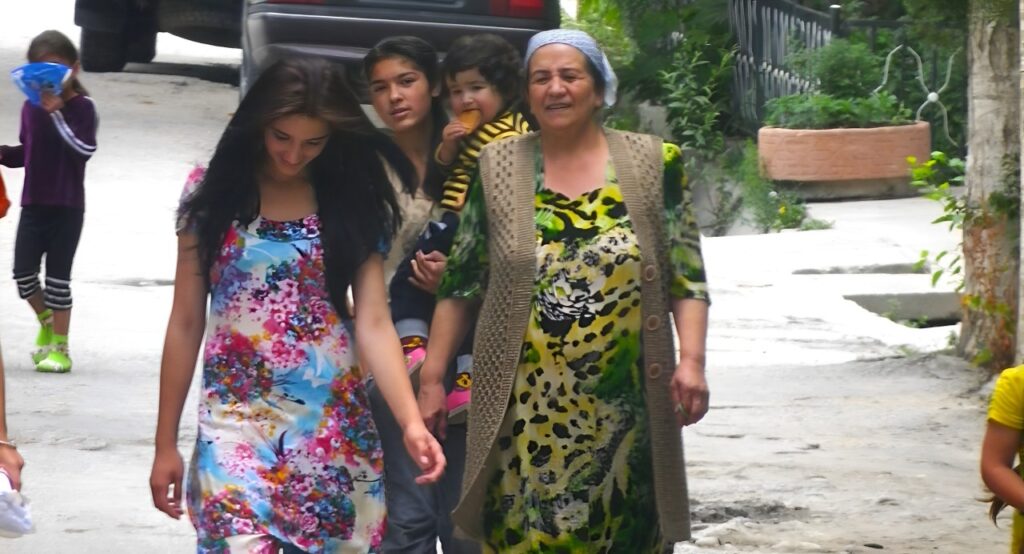
Residents of Tajikistan will face fines ranging from 8,000 to 65,000 somoni for “importing and selling clothes that do not correspond to the national culture” and for wearing such clothes in public places, as reported by Radio Ozodi. These regulations are outlined in Article 18 of the new version of the law “On Regulation of Traditions and Rites” and the Code of Administrative Offenses. The drafts were adopted by parliamentarians on May 8 this year.

“In the draft law ‘On the Regulation of Traditions and Rites,’ a corresponding prohibiting norm is included in part two of Article 18. For its violation, amendments and additions to Article 481 of the Code of Administrative Offenses provide for administrative responsibility,” explained Mavludakhon Mirzozoda, a deputy of the lower house of Tajikistan’s parliament.

Article 481 of the current Code of Administrative Offenses addresses not only Article 18, but also broader non-compliance with the norms of the Law on the Regulation of Traditions and Rites. According to this article:

  • Individuals will be fined 7,920 somoni ($733).
  • Officials will be fined 39,600 somoni ($3,665).
  • Legal entities will be fined 57,600 somoni ($5,333).
  • Individual entrepreneurs, scientists, and religious figures will be fined 54,000 somoni ($4,998).

For repeated violations, fines will range from 46,000 to 86,000 somoni. The recent amendments have updated this article, although changes to the fine amounts are yet to be confirmed. The average wage in Tajikistan is approximately $172 a month.

According to the current legislation, the amendments to the law come into force upon publication in the official press after approval by the Majlisi Milli (lower house) and the president’s signature. However, citizens are already being compelled to comply with these new regulations. The current law does not specify which clothing is considered alien to Tajik national culture.

Experts suggest that the law likely pertains to women’s national dress, although the text itself does not differentiate between men’s and women’s clothing.

Reactions within Tajik society have been mixed. Some residents of Dushanbe, during a street survey, expressed their opinion that people should have the freedom to choose their own attire without compulsion.

Tajik authorities have long campaigned to encourage the wearing of national dress and to discourage the adoption of foreign styles. They prohibit women from wearing black clothing, black headscarves, and hijabs, considering them alien to Tajik culture and traditions. Although mini-skirts, sweaters, dresses with cleavage, tops, and transparent fabrics were also banned at one point, these restrictions were quickly “forgotten.”

Turkmen Gas to Europe Mooted Again

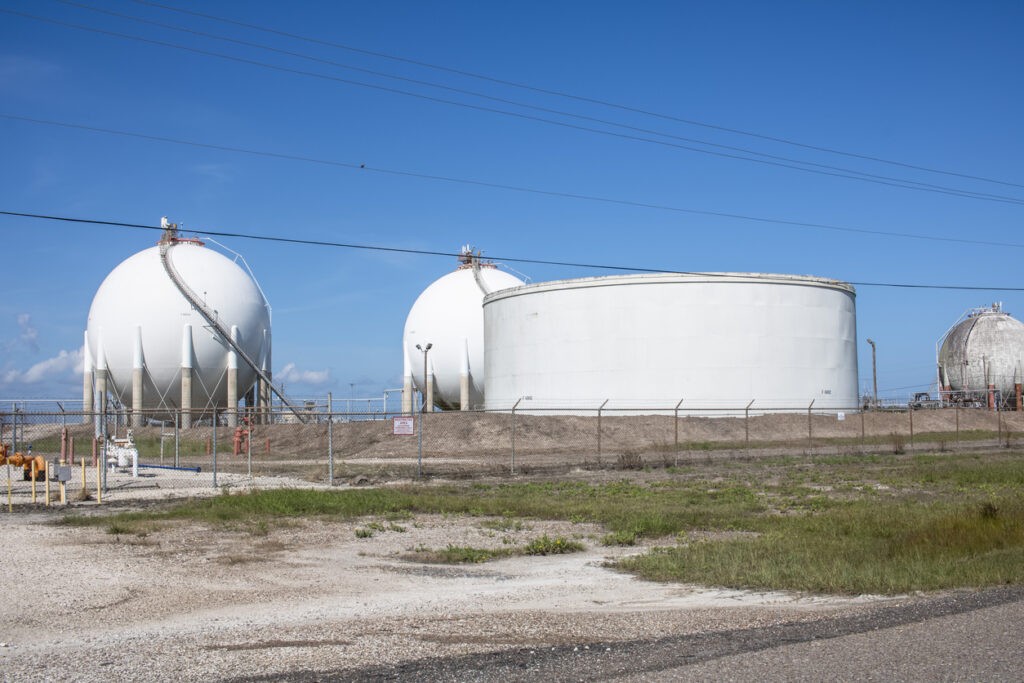
Turkmenistan and Pakistan intend to independently finance the construction of the TAPI gas pipeline (Turkmenistan-Afghanistan-Pakistan-India) to transport Turkmen gas to Europe, according to a statement made by Pakistani Minister, Musadiq Malik, who said the decision was driven by the international community’s reluctance to recognize the Afghan government, which has stalled foreign funding.

“Turkmenistan, rich in gas reserves and currently only selling to China, has considered exporting its gas to Europe via an LNG train,” Malik was quoted as saying by the Profit portal. The minister also talked about the idea of exporting Turkmen gas to the EU via Pakistan. According to this plan, the gas would be piped to Pakistan, and then transported to Europe by rail.

According to previous agreements, the $10 billion TAPI gas pipeline project was to be 30% financed ($3 billion) by the participants, and 70% ($7 billion) by loans from international financial institutions. Of the 30% to be allocated by the participating countries, 85% ($2.55 billion) was from to Turkmenistan, and the other 5% ($150 million each) from Afghanistan, Pakistan and India.

Uzbekistan to Increase Production and Export of Medicines

Uzbekistan President Shavkat Mirziyoyev called a government meeting  on 23 May to review plans for the country’s pharmaceutical industry.

On 10 January, a road map for 2024–2025 was approved for the development of the pharmaceutical industry and the acceleration of related investment projects. This was followed by a presidential decree of 23 January which identified additional measures required to regulate the pharmaceutical sector.

To date, a budget of $100 million has been allocated for the realization of new projects in the industry, boosted by an injection of $200 million from Asakabank.

As a result, two projects worth $30.5 million have been launched over the past four months, with exports totalling $51 million.

However, a lot of potential remains untapped. To redress the balance, plans are now underway to produce pharmaceutical products worth $400 million and increase the exports to $200 million.  A total of 147 projects worth $2 billion will be launched this year alongside the commission of a further 28.

The head of state emphasized the need to increase the level of domestically produced medicines available in Uzbekistan and to ensure a balance between price and quality.

The meeting also reviewed measures to intensify the work of the innovative pharmaceutical cluster, Tashkent Pharma Park, by launching 12 projects worth $470 million.


Kazakhstan and China to Cooperate on Innovative Technology

On 23 May, the Ministry of Digital Development, Innovation and Aerospace Industry of Kazakhstan hosted the first meeting of the Subcommittee on Innovative Cooperation of the Kazakh-Chinese Intergovernmental Cooperation Committee.

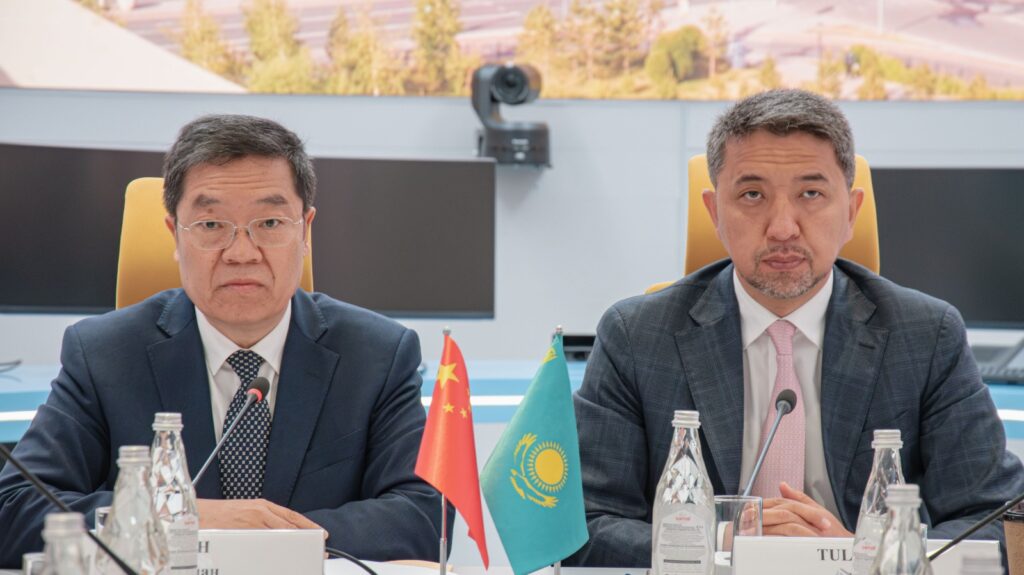
During the meeting in Astana, Kazakhstan’s First Vice Minister of Digital Development, Innovation and Aerospace Industry Kanysh Tuleushin, and Deputy Minister of Science and Technology of China Chen Jiachang discussed their respective countries’ cooperation in developing the 5G network, aerospace industry, and e-commerce.

The subcommittee agreed to expand cooperation in the implementation of joint scientific and innovative projects in space research, the use of microsatellites, monitoring agriculture and natural disasters using remote sensing, digitalization of the agricultural sector, and seismic monitoring.

An agreement was also reached on training young talent in the field of innovation, including short-term internships and joint scientific projects.

The co-chairs of the subcommittee pledged to exchange information on current developments in scientific and technological innovations in China and Kazakhstan.


Kazakhstan and South Korea to Strengthen Economic Cooperation

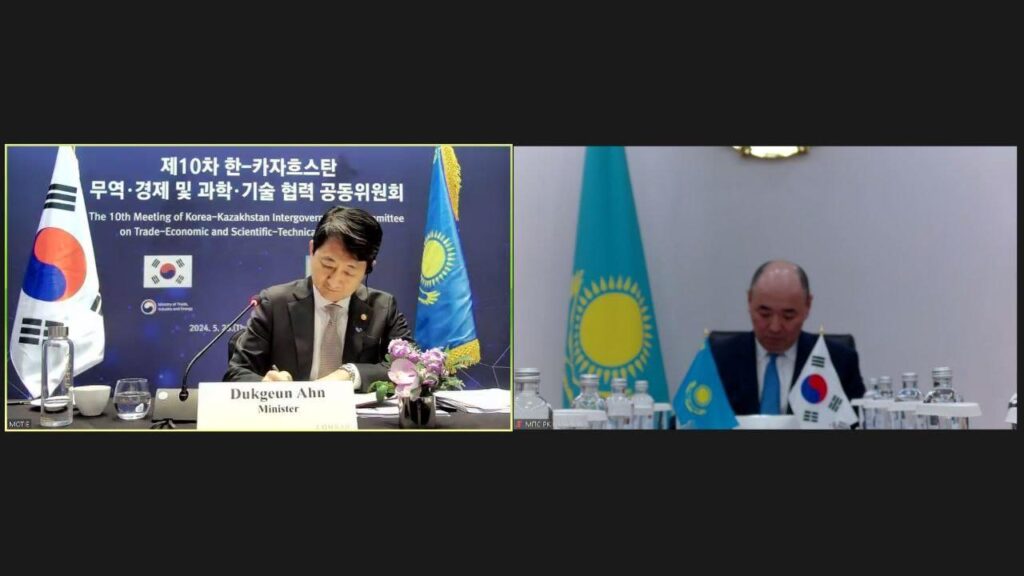
On May 23, Minister of Industry and Construction of Kazakhstan Kanat Sharlapaev participated in the 10th meeting of the Kazakh-Korean Intergovernmental Commission on Trade, Economic, Scientific and Technical Cooperation.

Regarding the strength of economic ties between Kazakhstan and South Korea in industrial cooperation, Sharlapaev reported that the current implementation of 15 joint investment projects worth $854.4 million will create over 4.7 thousand jobs.

To date, seven projects involving the production of buses, trucks, and elevators have been launched in Kazakhstan, costing $188.9 million and creating over 2.7 thousand jobs.

In 2023, with the participation of Korean companies including Daewoo Bus Global Corporation, Hyundai, KIA, and the Youngsan Glonet Corporation, the output of Kazakhstan’s electrical engineering and automobile industries reached $8.4 billion.

In the same year, 34.1 thousand tons of ferroalloys worth $55.4 million were exported to the Republic of Korea. A joint project between Mineral Product International and SIMPAC Group is now underway to produce ferroalloys in Kazakhstan’s Pavlodar region.

The minister confirmed his country’s readiness to cooperate with Korea in the energy sector by urging Korean companies to support the modernization and construction of new power plants in Kazakhstan.

Finishing on an optimistic note, Sharlapaev announced, “Kazakhstan sees great prospects for the further development of cooperation with the Republic of Korea in all directions.”


Kazakhstan and Singapore Join Forces to Boost Economy and Transport

On 23 May, Kazakhstan President Kassym-Jomart Tokayev’s made his first state visit to Singapore to engage in meetings with Singaporean President Tharman Shanmugaratnam focusing on connectivity, critical raw materials, and economic cooperation.

Over 140 Singaporean companies and joint ventures currently operate in Kazakhstan. The country has invested over $1.7 billion in the Kazakh economy and bilateral trade is forecast to exceed $2 billion.

Tokayev hailed Singapore as a time-tested and reliable partner of Kazakhstan and in talks with Singapore Prime Minister Lawrence Wong, expressed confidence that his visit would strengthen bilateral relations.

Citing the complementary nature of their countries’ economies, Lawrence Wong stated that Singapore can provide a gateway to further Kazakhstan’s interaction with ASEAN countries and in turn, Kazakhstan can facilitate Singapore’s rapprochement with Central Asian countries.

Regarding economic and investment cooperation, the parties reaffirmed their mutual commitment to expanding joint ventures in green energy, transport and logistics, digitalization, finance, agribusiness, connectivity, e-commerce, and mining and processing of critical minerals.

President Tokayev and Prime Minister Wong welcomed the implementation of Alatau City (G4 City); a thousand-kilometer Special Economic Zone to be developed by Kazakhstan with support from Singaporean company Surbana Jurong in the region of Almaty.

Tokayev expressed his gratitude to the Singaporean company for developing the comprehensive master plan for the project which he described as a catalyst for boosting both his country’s economy and that of Central Asia.

Tokayev and Wong also commended the partnership between Singapore’s PSA International and Kazakhstan’s national railways company Kazakhstan Temir Zholy (KTZ) aimed at increasing the potential of the Trans-Caspian International Transport Route (TITR).

A Memorandum was signed by KTZ and PSA to further develop Kazakhstan’s transport and transit potential and an agreement made to increase the volume of cargo transit through Kazakhstan by means of a synergy of their assets in China. Today, KTZ operates railway terminals in China in the dry port of Xi’an and the seaport of Lianyungang. Assets held by PSA include marine terminals in six ports and railway terminals in 13 cities in China.

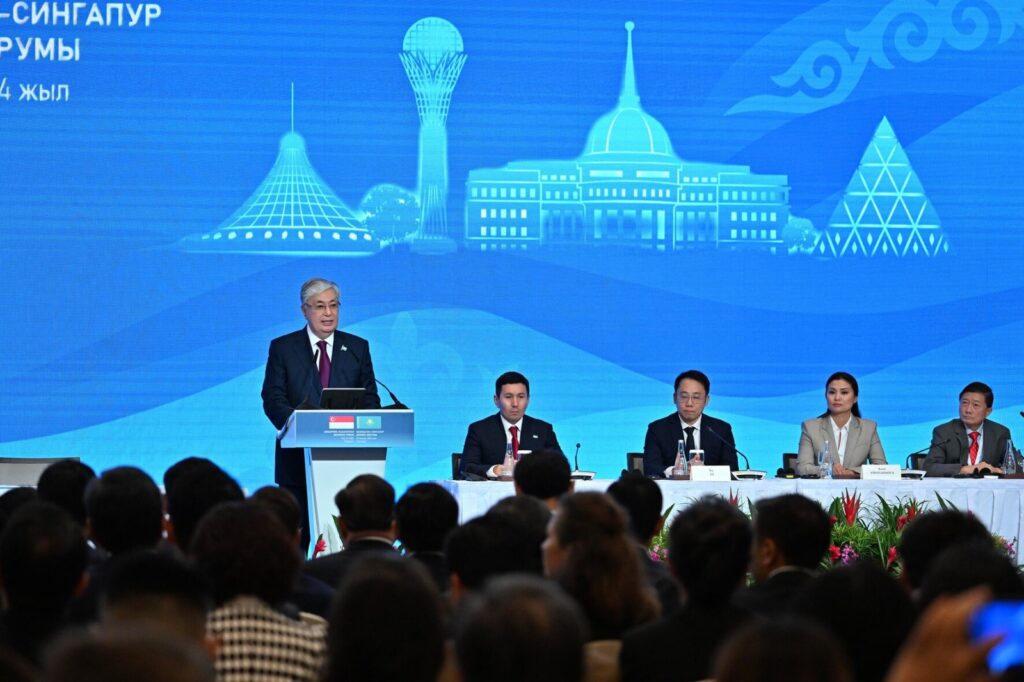
Speaking at the Kazakhstan-Singapore Business Forum later in the day, Tokayev emphasized that because it offers “the shortest and most sustainable route from Central and East Asia to Europe,” TITR has the potential to radically enhance Eurasian cooperation.

The Kazakh president outlined promising areas of cooperation between the two countries, and announcing Kazakhstan’s readiness to supply critical raw materials and natural resources to Singapore, stated: “Considering that global demand for rare metals will quadruple by 2040, Kazakhstan, which has approximately 5,000 unexplored deposits, can become a reliable partner for the joint development of this potential. We have high hopes for long-term cooperation with the Indorama company, which is interested in exploring copper and phosphate deposits in Kazakhstan.”

Tokayev also called on Singaporean companies to expand partnerships in the production of clean energy and the transfer of technology and expertise.