• KGS/USD = 0.01144 0%
  • KZT/USD = 0.00212 0%
  • TJS/USD = 0.10456 0.19%
  • UZS/USD = 0.00008 0%
  • TMT/USD = 0.28490 0%
  • KGS/USD = 0.01144 0%
  • KZT/USD = 0.00212 0%
  • TJS/USD = 0.10456 0.19%
  • UZS/USD = 0.00008 0%
  • TMT/USD = 0.28490 0%
  • KGS/USD = 0.01144 0%
  • KZT/USD = 0.00212 0%
  • TJS/USD = 0.10456 0.19%
  • UZS/USD = 0.00008 0%
  • TMT/USD = 0.28490 0%
  • KGS/USD = 0.01144 0%
  • KZT/USD = 0.00212 0%
  • TJS/USD = 0.10456 0.19%
  • UZS/USD = 0.00008 0%
  • TMT/USD = 0.28490 0%
  • KGS/USD = 0.01144 0%
  • KZT/USD = 0.00212 0%
  • TJS/USD = 0.10456 0.19%
  • UZS/USD = 0.00008 0%
  • TMT/USD = 0.28490 0%
  • KGS/USD = 0.01144 0%
  • KZT/USD = 0.00212 0%
  • TJS/USD = 0.10456 0.19%
  • UZS/USD = 0.00008 0%
  • TMT/USD = 0.28490 0%
  • KGS/USD = 0.01144 0%
  • KZT/USD = 0.00212 0%
  • TJS/USD = 0.10456 0.19%
  • UZS/USD = 0.00008 0%
  • TMT/USD = 0.28490 0%
  • KGS/USD = 0.01144 0%
  • KZT/USD = 0.00212 0%
  • TJS/USD = 0.10456 0.19%
  • UZS/USD = 0.00008 0%
  • TMT/USD = 0.28490 0%

Why Does Germany’s New Hydrogen Policy Suit Kazakhstan?

DW shares that Germany has adopted a strategy for importing hydrogen (H2), which is good news for Kazakhstan and a challenge for Russia.

The document, approved on July 24, reportedly outlines plans to replace fossil natural gas with renewable hydrogen. Berlin promises a stable market for H2 producers, as Europe’s largest economy intends to increase its imports due to the lack of domestic production capacity.

Private companies in Germany plan to build a hydrogen pipeline network of about 10,000 kilometers by 2032. Around 40% of this network will be built specifically for hydrogen, while 60% will be adapted gas pipelines. One of these pipelines will be one of the two pipelines previously laid from Lubmin on the Baltic coast to the Czech border, initially intended for Russian gas from Nord Stream.

Germany plans to import 50-70% of its hydrogen needs by 2030, between 95 and 130 terawatt-hours (about 9.5-13 billion cubic meters of natural gas). That’s about as much as Gazprom plans to deliver to the EU this year via the Ukrainian route. Hydrogen demand could reach 500 terawatt-hours by 2045, comparable to the amount of gas supplied through the first Nord Stream before the war in Ukraine.

These plans preclude renewed gas cooperation with Russia, as infrastructure would be adapted to replace natural gas with hydrogen, signaling a long-term change in Germany’s energy policy and a shift from Russian gas.

With its ideal conditions for green hydrogen production in the country’s west, Kazakhstan could become a key supplier for Germany. The strategy envisions a wide range of suppliers to avoid dependence on a single source. Around 40 countries are listed as potential partners, including Kazakhstan and Ukraine. Germany already has specific cooperation agreements with 15 of these countries.

The German economy is preparing to import hydrogen in various forms: gaseous, liquefied, or in the form of hydrogen-containing chemicals such as ammonia and methanol. This diversifies sources and minimizes the risks of dependence on individual suppliers.

Germany’s hydrogen import strategy thus presents significant opportunities for Kazakhstan and other partner countries, creating new prospects for hydrogen exports. At the same time, it presents severe challenges for Russia, limiting its role in Germany’s future energy market.

Iran-Turkmenistan-Kazakhstan-China Rail Transport Route Resumes Operation

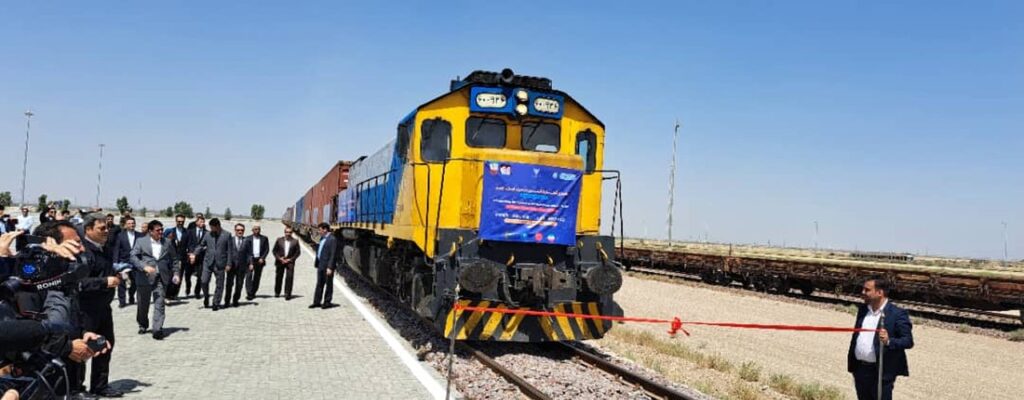
KTZ Express, a subsidiary of Kazakhstan’s national railways company Kazakhstan Temir Zholy (KTZ), and China Railway Container Transport Co. Ltd. have resumed the operation of  container trains on the Iran-Turkmenistan-Kazakhstan-China route.

As reported by KTZ’s press service, representatives of Iran, China, Kazakhstan, and Turkmenistan attended a ceremony on July 21 at Iran’s Aprin station to mark the departure of a container train to China.

The train, consisting of 50 forty-foot containers, will arrive in China within 12 days.

This shipment marks the restoration of the transport corridor, strengthening trade relations between participating countries.

Kazakhstan Looks to Increase Oil Shipment Across Caspian Sea

Kazakhstan’s national oil and gas company, KazMunayGas (KMG), is studying options to increase the shipment of Kazakh crude oil through the Trans-Caspian route. Askhat Khassenov, KMG’s CEO, announced this during negotiations in Baku last week with Rovshan Najaf, president of Azerbaijan’s State Oil Company SOCAR.

In 2022, KMG and SOCAR signed the five-year Aktau-Baku-Ceyhan Oil Transit Agreement to transport 1.5 million tons of crude oil annually.

In 2023, 1.057 million tons of oil were shipped from the Kazakh port of Aktau, and in the first half of this year, the figure exceeded 700,000 tons.

During his visit to Baku, Khassenov visited the BP Sangachal and Azertrans terminals, a Kazakh oil transit hub.

NVIDIA to Launch AI Educational Programs in Kazakhstan

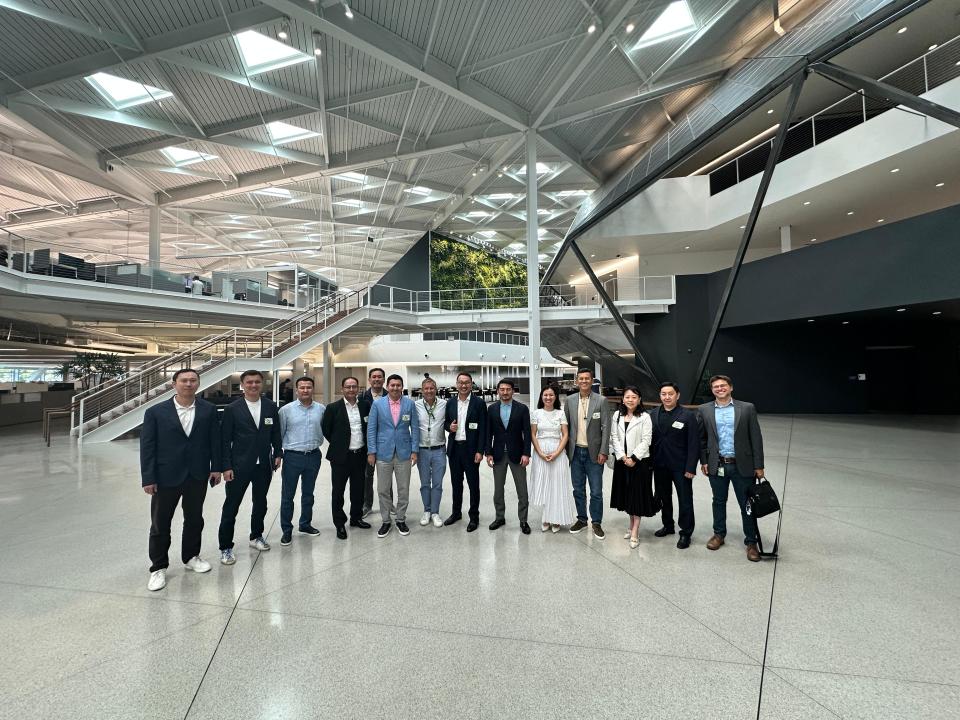
On July 26, a delegation from the Kazakh Ministry of Digital Development, Innovations, and Aerospace Industry visited the head office of US technology corporation NVIDIA in San Francisco, to discuss cooperation in artificial intelligence and supercomputer technologies.

The ministry and NVIDIA have agreed to launch artificial intelligence educational programs in Kazakhstani educational institutions, within the framework of the Deep Learning Institute program. The US company will help create educational content in the Kazakh language.

The parties are planning hackathons and boot camps on artificial intelligence to identify and support talented young specialists in this field. These events will help develop digital skills among young people, and strengthen Kazakhstan’s position as an innovation hub.

The ministry also said it is working to create computing power using NVIDIA chips to develop artificial intelligence in Kazakhstan.

ADB to Advise Kazakhstan’s Energy Ministry on Hydropower Development

The Asian Development Bank (ADB) has signed a transaction advisory services agreement with the Kazakh government for its Hydropower Development Program, which aims to attract the private sector to design, finance, construct, operate, and maintain the country’s hydropower projects.

According to the agreement, ADB will work with Kazakhstan’s Energy Ministry to conduct pre-feasibility studies, prepare auction documents and a template power purchasing agreement, and attract competitive offers to crowd investors.

ADB will help the ministry prepare and auction hydropower projects with private sector participation in the southeast, with a potential cumulative capacity of around 600 megawatts across the Alakol, Balkhash, and Irtysh/Zaysan basins.

The agreement was signed on July 26 in London by Kazakhstan’s minister for energy, Almasadam Satkaliyev, and ADB’s head of public–private partnerships, Cleo Kawawaki.

Emphasizing that supporting Kazakhstan in developing renewable energy sources is a priority for ADB, Ms. Kawawaki commented: “ADB’s focus is to assist the country’s efforts to address the impacts of climate change, promote decarbonization, and facilitate sustainable economic growth. This will help Kazakhstan achieve its goal of increasing its renewable energy capacity, reduce carbon emissions, and enhance the country’s energy security.”

Satkaliyev also proposed collaborating with ADB to attract technological support, investments, and grants to reduce methane emissions in all sectors of Kazakhstan’s economy, including the oil and gas industry.

Kazakhstan Looking to Develop Tourism

In recent years the government has made sizeable efforts to develop the country’s tourism industry. Today, more than ten tourist clusters are being developed in Kazakhstan, including the Almaty agglomeration, the resorts of Burabay, Katon-Karagay, and Bukhtarma in the East Kazakhstan Region, the Caspian resort areas in the west of the country, and ancient Turkestan.
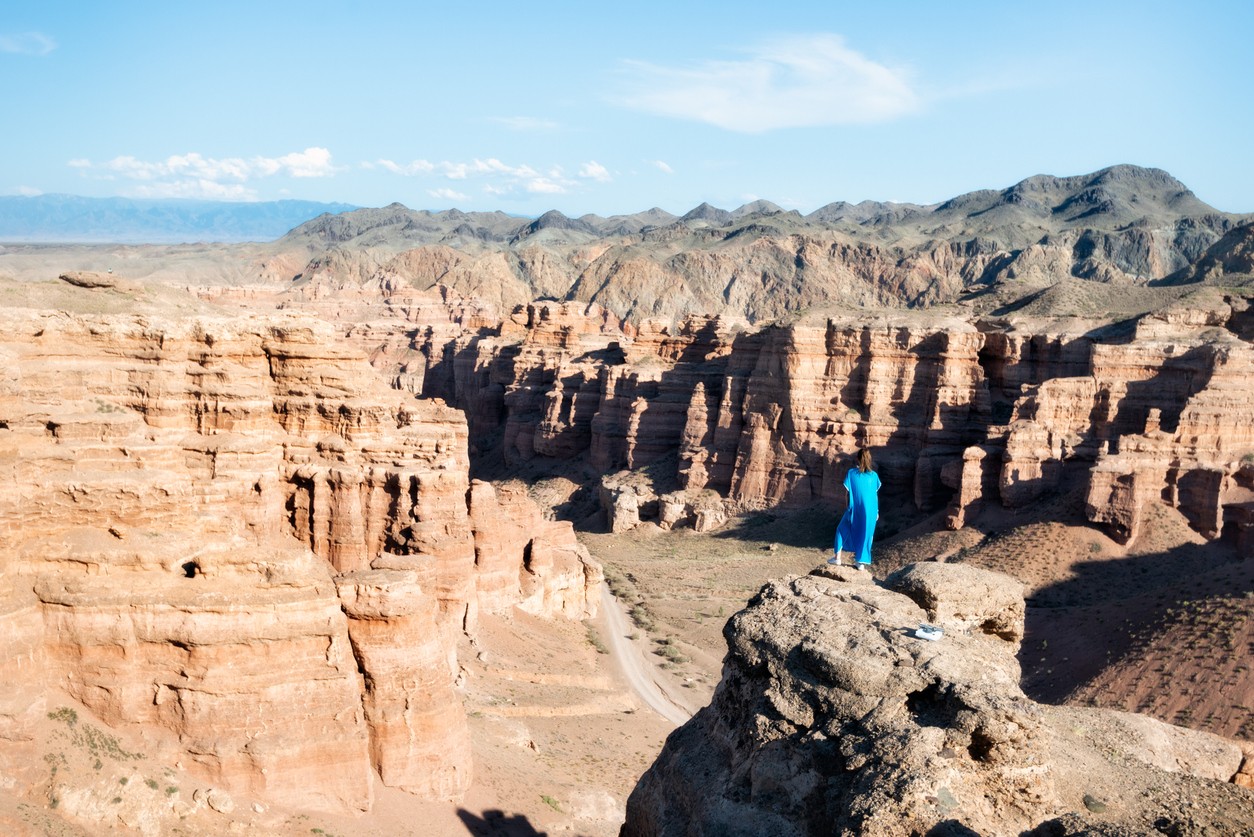

@iStock, Charyn Canyon

A lot has been done, but there is more to do

In June of this year, President Kassym-Jomart Tokayev held a meeting on developing tourism, where he outlined new priorities. “Today, the share of tourism in GDP has exceeded 9%. So, we can say that this indicator is returning to pre-pandemic levels. About 10% of jobs in the world are provided by tourism. Thirty percent of world exports, 7% of investment, and 5% of tax revenues are attributable to tourism services sector. Kazakhstan has everything necessary for the development of all types of tourism: from environmental to business,” he noted.

“Almost 90% of foreign tourists in Kazakhstan come from neighboring CIS countries. There are still a few tourists from further abroad. Meanwhile, international research shows that more than 70% of travelers prefer to visit vacation destinations within a four-hour flight. That is, Kazakhstan can be very attractive to tourists from China, India, East Asia, and the Middle East. At the same time, we must take into account specific issues related to the national mentality of foreign tourists, their interests and demands, and not approach all tourists with a single program. This requires qualified cadres and the will to do quality work. Within five years, we can double or even triple the number of tourists. We need to develop air transportation. First of all, we need to expand the presence of low-cost airlines on popular air routes.”

As the most promising destinations, President Tokayev cited the mountain cluster in the Almaty Region, Caspian Sea beaches in the Mangistau Region, and the Shchuchinsk-Burabay resort area in Akmola Region. Almaty was singled out as the locus of tourism development in Kazakhstan. The city accounts for a quarter of the country’s total tourist flow, including half of foreign tourists. President Tokayev also noted shortcomings: in some resort areas, there is not enough capacity, logistics need to be developed, and personnel training is lagging.
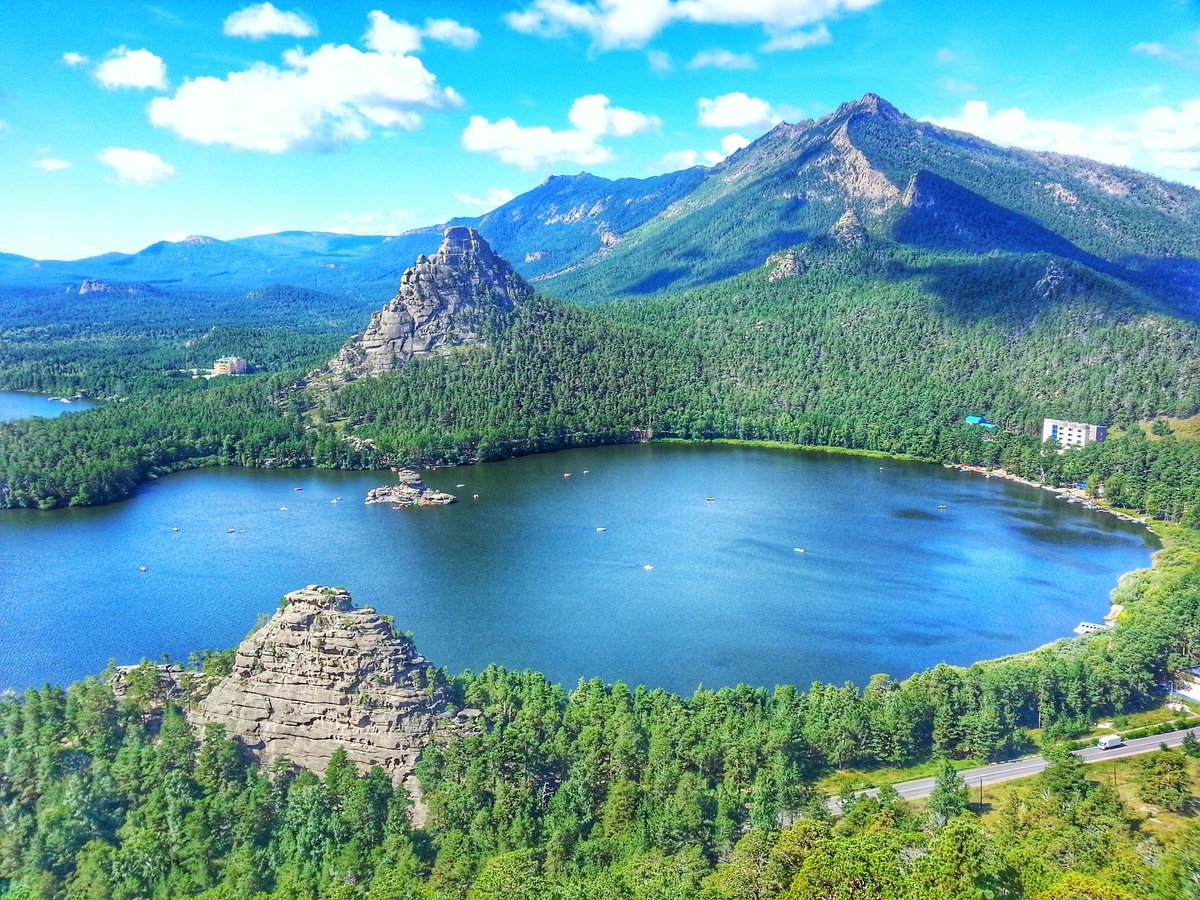

@borovoe.kz, Burabay resort area

Higher rankings and higher investment

In May, Kazakhstan rose in the World Economic Forum’s latest Travel & Tourism Development Index, jumping 14 spots to rank 52nd out of 119 countries, ahead of Qatar, Azerbaijan, Uzbekistan, Vietnam, Egypt, and Latvia. Kairat Sadvakassov, chair of the state company, Kazakh Tourism, called this a victory.

“Our long-term goal is to break into the top 50 of this ranking. Now, we are only two spots away from [achieving] this goal. This became possible thanks to the coordinated work of central government entities and local executive-branch entities, associations, businesses, and universities,” explained Sadvakassov.

This year, the Ministry of Tourism and Sports expects more than 10 million foreign tourists to visit Kazakhstan, versus over 9 million last year. This is double the number that came in the pandemic-tinged year of 2022, when 4.7 million traveled to the country. That year, hotels, guesthouses, and hostels earned KZT229 billion ($480 million). Currently, citizens from 82 countries can visit Kazakhstan visa-free.

Nurtas Karipbaev, chairman of the Tourism Industry Committee at the Ministry of Tourism and Sports, described the incentives provided to the tourism industry: “If, for example, an entrepreneur builds a hotel, 10% of his costs will be reimbursed by the state. In addition, if an entrepreneur buys machinery and equipment for ski resorts, the state reimburses 25%. If tour operators within the country buy buses for tourists, the state returns 25% to them.” According to Karipbaev, KZT1.4 billion ($3 million) has been allocated this year for the formation and promotion of tour offerings.

The Ministry of Tourism and Sports puts total investment in the tourism industry from January to May 2024 at KZT271 billion ($572 million), versus less than half that amount, KZT130.1 billion, for the same period in 2023. Investment is most active in Astana and Almaty, as well as in North Kazakhstan, Kyzylorda, and the Kostanay regions. “These figures prove that our tourism sector is becoming increasingly attractive to investors. We will continue to create favorable conditions for developing the industry and attracting capital,” said Karipbaev.

According to the ministry, the Almaty Mountain cluster was the most popular tourist destination in 2023, with more than 2.3 million visitors. Next came the Mangistau resort area (356,200 people) and Shchuchinsk-Burabay (305,400 people). Lake Alakol rounded out the most popular destinations with 205,800 visitors.