• KGS/USD = 0.01144 0%
  • KZT/USD = 0.00212 0%
  • TJS/USD = 0.10432 -0.29%
  • UZS/USD = 0.00008 0%
  • TMT/USD = 0.28571 0.28%
  • KGS/USD = 0.01144 0%
  • KZT/USD = 0.00212 0%
  • TJS/USD = 0.10432 -0.29%
  • UZS/USD = 0.00008 0%
  • TMT/USD = 0.28571 0.28%
  • KGS/USD = 0.01144 0%
  • KZT/USD = 0.00212 0%
  • TJS/USD = 0.10432 -0.29%
  • UZS/USD = 0.00008 0%
  • TMT/USD = 0.28571 0.28%
  • KGS/USD = 0.01144 0%
  • KZT/USD = 0.00212 0%
  • TJS/USD = 0.10432 -0.29%
  • UZS/USD = 0.00008 0%
  • TMT/USD = 0.28571 0.28%
  • KGS/USD = 0.01144 0%
  • KZT/USD = 0.00212 0%
  • TJS/USD = 0.10432 -0.29%
  • UZS/USD = 0.00008 0%
  • TMT/USD = 0.28571 0.28%
  • KGS/USD = 0.01144 0%
  • KZT/USD = 0.00212 0%
  • TJS/USD = 0.10432 -0.29%
  • UZS/USD = 0.00008 0%
  • TMT/USD = 0.28571 0.28%
  • KGS/USD = 0.01144 0%
  • KZT/USD = 0.00212 0%
  • TJS/USD = 0.10432 -0.29%
  • UZS/USD = 0.00008 0%
  • TMT/USD = 0.28571 0.28%
  • KGS/USD = 0.01144 0%
  • KZT/USD = 0.00212 0%
  • TJS/USD = 0.10432 -0.29%
  • UZS/USD = 0.00008 0%
  • TMT/USD = 0.28571 0.28%

Turkmenistan and Iran Sign Natural Gas Swap Deal

From 1-3 July, Turkmenistan and Iran engaged in negotiations on the supply of natural gas. Reporting on the meeting in Ashgabat, Turkmenistan’s Foreign Ministry announced that a contract had been signed for the purchase and sale of natural gas of up to 10 billion cubic meters per year, to be supplied by Turkmenistan to Iraq through the territory of Iran under a swap scheme.

According to the ministry’s statement, to accommodate increased supplies of gas, Iranian companies will also build a new 125-kilometer pipeline and three gas compressor stations in Turkmenistan.

Under the new contract, the volume of Turkmen gas supplied to Iran along the Dovletabad – Sarahs – Hangeran route and through the Chaloyuk gas measuring station, will rise to 40 billion cubic meters per year.

Despite being home to the world’s second-largest natural gas reserves, Iran has experienced chronic natural gas shortages during the winter months, and rising domestic demand has limited the country’s ability to export gas.

As a result of the gas swap with Turkmenistan, Iran will be able to meet its gas export commitments.

Turkmenistan has the world’s fourth-largest proven natural gas reserves, but due to its geographical location and geopolitical environment, has faced difficulties in finding export markets for its gas.

Today, China is the main buyer of Turkmen natural gas.


Hungarian Company to Develop Smart Parking for Tashkent

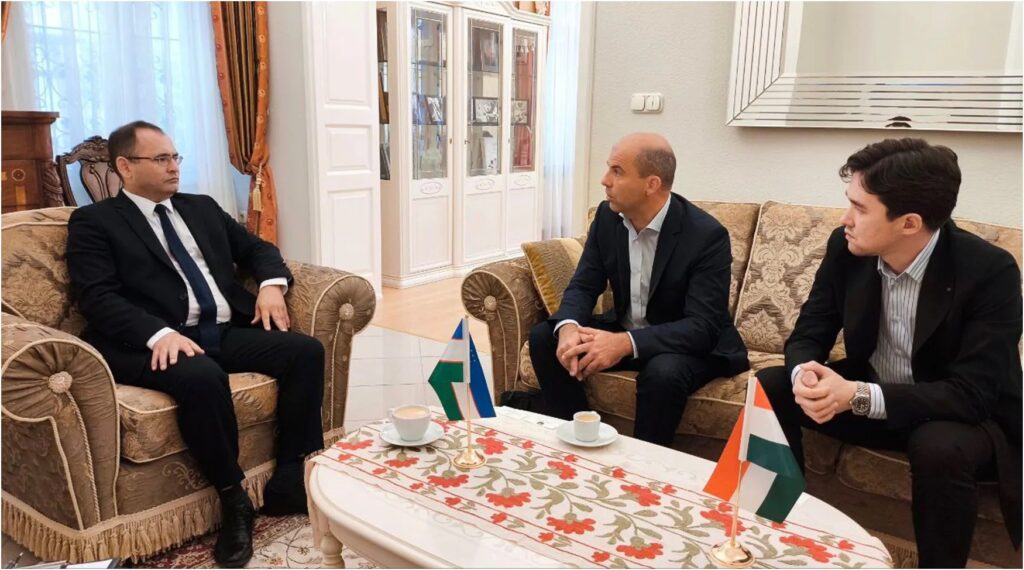
Specialists from Hungary will create an automated “smart” parking system in Tashkent. The issues of establishing cooperation and realizing investment projects in road and urban infrastructure were discussed at a meeting between Uzbekistan’s Ambassador to Hungary, Oybek Shakhavdinov, and Gabor Pusztai, Advisor to the General Director of the iCell company.

The parties conferred on the Hungarian group’s work on a project to help establish parking management within the fast-growing city of Tashkent. The system involves introducing and using high-tech sensors and mobile applications to find, reserve, and pay for parking spaces.

iCell’s specialists have been working for over a year on studying possible options for the effective implementation of the project and preparing a package based on the conditions and specifics of the capital of Uzbekistan. It was stated that an essential point in implementing the project is introducing changes to the republic’s current legislation regarding administrative sanctions for offenses and  articles which provide a clear understanding of the rights and obligations of road users.

iCell specializes in software development and services in various technological and telecommunication sectors. The company’s main activities and services include fleet management, intelligent parking solutions, IT services, energy and infrastructure management, and application development for various industries.

Uzbek Afghan Business Forum

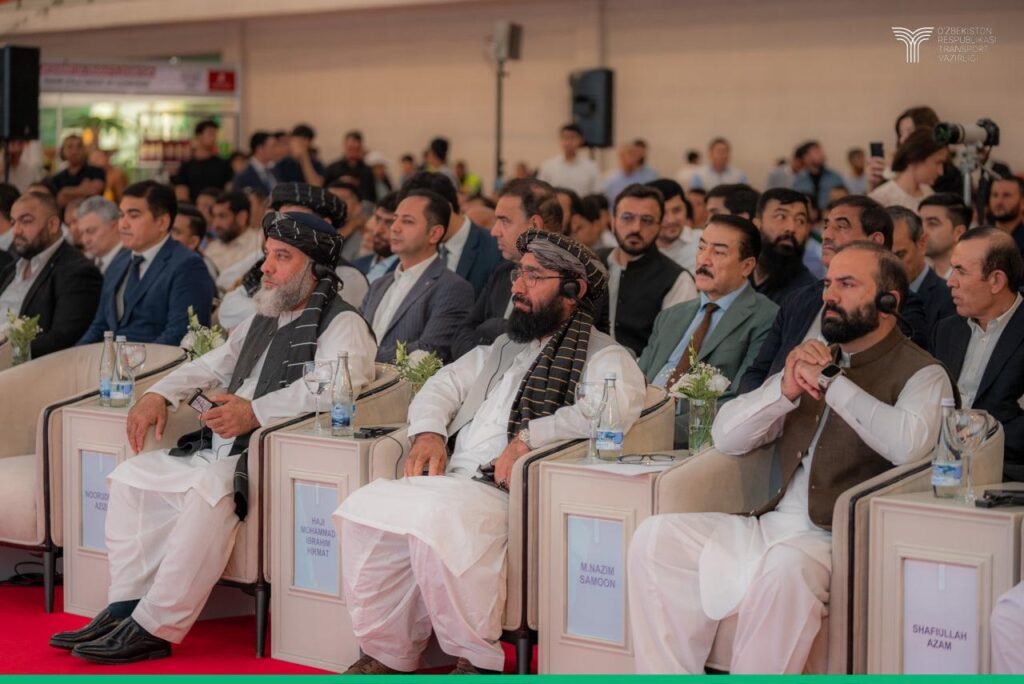
On July 3, an Uzbek-Afghan business forum was held in Tashkent to coincide with the visit  of an Afghan delegation headed by Minister of Industry and Trade Nuriddin Azizi. The major event, the forum was attended by heads of ministries and government agencies, industry, and over 1,000 business representatives from both countries.

As reported by the Uzbek Ministry of Investment, Industry and Trade, Afghanistan is Uzbekistan’s fifth-largest export market. In the last five years, trade between the two countries has increased almost 1.5-fold, reaching $866 million in 2023. Uzbekistan currently receives Afghan investment in 550 enterprises, 443 of which are wholly funded with Afghan capital.

In his welcoming speech, Laziz Kudratov, Minister of Investment, Industry and Trade of Uzbekistan, highlighted several promising areas of cooperation, including diversifying the range of goods traded, and bolstering cooperation between producers and exporters with support of both countries’ respective departments and industry associations.

The forum focused on initiatives to further develop mutual trade, such as the transition to round-the-clock border crossing operations, the establishment of trading houses, and the execution of major transport and infrastructure projects.

Attention was drawn to the significant impact of more proactive engagement at the International Trade Centre in Termez on the Uzbek-Afghan border, where the creation of business-friendly conditions include a 15-day visa-free regime and tax-free zone.

Nuriddin Azizi, Minister of Industry and Trade of Afghanistan, commended Uzbekistan’s efforts to foster an environment conducive to bilateral trade, economic and investment cooperation. He also encouraged more proactive engagement between Afghan and Uzbek entrepreneurs by offering assurance of both sides’ readiness to support new ventures and initiatives.

The forum was complemented by the  exhibition “Made in Afghanistan” which showcased the produce of 75 major Afghan companies from jewellery, textiles and food to electrical engineering, mining, transportation and logistics.

The event concluded with the signing of several trade agreements in the chemical and agricultural sectors, as well as an agreement to establish a logistics centre.

According to the Uzbek Ministry of Transport, Afghanistan is one of the key links in ensuring regional connectivity across Central and South Asia. In recent years, cargo transportation across Afghanistan has risen significantly and in 2023, the volume carried along the multimodal transport corridor Uzbekistan – Afghanistan – Pakistan increased 1.5-fold compared to 2021.


Chinese Power Plant for Western Kazakhstan

On July 2, Kazakhstan’s MAEK LLP and China Huadian Corporation Ltd., represented by Huadian Kazakhstan Energy, signed an agreement for the joint construction of a combined-cycle gas plant in Aktau.

The plant, aimed to meet the growing demand for electricity in Western Kazakhstan, is scheduled for commission in December 2026.

As reported by Kazakh Invest, the Chinese State Bank has pledged finance for the project for up to 15-25 years at a rate below 5%.

China Huadian Corporation is currently implementing the build of a combined-cycle gas plant in the Mangystau region of Kazakhstan. The $190 million project, which has the potential to integrate renewable energy sources,  will serve as the primary supplier of power and help regulate peak loads at a local level.


Uzbekistan’s Foreign Trade Turnover Reaches $62 Billion

EUROUZ member EastCham has published the “Market Outlook Uzbekistan 2024” reference guide. According to the report, Uzbekistan’s GDP per capita is lower than that of neighboring Kazakhstan, but higher than Kyrgyzstan and Tajikistan. Real GDP per capita may be higher than the official data suggests, however, as the volume of the national shadow economy is estimated at between 25 and 45% of Uzbekistan’s GDP. Per capita GDP is $2,510.1 (World Bank 2023), whilst the IMF forecasts $2,670 in 2024. GDP growth was 5.6% in 2023 (World Bank) and is expected to be 5.5% in 2024, and 5.6% in 2025.

“In 2022, Uzbekistan ranked 70th globally in gross GDP, 86th in total exports, and 75th in total imports, while placing 155th in GDP per capita,” the report states.

According to the report, Uzbekistan’s mining industry is one of the country’s most essential and internationally competitive industries, contributing up to around 30% of the country’s GDP. Uzbekistan is ranked 12th in the world in terms of mining. It is the world’s 5th-largest uranium, 8th-largest gold, and 11th-largest natural gas producer. Uzbekistan has the world’s 4th-largest gold, 7th-largest uranium, and 9th-largest copper reserves. In addition, metallurgy, the study of the physical and chemical behavior of metallic elements, is also one of the largest industries in Uzbekistan.

Natural gas dominates Uzbekistan’s energy complex. More than 85% of the country’s electricity is generated from natural gas, whilst coal generation is expected to increase from 3% to 10% in the coming years. Uzbekistan is one of the leading countries in the Eurasian region in terms of natural gas – it has large gas reserves and several small oil and coal resources.

“The Uzbek authorities established the green economy and renewable energy sources (solar, wind, hydropower) as the basis of sustainable economic development and plan to increase the share of renewable energy generation to 30% by 2030. One of the concrete steps towards this goal is to build 28 solar and wind power plants with a total capacity of 8000 GW and hydropower plants with a total capacity of 868 MW by 2027. The government also plans to build a large nuclear power plant by 2028,” the report states.

Last month, The Times of Central Asia published an interview with Neil McKain, the IFC regional manager for Uzbekistan, about the country’s potential to become a regional leader in renewable energy sources.

The report also emphasizes problems in the country’s electricity network, including Tashkent’s difficulties with heat and power supply systems in the last two years. Low temperatures have caused a decline in gas pipeline pressure (90% of power in Uzbekistan is produced by gas power plants). As a result, electrical heaters have gained popularity among residents of Tashkent, overwhelming the local power grid and leading to electricity shortages. President Mirziyoyev has acknowledged this problem, and Uzbekistan – Tashkent in particular – needs dramatic power and heat supply improvements.

Foreign trade turnover in Uzbekistan has surged in recent years. In 2022, it reached $50 billion (an 18.6% increase from 2021), while in 2023, it reached $62 billion, a 23.8% increase from 2022. Tashkent, the capital city, is responsible for 38% of all Uzbek foreign trade.
The share of CIS countries in foreign trade has begun gradually decreasing in the past few years: CIS member states accounted for 37.0% of Uzbekistan’s foreign trade in 2021, 35.7% in 2022, and 33.0% in 2023.

Imports into Uzbekistan reached $35.62 billion in 2022, while the period from January-June 2023 saw imports surge by 17% year-on-year. Exports from Uzbekistan reached $19.3 billion in 2022 (up 15.9% compared to 2021), and in the first half of 2023 (Jan-Jun), Uzbek exports saw a year-on-year increase of 1.1%. Furthermore, 80% of Uzbekistan’s foreign trade passes through Kazakhstan, Kyrgyzstan, and/or Russia, countries which combined represent 50% of total foreign trade in Uzbekistan. Other foreign trade, meanwhile, passes through Afghanistan and Iran, areas with high geopolitical risks.

SCO Round-Up

The Times of Central Asia is reporting live from the SCO Summit in Astana.

Kazakhstan’s Red Carpet

Astana put on a fireworks show on Wednesday night as dignitaries gathered in the Kazakh capital for the Shanghai Cooperation Organization, a regional forum for talks on security, economic and other issues.

The event is a chance for landlocked, resource-rich Kazakhstan to showcase its culture, hospitality and rising diplomatic profile at a time when wars in Ukraine and Gaza, along with big power tension and the threat of climate change, tend to dominate headlines.

High-stepping honor guards, motorcycle escorts, military marching bands and greeters in glittering traditional costumes welcomed the leaders arriving in Astana, which boasts a collection of shiny, futuristic-looking buildings that were constructed with the help of Kazakhstan’s oil wealth after independence from Soviet rule in 1991.

The nine full members of the SCO are India, Iran, Kazakhstan, China, Kyrgyzstan, Russia, Pakistan, Tajikistan and Uzbekistan. Belarus is expected to become a new member at this week’s summit.


Putin to Tokayev: I’ll Be Back

Russian President Vladimir Putin, responding to an invitation to visit Kazakhstan again, has suggested that he will return on a state trip in November.

Putin spoke about another visit in a conversation on Wednesday with Kazakh President Kassym-Jomart Tokayev on the sidelines of the Shanghai Cooperation Organization meeting in Astana, Russia’s official news agency, TASS has reported.

“I believe this is simply necessary to maintain the pace of cooperation between our countries,” Tokayev said. “I hope to see you again, this time on a state visit to our country.”

According to Tass, Putin thanked Tokayev and said: “Of course, it is most rational to do it in connection with the summit of the Collective Security Treaty Organization. Thank you for the invitation; I certainly accept it.”

Kazakhstan has the rotating chairmanship of the Collective Security Treaty Organization, or CSTO. The security alliance includes Russia and the former Soviet republics of Kazakhstan, Tajikistan, Kyrgyzstan, Belarus and Armenia. However, Armenia appears close to pulling out of the alliance because it feels betrayed by Russia its’ inaction when rival Azerbaijan made military gains over Armenia.


Erdogan to Putin: Let’s Trade

Türkiye, which holds the status of “dialogue partner” in the SCO and treads a delicate line in the war between Russia and Western-backed Ukraine, wants to boost trade with Moscow.

Turkish President Recep Tayyip Erdogan and Russian leader Vladimir Putin met in Astana on Wednesday.

“The Turkish president expressed confidence in reaching the ambitious trade volume goal of $100 billion, citing strong potential for growth in bilateral relations,” Türkiye’s official Anadolu news agency stated. Reports have indicated trade between the two countries was above $65 billion in the last couple of years.

Anadolu quoted Erdogan as saying that “we can take serious steps” on plans for the Sinop Nuclear Power Plant in Türkiye’s Black Sea region. Russia is potentially a partner in that electricity-producing project. Rosatom, Russia’s nuclear energy agency, is currently building Türkiye’s first nuclear power plant in Mersin in the south of the country.

Türkiye, a NATO member, has maintained economic and political ties with both Russia and Ukraine. Western sanctions on Russia are reported to have curbed some of Türkiye’s trade with Russia.


Where’s Modi?

Indian Prime Minister Narendra Modi didn’t show up at the SCO summit in Astana, sending the foreign minister in his place. There are a few unconfirmed theories about why Modi isn’t attending.

One is that he didn’t want to be linked to any anti-American rhetoric that might pop up at the summit, at a time when India is developing closer relationships in the West. Another is that he wanted to keep personal distance this time around from a forum in which China, Central Asia’s biggest trade partner, is likely to dominate. India is a growing economic power and there are periodic military tensions on the border with China, though both countries have sought stability in their relationship with each other.

An official reason for Modi’s absence was that the dates of the Astana meeting roughly coincided with an Indian parliamentary session.

Prime Minister Shehbaz Sharif of Pakistan, a traditional adversary of India, is attending the SCO summit.

As India pursues a balancing act in international relations, Modi is expected to travel to Moscow next week to meet the Russian President. India’s interest in Russian oil and gas as a way to feed its economic growth is a likely topic on the agenda, some analysts believe.

“There will be – at the core of the conversations – the topic of energy,” geopolitical strategist Velina Tchakarova said on the X platform on Wednesday.


Guterres on Tour

U.N. Secretary-General António Guterres said he has “discussed the world’s most dramatic conflicts” with Kazakhstan’s president after arriving in Astana.

Guterres, who was likely referring to the wars in Ukraine and Gaza, said he and President Tokayev also talked about the “regional situation in Central Asia.”

Earlier, the United Nations chief said on the X platform that he appreciated Kyrgyzstan’s decision to designate a mountain in the country’s Tian Shan range as “U.N. peak.”

“The Kyrgyz Republic stands on the frontlines of the climate crisis despite its negligible contribution to the problem,” said Guterres, who had traveled to Kyrgyzstan and met President Sadyr Japarov as well as young climate activists.

Kyrgyzstan has tried to create artificial glaciers to combat the negative effects of rising temperatures.