• KGS/USD = 0.01144 0%
  • KZT/USD = 0.00211 0%
  • TJS/USD = 0.10526 0%
  • UZS/USD = 0.00008 0%
  • TMT/USD = 0.28530 0%
  • KGS/USD = 0.01144 0%
  • KZT/USD = 0.00211 0%
  • TJS/USD = 0.10526 0%
  • UZS/USD = 0.00008 0%
  • TMT/USD = 0.28530 0%
  • KGS/USD = 0.01144 0%
  • KZT/USD = 0.00211 0%
  • TJS/USD = 0.10526 0%
  • UZS/USD = 0.00008 0%
  • TMT/USD = 0.28530 0%
  • KGS/USD = 0.01144 0%
  • KZT/USD = 0.00211 0%
  • TJS/USD = 0.10526 0%
  • UZS/USD = 0.00008 0%
  • TMT/USD = 0.28530 0%
  • KGS/USD = 0.01144 0%
  • KZT/USD = 0.00211 0%
  • TJS/USD = 0.10526 0%
  • UZS/USD = 0.00008 0%
  • TMT/USD = 0.28530 0%
  • KGS/USD = 0.01144 0%
  • KZT/USD = 0.00211 0%
  • TJS/USD = 0.10526 0%
  • UZS/USD = 0.00008 0%
  • TMT/USD = 0.28530 0%
  • KGS/USD = 0.01144 0%
  • KZT/USD = 0.00211 0%
  • TJS/USD = 0.10526 0%
  • UZS/USD = 0.00008 0%
  • TMT/USD = 0.28530 0%
  • KGS/USD = 0.01144 0%
  • KZT/USD = 0.00211 0%
  • TJS/USD = 0.10526 0%
  • UZS/USD = 0.00008 0%
  • TMT/USD = 0.28530 0%

Kazakhstan to Build the Largest Poultry Farm in CIS

On June 20, Chairman of the Management Board of Kazakh Invest, Yerzhan Yelekeyev, and Vice President of JSC Aitas KZ, Rabiga Tokseitova met to discuss the Kazakh company’s plans for the “Almaty Poultry Farm Zhetysu”.

As reported by Kazakh Invest, the project costing more than $600 million, will have the capacity to process 240,000 tons of poultry, including 100,000 tons of sausages and delicacies, for distribution to local and foreign markets.

To be constructed in the region of Almaty, from 2025-29, the enterprise will become the largest poultry farm in the CIS (the Commonwealth of Independent States, which unites post-Soviet republics) and provide 6,000 new jobs.

The Aitas holding company is a leading producer of poultry, covering around 43% of the local market. Its assets include Makinskaya, Central Asia’s largest poultry farm, and Kazakhstan’s oldest poultry farm Ust-Kamenogorsk, with a total capacity of 150,000 tons per year. It also owns Almaty Breeding Poultry Farm Nauryz Agro, which as the largest in the CIS, provides 80 million hatching eggs per year for broiler chickens.


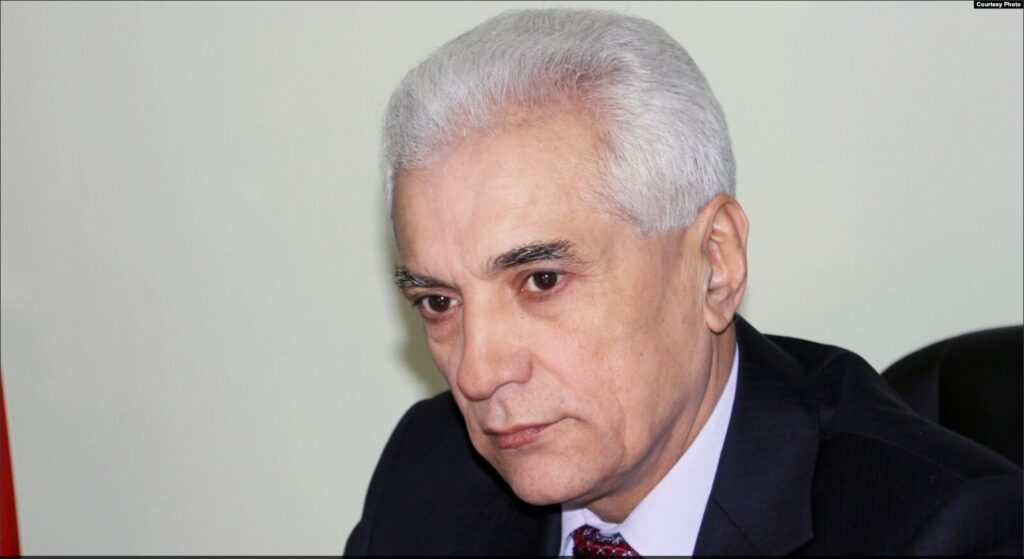
Tajikistan’s Former Foreign Minister Hamrokhon Zarifi Detained in Dushanbe

Several informed sources have confirmed that Tajikistan’s former foreign minister Hamrokhon Zarifi had been detained in Dushanbe.

It is reported that law enforcement agencies detained Zarifi on June 12th. Until June 16th he was held in Dushanbe’s temporary Ministry of Internal Affairs detention center. Still, the source has no information about where he was transferred for further detention. There were also reports that he was released after interrogation.

A source in Tajikistan’s law enforcement agencies said that “the detention and interrogation are related to an economic crime that was committed during the construction of the Foreign Ministry building during Zarifi’s time as head of the ministry.”

Hamrokhon Zarifi was arrested on the same day as Saidjafar Usmonzoda, a member of the Tajik parliament who was detained on charges of “attempting to seize state power.”

The Tajik opposition links Zarifi’s detention to the Usmonzoda case. The authorities have not commented.

Sustainable Aviation Fuel Production in Kazakhstan

On June 20, Chairman of the Board of Kazakhstan’s national oil and gas company KazMunayGas (KMG) Askhat Khasenov attended a meeting with the management of the American company LanzaJet and the Japanese investment company Mitsui to discuss the production of SAF (Sustainable Aviation Fuel) in Kazakhstan.

SAF is an environmentally-friendly version of Jet-1 fuel that reduces carbon emissions by 80%.

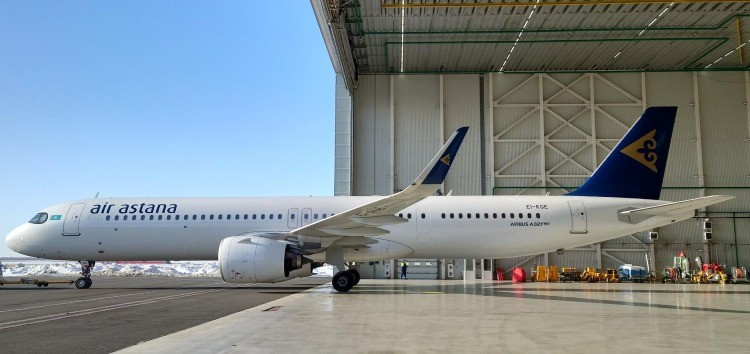
According to KMG, a preliminary feasibility study for the possible construction of a SAF production facility in Kazakhstan has already been completed by KMG and Air Astana with financial assistance from the European Bank for Reconstruction and Development (EBRD). The next stage is developing a feasibility study for the actual implementation of the project.

Air Astana is currently exploring the use of SAF by its air fleet. Regarding the concept of low-carbon development, the share of SAF consumption by the airline company will gradually increase to 5% by 2040, 15% by 2050, and 25% by 2060.

Three large oil refineries owned by KazMunayGas are ready to produce Jet A-1 aviation fuel, which could be mixed with SAF in the future.

LanzaJet recently opened LanzaJet Freedom Pines Fuels in the US, the world’s first SAF production facility, with plans to produce 1 billion gallons of SAF by 2030.


Campuses of Three Foreign Universities to Open in Kazakhstan

Student campuses of three major foreign universities will open in Kazakhstan. Branches of the British De Montfort and Coventry universities will appear in Almaty and Astana, and a branch of South Korean university, Woosong, will be located in Turkestan. This was announced by the Minister of Science and Higher Education of Kazakhstan, Sayasat Nurbek, at a press conference of the SCC.

According to him, the agency plans to turn Kazakhstan into a major academic center of the Eurasian region, making it necessary to attract established foreign brands to the country.

Nurbek stated that “23 academic partnerships have been created and opened in just two years. Campuses of 3 reputable foreign universities will open in Kazakhstan in 5 categories. We have permitted foreign universities in Kazakhstan to invest their money in constructing or purchasing a building and training in a foreign format. They work according to special decrees of the government, such as De Montfort University in Almaty. Next year, the first graduates will be there. This British university will award a bachelor’s degree based on its format and academic admission policy.”

Having received a foreign degree, graduates of these educational institutions will then be able to work in the university’s country of origin.

Kazakhstan’s Parliament To Consider Ban on Religious Clothing

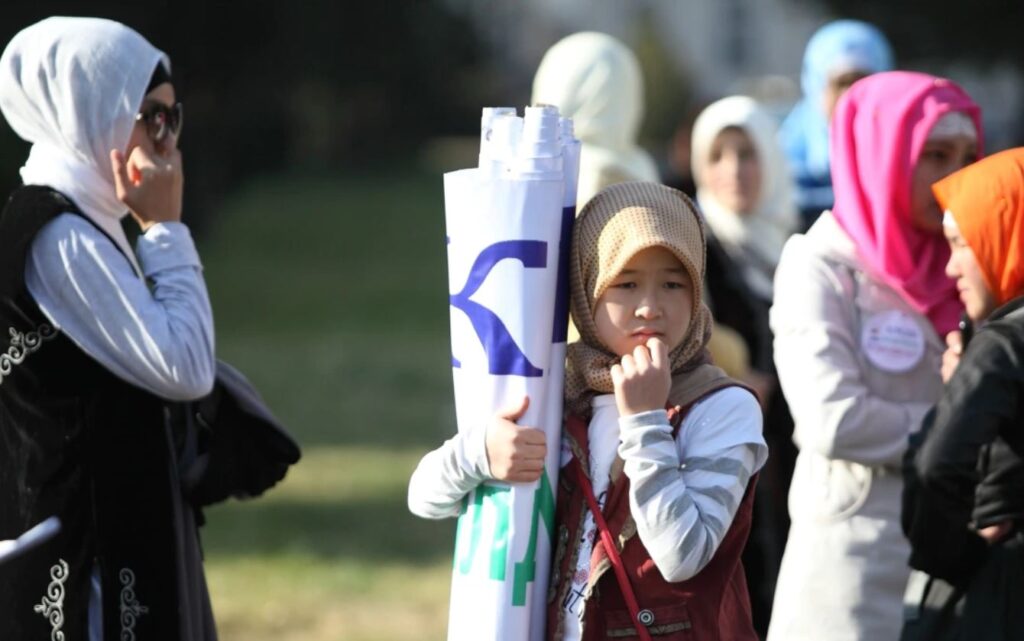
The Kazakh authorities are once again trying to restrict the wearing of religious clothing — hijabs and niqabs — in public places. There have been heated discussions on social media, and Muslim women have appealed to President Kassym-Jomart Tokayev himself.

The hijab (headscarf) has long become an everyday accessory, and today, the secular part of society is trying to prevent its wearing in schools. However, women wearing niqabs — a long, usually black cape that covers the face — are increasingly common on the streets. Many Kazakhs consider the niqab categorically unacceptable.

The issue of wearing religious clothing in public places may be considered in Kazakhstan’s parliament, said Yermurat Bapi, a member of the Mazhilis (lower house of parliament).

“Now, the most important issue for us is to preserve our country’s national interests, traditions, and culture. And if we look at the current situation, more Kazakhs are dressed in black in society. This situation seriously harms our future national interests,” Bapi said.

“That is why we, a group of deputies, have prepared such a bill. It will be submitted to the Parliament at the fall session. I think that the issue of hijab, niqab, and other religious clothing in society will be solved after its adoption. Then we will be able to regulate the issues of religious dress in some way,” he added.

In May this year, President Tokayev spoke sharply about covered faces. “Dressing in all black contradicts the worldview of our people, is thoughtless copying of foreign norms, conditioned by religious fanaticism. We must not break away from our spiritual roots and erode our national identity,” he said.

Also, in October 2023, Minister of Culture and Information Aida Balayeva said that the new law on religion will prohibit wearing religious clothing in public places.

Kazakhstan has been trying to solve the problem of wearing religious clothing in schools, universities, courts, and other organizations for years. In the past, the ban on wearing hijabs to school repeatedly caused clashes between school administrations, akimats (mayor’s offices), and parents of female students. For example, in Atyrau region in 2023, more than 150 girls refused to attend classes without a hijab. As the Ministry of Education explained, the parents were spoken with, after which the children returned to classes.

Experts believe the hijab and niqab have become fashion elements imposed by foreign influences alien to Kazakhstanis. However, local theologians are virtually unanimous: Kazakh women have never covered their faces.

“After gaining independence, our youth began to study in foreign educational institutions and began to instill in our people certain clothes and dress codes, which were abroad: in Pakistan, Saudi Arabia, and other Muslim countries. These are their customs, especially about covering the face. Popularly it is called a burqa — a headscarf with slits for the eyes — but in Arabic it is called a niqab. The niqab, which completely covers the face, is generally unacceptable for our people, and our people do not use it. Today, in some regions of our country, we sometimes see such movements in the streets. But our people have never dressed in black robes,” the well-known imam and theologian Nurlan Baizhigituly said.

Political analysts emphasize an important aspect of domestic politics related to wearing non-traditional religious clothing in Kazakhstan.

“Judging by the public discussions that have begun, the new Law “On Religious Activity and Religious Associations” will introduce a norm on the prohibition of wearing religious clothing that covers the face in public places. And this is a correct measure that should have been implemented long ago. First of all, there is an extremely important issue of ensuring public safety — for some people, niqabs may well be a way of disguise for destructive and criminal purposes. Secondly, it is time to put a real and practical barrier to the spread of the radical ideology of non-traditional pseudo-Islamic movements,” political scientist Urazgali Selteev said on social media.

“I am sure that any cross-section of public opinion will show dominant support in favor of this legislative measure. However, the implementation process will require firmness from the authorities. We must be prepared for massive information pressure from both external actors and internal ones, which have an active pseudo-Muslim lobby in many spheres in our country. In all likelihood, there will be a lot of information throw-ins, bloggers instigating conflicts in social networks, etc. But here, the state should not retreat in any case,” Selteev added.

Sources said the pressure has already begun. Kazakhstani lawyer Diana Meyrbek published an appeal to Tokayev over a planned ban on religious dress. On behalf of an unspecified number of Muslim women in Kazakhstan, she took offense to the Parliament’s intention to pass a law regulating the wearing of relevant paraphernalia.

“Banning the hijab violates freedom of conscience, religion, speech, and expression. Women who wear the hijab do so within the framework of their religious beliefs and cultural traditions, and their right to self-expression should be protected,” Ulysmedia.kz quoted Meyrbek.

In the fall of 2023, Uzbek President Shavkat Mirziyoyev signed a law prohibiting the wearing of the niqab in public places. The violation is punishable by a fine of more than $800. It is prohibited to cover the face in most European countries, as well as in some countries with a large Muslim population, such as India.

Kyrgyz-German Business Forum

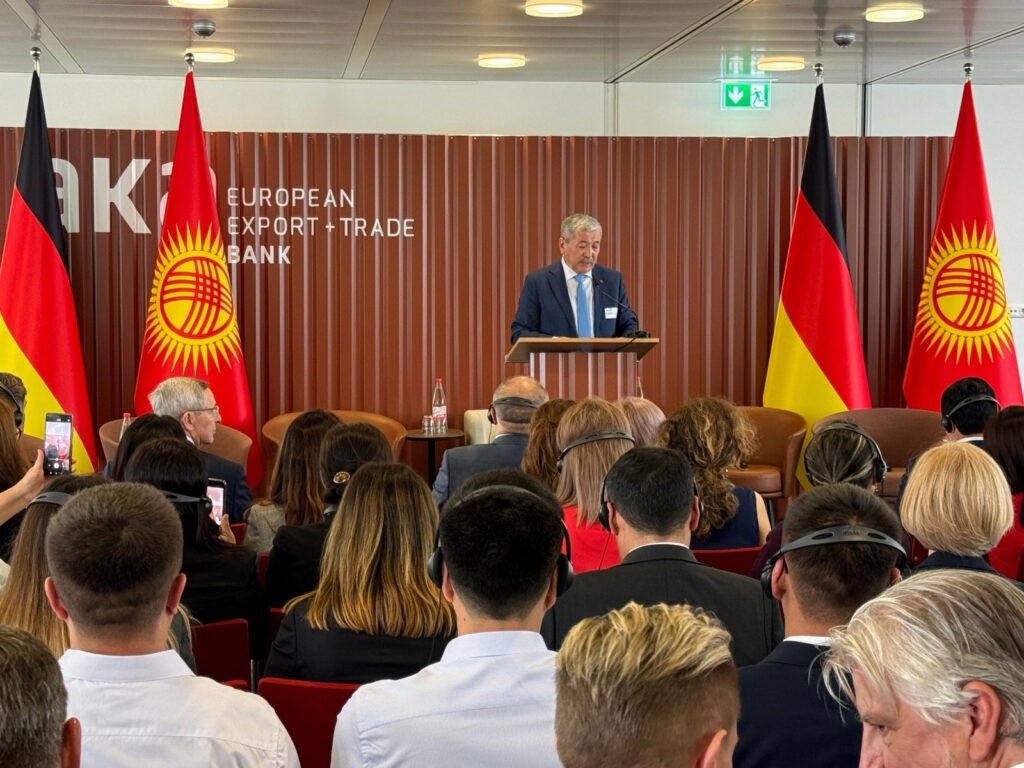
On June 20, First Deputy Chairman of the Cabinet of Ministers of the Kyrgyz Republic Adylbek Kasymaliev presided over a Kyrgyz-German business forum hosted by Frankfurt am Main.

Kasymaliev noted that during 32 years of bilateral cooperation, his country’s German partners have implemented several socially significant projects in Kyrgyzstan, including the establishment of an Anti-TB Clinic and a Perinatal Center in Bishkek.

Referencing the facts from 2019-2023, bilateral trade turnover had increased 5.5-fold and over 180 joint Kyrgyz-German enterprises currently operate in Kyrgyzstan, first deputy prime minister emphasized that “the potential of cooperation between the two countries has not been fully realized.”

Calling on German businesses to further their investment in projects in Kyrgyzstan, Kasymaliev stated, “The undertaken fiscal reforms have made it possible for Kyrgyzstan to instigate the most liberal tax regime in Central Asia”, to the great advantage of German companies and entrepreneurs investing in joint ventures.