• KGS/USD = 0.01144 0%
  • KZT/USD = 0.00193 -0%
  • TJS/USD = 0.10811 -0.28%
  • UZS/USD = 0.00008 0%
  • TMT/USD = 0.28490 0%
  • KGS/USD = 0.01144 0%
  • KZT/USD = 0.00193 -0%
  • TJS/USD = 0.10811 -0.28%
  • UZS/USD = 0.00008 0%
  • TMT/USD = 0.28490 0%
  • KGS/USD = 0.01144 0%
  • KZT/USD = 0.00193 -0%
  • TJS/USD = 0.10811 -0.28%
  • UZS/USD = 0.00008 0%
  • TMT/USD = 0.28490 0%
  • KGS/USD = 0.01144 0%
  • KZT/USD = 0.00193 -0%
  • TJS/USD = 0.10811 -0.28%
  • UZS/USD = 0.00008 0%
  • TMT/USD = 0.28490 0%
  • KGS/USD = 0.01144 0%
  • KZT/USD = 0.00193 -0%
  • TJS/USD = 0.10811 -0.28%
  • UZS/USD = 0.00008 0%
  • TMT/USD = 0.28490 0%
  • KGS/USD = 0.01144 0%
  • KZT/USD = 0.00193 -0%
  • TJS/USD = 0.10811 -0.28%
  • UZS/USD = 0.00008 0%
  • TMT/USD = 0.28490 0%
  • KGS/USD = 0.01144 0%
  • KZT/USD = 0.00193 -0%
  • TJS/USD = 0.10811 -0.28%
  • UZS/USD = 0.00008 0%
  • TMT/USD = 0.28490 0%
  • KGS/USD = 0.01144 0%
  • KZT/USD = 0.00193 -0%
  • TJS/USD = 0.10811 -0.28%
  • UZS/USD = 0.00008 0%
  • TMT/USD = 0.28490 0%
10 December 2025

Kazakhstan Seeks U.S. Cooperation to Develop Critical Minerals

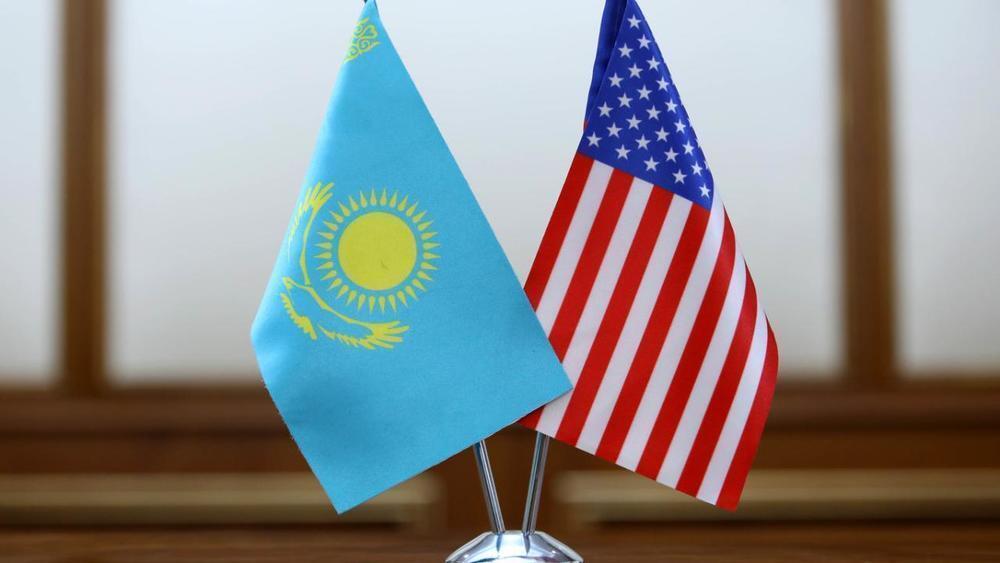
During a visit to the United States on March 1st, Kazakhstan’s Minister of Industry and Construction, Kanat Sharlapaev met David Applegate, director of the U.S. Geological Survey, to discuss expanding bilateral cooperation regarding mineral deposits in Kazakhstan.

Of Kazakhstan’s 50 types of minerals, 17 were identified by the U.S. Geological Survey as critical.

As reported by Sharlapaev, the key aims of future collaborations are attracting investment in geological exploration, mining, and the processing of rare and rare-earth metals, as well as facilitating Kazakhstan’s integration to the global market through cutting-edge technologies and expertise.

Speaking at a roundtable discussion at the U.S. Chamber of Commerce with members of the Kazakh-American Business Council (USKZBC) and representatives of American companies, the minister outlined the benefits afforded by consolidating the partnership between Kazakhstan and the USA.

Emphasis was placed on the strategic potential of mining rare and rare earth metals and the development of related industries. In particular, he cited the importance of creating a cluster of industries in Kazakhstan to produce raw materials for batteries, including nickel, cobalt, manganese, and lithium and with reference to reforms on the use of subsoil to attract investment, encouraged US mining companies to participate in forthcoming auctions in Kazakhstan.
EBRD Announces Third Stage of Funding for Green Projects in Kyrgyzstan

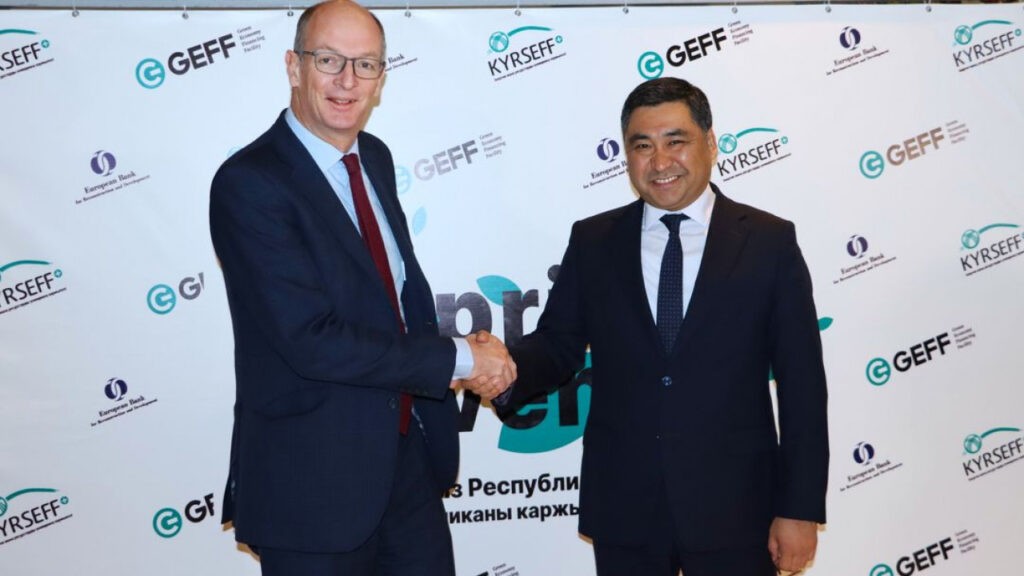
On 29th February, Mark Bowman, Vice President of The European Bank for Reconstruction and Development (EBRD) visited Bishkek to announce a new partnership with Demir Kyrgyz International Bank, FINCA Bank Kyrgyzstan, and Kyrgyz Investment and Credit Bank.

Applauding their commitment, Bowman said, “We welcome partner banks to KyrSEFF III and their participation in our third green financing facility in the Kyrgyz Republic to help address pressing environmental challenges. For more than 10 years, the EBRD, local financial institutions and the authorities have worked together to promote a greener future for the country. We look forward to building on this success.”

Kyrgyzstan’s Minister of Economy and Commerce, Daniyar Amangeldiev expressed gratitude to the EBRD for supporting the KyrSEFF program, which has so far invested more than $55 million in 3,355 energy efficiency projects in Kyrgyzstan.

While previous initiatives focused mainly on energy and resource efficiency, the new Green Economy Financing Facility KyrSEFF III has expanded its remit by investing a further $50 million to support climate resilience and adaptation, reduce pollution and promote the sustainable use of water.

Loans will be offered to relevant small and medium-sized businesses as well as households across the country. Finance will also be available to retailers and producers of material and equipment covered by the KyrSEFF Technology Selector, an online database of energy-saving technologies.

A New Railway Project for China, Kyrgyzstan and Uzbekistan

On March 1st, Akylbek Japarov Chairman of the Cabinet of Ministers of the Kyrgyz Republic, Abdulla Aripov Prime Minister of Uzbekistan and Ma Xingrui Communist Party Secretary of China’s western Xinjiang Uygur Autonomous Region, met in Kashgar (Xinjiang) to discuss the construction of the China-Kyrgyzstan-Uzbekistan railway.

Japarov first praised the incentive for its potential to strengthen the development of trade and economic cooperation between the three countries and reported that a jointly funded feasibility study of the project had already been developed and approved.

Uzbekistan’s Prime Minister Aripov expressed his country’s interest in developing multimodal transport routes to support the joint construction of the China-Kyrgyzstan-Uzbekistan railway.

Addressing the insufficient throughput capacity of the Irkeshtam checkpoint on the Kyrgyz-Chinese border, Japarov stated, “increasing the volume of cargo throughput at the Irkeshtam checkpoint is an issue relevant to both the Kyrgyz and Chinese sides, as well as the Uzbek side. It is therefore important that all checkpoints are modernized and equipped with updated means of customs control.”
He then reported that new customs inspection complexes at the Irkeshtam and Torugart checkpoints to be installed this year, will allow up to 125 vehicles per hour to cross the border, and added that the Kyrgyz side aims to increase the throughput capacity of these checkpoints to 1,000 vehicles per day.

In the interest of developing trade and economic ties, the Secretary of Xinjiang’s Party Committee welcomed the Kyrgyz Prime Minister’s proposals and supported his stance that Xinjiang is perceived as a gateway to China from Kyrgyzstan and in turn, several other Central Asian countries.

Przewalski’s Horses to Return to Kazakhstan

In Astana on February 29th, Roman Vassilenko, Kazakhstan’s Deputy Minister of Foreign Affairs, met with a Czech delegation led by Miroslav Bobek, director of Prague Zoo, to discuss the reintroduction of Przewalski’s horses to Kazakhstan.

“We have just begun a new chapter on the return of the last wild horses to their natural habitats,” explained Bobek. “Following the success of the horses’ reintroduction to Mongolia, where the population is now thriving, we were approached by the government of Kazakhstan for the same purpose.”

Under an agreement made during a visit to Astana in April 2023 by the Czech Republic’s Prime Minister Petr Fiala, the ‘Return of the Wild Horses Project’ aims to relocate some forty horses from Europe and over five years, increase their population in the Kazakh steppe ecosystem.

The Kazakh Ministry of Ecology and Natural Resources reported that two Czech Air Force aircraft carrying the first eight horses are scheduled to arrive on June 2nd from Prague and Berlin. They will then be transported to the Altyn Dala state natural reserve in the Kostanay region.

The Przewalski horse named after the Russian who discovered it and known as ‘takhi’ in Mongolia, is a rare and endangered species. Originally found on the steppes of Central Asia, it had disappeared from the wilds by the sixties. Thanks to special breeding programmes in European zoos, the breed was saved from extinction and since the 1990’s, has been gradually resettled in its native lands.

French Company to Build a Solar Plant in Uzbekistan

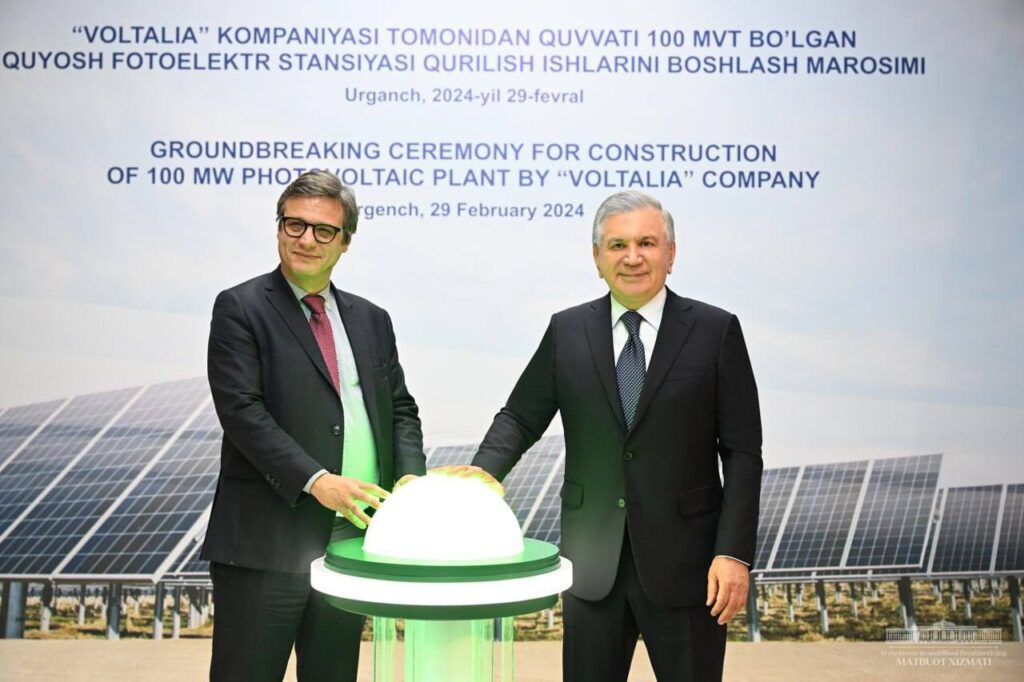
Attended by Uzbek President Shavkat Mirziyoyev, a ground-breaking ceremony for the construction of a solar power plant with a capacity of 100 megawatts took place in Uzbekistan’s Khorezm region on February 29th.

Built by the French company Voltalia, the new photovoltaic plant will generate 254 million kilowatt-hours of green energy per annum and increase the volume of electricity generated in Khorezm by 30%.
In addition to providing 11% of the region’s annual electricity consumption by the end of the year, the new plant will save 76 million cubic meters of natural gas and prevent the release of 106 thousand tons of harmful substances into the atmosphere.

The project will also harness agrovoltaics technology and by combining energy production and agriculture, allow crops to be grown under solar panels for the first time in Uzbekistan.

In discussion with Sébastien Clerc, CEO of Voltalia, President Mirziyoyev emphasized his support of both the Khorezm project and the construction of a hybrid power plant in the Bukhara region, and reiterated the extent to which such innovative projects strengthen multifaceted cooperation between Uzbekistan and France.

Kyrgyzstan Becomes an Industrial Producer of Black Caviar

Until recently Kyrgyzstan has not produced or exported black caviar — but by the end of 2024 the republic will have made several tons of it.

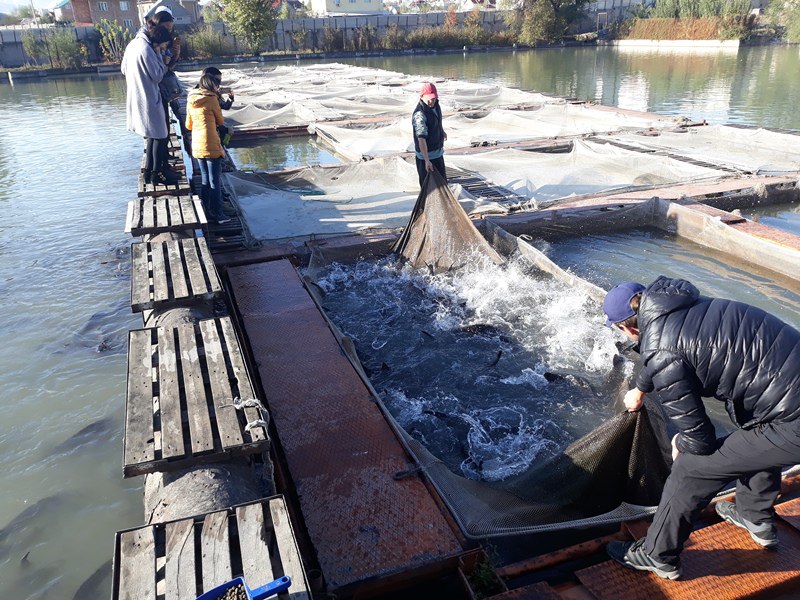
Today Kyrgyzstan is breeding different species of sturgeon fish, which produce black caviar. Female fish purchased 4-5 years ago have now reached sexual maturity, and can produce a high volume of black caviar. Fish farm owners believe it is much cheaper to produce caviar in Kyrgyzstan than in Kazakhstan or Russia because of the better climatic conditions.

“Sturgeon [reach maturity] in 4-5 years in our country, while in Russia it takes 8-10 years,” the Kyrgyz fisheries association commented. One of Kyrgyzstan’s fish companies said that as of a week ago, the country was not on the world’s black caviar production lists. But today they are already harvesting caviar using the so-called ‘lifetime method’. That means the caviar is simply squeezed out of a live fish. Therefore, from one fish it’s possible to harvest caviar several times over the fish’s lifetime. According to the producers, such caviar is usually larger in size and discernible by taste.

“At the moment we are not talking about dozens, but hundreds of kilograms of caviar. By the end of 2024, tons of products will be produced, which will soon be available for sale on the shelves of domestic stores. At the moment, work is underway to produce cans and stickers,” said Kyrgyz meat company ichthyologist Alexander Dytynyak.

Meanwhile, black caviar exports from Kyrgyzstan to Russia have already begun. According to Russian Customs Service data, black caviar from Kyrgyzstan was not supplied to the Russian market at all until 2022, when 1.7 tons of it were sent.

Experts from the food oversight agency Rosselkhoznadzor suspect that the caviar supplied to Russia is not actually produced in Kyrgyzstan, but is re-exported from Europe. To verify these speculations, the Russian inspection body inspected Kyrgyz fish farms last year. However, not all enterprises agreed to let Russian specialists in. “The refusal to participate in the inspection confirms the validity of Rosselkhoznadzor’s claims and the possibility of supplying products from third countries under the guise of Kyrgyz products,” the Russian agency reported.

Last year, representatives of the European Union (EU) also noted the growth of caviar exports from Europe to Kyrgyzstan. According to them, after the introduction of economic sanctions against Russia, exports of the delicacy from Europe to Kyrgyzstan increased many times over.