• KGS/USD = 0.01144 0%
  • KZT/USD = 0.00194 -0%
  • TJS/USD = 0.10877 -0%
  • UZS/USD = 0.00008 0%
  • TMT/USD = 0.28571 0%
  • KGS/USD = 0.01144 0%
  • KZT/USD = 0.00194 -0%
  • TJS/USD = 0.10877 -0%
  • UZS/USD = 0.00008 0%
  • TMT/USD = 0.28571 0%
  • KGS/USD = 0.01144 0%
  • KZT/USD = 0.00194 -0%
  • TJS/USD = 0.10877 -0%
  • UZS/USD = 0.00008 0%
  • TMT/USD = 0.28571 0%
  • KGS/USD = 0.01144 0%
  • KZT/USD = 0.00194 -0%
  • TJS/USD = 0.10877 -0%
  • UZS/USD = 0.00008 0%
  • TMT/USD = 0.28571 0%
  • KGS/USD = 0.01144 0%
  • KZT/USD = 0.00194 -0%
  • TJS/USD = 0.10877 -0%
  • UZS/USD = 0.00008 0%
  • TMT/USD = 0.28571 0%
  • KGS/USD = 0.01144 0%
  • KZT/USD = 0.00194 -0%
  • TJS/USD = 0.10877 -0%
  • UZS/USD = 0.00008 0%
  • TMT/USD = 0.28571 0%
  • KGS/USD = 0.01144 0%
  • KZT/USD = 0.00194 -0%
  • TJS/USD = 0.10877 -0%
  • UZS/USD = 0.00008 0%
  • TMT/USD = 0.28571 0%
  • KGS/USD = 0.01144 0%
  • KZT/USD = 0.00194 -0%
  • TJS/USD = 0.10877 -0%
  • UZS/USD = 0.00008 0%
  • TMT/USD = 0.28571 0%
16 December 2025

Child Brides and Forced Marriages Among Gender Equality Topics

Kyrgyz Ombudsman Dzhamilya Dzhamanbaeva met with USAID’s Senior Global Coordinator for Gender Equality and Women’s Empowerment, Jamille Bigio in Bishkek. According to the ombudsman’s office, the parties discussed important issues in the protection of freedoms and human rights. The key topics of conversation were reportedly the problem of early marriage among women in Kyrgyzstan, and the protection of children’s rights. The ombudsman’s office cited an example of a 15-year-old girl being married against her will to a much older man.

“There is an urgent need to support victims of early marriages, because they are exposed to domestic violence… For example, a 23-year-old mother of three approached the Ombudsman Institute complaining of domestic violence. As it transpired, she had been forcibly married at age 15 to a man three times her age,” Dzhamanbaeva said.

The ombudsman stated that her office receives many appeals from girls complaining about domestic violence, and its review has revealed facts about forced early marriages. According to the Institute, such egregious facts are not isolated in Kyrgyzstan, and there is a need for the government to take measures to prevent them.

In the past, human rights activists have repeatedly stated that the police are reluctant to consider cases of domestic violence, because the spouses very often reconcile, and the victim withdraws her statement. Furthermore, the Supreme Court has recognized that police systematically fail to prosecute domestic violence cases, “because of widespread misconceptions and gender stereotypes present at all levels of law enforcement and judicial systems.”

“The police often see no need to intervene in what they consider to be ‘private matters,’ and do not recognize domestic violence as acts requiring preventive measures or investigation,” noted a Kyrgyz Supreme Court report. As a result, law enforcement officials often try to dissuade victims from filing a formal complaint.

The situation is similar regarding the practice of bride kidnapping. However, under public pressure, in 2019 the Kyrgyz authorities toughened the punishment for kidnapping girls in order to marry them. According to the criminal code, this offense now carries a prison sentence of 5 to 10 years. Additionally, the fine for forcing girls under the age of 17 into marriage can be up to 200,000 som ($2,200).

The ombudsman also said a new bill is being drafted to strengthen the mandate of the ombudsman’s office and allow representatives to participate in closed-court sessions involving children. “Currently, the institute’s employees are not allowed to attend such sessions, [as per] the criminal code. In this regard, we have no opportunity to ensure the protection in court of the rights of children who have been abused. With the adoption of the new law, we will be able to monitor closed trials,” the ombudsman emphasized.

USAID’s representative, Bigio noted the importance of strengthening cooperation on the protection of children’s rights and the development of mechanisms to protect against early marriage, saying that USAID is ready to continue to cooperate with the government of Kyrgyzstan, authorized bodies and human rights defenders and to provide all of them with all necessary support. According to Bigio, her office also supports the efforts of the Kyrgyz ombudsman to become a bridge between civil society and the authorities.

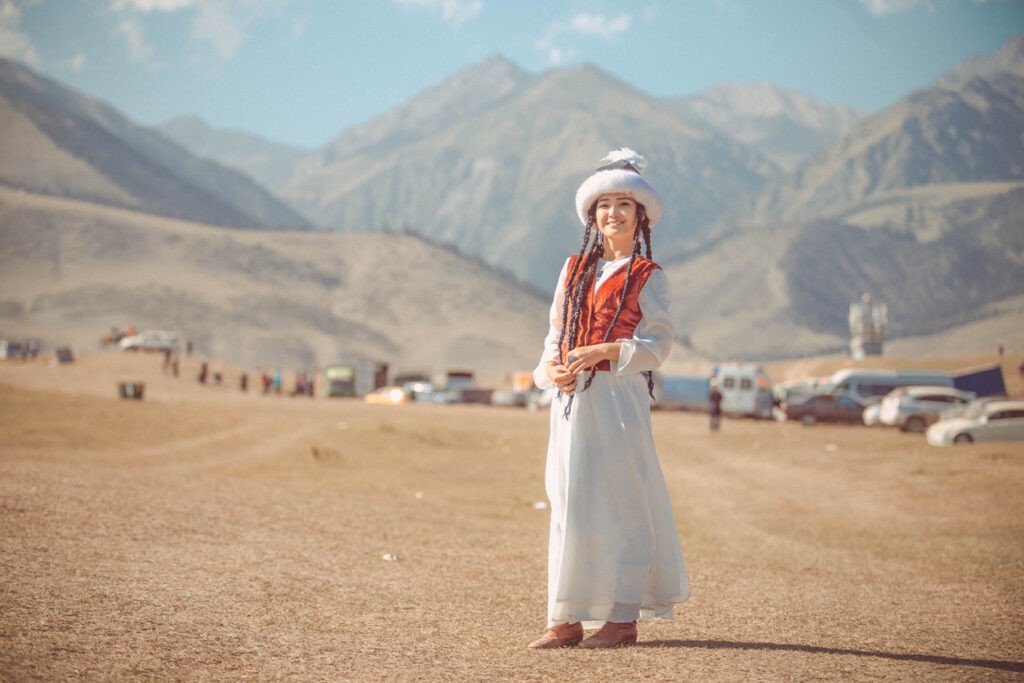
Simpler than courtship and circumventing the bride price (dowry), Ala-Kachuu – ‘take and flee’ – is a ritual form of bride kidnapping prevalent throughout Central Asia, but particularly prevalent in Kyrgyzstan. Traditionally whisked away on horseback, or these days more often stuffed into the back of a car by the prospective groom, future in-laws then try to calm the girl and coax her into putting on the jooluk, the white wedding shawl of submission.

Whilst the waters are muddy as the appellation covers both abduction and elopement, in 2005 the New York Times estimated that over half of Kyrgyzstan’s married women were snatched from the street by their husbands, hence the adage, “every good marriage begins in tears.” In a victimization survey conducted in Kyrgyzstan in 2015, out of the surveyed married women, 14% disclosed experiencing kidnapping, with a notable revelation being that approximately two-thirds of these instances were consensual. In these cases, the women were familiar with the man, involved and had agreed to the abduction in advance.

The practice of bride kidnapping takes another twist in Turkmen culture. Meticulously planned, weddings involve a long-winded back and forth between families, each part of the process having an attached ritual. Even after the parents reach an accord, aunts and sisters-in-law must still visit the prospective groom’s family to establish good relations. When the nuptial day is finally set, the girl’s family traditionally sing one of many ceremonial songs.

We’ve seen our future son-in-law. He doesn’t look worse than our girl, ya-ya.
We’ve tasted their dish, ya-ya. It’s better than grapes, ya-ya.

Despite all the pre-arrangements, the suitor must still pursue and capture the bride, which often takes the form of a high-speed car chase.
Uzbekistan, Azerbaijan Move to Simplify Travel Rules for Each Other’s Citizens

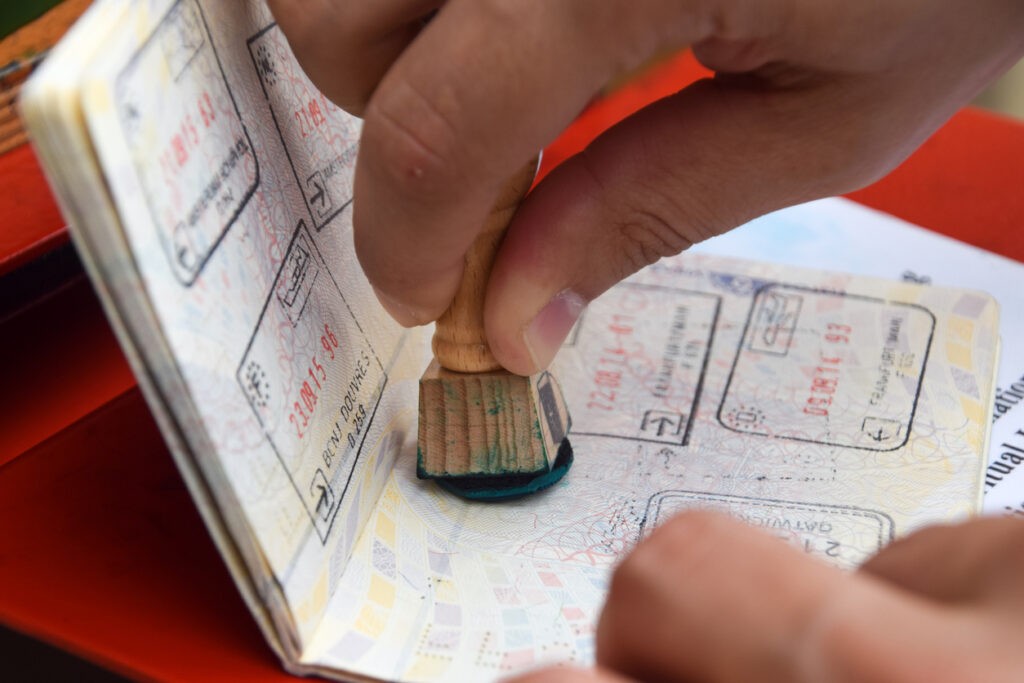
Citizens of Uzbekistan will now be able to stay in Azerbaijan without registration for up to 15 days, according to Uzbekistan’s Ministry of Internal Affairs. The same rules apply to citizens of Azerbaijan in Uzbekistan, due to a protocol entering into force that amends an agreement between the government of Azerbaijan and Uzbekistan on visa-free travel. Previously, the period of stay without registration in Uzbekistan was five days, and in Azerbaijan for Uzbeks — 10 days.

The visa-free regime between Uzbekistan and Azerbaijan is already in force: Uzbeks can stay in Azerbaijan for no more than 90 days, and Azeris in Uzbekistan for no more than 30 days.

In August of last year, Uzbek president Shavkat Mirziyoyev visited Azerbaijan following his re-election and signed a document on the establishment of the Supreme Interstate Council between the two countries with his counterpart, Azeri President Ilham Aliyev

A key component of bilateral cooperation is logistics. Currently the countries are discussing the creation of a logistics company within the Trans-Caspian corridor — and building warehouse infrastructure and logistics centers in the ports of Baku and those located in third countries.

The two countries actively cooperate in many spheres, as evidenced by the sharply increasing trade turnover between the two republics: it has grown by 40% since the beginning of 2023. The two countries plan to increase bilateral trade to $1bn annually. This will be facilitated in part by the Uzbek-Azerbaijani investment fund,  which now has authorized capital of $500m. Three-quarters of that capital is slated to go to Azerbaijan, with a quarter for Uzbekistan. Today, over 200 companies operate in Uzbekistan with Azerbaijani investments.

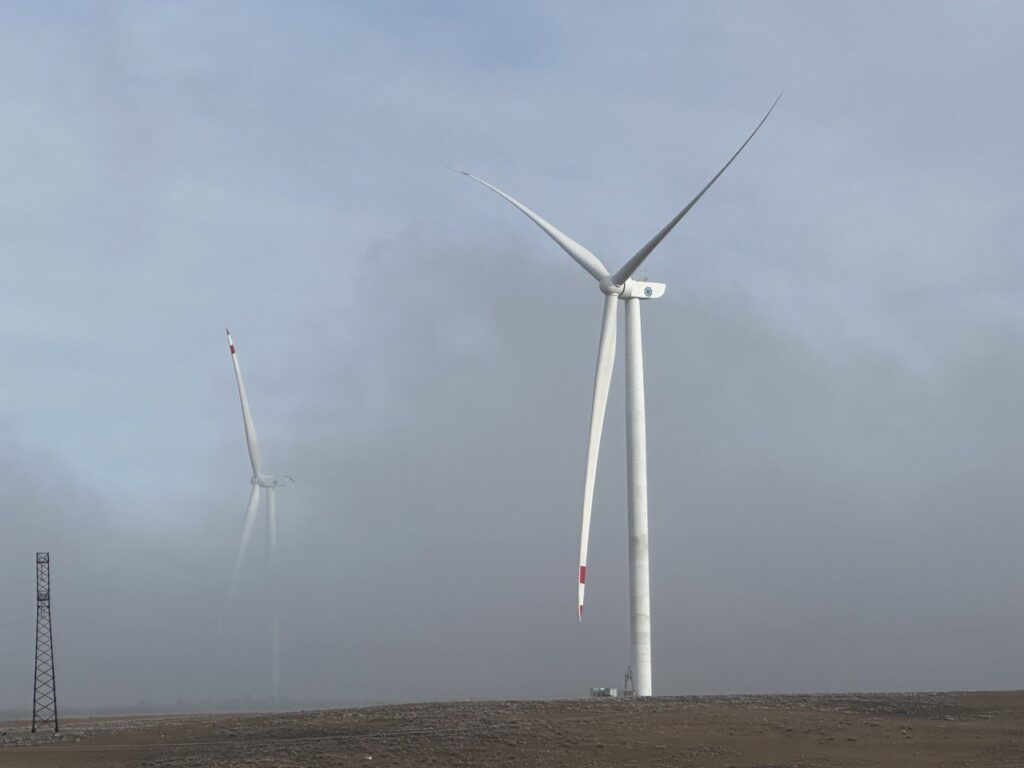
Uzbekistan Builds First Wind Farm

A wind power plant with a capacity of 500 MW is being built by the UAE company Masdar in Uzbekistan’s Navoi region. The first 100 MW of the plant was put into operation in December 2023, and since then the wind farm has generated 31 million kWh of electricity – equivalent to the monthly consumption of over 150,000 Uzbek households, the Ministry of Energy has said. 

During this short period, the wind farm has saved 9.4 million cubic meters of natural gas and prevented the emission of 13,000 tons of harmful substances into the atmosphere.

The next 200 MW of the wind farm will be commissioned before the end of this year, and it will be operational at full design capacity in 2025.

Wind turbines with a capacity of 4.7 MW from China’s Goldwind are being installed at the site. To date, 34 of a total of 111 turbines have been installed. 

Global Ecological Connectivity Partnership Launches in Uzbekistan

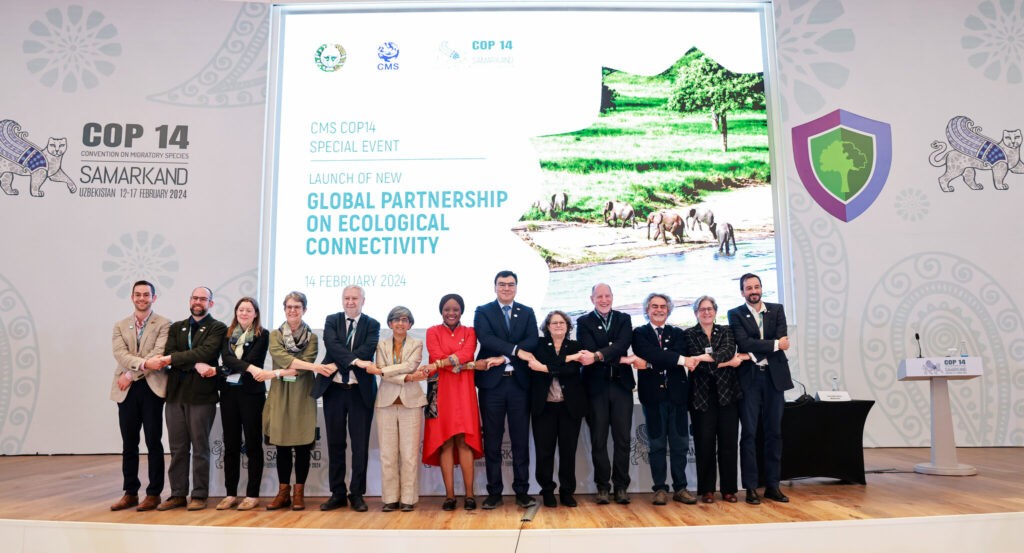
The Global Partnership on Ecological Connectivity (GPEC) — a major new initiative to ensure that areas that are important to migratory animals are identified, protected and connected — was launched on February 14th on the margins of the 14th Meeting of the Conference of the Parties to the Convention on the Conservation of Migratory Species of Wild Animals in Samarkand, Uzbekistan. 

The Convention on Migratory Species (CMS) is an environmental treaty of the United Nations that provides a global platform for the conservation and sustainable use of terrestrial, aquatic and avian migratory animals and their habitats.  

Amy Fraenkel, the executive secretary for the CMS, commented: “The launch of this new global partnership is a direct and immediate response to some of the key recommendations of the flagship CMS report, the State of the World’s Migratory Species, released just two days ago at the opening of the conference. The report calls for increased actions to identify, protect, connect and effectively manage important sites for migratory species. This is exactly what this alliance is about, as it will ensure that actions to address ecological connectivity are mobilized around the world. GPEC’s objective is to ensure that ecological connectivity is maintained, enhanced, and restored in places of importance for migratory species of wild animals. But ecological connectivity is not just relevant to migratory species. It also plays a major role in addressing effective biodiversity conservation, land restoration and climate change mitigation and adaptation across terrestrial, freshwater, and marine ecosystems”. 

Aziz Abdukhakimov, the minister of ecology, environmental protection, and climate change of Uzbekistan, added: “Nature does not recognize man-made boundaries. Uzbekistan is acutely aware of this fact, as evidenced by the devastating effects of the Aral Sea’s depletion on humans and wildlife across Central Asia and beyond. By contributing to the CMS Global Ecological Connectivity program, Uzbekistan is participating in a worldwide effort to protect migratory species. This collaboration underscores Uzbekistan’s belief in the power of nature to unite nations, necessitating a collective effort to protect it.”

EBRD Acquires Stake in Air Astana

The European Bank for Reconstruction and Development (EBRD) on February 14th said it has invested $41.1m (€39m) into shares of Kazakhstan’s flagship carrier, Air Astana, supporting the country’s first partial privatization through an initial public offering (IPO). The EBRD’s investment represents a 5% shareholding in Air Astana.

The shares will be listed on both the London Stock Exchange and the Kazakhstan Stock Exchange. The IPO is a significant privatization benchmark for Kazakhstan’s economy, which is predominantly controlled by the state. 

The IPO funds, including the EBRD’s investment, will be used to support Air Astana’s fleet expansion and renewal program, the construction of an aircraft maintenance facility and the acquisition of a flight simulator, the EBRD press service said.

Air Astana plans to expand its current fleet to 80 aircraft by 2029 by acquiring new fuel-efficient planes.

The EBRD said it will be working with Air Astana towards achieving its target of becoming carbon neutral by 2050. The bank will also use this opportunity to play a greater role in the decarbonization of aviation and to assist in setting up the sustainable aviation fuels industry in Central Asia.

One Health Nature Conservation Project Launches in Central Asia

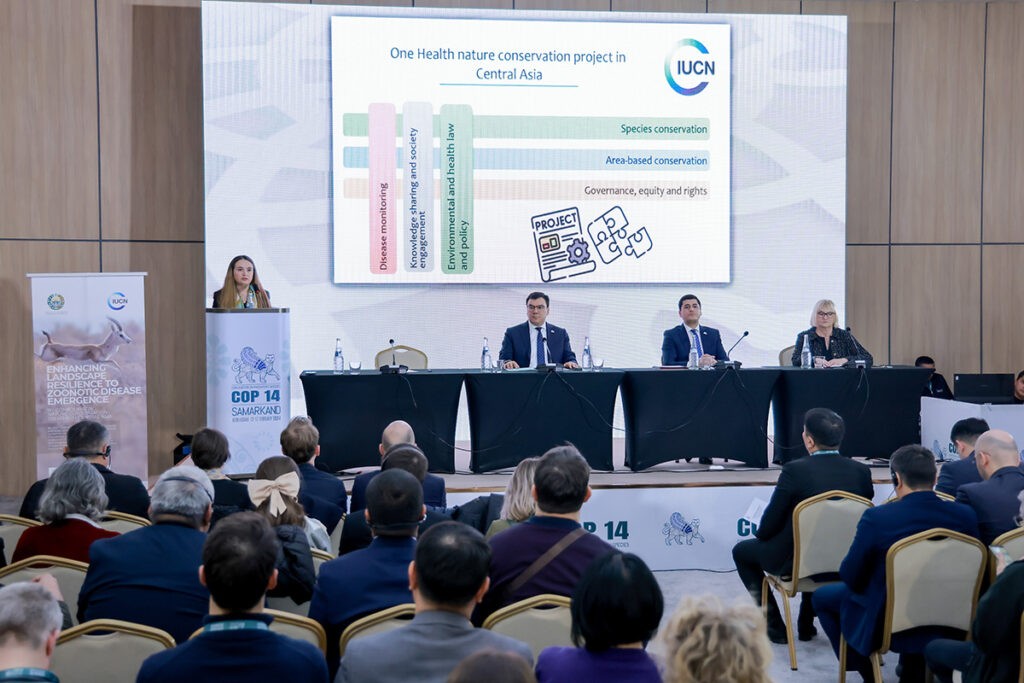
The International Union for Conservation of Nature (IUCN) and its international partners have launched the One Health Central Asia project, aiming to mitigate the risk of zoonoses – diseases that are naturally transmissible from animals to humans – in Central Asia. The new initiative was announced on February 13th at the 14th Conference of the Parties to the Convention on Migratory Species of Wild Animals (CMS COP14) in Samarkand, Uzbekistan. 

The risk of zoonotic diseases in Central Asia is exacerbated by biodiversity loss and changes in human-wildlife interactions. As part of the new initiative, IUCN and national and international partners, including all five Central Asian countries, will implement actions to prevent the emergence and spread of zoonotic diseases, IUCN reported on its website. 

The experts will work to consolidate a fair and effective regional network of protected and conserved areas, strengthen conservation measures and wildlife management for disease risk mitigation, and promote the latest advancements in zoonosis research and technology. 

Speaking at the launch ceremony, IUCN’s director general, Dr Grethel Aguilar, said that nature conservation can contribute to mitigating the risk of zoonotic disease outbreaks, and this important new initiative will strengthen the resilience of Central Asian landscapes, bringing numerous benefits to communities. “We will continue to support the governments here to build regional capacity to apply IUCN’s tools and standards, including the IUCN Green List, best practices in species management, and the latest advancements in zoonosis research.” 

Aziz Abdukhakimov, the minister of ecology, environmental protection, and climate change of Uzbekistan, commented that: “Over the past few years we have observed how the spread of zoonotic diseases like COVID-19 can have a global impact. This has resulted in entire countries being demobilized, transportation connections being disrupted, an increase in food security issues, and massive socio-economic consequences. We are committed to expanding regional cooperation for sustainable management of protected natural areas, preserving unique biological diversity, and contributing to the environmental balance in the Central Asian region, which will receive a significant boost through this project on One Health in nature conservation.” 

Supported by a €11m contribution from the German Ministry for Environment, Nature Conservation, Nuclear Safety and Consumer Protection via the International Climate Initiative, this major regional initiative will spearhead the One Health approach in Central Asia over the next six years. The initiative, entitled Enhancing landscape resilience to zoonotic disease emergence by consolidating nature conservation systems in Central Asia, will focus on the interconnectedness of human, animal, and environmental health.

“Obstacles to migration reduce the habitat available to migratory species. This phenomenon has been observed across Central Asia with species such as the Saiga, Wild Ass, and even those with relatively small ranges, like the Bukhara Deer,” said Amy Fraenkel, the executive secretary of the Convention on the Conservation of Migratory Species of Wild Animals (CMS), one of the international partners of the One Health Central Asia initiative. “In the diminished and fragmented habitats, migratory species of wild animals often find themselves in contact and competition with livestock for pasture and water which heightens the risk of transmission of disease between these sectors to the detriment of both. Therefore, preserving habitat connectivity not only helps in mitigating the risk of disease outbreaks in wildlife but also reduces the transmission of diseases between wildlife and livestock, and decreases the risk of zoonotic diseases i.e. those affecting humans.” 

Coordinated by IUCN, the One Health Central Asia initiative gathers international partners, including the Michael Succow Foundation, the Secretariat of the Convention of Migratory Species (CMS), UNEP World Conservation Monitoring Centre (WCMC), and the Zoological Society of London (ZSL). They will collaborate closely with national authorities and expert organizations across the region, such as CAMP Alatoo in Kyrgyzstan, the Institute of Zoology of Kazakhstan, the Institute of Zoology of the Uzbek Academy of Sciences, and the Tajikistan Nature Foundation.