• KGS/USD = 0.01144 0%
  • KZT/USD = 0.00193 -0%
  • TJS/USD = 0.10876 0.55%
  • UZS/USD = 0.00008 0%
  • TMT/USD = 0.28490 0%
  • KGS/USD = 0.01144 0%
  • KZT/USD = 0.00193 -0%
  • TJS/USD = 0.10876 0.55%
  • UZS/USD = 0.00008 0%
  • TMT/USD = 0.28490 0%
  • KGS/USD = 0.01144 0%
  • KZT/USD = 0.00193 -0%
  • TJS/USD = 0.10876 0.55%
  • UZS/USD = 0.00008 0%
  • TMT/USD = 0.28490 0%
  • KGS/USD = 0.01144 0%
  • KZT/USD = 0.00193 -0%
  • TJS/USD = 0.10876 0.55%
  • UZS/USD = 0.00008 0%
  • TMT/USD = 0.28490 0%
  • KGS/USD = 0.01144 0%
  • KZT/USD = 0.00193 -0%
  • TJS/USD = 0.10876 0.55%
  • UZS/USD = 0.00008 0%
  • TMT/USD = 0.28490 0%
  • KGS/USD = 0.01144 0%
  • KZT/USD = 0.00193 -0%
  • TJS/USD = 0.10876 0.55%
  • UZS/USD = 0.00008 0%
  • TMT/USD = 0.28490 0%
  • KGS/USD = 0.01144 0%
  • KZT/USD = 0.00193 -0%
  • TJS/USD = 0.10876 0.55%
  • UZS/USD = 0.00008 0%
  • TMT/USD = 0.28490 0%
  • KGS/USD = 0.01144 0%
  • KZT/USD = 0.00193 -0%
  • TJS/USD = 0.10876 0.55%
  • UZS/USD = 0.00008 0%
  • TMT/USD = 0.28490 0%
11 December 2025

Kazakhstan Searches For More Military Personnel

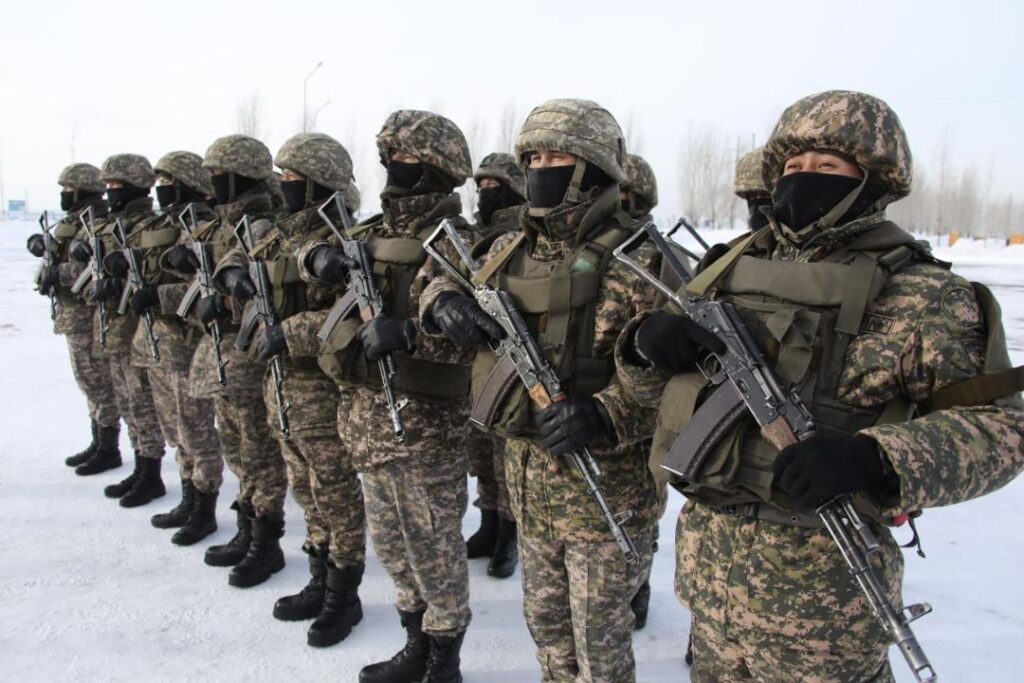
Kazakhstan’s army is suffering from a high outflow of staff, the country’s first deputy minister of defense, Sultan Kamaletdinov, announced at a parliamentary defense and security meeting on January 30th. 

Mr Kamaletdinov explained that between 2020 and 2023 over 17,000 military personnel had left the Armed Forces, mostly contract soldiers but including 4,300 commissioned officers. The deputy minister added that one of the reasons for the outflow is the soldiers’ relatively low salary.

The Ministry of Defense announced on January 31st that the ranks of the Kazakh army would be replenished by reserve commissioned officers who have not completed military service. These are university graduates, predominantly from technical courses, who receive the rank of lieutenant along with their diplomas.

This year 600 reserve officers will be drafted into the Armed Forces and 152 into the Border Guard Service, the National Guard, and the Ministry of Emergency Situations. Priority will be given to unemployed reserve officers.

In the 2024 Military Strength Ranking released by the Global Firepower agency, Kazakhstan ranked 58th of the 145 countries listed — the highest among Central Asian countries. Uzbekistan is in 65th place on the list, Turkmenistan 83rd, Kyrgyzstan 100th, and Tajikistan 107th.

Global Firepower ranks the nations of the world based on their current war-making capability across land, sea, and air.

Uzbekistan Gains Ground Against Corruption in Annual Perception Ranking

International non-governmental organization Transparency International has published its 2023 global ranking of corruption perception. For the last six years, Denmark has held first position, followed by Finland and New Zealand. It’s no coincidence that these countries hold the lead in the rule of law index, what with their well-established government and societal institutions and transparent justice systems. Somalia, Venezuela, Syria, South Sudan, and Yemen, which suffer from wars and/or social crises, close out the list.

According to the rating, Uzbekistan held 121st place out of 180 – rising five spots on the list in just one year. Over the past decade, the republic has improved its position by 16 spots, becoming the leader in terms of the rate of improvement across the entire index. Among Uzbekistan’s neighbors in Central Asia, only Kazakhstan, which ranks 93rd, is higher. In the region, Turkmenistan (170) has the worst record with corruption; Tajikistan is 162nd on the list, and Kyrgyzstan ranked 141st – tied with Russia.

According to Transparency International experts, the index revealed that many countries have made little progress in the fight against corruption.

Francois Valerian, chairman of Transparency International, said “corruption will continue to thrive as long as justice systems fail to punish wrongdoing and keep governments in check. When justice is bought or interfered with by political forces, people suffer. Leaders must fully invest in and guarantee the independence of institutions that uphold the law and fight corruption. It is time to end impunity for corruption.”
Transparency International began assessing and compiling the 180-country index in 1995. It’s calculated based on perceptions of public sector corruption. The company uses data from 13 external sources, including non-governmental consulting companies and think tanks, the World Bank, the World Economic Forum and others.

What Awaits the Media in Kazakhstan: Changes to the Draft Law on Mass Media

Radio Azattyk, one of the editorial offices of the U.S.Congress-financed media organization Radio Free Europe/Radio Liberty (RFE/RL), has sued the Ministry of Foreign Affairs of Kazakhstan for denial of accreditation. The case was transferred to the specialized district court of Astana. At the beginning of this year, 36 employees of the editorial office were not accredited. According to the government agency, the reason was due to fines and charges which the editorial staff  incurred for spreading false information in previous publications.

The lawsuit has coincided with the discussion of changes to the Law on the Mass Media in Kazakhstan. Rumors began to spread quickly on social networks and in some publications that the country was expected to significantly restrict the rights of media representatives.

Member of the Mazhilis, Nikita Shatalov described in a post on social media the updates that are intended for the law “On Mass Media,” stating that he intends to refute inaccurate information that has been leaked to the media. According to Shatalov, a ban on foreign media isn’t expected. The ban will apply only to those publications that work without accreditation. The only new point that will be introduced is the possibility of denial of accreditation in cases of a possible threat to national security emanating from a particular publication.

Shatalov specified that this rule is based on the law “On National Security,” which provides clear guidelines by which the presence or absence of a threat will be determined. This rule will be applied only to those foreign media which in some way or other have called for a violation of the Constitution of the Republic of Kazakhstan, or exacerbated unrest or security threats in the country.

The law will give foreign publications the opportunity to challenge the decision to refuse accreditation in court.

Pilot Public-Private Partnership Project to Modernize Power Distribution System

The International Finance Corporation (IFC) will help launch a project to rehabilitate, modernize and operate the outdated electricity distribution system in Samarkand using a public-private partnership. A local distribution system operator has been selected as the platform for the pilot project. Expansion of the project across the entire country is being considered in the future.

The Uzbek economy is one of the most energy-intensive economies in the world. On average, it consumes three times more energy for the same unit of GDP than other European and Central Asian countries. Uzbekistan’s outdated electricity transmission and distribution infrastructure leads to high losses across the power grid. Modernization and digitization of transmission and distribution systems will also enable the introduction of more green energy-generation capacity. This is especially relevant for renewable energy sources, such as solar and wind, as flexible smart systems can more easily adapt to their variable output.

Public-private partnership projects have in recent years become increasingly in demand in Uzbekistan. The plan is to implement such initiatives worth $14 billion by 2026. This will cover half of the country’s investment needs. With the help of foreign investment, Uzbekistan intends to develop its transportation, energy, agriculture, and social-services infrastructure.

Will Construction Of Kyrgyzstan’s “Chinese Railroad” Start This Year?

The China-Kyrgyzstan-Uzbekistan railroad construction project is the largest project in Kyrgyzstan’s transport sector, according to the authorities in Kyrgyzstan, and its implementation will help realize the transit potential of the republic while connecting it with the countries of southeast Asia.

The new railroad will be important not only for the three named countries through which it will pass; it will also shorten the route from East Asia to the Middle East and Southern Europe. The total length of the Kyrgyz branch will be 280 kilometers.

It’s worth noting that Beijing developed a feasibility study for this project back in the early 2000s, whereby the route was first determined. The Chinese study proposed building a shorter route across the territory of Kyrgyzstan, which would have been about 250 kilometers long. But the authorities in Kyrgyzstan at the time proposed lengthening the route by over 100 kilometers in order to add more villages to the route, thereby securing access to the economic benefits of the railroad for more citizens.

For the longest time, authorities in the three countries couldn’t agree on which gauge to set. This hinged on the fact that China, Turkey and Iran are building using the European gauge of 1.435mm, while Central Asian countries use the Russian standard of 1.620mm. As a result, the parties decided on a so-called transition from one gauge to the other. According to some reports, this transition will be located in Kyrgyzstan in the village of Kazarman. China will build its part of the railroad line to this settlement on its own. Financing for the Kyrgyz part of the railroad will be determined by the authorities in Kyrgyzstan in concert with their counterparts in Uzbekistan and other investors. The project’s cost is estimated at $4.7 billion.

In the future, Kyrgyzstan plans to connect the new route with the northern part of the railroad in order to re-export Chinese goods to Russia.

Chinese leader Xi Jinping recently hosted President Shavkat Mirziyoyev of Uzbekistan on a state visit to Beijing, where the two leaders discussed the China-Kyrgyzstan-Uzbekistan railroad, among other economic issues. In a conversation with his Uzbek counterpart, Xi Jinping noted that the countries should speed up negotiations and start construction of the railroad as soon as possible, which is a key component of China’s “One Belt, One Road” mega-project.

Forest Nurseries Created In Turkmenistan

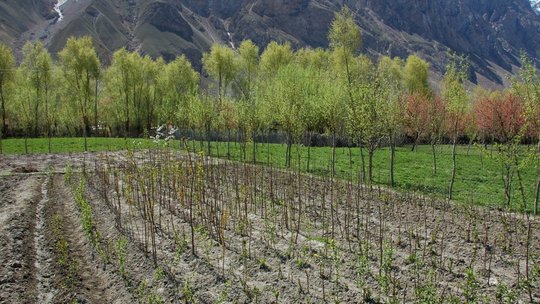
Two forest nurseries have been created in Turkmenistan’s Kopetdag State Reserve. One of the nurseries, two hectares in size, is located in the Kopetdag Mountains; the other, smaller site is in the Gyavers oasis area near the Karakum desert. The trees were planted as part of a joint ecology project between the UN’s Food and Agriculture Organization and the Turkmen Ministry of Environment.

The young forests will eventually contribute to restoring Turkmenistan’s forest resources, which is an important part of the country’s efforts to make its industrial sectors more sustainable. 

Forest nurseries grow and breed saplings and trees, as well as forest plants. The nurseries in Kopetdag and by the Karakum will also house nut and berry orchards, where pistachio, almond, hawthorn, blackberry, and cherry trees will be grown.

Expanding forested areas in mountainous parts of Turkmenistan is an effective way to reduce the impact of water erosion and prevent dangerous mudflows. It is also an important step in conserving biodiversity and preserving unique ecosystems.

Forest nurseries additionally contribute to improving yields from agricultural pastures, which in turn improves the welfare of local farmers.