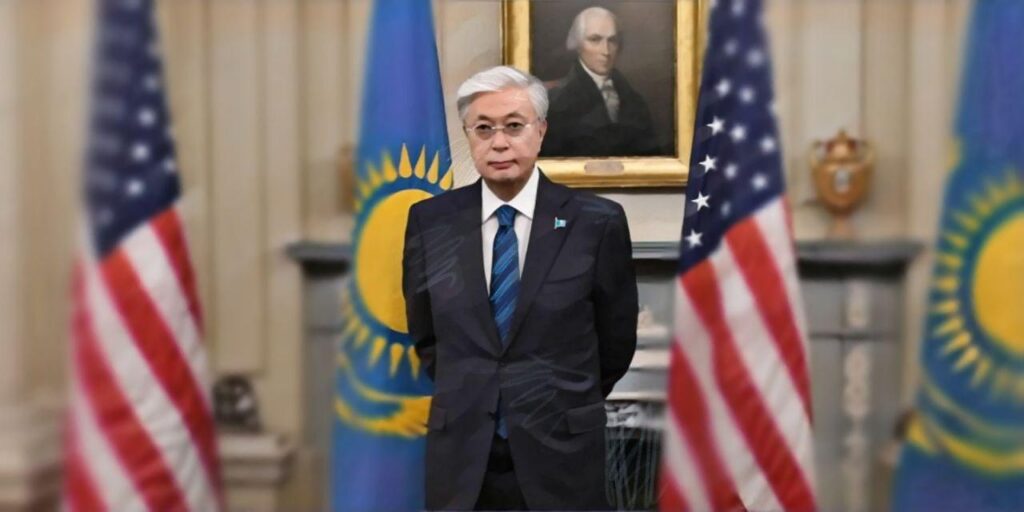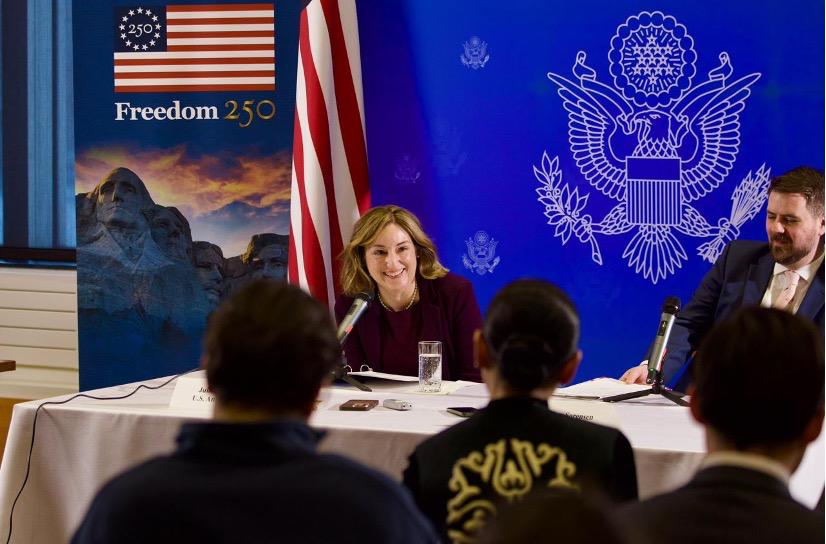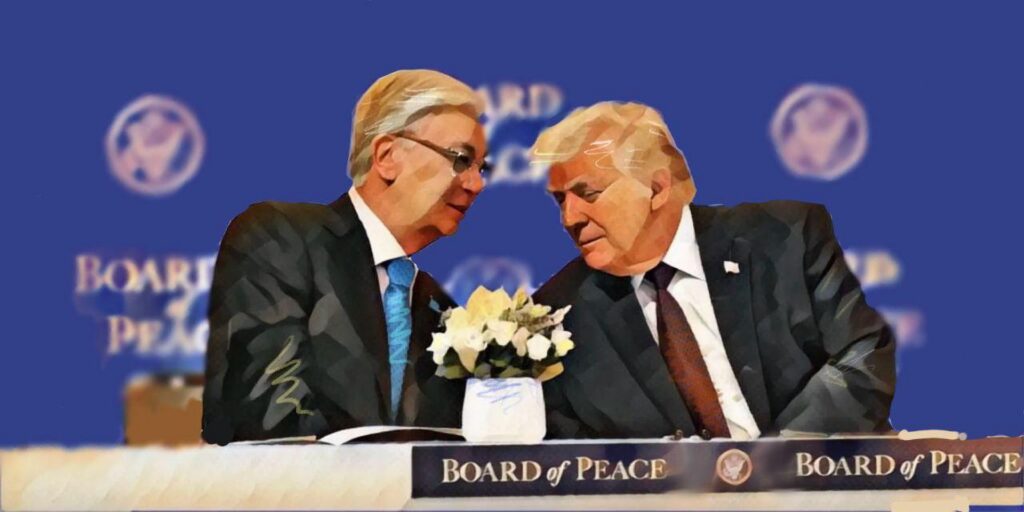
Kazakhstan’s relationship with the United States is entering a more explicitly strategic phase under Kassym-Jomart Tokayev, marked by a shift in how Astana manages its most consequential external partnerships. As economic ties deepen and geopolitical coordination expands across energy, investment, and Eurasian connectivity, engagement with Washington is increasingly being treated as a presidential priority rather than a routine diplomatic file.
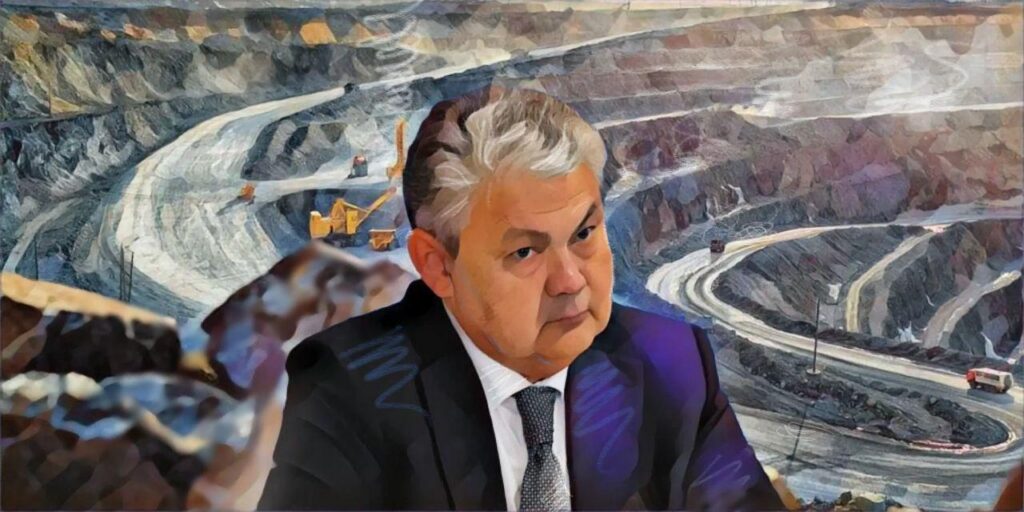
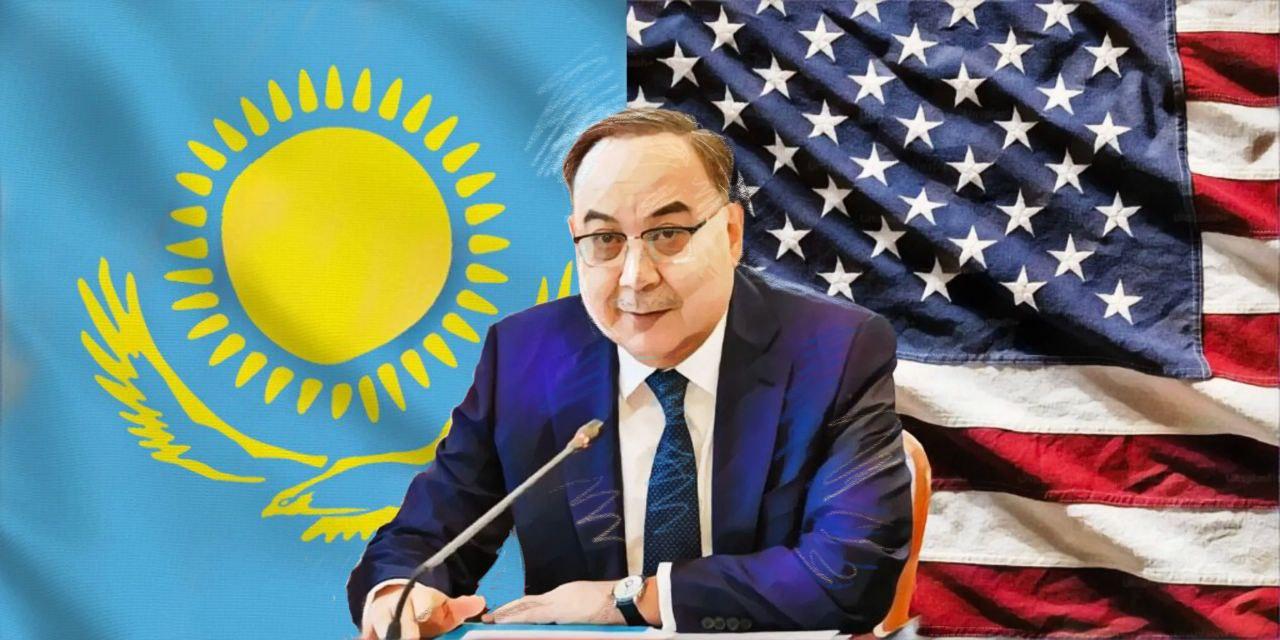
In this context, Kazakhstan has formally elevated its engagement with the United States by appointing a presidential representative to steer bilateral negotiations on priority issues. By presidential decree, Ambassador Yerzhan Kazykhan—Kazakhstan’s Permanent Representative to the United Nations Office in Geneva and a veteran diplomat with prior postings as ambassador to the United States and the United Kingdom—has been designated as the President’s Representative for negotiations with Washington. The appointment places key aspects of the U.S. relationship under direct presidential oversight from the Akorda, the presidential office.
Kazykhan has previously served as foreign minister and assistant to the president, and has held senior roles within both the Foreign Ministry and the presidential administration. His experience in Washington and in multilateral settings provides institutional continuity as the bilateral agenda broadens to encompass investment, energy security, and regional connectivity, while day-to-day execution remains within established diplomatic channels.
Drivers Behind the Elevation of U.S.–Kazakhstan Engagement
The decision reflects how rapidly the scope of U.S.–Kazakhstan engagement has expanded and how Kazakhstan is positioning itself as a major investment and strategic connectivity hub. The United States is Kazakhstan’s largest source of foreign direct investment, with hundreds of American companies operating across the economy. Chevron, Kazakhstan’s single largest foreign investor, has invested more than $50 billion over time, anchoring long-term U.S. corporate presence in the country’s energy sector.
This investment relationship gained further momentum in 2025. At the C5+1 leaders’ summit in Washington, Kazakhstan and U.S. partners announced nearly $17 billion in new commercial agreements and investment commitments across energy, transport, and industrial cooperation. The package was publicly highlighted by U.S. Commerce Secretary Howard Lutnick, underscoring senior-level U.S. political backing for deeper economic engagement with Kazakhstan.
Beyond investment, the bilateral agenda has expanded into strategic and geopolitical domains. Kazakhstan’s decision to join the Abraham Accords marked a notable political alignment with a U.S.-led diplomatic initiative, extending the framework’s reach beyond its original Middle Eastern focus.
Connectivity has become central to U.S. policy thinking. The Middle Corridor is increasingly viewed as an eastward extension of the post-Azerbaijan–Armenia Caucasus transit framework, also called the ‘Trump Route for International Peace and Prosperity’, aimed at reopening and securing east–west routes across the South Caucasus. Extending it through Kazakhstan links Central Asia to Europe while reducing reliance on Russia or Iran.
Trade and energy ties reinforce this trajectory. Kazakhstan is the world’s largest uranium producer and a major supplier to the United States, making the U.S. one of its most important export markets for nuclear fuel. As U.S. policy places greater emphasis on secure and diversified supply chains, Kazakhstan’s role in critical energy inputs and transit infrastructure has taken on added strategic weight.
Taken together, these developments—large-scale investment, strategic energy trade, participation in U.S.-backed diplomatic frameworks, and growing importance in Eurasian connectivity—have moved the relationship beyond a narrow project-based focus. The agenda now spans economic, geopolitical, and reputational dimensions, driving the decision to elevate how it is managed.
Comparative Context
Kazakhstan’s approach mirrors a broader pattern among states seeking tighter alignment with Washington amid shifting U.S. foreign and economic policy. South Africa appointed a special presidential envoy to the United States in 2025 to stabilize and deepen ties, while Israel has long relied on senior political figures to manage strategic coordination with Washington outside routine diplomatic channels. Uzbekistan has also prioritized its U.S. ties, most recently through the establishment of a U.S.–Uzbekistan Business Committee.
What distinguishes Kazakhstan’s move is its formality: the appointment is grounded in a presidential decree and embedded within the diplomatic hierarchy, suggesting an intent to sustain this arrangement rather than rely on ad hoc engagement.
Outlook
Elevating management of the U.S. relationship to the presidential level reflects Kazakhstan’s response to a broader and more demanding bilateral agenda. The move places coordination under direct presidential oversight, signaling political priority rather than routine head-of-state bargaining. For U.S. counterparts, it creates a clearer political channel for advancing complex initiatives—from investment and critical minerals to connectivity and regional diplomacy—while execution continues through established diplomatic institutions. The result is not a restructuring of diplomacy, but a tightening of political control designed to keep an increasingly strategic relationship moving in step with Kazakhstan’s wider foreign-policy objectives.