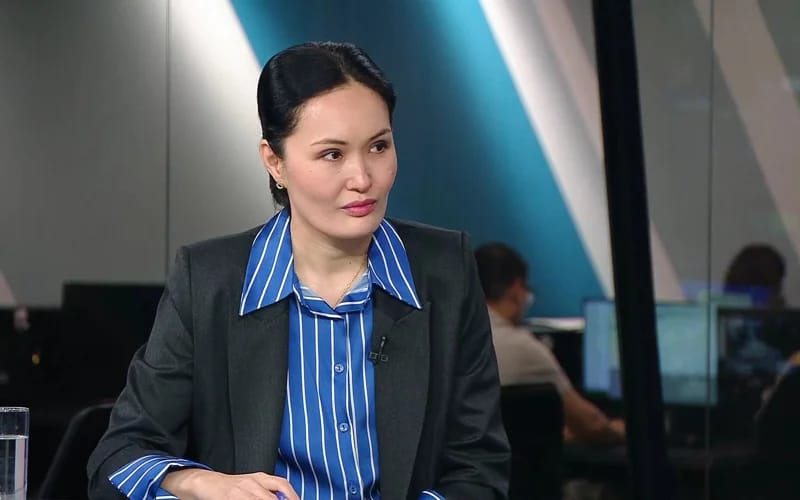
Kazakhstan wants the Astana Congress of the Leaders of World and Traditional Religions to take a more active role in conflict prevention and postwar reconciliation, including through permanent expert engagement and a possible Islamic-Jewish roundtable in Israel in 2027.
In an interview with The Times of Central Asia, Gulsana Kozhabay, chair of the board of the International Center for Interfaith and Interreligious Dialogue, explains how the Congress could expand its work between its triennial gatherings while remaining politically neutral.
Speaking in a personal capacity, she discusses the limits of religious diplomacy in the conflict in Gaza. She also addresses Kazakhstan’s ambition to develop its own school in this field and explains why she believes interfaith dialogue must increasingly lead to practical action rather than declarations alone.
TCA: What role can Kazakhstan’s humanitarian and spiritual diplomacy play in promoting peace, and how can the International Center contribute?
Kozhabay: Let us begin by explaining in simple terms what spiritual diplomacy means. In the context of this interview, we primarily understand it as religious diplomacy. It has several layers. It includes relations between different religions, dialogue within a single religion, engagement among the Abrahamic faiths, and work at local, regional and international levels. Religious leaders and organizations can work with states, international organizations and civil society, or act independently.
Many researchers believe that we are living in a post-secular period. Jürgen Habermas is one of the principal theorists associated with this approach. Modernization and technological development have clearly not pushed religion to the margins. Religions continue to play an important role in society, culture, and even politics. In many countries, including the Vatican, states in the Middle East, Egypt, Israel, the United States, and Russia, religious leaders command considerable trust, exercise influence in society, and have direct access to very large audiences. Habermas’s work is widely associated with the concept of a post-secular society and the continuing place of religion in public life.
Religious diplomacy cannot, of course, prevent or resolve every conflict and crisis, or replace political negotiations. Its main value lies in preserving channels of communication alongside political dialogue, or when that dialogue becomes difficult. Reducing mistrust, countering hate speech, and explaining to the public the value of peace and human life are important elements of religious diplomacy and are reflected in the Astana Peace Declaration 2025. In his ecological encyclical Laudato si’, Pope Francis wrote that religions should engage in dialogue to protect nature, defend the poor, and build networks of respect and fraternity.
Kazakhstan has always supported peaceful dialogue and a constructive international agenda. This is one of our strengths. We do not claim the role of a great power and do not seek to impose our decisions on other countries. Kazakhstan acts as a middle power that can build bridges, bring different parties to the same table, and offer neutral venues for dialogue.
This is also part of Kazakhstan’s soft power. Kazakhstan is trusted as a state that consistently supports dialogue at the political level and among cultures, religions, and civilizations. The President has spoken about the need to unite the efforts of spiritual leaders and form a Global Movement for Peace. This idea received positive responses from our international partners and was reflected in the Astana Peace Declaration 2025.
In my view, this need not take the form of another international organization. There are already enough of them. Today, the Global Movement for Peace is better understood as a broad concept. For example it might take the form of educational program or humanitarian projects. Each participant can contribute within their own area of competence.
This is the practical approach we try to follow at the Center. Following the Eighth Congress, we worked with international partners from several countries to develop draft documents entitled “The Role of Religions in Combating Climate Change” and “Ethical Code for the Use of Artificial Intelligence”.
Another important area is the Bambino Gesù Children’s Hospital’s Charter of Rights of the Incurable Child, which we intend to help promote together with the Holy See. The document seeks to protect the dignity, rights, and interests of particularly vulnerable children and to support their families.
Climate change, artificial intelligence, and the protection of children’s rights may initially appear to be separate subjects from religious dialogue. They are, however, closely connected. The initiative “On World Unity for a Just Peace, Harmony and Development” treats a just peace as more than the absence of war. A just peace requires responsible attitudes towards technology, human dignity, the environment and future generations. Religious leaders can bring a moral dimension to these discussions and communicate it to millions of people.
I see the International Center for Interfaith and Interreligious Dialogue as Kazakhstan’s principal specialized institution for developing religious diplomacy internationally. Its role should be to bring participants together.
The Congress normally meets once every three years and creates strong political and moral momentum. The world, however, changes every day. A permanent institution should therefore work between congresses to maintain contacts, whilst building institutional memory and a common agenda.
The Center works with religious leaders, international organizations, academic institutions, and civil society associations from more than sixty countries. Over the years, Kazakhstan, the Congress and the Center have built a stable international community of participants. Our platform has become recognized internationally.
TCA: Does the Congress already have a permanent mechanism for spiritual diplomacy, and could it develop stronger thematic channels, including Islamic-Jewish dialogue?
Kozhabay: I would point out that a permanent international mechanism already exists. Over more than twenty years, an entire institutional system has developed around the Congress: the Congress itself, its Secretariat and the International Center for Interfaith and Interreligious Dialogue. The Secretariat is the Congress’s standing working body, while the Center carries out day-to-day work and maintains contact with international partners between congresses. The Secretariat was established at the First Congress in 2003 and formally ensures the Congress’s work between its sessions.
The priority today should be to develop this existing system rather than establish another international mechanism. For example, separate permanent thematic tracks and working formats could be considered.
If we are discussing a separate mediation or intermediary center, caution is necessary. The Congress’s central philosophy rests on its neutrality and non-political character. It was established as a forum for dialogue among religions, rather than as a body for the political settlement of international conflicts.
Full mediation in crises as complex as the situation in Gaza, tensions involving Iran, or other conflicts in the Middle East requires an appropriate political mandate, the consent of the parties, professional negotiators, and the involvement of states and international organizations. Without these conditions, even the best intentions could be misinterpreted by one of the parties.
Giving political assessments or attempting to mediate without an invitation from the parties could also damage the Congress’s neutrality. A platform that has united representatives of different religions and countries for more than twenty years could itself become the subject of political dispute. We must avoid that.
The Congress can still contribute during international crises. As I have said, its role may include preserving channels of communication, creating conditions for informal dialogue, reducing religious and social tensions, countering hate speech, and discussing the humanitarian and moral consequences of crises.
Since Kazakhstan has acceded to the Abraham Accords, I see considerable potential for developing a broader Islamic-Jewish dialogue within the Congress. One possibility would be a thematic track involving religious figures, experts, and representatives of civil society institutions.
In 2027, we are considering holding an expert round table in Israel with representatives of the Spiritual Administration of Muslims of Kazakhstan. Such a format could create valuable opportunities for a narrower and more substantive Islamic-Jewish dialogue within the broader architecture of the Congress. This is particularly important for peaceful coexistence and for building trust between communities.
I would begin with practical steps of this kind rather than a large international structure. A lasting dialogue cannot be created through a single decision or declaration. It develops gradually at different levels through personal contacts, joint research, meetings between religious leaders, and discussion of difficult questions. This is diplomacy in the broad sense, or realpolitik. Such formats can operate between congresses.
I believe these mechanisms can help reduce tensions surrounding the situation in the Middle East, but we must remain realistic about the limits of their influence. We should also recognize the role of the political track and of the UN, the Organization of Islamic Cooperation, the Shanghai Cooperation Organization, and other major international organizations.
The best course is to develop permanent formats for religious and expert dialogue while preserving the Congress’s non-political role. Its strength lies in its neutrality, its non-political character, and its ability to bring together people who may find it difficult to sit at the same table in other circumstances.
The experience of September 2025 is instructive. During an acute phase of the crisis in Gaza, we, as the organizers of the Eighth Congress in Astana, prepared for various scenarios, including possible walkouts and communication difficulties among participants. Despite the highly tense international climate, participants attended and continued their work throughout the program. Israeli representatives, including representatives of Israel’s Ashkenazi and Sephardi chief rabbis, as well as representatives from Muslim-majority countries in the Middle East, Egypt and Asia, remained at the plenary sessions despite differences in their positions and even in the tone of their speeches. Official participant records identify Shlomo Kook and David Antebi Sakka as representatives of Israel’s Ashkenazi and Sephardi chief rabbis respectively.
For us as organizers, this was important evidence that such platforms are genuinely needed. Participants see them as an opportunity to be heard and to state their position while preserving a space for respectful dialogue, even amid the most serious international disagreements.
TCA: Could the Congress help prepare a program of spiritual reconciliation for Gaza, including the protection of sacred sites, after the fighting ends?
Kozhabay: Here I would again draw a clear boundary. The Congress cannot independently become involved in settling the situation in Gaza or decide to establish an international program on behalf of all its participants. We cannot simply arrive in a region with our own initiative when the UN, leading states, regional organizations, and the direct parties to the conflict are already involved.
Such work would require a request or invitation from the interested regional and international parties, as well as the agreement of the Congress’s own partners. Religious leaders and organizations from different countries participate in its work, and they have different positions and perceptions of the conflict. Such a program therefore cannot be a decision by Kazakhstan alone. It would have to be developed jointly and be acceptable above all to the societies and religious communities directly affected by the conflict.
We must also understand the limits of any program of “spiritual reconciliation”. It cannot resolve questions of security, governance, territory, or the return of displaced people. Those areas belong to political agreements, international law, and humanitarian mechanisms.
Regarding the protection of sacred sites, the Congress already has some experience in this area. On 16 September 2025, as part of the Eighth Congress, we held a Special Session on Safeguarding Religious Sites under the auspices of the United Nations Alliance of Civilizations. Religious and political leaders, diplomats, and representatives of international organizations took part. They discussed threats to places of worship, shrines and religious buildings, as well as possible practical mechanisms for their protection.
The importance of the session was also reflected in the Astana Peace Declaration 2025. We had therefore moved beyond discussing the protection of sacred sites in general terms and had begun working with the relevant UN body. If an appropriate request were made, this experience could also be applied to the post-conflict reconstruction of Gaza.
As a practitioner, I would suggest beginning with a consultative format within the Congress rather than immediately establishing a large international program. For example, a special meeting could bring together representatives of Islam, Christianity, and Judaism, the UN Alliance of Civilizations, the Organization of Islamic Cooperation, other international organizations and, most importantly, religious and civil society representatives from the region itself.
The first stage could determine whether there is a genuine demand for such a program, which subjects the parties are prepared to discuss, which they are not, and where religious diplomacy could make a useful contribution. If a common position emerged, the participants could then prepare principles or a roadmap for spiritual reconciliation. The program would have to remain non-political and avoid interference in conventional diplomacy, which is the responsibility of foreign ministries.
Such an initiative is broadly consistent with the Congress’s field of activity. Its legitimacy, however, would have to rest on the collective consent of Congress participants, a request from the region, and coordination with international organizations already involved in Gaza’s political and humanitarian recovery.
TCA: Is the Center developing a permanent expert platform on humanitarian and spiritual diplomacy?
Kozhabay: This work has already begun. In 2025, the Congress launched a separate expert track in the form of the Expert Round Table “Intercultural and Interreligious Dialogue Today”. It brought together scholars, religious figures, experts, and representatives of analytical institutions. Its purpose is to supplement dialogue among religious leaders with expert analysis and translate broad ideas into practical recommendations. The round table was held in Astana on 18 September 2025 as part of the Eighth Congress.
This provides a good foundation for a permanent expert platform. In the future, the track could be strengthened through research, analytical publications, and the participation of universities and international think tanks. One area of work could involve analyzing the religious and social dimensions of conflicts, identifying risks, and preparing recommendations for the Congress’s partners.
I believe that creating another center within the existing International Centre would be premature at this stage. It would duplicate functions and spread resources too thinly.
A more effective approach would be to strengthen the International Center itself and develop it into a strong international think tank in the fields of interfaith dialogue and humanitarian and religious diplomacy. This would require a stronger international analytical division, a larger staff, a broader international expert network, and expanded representation. This is essentially what we are doing now. The Expert Round Table is intended to become a permanent platform for this work between congresses.
TCA: Could an “Astana Humanitarian Track” support official diplomacy in major conflicts, and which international partners might take part?
Kozhabay: The idea of an “Astana Humanitarian Track” deserves study. Kazakhstan enjoys trust as a neutral venue, but such a format should neither replace official diplomacy nor interfere in the political settlement of conflicts.
Within its own field, the Congress could complement diplomatic processes by supporting interfaith dialogue, strengthening trust between communities, helping to protect religious sites and countering hate speech. This would require a clear mandate, a request from the interested parties, and the agreement of international partners.
Potential participants could include the UN Alliance of Civilizations, UNESCO, the Organization of Islamic Cooperation, ICESCO, the Muslim World League, the World Council of Churches, the Holy See, and other partners of the Congress. All of them already engage with us. This therefore offers promising ground for joint expert work, although it is not yet a fully developed mechanism.
TCA: Looking ten years ahead, what should the Astana Congress’s principal legacy be?
Kozhabay: Ten years from now, I would like the Congress’s principal legacy to be its transition from dialogue to joint practical action, followed by the development of a shared peacebuilding and spiritual voice for religions.
We have already passed through an important stage in which the priority was to establish dialogue among religions. That dialogue now exists. Our focus should be on finding common ground and translating shared values into specific decisions.
Ideally, religions should gradually move beyond disputes about which faith is more correct and unite around what is genuinely important for all humanity: peaceful coexistence, tolerance, human dignity, responsibility for the future, the protection of vulnerable people, and the preservation of life on Earth.
This is especially important in the age of artificial intelligence. The faster technology develops, the wiser, more humane, and more spiritually responsible we must become.
For Kazakhstan, this legacy could include a strong international expert center and its own school of religious diplomacy, understood as a recognized approach, body of experience and tradition rather than a separate organization.