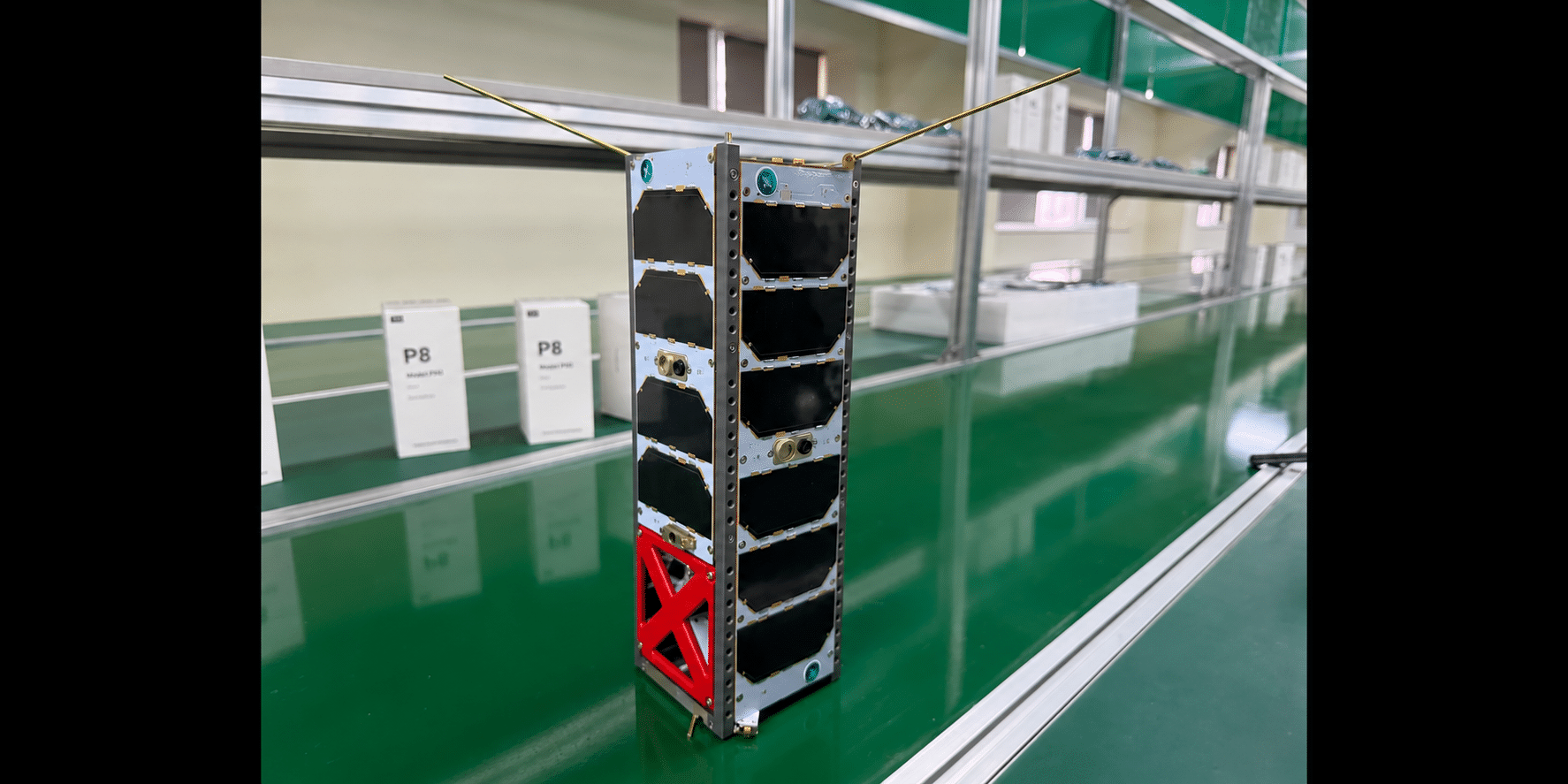
Kyrgyzstan plans to launch its first domestically developed and assembled satellite in early October, according to the Agriculture Ministry. The spacecraft is intended to collect imagery of farmland, pastures, glaciers, and water resources. The Agriculture Ministry plans to use the data to assess crop conditions and yields, detect drought, and monitor water resources.
The satellite has been under development for about two and a half years. Final preparations are underway in Bishkek, including assembling its main components, installing electronic equipment, and testing the system. The launch is scheduled to take place from California during the first week of October. Kyrgyz media have reported October 1 as the planned launch date.
The project is being carried out by the state-owned company Kyrgyz Asman. It was established in 2026 under the name Kyrgyz Sputnik and renamed in June. The Times of Central Asia previously reported that the company was created to develop the use of satellite technologies and data in agriculture and natural resource management. The company is to be based in Karakol in the Issyk-Kul region.
The imagery is also expected to help assess areas affected by emergencies.
For Kyrgyzstan, one of the most obvious applications of such imagery is water management. Mountain glaciers feed the rivers on which agricultural irrigation depends, while satellite observation makes it possible to regularly track changes across large and difficult-to-access areas.
Similar projects are emerging elsewhere in Central Asia. In August, the Chinese-built Samarkand-2028 hyperspectral Earth observation satellite was launched carrying an artificial intelligence module developed by specialists from Uzbekistan’s Uzbekcosmos space agency. The data obtained from the satellite is expected to be used for agriculture, environmental monitoring, water and natural resource management, and other applications.
Samarkand-2028 was built by China’s STAR.VISION Aerospace. Uzbekistan’s own scientific satellite, Mirzo Ulugbek, is being developed by a team of seven Uzbek engineers undergoing training at Japan’s Kyushu Institute of Technology. Its launch is planned for 2028.