Kazakhstan’s economy grew by 4.2% in the first nine months of 2026, despite an 8.3% drop in oil production. Growth in construction, manufacturing, transportation, and trade helped offset the decline in the country’s main export industry, although real household incomes have barely risen.
According to figures presented on October 13 by Deputy Prime Minister and Minister of National Economy Serik Zhumangarin, Kazakhstan produced 69.4 million metric tons of oil between January and September. GDP growth accelerated slightly from 4.1% in the first eight months of the year.
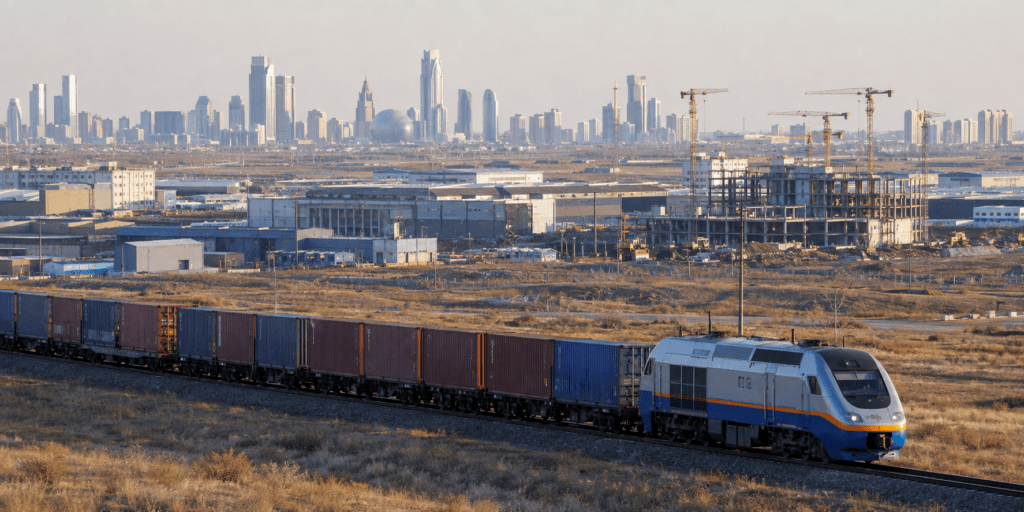
Kazakhstan is Central Asia’s largest economy and a significant supplier of oil to the global market. Most of its oil exports pass through Russia, including via the Caspian Pipeline Consortium (CPC) pipeline system to a terminal on the Black Sea. Disruptions along these routes can force producers to cut output. The Times of Central Asia previously examined why even high global oil prices do not always translate into the expected revenues for Kazakhstan.
According to government estimates, the non-resource sector expanded by 5.4%. Manufacturing, construction, transportation, and trade accounted for more than three-quarters of GDP growth.
Manufacturing output rose by 8.6%, with machinery production increasing by 22.8%. Over the nine-month period, automobile production increased by nearly 30%, while electrical equipment output rose by approximately 21%. Production of fabricated metal products, food, chemicals, and pharmaceuticals also increased.
Investment in fixed assets, including buildings and equipment, rose by 7% between January and September, reaching 16.1 trillion tenge (approximately $35.7 billion). Private investment accounted for 85.7% of the total and increased by 18.2%, with particularly strong growth in manufacturing and construction.
At the same time, the strengthening of the tenge, Kazakhstan’s national currency, has put pressure on exporters when dollar-denominated earnings are converted into local currency. Consumer lending has also slowed: annual growth in consumer loans fell from 26.4% in August 2025 to 10.4% in August 2026.
Annual inflation stood at 9.3% in September, down from 9.8% in August. Prices are still rising, although somewhat more slowly. In the second quarter, real household incomes per person, adjusted for inflation, grew by just 0.7% compared with the same period last year, following an increase of just 0.1% in the first quarter.