Uzbekistan is offering international technology companies a separate legal regime based on principles of English law, tax incentives, three-year visas for foreign specialists, and a regulatory sandbox for testing new products. The measures will form the basis of Enterprise Uzbekistan, a new international center for digital technologies.
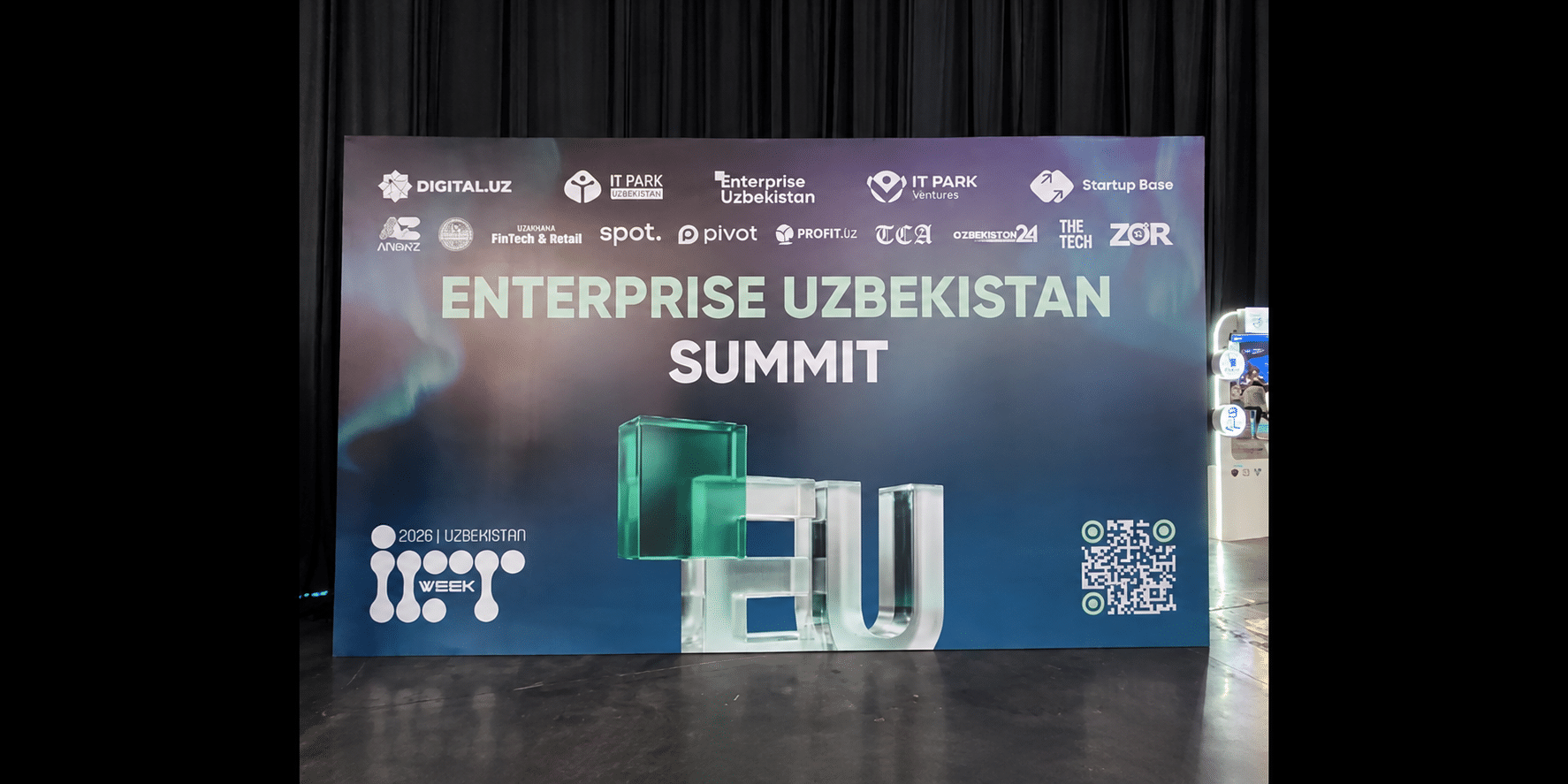
Organizers presented the project a ICT Week Uzbekistan 2026, held in Tashkent from September 22 to 25, during which they hosted a dedicated Enterprise Uzbekistan Summit.
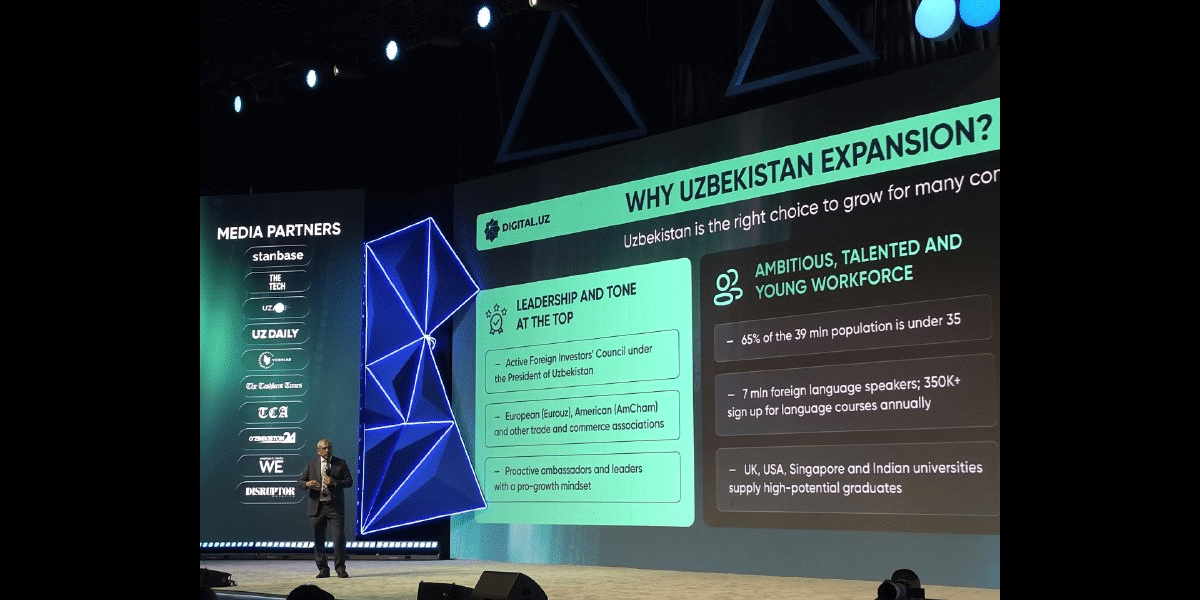
Davron Yakubov, managing partner at BDO Uzbekistan
The government hopes the new regime will reduce some of the risks foreign companies face when entering Uzbekistan, including changes in tax rules, commercial disputes, and restrictions on hiring overseas staff. The special regime is planned to remain in place through 2100, while conditions granted to participants are not supposed to become less favorable over time.
Farkhod Ibragimov, Chief Executive of Enterprise Uzbekistan, said foreign companies entering a new market typically want to know how long incentives will last, how disputes will be resolved, and what tax, customs, and visa rules they will face.
Sultonmurod Rasulov, Head of Strategic Partnerships at Enterprise Uzbekistan, argued that uncertainty itself imposes costs on businesses.
“Uncertainty is a kind of hidden tax on every direction a business moves in and every decision it makes,” Rasulov said.
For technology companies, he added, rapid economic growth alone is not enough.
“Global clients do not buy Uzbekistan’s GDP. They buy certainty, they buy products, they buy predictability.”
English Law, Commercial Court, and Regulatory Sandbox
Enterprise Uzbekistan is being established as a separate legal environment for international technology companies. English will be the official language for documentation, while its legal framework will draw on the common law of England and Wales.
Commercial disputes are expected to fall under the jurisdiction of the Tashkent International Commercial Court.
“Even if the Enterprise Uzbekistan administration makes a wrong decision regarding a company, it will be able to challenge that decision in an independent court,” Ibragimov said.
The center will also include a regulatory sandbox allowing companies to test products in areas where existing rules have not kept pace with new technologies.
The regime is expected to cover cloud data storage and processing, international recruitment, and investment instruments familiar to foreign investors. Companies will be allowed 100% foreign ownership, while more flexible employment arrangements are planned for overseas specialists.
Taxes and Visas
Enterprise Uzbekistan plans to apply three main taxes: value-added tax (VAT), corporate income tax, and personal income tax.
Priority activities may qualify for exemptions from corporate income tax and a zero VAT rate on sales abroad and within the center, subject to the final rules. Rasulov said highly qualified foreign specialists may also qualify for zero personal income tax on salaries and dividends.
Foreign specialists are expected to be eligible for visas valid for up to three years, renewable without leaving Uzbekistan. Those meeting Enterprise Uzbekistan requirements will not need a separate work permit.
Technology Exports and Talent
Rasulov said Uzbekistan’s information and communications technology (ICT) sector now employs around 150,000 people, while the number of countries buying Uzbek technology services and products has risen from eight to 94 in less than a decade.
IT services exports exceeded $1 billion last year, according to figures presented at the summit, while the digital sector has grown by nearly 25% annually over the past five years.
More than 120,000 students are enrolled in information technology (IT)-related programs, while government initiatives including One Million Uzbek Coders and Five Million AI Leaders are intended to expand the talent pool. The Times of Central Asia has previously reported on the development of artificial intelligence and fifth-generation (5G) infrastructure in Uzbekistan.
“The export economy is very simple. It is not only revenue that crosses the border, but, much more importantly, human potential stays inside the market and accumulates,” Rasulov said.
He said engineers who complete international projects carry that experience into later work, spreading skills across the sector.
Davron Yakubov, Managing Partner of BDO Uzbekistan, identified leadership, talent, infrastructure, and access to international markets as the main requirements for developing the country’s technology sector.
“For me, it all starts with leadership and the tone from the top,” Yakubov said, referring to economic reforms and the government’s engagement with foreign investors.
He said platforms including the Foreign Investors Council, the American Chamber of Commerce, and EuroUz give companies a way to raise problems directly with officials.
Yakubov said young Uzbek professionals often have strong technical skills but need more mentorship and professional development.
“I can say that these young people really want to work. They just need further guidance and development so they can become the future leaders of the technology world.”
Businesses Asked to Help Write the Rules
The Constitutional Law establishing Enterprise Uzbekistan’s special regime has already been adopted, but much of the detailed regulatory framework is still being written.
Rasulov urged international companies to identify practical obstacles rather than simply endorse the project.
“Don’t send us compliments – send us problems. Tell us what your general counsel cannot sign, what your engineers cannot implement, and what your investors need to see before they put money in,” he said.
Ibragimov was equally direct: “Please don’t try to be polite and don’t avoid uncomfortable questions. Right now, that will be a contribution to our work. Two years from now, it may already sound like a complaint.”
That unfinished regulatory framework is also one of the project’s main uncertainties. Enterprise Uzbekistan promises an English-law-based regime, a separate commercial court, tax incentives, a regulatory sandbox, and simpler rules for foreign specialists, but many of the details remain undecided.
Its first participants will do more than operate under the new system; they will help determine how it works.