Trade disputes within the Eurasian Economic Union (EAEU) are as old as its creation. Restrictions on the import and export of certain goods have long been common practice. However, analysts increasingly warn that tensions have reached a point at which the organization risks losing its core function, ensuring the free movement of goods across borders and maintaining simplified conditions for migrant workers.
Mounting Restrictions
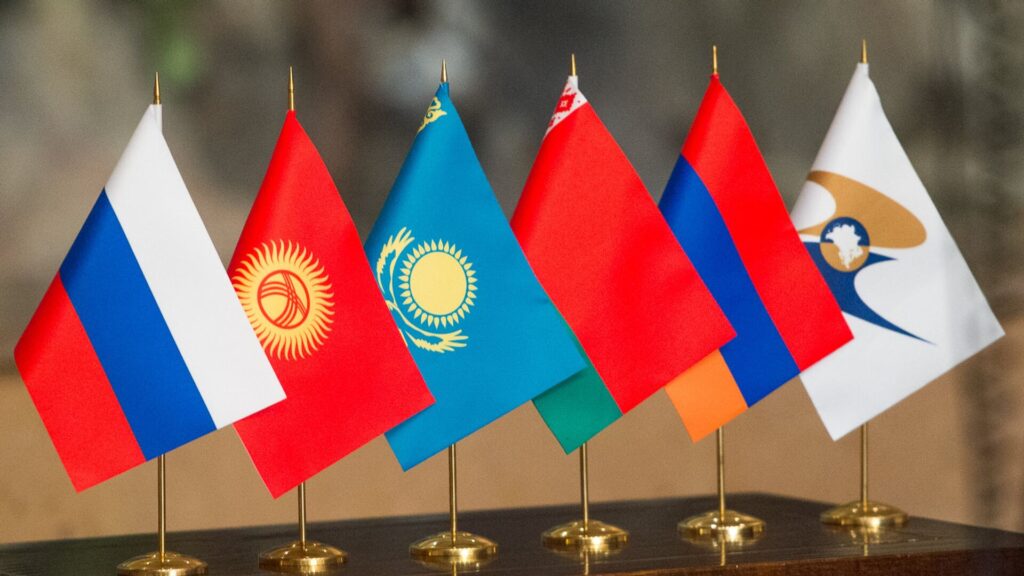
The EAEU currently comprises Armenia, Belarus, Kazakhstan, Kyrgyzstan, and Russia. Economic integration among several post-Soviet states began in 2000 with the establishment of the Eurasian Economic Community (EurAsEC), formed by Belarus, Kazakhstan, Kyrgyzstan, Russia, and Tajikistan. Uzbekistan joined in 2006, but suspended its participation in 2008. The foundation of this organization was the Customs Union agreement, intended to abolish customs duties among member states.
The structure of the integration project has since evolved. The EAEU treaty was signed in 2014 and entered into force on January 1, 2015. Tajikistan and Uzbekistan did not join, while Armenia became a member in 2015. More than two decades after the first integration agreements, however, many of the bloc’s original promises remain only partially fulfilled.
Experts have long argued that protectionist measures remain widespread within the bloc and that full freedom of movement for all categories of goods, including strategic products, has not been achieved. They also point to pronounced economic asymmetry: Russia accounts for approximately 85–87% of the union’s combined GDP, whereas Kazakhstan accounts for approximately 9–10%.
Russia’s significantly larger population and political influence have further reinforced perceptions of structural imbalance.
Moscow is now preparing new regulatory measures affecting its partners. From April 1, 2026, a national system for confirming the arrival of goods will be introduced for road imports from EAEU countries. According to the Russian authorities, shifting key control procedures to the pre-border stage is intended to improve transparency in the administration of indirect taxes. Previously, such checks were conducted after goods entered the country through desk and field audits.
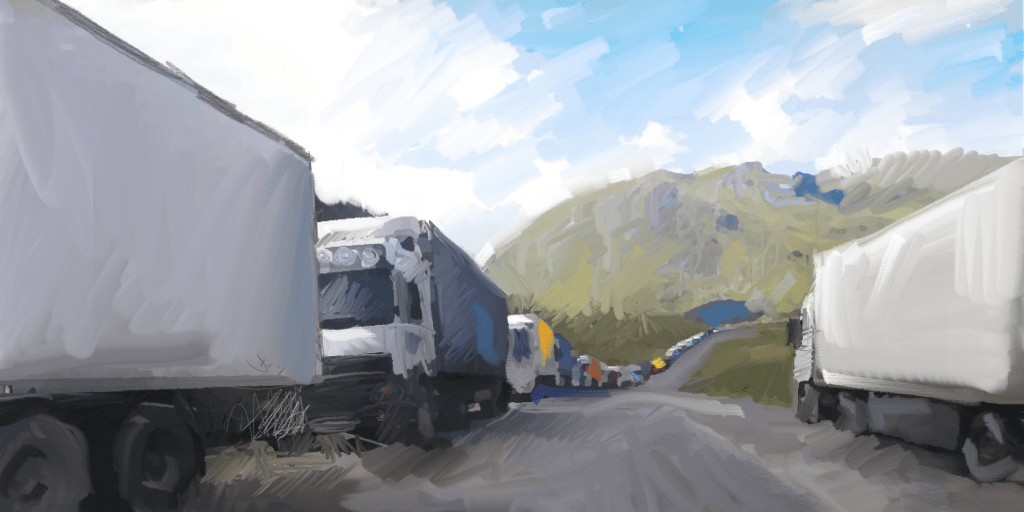
At the same time, Russia has intensified selective customs controls on its borders with Kazakhstan and Belarus, officially citing efforts to combat counterfeit goods. Particular scrutiny is being applied to product labelling and accompanying documentation. Controls were tightened last summer, when mobile checkpoints were established along the Kazakh-Russian border, followed by the inspections of vehicles leaving Belarus in the autumn.
Full-scale checkpoints are now operating on the Kazakh-Russian border, while a simplified regime linked to the Union State and EAEU agreements continues to apply on the Belarusian-Russian border.
Logistics industry representatives report that stricter controls on the Kazakh border have significantly increased transit delivery times. Carriers often face lengthy delays at checkpoints even when their documentation is in order. According to Alexandra Pokumeiko, head of a freight-forwarding department, the changes have created uncertainty in delivery schedules along Belarus-Russia transport corridors and on transit routes through Russia to Kazakhstan.
The growing number of administrative restrictions has begun to spill into specific sectors of the economy, triggering retaliatory measures between member states.
Escalating Tensions in the Automotive Sector
A new dispute has emerged between Kazakhstan and Russia over vehicle recycling fees. On March 10, Kazakhstan announced plans to raise the scrap fee on Russian-made cars, describing the move as a reciprocal response to measures introduced by Moscow.
Although the relevant order is yet to be formally signed, Kazakhstan’s Minister of Industry and Construction, Yersayin Nagaspayev, has stated that the increase would mirror Moscow’s policy. Within Russia, recycling fees on vehicles imported from Kazakhstan have reportedly risen tenfold and are set to increase further under a progressive scale through 2029-2030. Astana argues that the reciprocal step is necessary to support its domestic automotive industry.
Nagaspayev emphasised that the value of Russian passenger vehicles accounts for only around 3.7% of Kazakhstan’s car imports, suggesting limited market impact and no expectation of sharp price increases.
Meanwhile, Russian media outlets have reported that since spring 2024, more than 30,000 Hyundai, Kia, and Skoda vehicles assembled in Kazakhstan have entered the Russian market within the EAEU framework.
Debate Over the Union’s Future
The dispute has revived debate in Kazakhstan about the country’s economic gains from EAEU membership and speculation about the bloc’s long-term viability.
Olzhas Zhorayev, an expert at the Association for Analysis and Management of Public Policy, argues that the institutional structure of the Eurasian Economic Commission complicates the promotion of national interests. According to him, the multinational composition of the bloc’s leadership positions sometimes makes dispute resolution difficult and contributes to perceptions that Eurasian integration remains largely declarative.
Zhorayev also highlights concerns about the preparedness of some national officials working within integration bodies, suggesting that a limited understanding of economic conditions may reduce the effectiveness of their representation.
Economist Arman Beisembayev takes a more critical view, arguing that Kazakhstan derives limited economic benefit from its membership in the union. Beisembayev points to a significant trade imbalance with Russia, noting that Kazakhstan imports substantially more from its northern neighbour than it exports. At the same time, he notes that Kazakhstan remains heavily dependent on Russian supplies in sectors such as food and pharmaceuticals.
Labour Migration Disputes
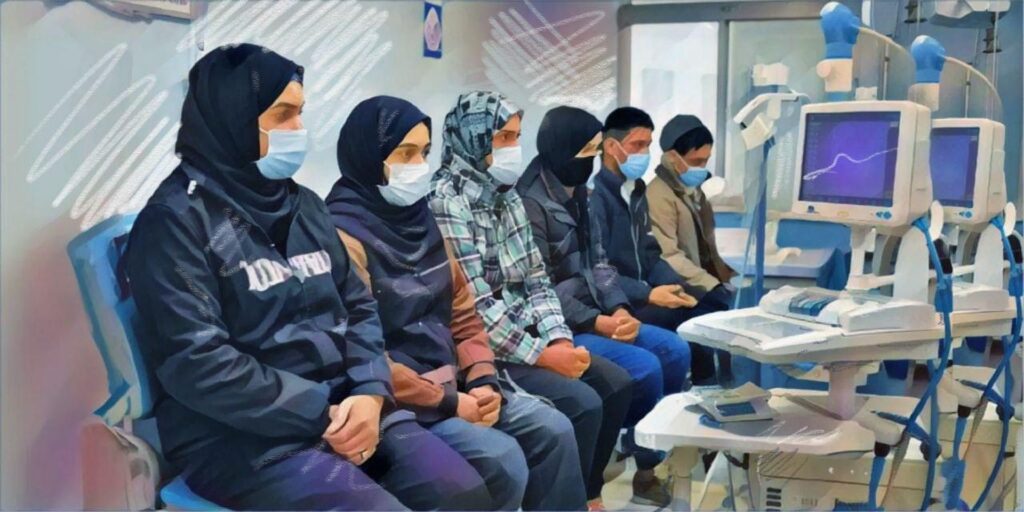
Russia has also tightened legislation governing labour migration. In January, Kyrgyzstan filed a case with the EAEU Court, arguing that Russia’s refusal to provide compulsory medical insurance to the families of migrant workers violates union agreements guaranteeing access to social protection.
In March, however, the court’s Grand Chamber clarified that member states are not required to automatically extend compulsory medical insurance coverage to migrants’ family members. The ruling emphasised the distinction within EAEU agreements between social security provisions and access to medical assistance.
Armenia’s Strategic Dilemma
Armenia’s shifting foreign policy priorities add another layer of uncertainty to the union’s future. The country’s leadership has repeatedly signalled hesitation between deepening integration with the EAEU amid moves aimed at potentially strengthening ties with the European Union.
In the summer of 2025, Armenian Prime Minister Nikol Pashinyan joined an EAEU forum via video link rather than attending in person, prompting speculation in regional media about Yerevan’s commitment to the bloc. Belarusian President Alexander Lukashenko later suggested that Armenia may have its own reasons for adopting a more critical stance toward the organization.
Simultaneous membership in both the EAEU and the European Union is not feasible, meaning Armenia may eventually face a strategic choice.
Rising Tensions Ahead of Key Meetings
Internal disputes are likely to influence discussions at the upcoming EAEU summit of heads of state in May, as well as during the Russian president’s planned state visit to Kazakhstan, scheduled to coincide with the event. Kazakhstan assumed the rotating chairmanship of the EAEU from January 1, 2026. Recent trade disputes suggest that Astana intends to pursue a more assertive position within the organization rather than simply aligning with Moscow’s policy preferences.
Taken together, these disputes highlight growing contradictions within the EAEU. While the union was designed to remove barriers to trade and labor mobility, member states have increasingly resorted to unilateral restrictions when national economic interests are at stake. The result is a system that formally promotes integration but frequently operates through ad-hoc controls, exemptions, and retaliatory measures.
Whether the EAEU can reconcile these tensions remains uncertain. For countries such as Kazakhstan and Kyrgyzstan, the union still offers access to a large regional market and simplified migration rules, but recurring trade conflicts and regulatory asymmetries continue to fuel debate about how much members are willing to sacrifice for integration. As the bloc approaches another summit, the question is less about whether disagreements exist and more about how far they can escalate before the mechanisms of the union itself begin to erode.