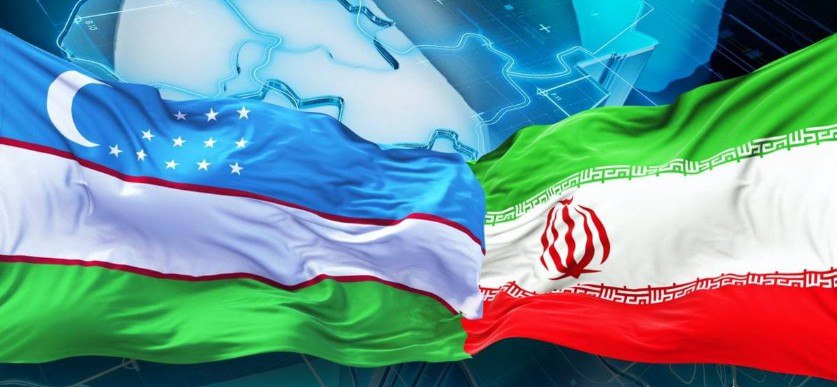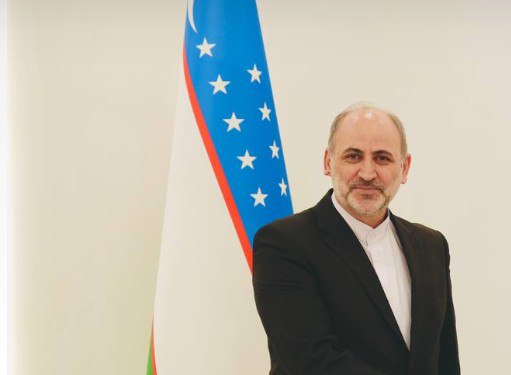
Iran’s ambassador to Uzbekistan, Mohammad Ali Iskandari, has held a press conference in Tashkent where he addressed the escalating conflict in the Middle East, sharply criticizing the United States and Israel while defending Iran’s actions and political system.
According to the Uzbek diplomatic news platform UzDiplomat, Iskandari spoke with local and international journalists about Tehran’s interpretation of the ongoing hostilities and the broader political tensions surrounding them.
The ambassador framed the conflict not only as a military confrontation but also as an ideological struggle.
“We are not fighting the United States or Israel. We are fighting a mindset, the mindset that everything belongs to them,” Iskandari said during the briefing.
He insisted that Iran was not responsible for initiating the conflict.
“We did not start this war,” the ambassador said, adding that the escalation began while diplomatic negotiations were still underway. “The war began while negotiations were continuing,” he told reporters.
Iskandari also accused Washington of long-term strategic support for Israel.
“The United States has helped Israel for forty years to prepare for this war,” he said, arguing that the conflict was closely tied to Israel’s regional policies and the decisions of its leadership.
During the press conference, the ambassador condemned what he described as a terrorist act allegedly targeting Iran’s top leadership. According to Uzbek journalist Sharofiddin Tulaganov, who attended the event and later described it on his Telegram channel, Iskandari said the alleged attack on Iran’s Supreme Leader occurred during an active diplomatic process and represented a violation of international norms.
“The aggression occurred in the middle of diplomatic efforts, not to remove an immediate threat but to satisfy the ambitions of Netanyahu, who has already been condemned as an international criminal,” Iskandari said.
The ambassador warned that silence from the international community could lead to further escalation.
“Remaining silent in the face of such crimes only increases the scale of future crimes and will affect the fate of generations around the world,” he said.
Iskandari also referred to casualties he said resulted from recent attacks. According to his remarks, 168 Iranian girls between the ages of seven and twelve were killed in what he described as one of the largest massacres of schoolchildren in history. He criticized Western media outlets for what he described as a lack of coverage of the incident.
“This massacre happened in silence from Western media,” the ambassador said. “These children were living their normal lives while diplomatic negotiations were still ongoing.”
The ambassador maintained that Iran’s military actions have targeted only specific facilities.
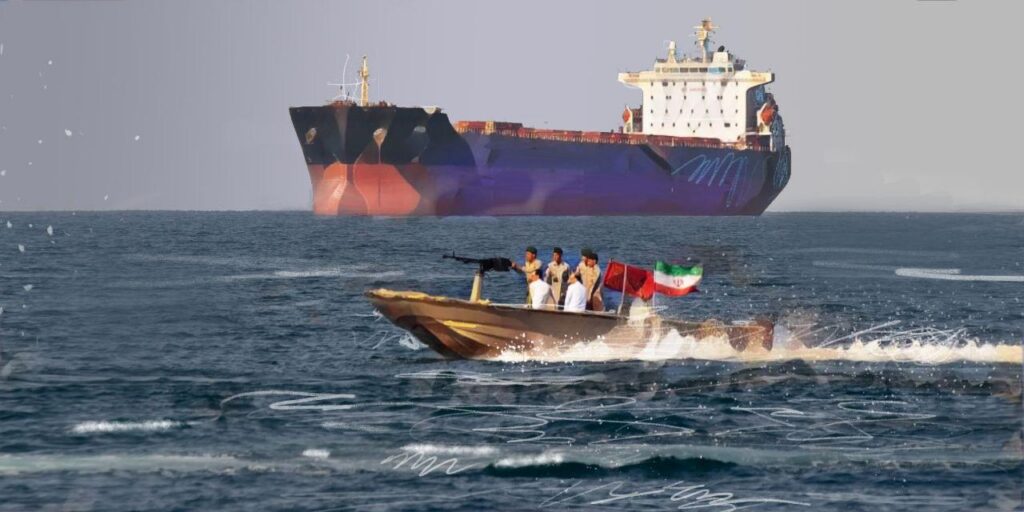
“Iran’s strikes are aimed exclusively at U.S. military bases and intelligence centers belonging to the United States and Israel,” he said, emphasizing that Tehran does not consider neighboring states in the Persian Gulf to be enemies.
“All countries around the Persian Gulf have always been friends of the Islamic Republic of Iran and will remain so,” Iskandari said, adding that regional populations have often expressed dissatisfaction with foreign military presence.
Iskandari also rejected speculation that Iran was seeking external military assistance.
“We have not asked anyone for help in this war,” he said. “Even if someone offers assistance, we do not intend to ask for it.”
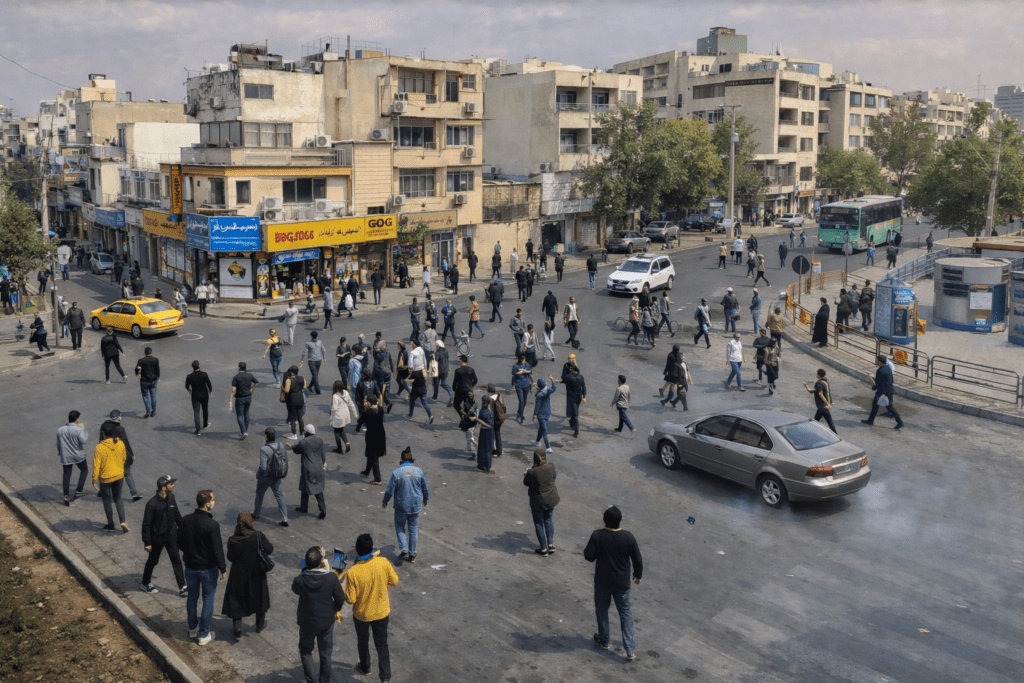
Responding to questions about internal protests in Iran, the ambassador said the country’s constitution guarantees citizens the right to express dissatisfaction with government policies. He rejected claims that Iran suppresses dissent.
“Iran is one of the most democratic countries in the region,” he said. “All levels of government, from village councils to the highest leadership, are formed through elections.”
He added that public criticism of the government is legally permitted.
“If someone has an opposing opinion and expresses protest, this is considered natural in Iran,” the ambassador said. “There are many cases when the public does not elect the candidate favored by the government.”
At the same time, Iskandari suggested that some negative information about Iran originates from foreign sources. According to him, outside actors sometimes attempt to exploit domestic protests.
As an example, he mentioned attacks on mosques and police stations during recent demonstrations.
“Do you really believe that Muslims would burn mosques during protests?” he asked in response to a journalist’s question.
He concluded by saying that international stability depends on respect for legal norms between states.
“Legitimacy in the international system can only be achieved through adherence to international law, respect for state sovereignty, and protection of civilians,” Iskandari said. “Such aggressive actions must be condemned by all states and international organizations.”