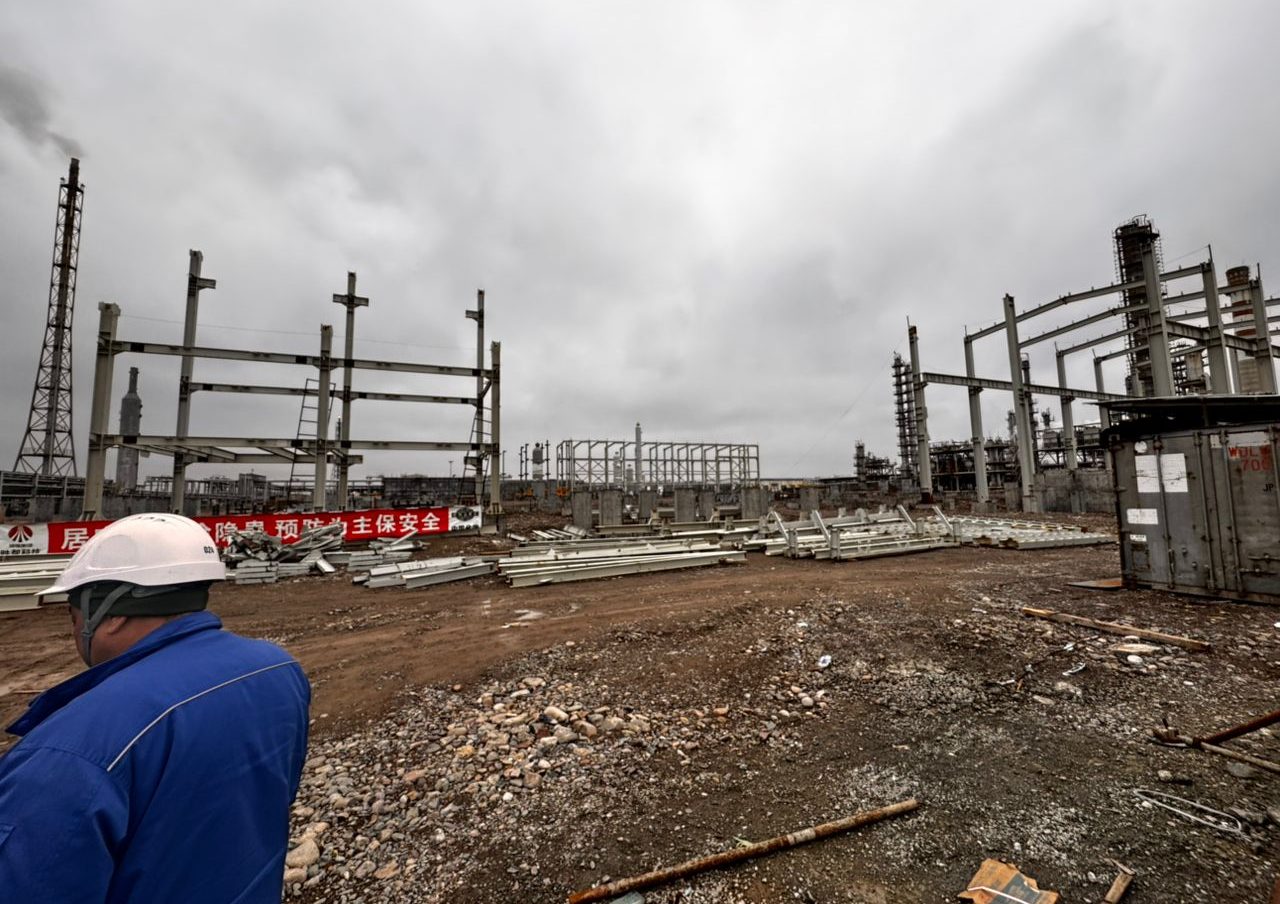
Kyrgyzstan’s largest oil refining facility, the Junda (Zhongda) refinery in the town of Kara-Balta, approximately 60 kilometers west of Bishkek, is undergoing a major modernization project scheduled for completion by July 31, 2026. The $193.75 million upgrade is expected to increase domestic fuel production and strengthen the country’s energy security.
On March 2, a delegation from the National Investment Agency of Kyrgyzstan, the Ministry of Economy and Commerce, and the Kara-Balta municipality visited the refinery to monitor implementation of the investment agreement signed in July 2024 with China Petrol Company Zhongda LLC.
Owned by a Chinese investor, the refinery has an annual crude processing capacity of 800,000 tons, producing gasoline, diesel fuel, and liquefied petroleum gas. The modernization is intended to upgrade technical infrastructure and improve operational efficiency.
Government representatives have emphasized the project’s importance for industrial development, job creation, and reducing Kyrgyzstan’s reliance on imported fuel.
If completed on schedule, the refinery could potentially cover between 50% and 70% of Kyrgyzstan’s domestic demand for motor fuel. This would represent a significant shift for a country that currently depends heavily on imports.
At present, local refining capacity reportedly meets only about 5% of domestic fuel demand. Kyrgyzstan consumes approximately 1.6 million tons of motor fuel annually, more than 90% of which is imported from Russia.
A key constraint remains the refinery’s dependence on imported crude oil. Authorities are seeking to diversify supply routes, including potential deliveries from Azerbaijan and other oil-producing countries.
Originally commissioned in 2014, the refinery was shut down in February 2020 for extensive repairs and modernization that lasted four years. Operations resumed in August 2024.
The facility has faced public scrutiny over environmental concerns. Residents of Kara-Balta have complained about air pollution, resulting in fines for emissions violations. The refinery has also been accused of damaging ancient burial mounds, prompting criticism from cultural heritage advocates.
The modernization positions the Kara-Balta refinery as a strategic industrial asset in Kyrgyzstan’s efforts to enhance energy security. However, its long-term viability will depend on securing stable crude oil supplies and addressing environmental risks.
If successful, the project could reduce Kyrgyzstan’s fuel import bill and mark a significant step toward greater energy independence.