BISHKEK (TCA) — Kyrgyzstan will be able to export electricity to neighboring countries this year, the State Committee for Industry, Energy and Subsoil Use of Kyrgyzstan said.
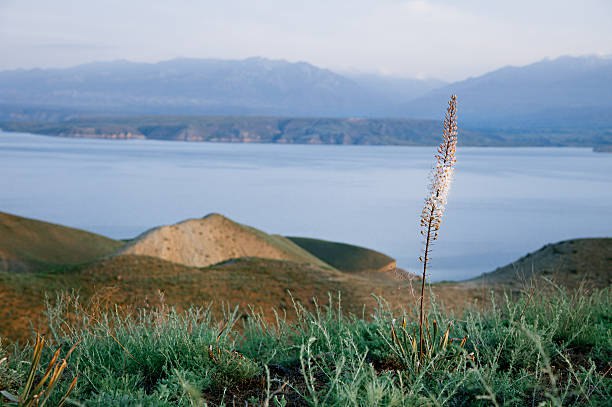
As of April 1, 2017, the water level in the reservoir of the Toktogul hydro power plant (HPP), the largest in Kyrgyzstan, was 12.7 billion cubic meters, 3.8 billion cubic meters more than last year.
Accumulation of water in the Toktogul reservoir improved in 2016. As of October 1, 2016, the volume of water increased up to 17.3 billion cubic meters (4.3 billion cubic meters more than on October 1, 2015). The accumulation of water was achieved due to increased water inflow, the import of electricity and reduction of its consumption due to favorable climatic conditions (warm winter) and the adopted tariff policy, the Committee said.
During the winter heating season of 2016-2017, the National Energy Holding JSC planned to spend 13 billion kilowatt hours of electricity, but Kyrgyzstan spent 11 billion kilowatt-hours.
Toktogul HPP rehabilitation
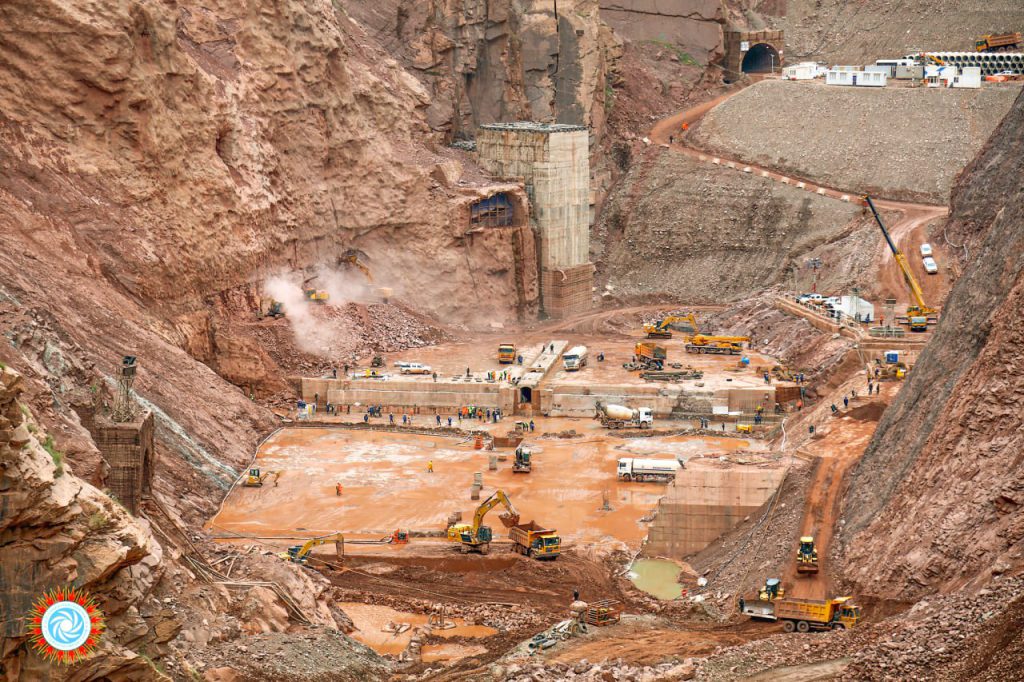
From April 10, the reconstruction of the Toktogul HPP located in the south of Kyrgyzstan will start, and the second and third generating units will be stopped alternately to install new cables and transformers.
Last December, the Toktogul HPP suffered two accidents. Three of the four generators were disconnected there due to an oil leakage in cables installed 40 years ago.
The Toktogul HPP, built in 1975, generates up to 40% of all electricity in the country.
Rehabilitation of the Toktogul HPP will be done in three phases and will result in a 20% increase in its capacity. During the first phase, the electrical and mechanical equipment will be upgraded. The second phase includes replacing of two hydraulic units, resulting in 60 megawatts power increase of each unit. In the third phase, the remaining two hydraulic units will be replaced by new ones. The rehabilitation is to be accomplished in 2022.
Bishkek power plant modernization
Modernization of the Bishkek thermal electric power plant (TPP) is currently underway. In March, the first unit successfully passed tests, and soon tests of the second unit will begin with its subsequent commissioning. The project is carried out through funds allocated by the Export-Import Bank of China, while the project contractor is China’s TBEA (Tebian Electric Apparatus Stock Co. Ltd).
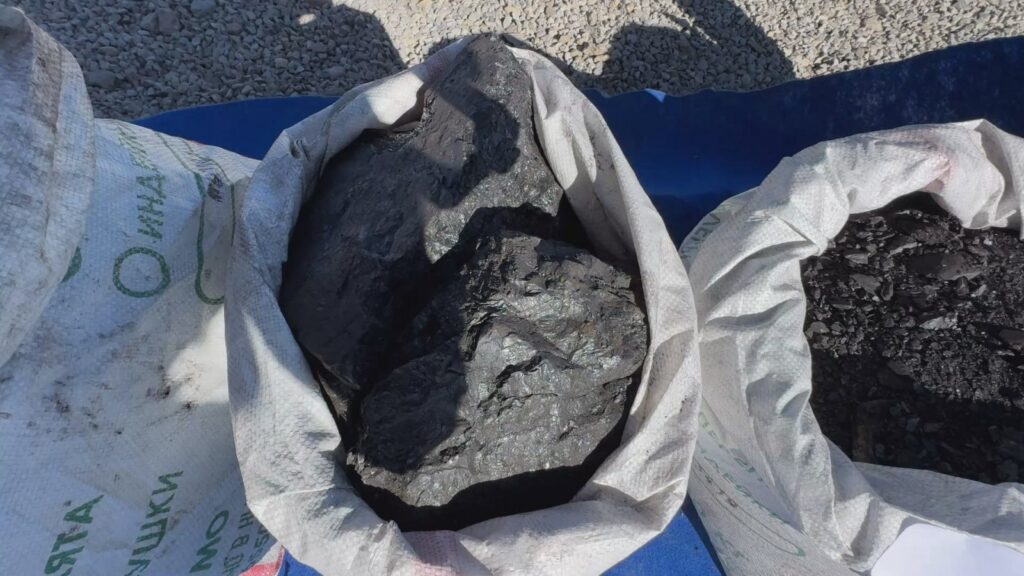
After the modernization, the Bishkek TPP will burn more coal. For the next heating season of 2017/2018, it is necessary to supply 2.3 million tons of coal in the country.
It is planned to supply one million tons of coal for the Bishkek TPP, including 550,000 tons of local coal. Last year, 950,000 tons of coal was provided including 450,000 tons of local coal.
The Kyrgyzkomur state enterprise, which develops the Kara-Keche coal deposit in the Naryn province, is ready to supply one million tons of coal to the Bishkek TPP if the issue with transportation is resolved. Two options for the construction of a railway from Kara-Keche to Balykchy at Issyk Kul Lake (from which there is a rail link to Bishkek) — through the Kegetai and Shamshy passes — are now considered by the Government.
Upper Naryn HPPs cascade
During the recent visit of Russian President Vladimir Putin to Kyrgyzstan, the presidents of the two countries discussed the project of the Upper Naryn HPPs cascade.
Consultative negotiations with Russia on the issue are currently underway, head of Kyrgyzstan’s National Energy Holding Aibek Kaliev said. Local media have politicized the issue, he believes. Unfortunately, Kyrgyzstan and Russia have not been able to implement a unique investment agreement for the construction of the cascade, he added.
Kyrgyzstan will return $37 million to Russia either after an audit or through an investor (if Kyrgyzstan finds it), Kaliyev said. Kyrgyzstan does not want to conduct an audit worth between $300,000 and $1 million independently and offered Russia joint payment. An international company will conduct the audit.
Earlier this year, the Russian company RusHydro demanded from Kyrgyzstan to return its funds invested in the construction of the HPPs cascade. As part of the Upper-Naryn project, Russian money was spent to build a camp for construction workers, concrete plants, bridges, water supply, sewage and purification networks, access roads, transformer substations, etc. The Russian side estimated these expenditures at $37 million.
The Kyrgyz side considered the amount to be too high and required an international audit. The Russian side insisted on the return of the invested money without an audit.
Background
In January 2016, President of Kyrgyzstan Almazbek Atambayev signed a law on denunciation of the agreement between the governments of Kyrgyzstan and Russia on the construction and operation of the Upper Naryn HPPs cascade.
Kyrgyzstan intended to attract investors for the construction of new generating capacity on the Naryn River. According to the Kyrgyz parliament, in 2015 the Russian side did not solve the issue of financing the project due to financial problems and did not find sources of funding for 2016. It led to delays of the cascade construction. The Kyrgyz side allocated 2,458 hectares for the construction of the Upper Naryn cascade and thereby completed its obligations.
Construction of four HPPs of the Naryn cascade was postponed indefinitely and there was a need to find new investors.
According to the agreements, the Electric Stations JSC from Kyrgyzstan and RusHydro JSC from Russia were authorized to implement the project. Both companies owned 50% stakes in the authorized capital of the Upper-Naryn HPPs JSC.
It was planned to build the Naryn cascade within six years, and the first hydraulic unit of the main Naryn HPP-1 should have been put into operation in 2016. The Upper-Naryn cascade includes AkBulun, Naryn HPP-1, Naryn HPP-2, and Naryn HPP-3 power plants.
The total capacity of the cascade should be at least 191 MW, with average annual electricity production of 1.55 billion kilowatt-hours.