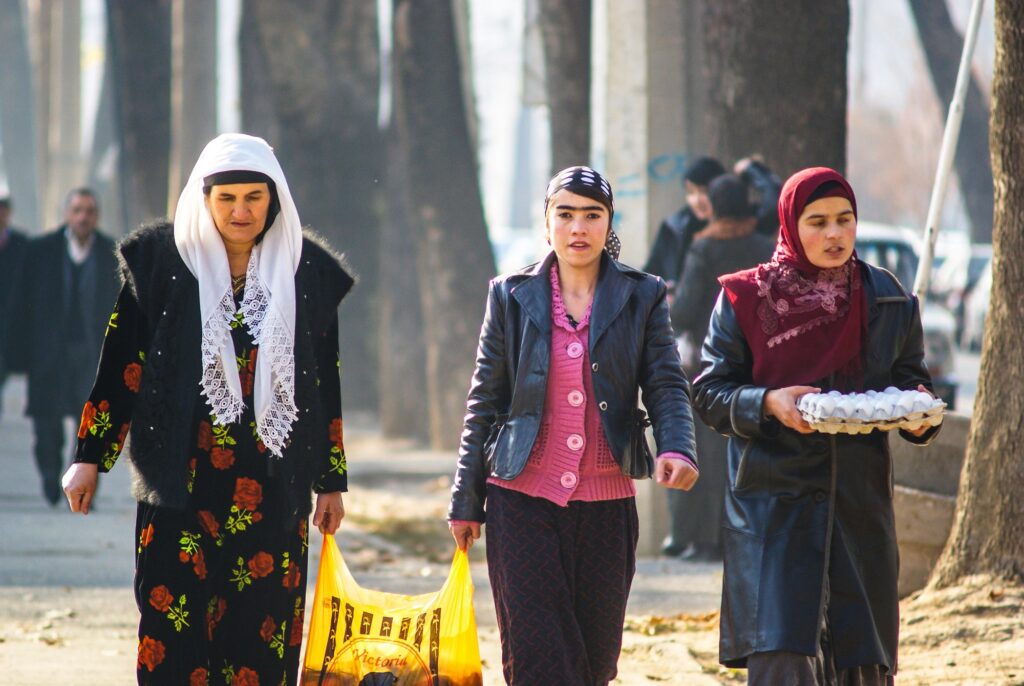
In the first six months of 2025, 102 women and 30 girls died by suicide in Tajikistan, according to figures announced by Bunafsha Fayziddinzoda, head of the Committee on Women and Family Affairs.
Disturbing Trends
While the overall number of female suicides declined by eight cases compared to the same period in 2024, the number among girls rose by six.
The Committee has been conducting large-scale preventive efforts. As part of its outreach, 430,264 families were visited in a “door-to-door” campaign, accompanied by 3,847 “district-to-district” and “village-to-village” meetings and 795 school-based awareness events.
Gender-Based Violence: Not Just a Women’s Issue
From January to June 2025, authorities recorded 2,121 cases of violence, 277 more than in the same period last year. Women accounted for 1,763 of these cases, up by 256, while cases involving men fell to 251, a decline of 86.
Fayziddinzoda cited the primary causes of domestic violence as spousal conflict, jealousy, third-party interference, and mental or physical illness. Economic and sexual violence were also reported. She added that in many cases, violence against men is perpetrated by in-laws, including a wife’s brothers, fathers, and uncles.
In July, the Committee launched hotline 1313. It received 58 calls in its first month, nine of them from men. According to Azimova, male callers reported abuse by wives, daughters-in-law, and in some cases, their own mothers.
Children and Marriage
Official data showed that 30,356 marriages were registered in the first half of 2025, a slight increase of 78 from the same period in 2024. However, 4,117 marriages were dissolved, affecting 3,632 children. While divorces decreased by 291 cases, 230 court-sanctioned marriages involving minors were also registered, 100 fewer than last year. Nonetheless, 26 early marriages involving underage girls were reported.
Those responsible have been prosecuted under Articles 168 and 169 of the Criminal Code. Penalties include fines of up to 150,000 somoni ($15,700), corrective labor, or up to five years of restricted liberty.
Education Access and Structural Challenges
Obstacles to compulsory secondary education also increased: 271 cases were recorded, 59 more than in the previous year. Those found guilty, usually parents or guardians, face prosecution under Article 164 of the Criminal Code, with penalties of up to $9,500 in fines, compulsory labor, or up to two years of imprisonment.
Compulsory education in Tajikistan now includes grades 10 and 11, a move implemented in 2024 to combat early marriage, particularly in rural regions where girls were often removed from school after grade 9.
Azimova stressed that violence is not confined to socially disadvantaged families.
“Today, there are people who are seen as model citizens, even hajis, who unfortunately behave unacceptably toward their wives and children, unbeknownst to those around them,” she said.
The Committee reiterated that violence and crime cut across all segments of society and must be addressed universally.