• KGS/USD = 0.01144 0%
  • KZT/USD = 0.00213 0%
  • TJS/USD = 0.10456 0.19%
  • UZS/USD = 0.00008 0%
  • TMT/USD = 0.28490 0%
  • KGS/USD = 0.01144 0%
  • KZT/USD = 0.00213 0%
  • TJS/USD = 0.10456 0.19%
  • UZS/USD = 0.00008 0%
  • TMT/USD = 0.28490 0%
  • KGS/USD = 0.01144 0%
  • KZT/USD = 0.00213 0%
  • TJS/USD = 0.10456 0.19%
  • UZS/USD = 0.00008 0%
  • TMT/USD = 0.28490 0%
  • KGS/USD = 0.01144 0%
  • KZT/USD = 0.00213 0%
  • TJS/USD = 0.10456 0.19%
  • UZS/USD = 0.00008 0%
  • TMT/USD = 0.28490 0%
  • KGS/USD = 0.01144 0%
  • KZT/USD = 0.00213 0%
  • TJS/USD = 0.10456 0.19%
  • UZS/USD = 0.00008 0%
  • TMT/USD = 0.28490 0%
  • KGS/USD = 0.01144 0%
  • KZT/USD = 0.00213 0%
  • TJS/USD = 0.10456 0.19%
  • UZS/USD = 0.00008 0%
  • TMT/USD = 0.28490 0%
  • KGS/USD = 0.01144 0%
  • KZT/USD = 0.00213 0%
  • TJS/USD = 0.10456 0.19%
  • UZS/USD = 0.00008 0%
  • TMT/USD = 0.28490 0%
  • KGS/USD = 0.01144 0%
  • KZT/USD = 0.00213 0%
  • TJS/USD = 0.10456 0.19%
  • UZS/USD = 0.00008 0%
  • TMT/USD = 0.28490 0%

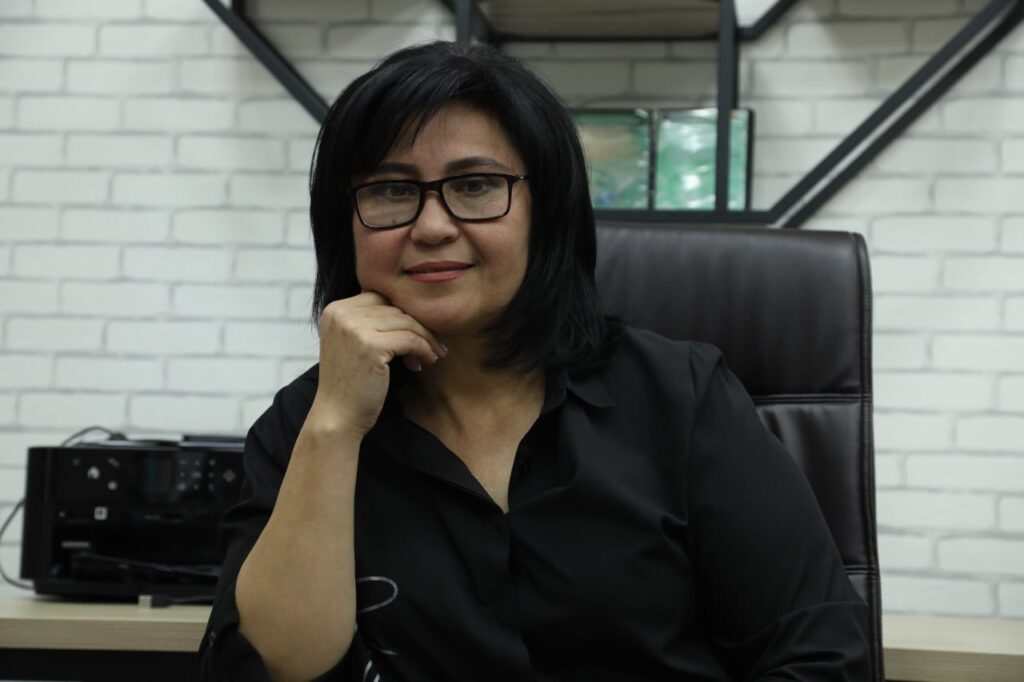
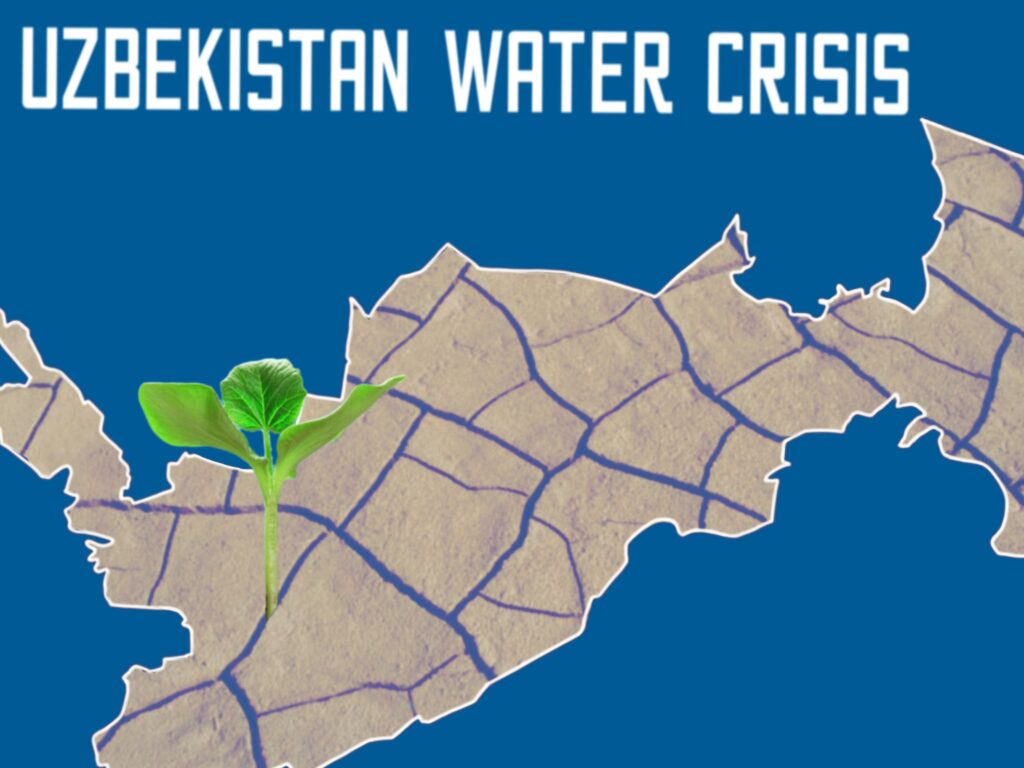
Water Crisis in Uzbekistan: an interview with Eco-journalist Nargis Kosimova

For a long time now, there have been murmurs about the growing problem of water shortages in Uzbekistan. Every citizen is likely to remember, at the very least, public service announcements on television with calls to conserve water. Still, the issue began to really attract people’s attention after the last, rather unexpected hike in cold tariffs. Was this an indication of the situation deteriorating? What is going on with water resources, and what should we expect moving forward? To find out, we talked to Nargis Kosimova, an eco-journalist, teacher, media trainer, and doctor of philology, who has come to fame as the author of Ekolog.uz.

What is the current situation with drinking water in Uzbekistan?

The problem with water resources is particularly serious in Uzbekistan, now. Experts say that by 2030, the water deficit could reach 7 billion cubic meters, and this could double by 2050. Unfortunately, the climate is changing at a rapid pace. Our key rivers, the Amu Darya and the Syr Darya have seen their discharge decline 20% in just 50 years. Currently, we are also seeing dust storms and droughts, which are exacerbating the problem of water scarcity. The result may be a rise in the cost of fresh water and, consequently, food prices, with the entire economy of the country affected in turn.

For example, over the past 15 years, the amount of water used per person in Uzbekistan has roughly halved from 3,000 cubic meters in 2008 to 1,500 cubic meters by the end of 2022. Nevertheless, water consumption per capita is still very high. for example, in Germany each person uses just 312 cubic meters of water each year, meaning that even though they have plentiful resources, Germans conserve a lot of water.

Last year, we conducted a training session which was attended by 60 farmers. Unfortunately, not one of them, as they told us, had switched to water-saving technologies. when asked why not, they gave a wide range of answers, from a lack of money to the phrase, “Why [should we] if there is still water?”

What measures can be taken to help avoid a water crisis?

Many experts highlight drip irrigation as an effective way to rationally utilize resources. Even the Ministry of Water Resources noted that switching to this system would significantly reduce the stress on the country’s reserves. and at the same time, yields would increase significantly.

Increasing prices on drinking water can also help avoid a crisis situation, while control over water usage should also be strengthened. A 100% transition to water-saving technologies in agriculture is needed, as well as protecting rivers from erosion. In Uzbekistan, starting on May 1st, an indefinite moratorium on the extraction of ore from the beds of large rivers will come into effect. Increasing construction and urbanization have led to almost uncontrolled extraction of sand and gravel, as a result of which riverbeds have been nearly degraded and the water has practically disappeared from these rivers. Moreover, it is not just water that has begun to disappear, but also biodiversity.

Of course, for household needs, we still need to switch to processed water. The dumping of sewage and wastewater into rivers – which is common in our country today, especially by developers and private enterprises – must be regulated.

In addition, the population still doesn’t know anything, for example, about virtual water – the water that is used for processing products and in the manufacture of various goods. Roughly speaking, it takes 20,000 liters of virtual water to produce a kilogram of pilaf, approximately 15,400 liters goes into producing a kilogram of beef, and 1,700 liters to grow a kilogram of rice.

In your view, is the recently announced hike in cold water tariffs related to the water situation in our country?

In 2023, the president held a conference call where measures to prevent a water crisis in the country were discussed. One of the tasks he set was precisely this, hiking tariffs for drinking water. Water itself has no cost in the country; only its delivery to populated areas is priced.

What is being implemented to ensure the population does not sooner or later lose access to water?

Back in 2013, the regulation “On the Procedure for Water Use and Water Consumption in the Republic of Uzbekistan” was adopted. It was therein that such concepts as water consumers, water use, water bodies, water resources, etc. were laid out for the first time.

Last year, people began to receive fines ranging between UZS300,000 ($24) and UZS900,000 ($72) “for the unreasonable use of water.” If this is committed by officials, then it can increase from five to ten base calculation units (BCUs), which would be about UZS3.5 million ($280).

Our @eklguz_bot Telegram channel receives a lot of messages about the irrational use of water, and about pollution of open reservoirs by businesspeople, developers, and ordinary people alike. It seems advisable to me to begin the construction of water purification plants in all populated areas in Uzbekistan. At this time, only large cities have them, while in the provinces the water is currently treated only to get rid of garbage, and sewer water is discharged into rivers, canals, and open reservoirs. I would like the government to pay attention to this, and for every businessman and developer to install water treatment equipment when a new residential complex is built or an enterprise is set up. Purified water could be reused in everyday life.

I would like to add that the government has set out a concept for the country’s comprehensive development until 2030, in line with which market mechanisms are already being introduced for water consumption, while the development of irrigation systems is underway through the construction and reconstruction of irrigation canals and their hydraulic structures.

The government also plans to provide the population with high-quality drinking water by 2030, although I don’t know how realistic that is as the plan targets 100% of the population, even though 60% still use artesian wells and the issue of water becomes increasingly serious every year.

What are the consequences of water depletion?

As it stands today, the economy of Uzbekistan is losing around $5 billion a year due to water scarcity. But if we consider the future, the consequences could be, for example, the commercialization of water resources and their treatment as nothing more than a commodity. And all this will, of course, be in the hands of the countries upstream, mainly Tajikistan and Kyrgyzstan. Plus, we know Afghanistan is already building its own canal. All this poses certain risks, in particular the potential outbreak of armed conflicts against the backdrop of water shortages, as well as a limited supply of drinking water, shortages of water for fields and electricity, a reduction in crop yields and, finally, more and more climate migrants.

It would be good to develop a common code for Central Asia on water use that takes into account the interests of each country in the region. A Central Asian institute for joint research of regional water issues should also be established, since small, seemingly insignificant conflicts, which are already visible today, could over time develop into big ones.

The government and citizens of Uzbekistan should understand the importance of water conservation. Water is not only vital to our existence but is also a key resource that enables our societies to function and supports economic development.

For each of us, this means taking simple but important steps to conserve water in our daily lives. We can reduce water consumption by monitoring the condition of water supply systems and eliminating leaks and replacing old faucets and showers with low-flow models. This also includes optimizing the use of washing machines and dishwashers, reusing water, limiting shower times, and family education. Remember, there is no alternative to water.

Nargis Kosimova is an eco-journalist, teacher, media trainer, doctor of philology, and the author of Ekolog.uz.

Endangered Fish Species in the Amu Darya Basin May Disappear Due to Hydropower Plants

The 14th Conference of the Parties to the Convention on the Conservation of Migratory Species of Wild Animals is being held this week in Samarkand, Uzbekistan. The international environmental coalition Rivers Without Boundaries is calling on conference participants to pay serious attention to how the rampant construction of dams and reservoirs across Central Asia is leading to population declines and the complete extinction of endangered (red-listed) species. 

Rivers Without Boundaries experts point to the long-suffering Amu Darya river basin as an example: the alteration of its flow as a result of reservoirs and dams that change the hydrological regime and block fish migration routes was the most important reason for the Convention on Migratory Species to take under its protection the large Amu Darya sturgeon, a unique sturgeon adapted to live in the fast and turbid waters of the Vakhsh, Pyandj and Amu Darya. Its close relative, the Syr Darya sturgeon, is already considered extinct by most experts, due to the creation of numerous dams and reservoirs on the Syr Darya and its tributaries. 

Nevertheless, as experts from the Rivers Without Boundaries coalition emphasize, the recent World Bank assessment of the environmental impact of the construction of the Rogun hydropower plant in the Amu Darya basin does not consider the state of populations and the possible impact of changes in river flow on rare species of fish in the lower Vakhsh and the Amu Darya itself. 

Another example cited by ecologists is the Aral salmon (listed in the Red Book of Tajikistan), which once migrated along the Amu Darya and the Vakhsh, but since the creation of the Tuyamuyun hydro system and the Vakhsh group of hydropower plants has now completely disappeared from the area. Scientists found a last grouping of Aral salmon in the Nurek reservoir, but this too is likely to disappear as a result of the construction of the Rogun hydropower station upstream, as this will simply leave the salmon with no rivers in which to spawn. 

“Despite the requirements of national legislation regarding environmental impact assessment and protection of rare species, in all Central Asian countries, rivers – as well as their valleys, and the fauna and flora that depend on their ecological health – are massively sacrificed to the implementation of poorly justified hydraulic engineering projects,” points out Evgeny Simonov, the international coordinator for Rivers Without Boundaries. “To date, when designing and building most dams throughout the region, no one is seriously trying to prevent damage to populations of rare migratory species.” 

“Refusal to consider the potential impacts of hydropower plants on rare migratory species and natural ecosystems is not only a gross violation of international environmental conventions, but also often contradicts the environmental policy of those development banks that are going to lend money to build reservoirs,” emphasizes Alexander Kolotov, Central Asia coordinator of the Rivers Without Boundaries environmental coalition. “We hope that the discussions during the conference in Samarkand will lead to the introduction of more responsible approaches to the selection of sites for energy facilities, especially dammed hydroelectric power stations, as the most dangerous hydraulic structures for nature.” 

The Convention on the Conservation of Migratory Species of Wild Animals was signed in 1979 in Bonn, Germany. It entered into force in 1983. One hundred and thirty-three countries are members of the Convention. The Bonn Convention is designed to unite the states of the ranges through which migratory species pass and to lay the legal basis for internationally agreed measures to conserve species throughout their migratory range. In addition to migratory birds, the Bonn Convention protects four species of sturgeon, as well as many mammals, such as the snow leopard and Bukhara deer.

Alexander Kolotov is the director of the Rivers Without Boundaries Public Fund in Almaty, and the Central Asia region coordinator of the Rivers Without Boundaries International Coalition.


Uzbekistan Continues Switching Public Transport to Electric-Powered

Uzbekistan is charging ahead in 2024 on a course it began a few years ago to modernize public transport systems. Metro lines have been completed and several new stations opened in both remote and densely populated areas of Tashkent, and a plan is being developed to bring the most environmentally-friendly form of urban transport, the streetcar back to the capital. The bus fleet in Tashkent has also been significantly upgraded; now, it’s mostly comprised of newer, more comfortable buses and electric buses.

Against a background of serious air quality problems, the issue of reducing the number of cars on the roads has become particularly urgent. Thus, in the capital and other major cities, authorities are opting for electric modes of urban transport. The first bus powered by electricity hit the streets of Tashkent back in 2019. Last year, officials in the capital agreed to purchase 2,000 buses from China: half of them will be used in the regions and the rest in Tashkent. In early 2024, the European Bank for Reconstruction and Development (EBRD) issued a loan to Uzbekistan to buy 100 Yutong electric buses from China for the Samarkand Region.

Tashkent will buy 673 electric buses – out of 1,063 total planned purchases – by 2025. From now on, only electric buses will be purchased for Uzbekistan’s capital. By 2025, their share of the public transport mix of Tashkent should be 49%. It is a major component that city authorities are counting on as part of a plan to reduce the amount of carbon dioxide (CO2) in the atmosphere, reduce noise levels in the city, and improve transport safety.

Uzbekistan plans to not only buy pre-assembled buses but to also produce its own. a memorandum has been signed with Lanzhou Guangtong New Energy Automobile of China to start the joint production of 2,000 electric buses annually in Uzbekistan.

Uzbekistan’s continued efforts at electrification of the public transport network comes against a backdrop of the low headline costs of using that transport. Numbeo, the world’s largest database on the cost of living, publishes data on the cost of public transportation in different countries. according to their data, the cost of a one-way fare in Uzbekistan is $0.13. In Kazakhstan, the fare is slightly more at $0.20. Currently, there is no data on other Central Asian republics. The top three are most expensive places are Switzerland ($4), Norway ($3.76), and the Netherlands ($3.66).


Potential Water Crisis in Uzbekistan: An Interview with Eco-journalist Nargis Kosimova

For a long time now, there have been murmurs about the growing problem of water shortages in Uzbekistan. Every citizen is likely to remember, at the very least, public service announcements on television with calls to conserve water. Still, the issue began to really attract people’s attention after the last, rather unexpected hike in cold tariffs. Was this an indication of the situation deteriorating? What is going on with water resources, and what should we expect moving forward? To find out, we talked to Nargis Kosimova, an eco-journalist, teacher, media trainer, and doctor of philology, who has come to fame as the author of Ekolog.uz.

What is the current situation with drinking water in Uzbekistan?

The problem with water resources is particularly serious in Uzbekistan, now. Experts say that by 2030, the water deficit could reach 7 billion cubic meters, and this could double by 2050. Unfortunately, the climate is changing at a rapid pace. Our key rivers, the Amu Darya and Syr Darya, have seen their discharge decline 20% in just 50 years. Currently, we are also seeing dust storms and droughts, which are exacerbating the problem of water scarcity. The result may be a rise in the cost of fresh water and, consequently, food prices, with the entire economy of the country affected in turn.

For example, over the past 15 years, the amount of water used per person in Uzbekistan has roughly halved from 3,000 cubic meters in 2008 to 1,500 cubic meters by the end of 2022. Nevertheless, water consumption per capita is still very high. For example, in Germany each person uses just 312 cubic meters of water each year, meaning that even though they have plentiful resources, Germans conserve a lot of water.

Last year, we conducted a training session which was attended by 60 farmers. Unfortunately, not one of them, as they told us, had switched to water-saving technologies. When asked why not, they gave a wide range of answers, from a lack of money to the phrase, “why [should we] if there is still water?”

What measures can be taken to help avoid a water crisis?

Many experts highlight drip irrigation as an effective way to rationally utilize resources. Even the Ministry of Water Resources noted that switching to this system would significantly reduce the stress on the country’s reserves. And at the same time, yields would increase significantly.

Increasing prices on drinking water can also help avoid a crisis situation, while control over water usage should also be strengthened. A 100% transition to water-saving technologies in agriculture is needed, as well as protecting rivers from erosion. In Uzbekistan, starting on May 1st, an indefinite moratorium on the extraction of ore from the beds of large rivers will come into effect. Increasing construction and urbanization has led to almost uncontrolled extraction of sand and gravel, as a result of which riverbeds have been nearly degraded and the water has practically disappeared from these rivers. Moreover, it is not just water that has begun to disappear, but also biodiversity.

And, of course, for household needs, we still need to switch to processed water. The dumping of sewage and wastewater into rivers – which is common in our country today, especially by developers and private enterprises – must be regulated.

In addition, the population still doesn’t know anything, for example, about virtual water – the water that is used for processing products and in the manufacture of various goods. Roughly speaking, it takes 20,000 liters of virtual water to produce a kilogram of pilaf, approximately 15,400 liters goes into producing a kilogram of beef, and 1,700 liters to grow a kilogram of rice.

In your view, is the recently announced hike in cold water tariffs related to the water situation in our country?

In 2023, the president held a conference call where measures to prevent a water crisis in the country were discussed. One of the tasks he set was precisely this, hiking tariffs for drinking water. Water itself has no cost in the country; only its delivery to populated areas is priced.

What is being implemented to ensure the population does not sooner or later lose access to water?

Back in 2013, the regulation “On the Procedure for Water Use and Water Consumption in the Republic of Uzbekistan” was adopted. It was therein that such concepts as water consumers, water use, water bodies, water resources, etc. were laid out for the first time.

Last year, people began to receive fines ranging between UZS300,000 ($24) and UZS900,000 ($72) “for the unreasonable use of water.” If this is committed by officials, then it can increase from five to ten base calculation units (BCUs), which would be about UZS3.5 million ($280).

Our @eklguz_bot Telegram channel receives a lot of messages about the irrational use of water, about pollution of open reservoirs by businesspeople, developers, and ordinary people alike. It seems advisable to me to begin the construction of water purification plants in all populated areas in Uzbekistan. At this time, only large cities have them, while in the provinces the water is currently treated only to get rid of garbage, and sewer water is discharged into rivers, canals, and open reservoirs. I would really like the government to pay attention to this, and for every businessman and developer to install water treatment equipment when a new residential complex id built or an enterprise is set up. Purified water could be reused in everyday life.

I would like to add that the government has set out a concept for the country’s comprehensive development until 2030, in line with which market mechanisms are already being introduced for water consumption, while the development of irrigation systems is underway through the construction and reconstruction of irrigation canals and their hydraulic structures.

The government also plans to provide the population with high-quality drinking water by 2030, although I don’t know how realistic that is as the plan targets 100% of the population, even though 60% still use artesian wells and the issue of water becomes increasingly serious every year.

What are the consequences of water depletion?

As it stands today, the economy of Uzbekistan is losing around $5 billion a year due to water scarcity. But if we consider the future, the consequences could be, for example, the commercialization of water resources and their treatment as nothing more than a commodity. And all this will, of course, be in the hands of the countries upstream, mainly Tajikistan and Kyrgyzstan. Plus, we know Afghanistan is already building its own canal. All this poses certain risks, in particular the potential outbreak of armed conflicts against the backdrop of water shortages, as well as a limited supply of drinking water, shortages of water for fields and electricity, a reduction in crop yields and, finally, more and more climate migrants.

It would be good to develop a common code for Central Asia on water use that takes into account the interests of each country in the region. A Central Asian institute for joint research of regional water issues should also be established, since small, seemingly insignificant conflicts, which are already visible today, could over time develop into big ones.

The government and citizens of Uzbekistan should understand the importance of water conservation. Water is not only vital to our existence, but is also a key resource that enables our societies to function and supports economic development.

For each of us, this means taking simple but important steps to conserve water in our daily lives. We can reduce water consumption by monitoring the condition of water supply systems and eliminating leaks and replacing old faucets and showers with low-flow models. This also includes optimizing the use of washing machines and dishwashers, reusing water, limiting shower times, and family education. Remember, there is no alternative to water.

How Kazakhs Saw Their Personal and National Well-Being at the Start of 2024

In December 2023, I was asked quite frequently whether, in my view, protests like the ones that took place across Kazakhstan in January 2022 were again possible. Based on previous sociological data, I answered that they were most likely not: Throughout 2021 – largely due to the pandemic – social sentiment had worsened, reaching its lowest levels in our 20 years of collecting observations. At that time, almost all indicators of social well-being had declined, including satisfaction with life and the approval of government institutions, while expectations of protests about socio-economic and political issues had increased.

Since January 2022, however, many indicators began to improve, and by December 2023, they had “normalized”, roughly reaching 2019 levels. This is clearly seen in the indicator regarding the respondent’s satisfaction with life (see Chart 1 below). Over 2004-2023, this indicator saw three incidences of significant deterioration, namely in 2004, in 2008-2009 when the financial crisis struck, and in 2021-2022. Thus, by end-2023, the dangerous convergence of satisfaction/dissatisfaction indicators seems to have passed as social sentiment stabilized.

Chart 1: In general, are you satisfied or dissatisfied with your life? (2004-2023)

In December 2023, the country’s economic situation was also seen as having improved (see Chart 2 below). Some 24% percent of respondents said that the economy was in good shape (versus 7% in 2021); 57% saw things as average (vs. 41% in 2021), and only 13% called the economic situation “bad” (vs. 30% in 2021). Most respondents, therefore, saw the economy in 2023 in a neutral or positive light.


Chart 2: How would you assess the current economic situation in Kazakhstan?

However, this does not mean that social sentiment has completely turned around and that it can be ignored. The challenging dynamics of “social optimism”, an important indicator, reflects the population’s subjective near-term outlook. Optimistic responses (i.e., “we will be better off”) rose in 2022 to 49% but decreased to 43% in 2023, representing the same level as during the crisis year of 2021 (see Chart 3 below).


Chart 3: Do you think that in a year you (your family) will be better or worse off than now? (2004-2023)

What drives this decline in Kazakhs’ social optimism? The answer, I think, is low levels of income against a backdrop of rising prices for food and essential goods and services, as well as higher utility tariffs. According to the survey, 58% of the population only has enough money to buy food and clothing and to pay for utilities, with no money left for savings. Almost another fifth of respondents (18.2%) can be classified as “low-income”, meaning their income is barely enough to live on (see below Chart 4).


Chart 4: Assess your income versus consumption (%, December 2023)

This is why the majority of the population, having carefully planned their small family budgets, painfully experiences unexpected changes to the status quo. Take health care, for example: Some 52.6% of respondents said that their health insurance payments were already too high and that they have trouble making them each month while 43.2% said that they do not have a regular income to make compulsory social health insurance contributions.

The data from this sociological research raises some questions, including to what extent the state takes into account difficulties faced by a significant part of the country’s population when it adjusts taxes and tariffs and makes changes in other areas without adequate transition periods and insufficient information campaigns. Government bodies should be aware of their responsibility to preserve social stability. Obviously, the inability to plan one’s life even in the short term is extremely irritating and can unhinge anyone.


Dr. Gulmira Ileuova has a PhD in economics and is president of the Strategy – Center for Social and Political Research public foundation. Building on more than 25 years of research experience she is currently focused on projects that advance the social welfare and political climate of Kazakhstan. Dr. Ileuova graduated from St Petersburg State University Faculty of Philosophy with a degree in sociology and teaching sociology. Her Master’s thesis was on “The social aspects of the formation and development of Kazakhstan’s political elite” (1997). Dr. Ileuova holds memberships in the National Kurultai, a community organization and consultative body under the President of the Republic of Kazakhstan.

Kyrgyzstan-Turkey Business Forum Held in Ankara

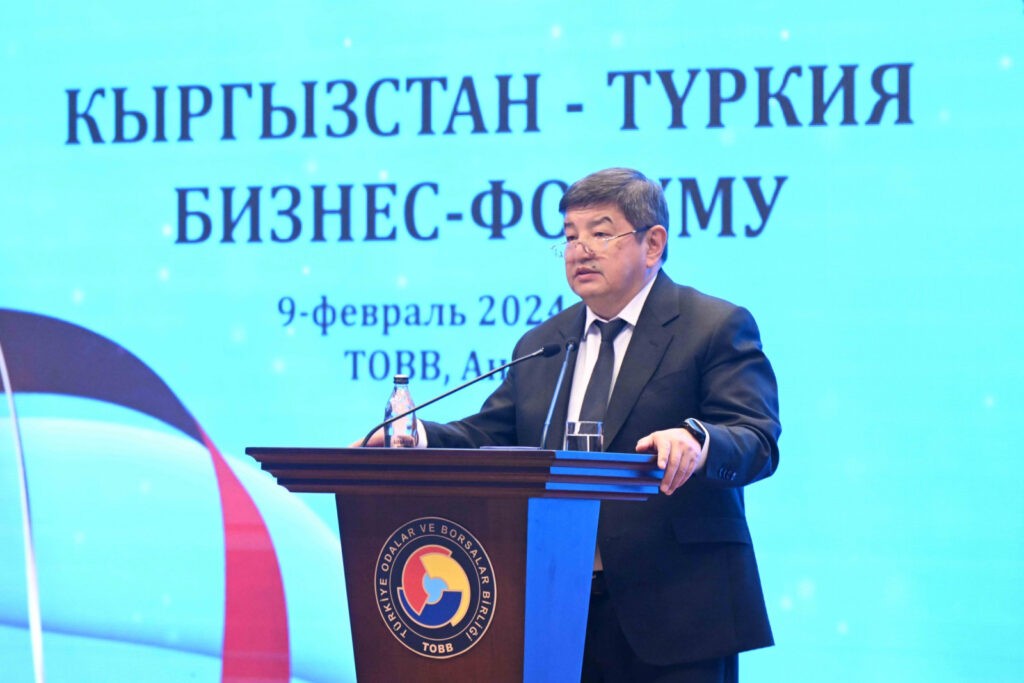
Relations between Kyrgyzstan and Turkey have reached a new level in all areas, the chairman of the Cabinet of Ministers of the Kyrgyz Republic, Akylbek Japarov said at the Kyrgyz-Turkish business forum in the Turkish capital, Ankara on February 9th.

According to the Prime Minister, Turkey was the largest foreign investor in Kyrgyzstan’s economy in 2022, with investments totaling $341.6m. Between January and November 2023, trade turnover between the two countries increased again, amounting to $560.5m.

Japarov added that the governments of the two countries are now working to create a Kyrgyz-Turkish Investment Fund to finance large infrastructure projects.

At the forum, Kyrgyzstan’s Minister of Economy and Commerce, Daniyar Amangeldiev informed Turkish entrepreneurs about opportunities in Kyrgyzstan, highlighting tax breaks and support for investors.

The forum culminated in the signing of eight cooperation documents on joint projects, among them a contract for the supply of walnuts from Kyrgyzstan to Turkey.

On the same day, Japarov and Turkish Vice President, Cevdet Yilmaz co-chaired the 11th meeting of the Kyrgyz-Turkish Intergovernmental Commission on Trade and Economic Cooperation. The meeting focused on the fields of economy, investment, energy, industry, agriculture, transport, tourism, healthcare, culture, and education.

At the meeting Japarov stated that the establishment of a trade mission of Kyrgyzstan in Turkey will help deepen economic ties between the two states and ensure the sustainable development of cooperation in trade and investment.