• KGS/USD = 0.01144 0%
  • KZT/USD = 0.00196 -0%
  • TJS/USD = 0.10899 -0%
  • UZS/USD = 0.00008 -0%
  • TMT/USD = 0.28490 0%
  • KGS/USD = 0.01144 0%
  • KZT/USD = 0.00196 -0%
  • TJS/USD = 0.10899 -0%
  • UZS/USD = 0.00008 -0%
  • TMT/USD = 0.28490 0%
  • KGS/USD = 0.01144 0%
  • KZT/USD = 0.00196 -0%
  • TJS/USD = 0.10899 -0%
  • UZS/USD = 0.00008 -0%
  • TMT/USD = 0.28490 0%
  • KGS/USD = 0.01144 0%
  • KZT/USD = 0.00196 -0%
  • TJS/USD = 0.10899 -0%
  • UZS/USD = 0.00008 -0%
  • TMT/USD = 0.28490 0%
  • KGS/USD = 0.01144 0%
  • KZT/USD = 0.00196 -0%
  • TJS/USD = 0.10899 -0%
  • UZS/USD = 0.00008 -0%
  • TMT/USD = 0.28490 0%
  • KGS/USD = 0.01144 0%
  • KZT/USD = 0.00196 -0%
  • TJS/USD = 0.10899 -0%
  • UZS/USD = 0.00008 -0%
  • TMT/USD = 0.28490 0%
  • KGS/USD = 0.01144 0%
  • KZT/USD = 0.00196 -0%
  • TJS/USD = 0.10899 -0%
  • UZS/USD = 0.00008 -0%
  • TMT/USD = 0.28490 0%
  • KGS/USD = 0.01144 0%
  • KZT/USD = 0.00196 -0%
  • TJS/USD = 0.10899 -0%
  • UZS/USD = 0.00008 -0%
  • TMT/USD = 0.28490 0%
08 December 2025

Kazakhstan’s Automotive Industry Boosts Revenues by Over 50% in July

Kazakhstan’s automotive industry posted strong growth in July 2025, producing 11,700 vehicles valued at KZT 164.9 billion ($305.3 million), according to the Kazakhstan Automobile Union. This represents a 50.1% increase in production volume compared to July 2024.

Data from the National Statistics Bureau shows that in July 2024, the country produced 7,800 vehicles worth KZT 100.9 billion ($186.8 million). Over the past year, the industry has not only expanded output but also significantly boosted revenue.

From January to July 2025, Kazakhstan produced 83,200 vehicles valued at KZT 1.16 trillion ($21.4 billion), marking a 16.7% year-on-year increase. The automotive sector now accounts for 40.7% of the national engineering industry. Passenger cars led the growth, with 75,400 units produced, up 19% from the same period last year.

Bus production also saw a 5.5% uptick, totaling more than 1,300 units. In contrast, truck output declined by 10.5% to 4,100 vehicles. Manufacturers also turned out 1,900 trailers and semi-trailers, along with 453 special-purpose vehicles.

Regional Breakdown

Kostanay remains the top manufacturing hub, producing 45,700 vehicles, a 6.9% increase, at Allur’s facilities. In Almaty, the Hyundai Trans Kazakhstan and Hyundai Trans Almaty plants reported a record 41.8% increase, assembling 31,200 vehicles.

Production trends varied in other regions:

  • Semey: Down 17.5% (2,400 units)
  • Karaganda region (QazTehna): Up 28.1%
  • Kokshetau (KAMAZ-Engineering): Up 34.6%

Top Brands and Models

The most produced brands from January to July were:

  • Hyundai: 30,800 units
  • Chevrolet: 16,500
  • Kia: 14,800
  • Jetour: 7,100
  • Jac: 5,600

Leading models included the Chevrolet Cobalt (13,600 units), Hyundai Tucson (11,900), Kia Sportage (nearly 7,000), Hyundai Elantra (4,900), and Hyundai Mufasa (4,600).

Anar Makasheva, President of the Kazakhstani Automobile Union, credited the industry’s progress to the expertise of more than 8,000 specialists:

“The growth in production strengthens the position of the domestic automotive industry and opens up new opportunities for enterprises.”

She also announced the upcoming launch of two new plants: the multi-brand Astana Motors Manufacturing Kazakhstan facility in Almaty and a new KIA production line in Kostanay. Together, these projects are expected to create over 5,000 jobs.

As previously reported by The Times of Central Asia, Kazakhstan set a record for car sales in 2024. Domestic automotive production is projected to reach approximately 150,000 vehicles in 2025.

In Kyrgyzstan, Nearly 50,000 Hectares of Arable Land Left Fallow Due to Water Shortages

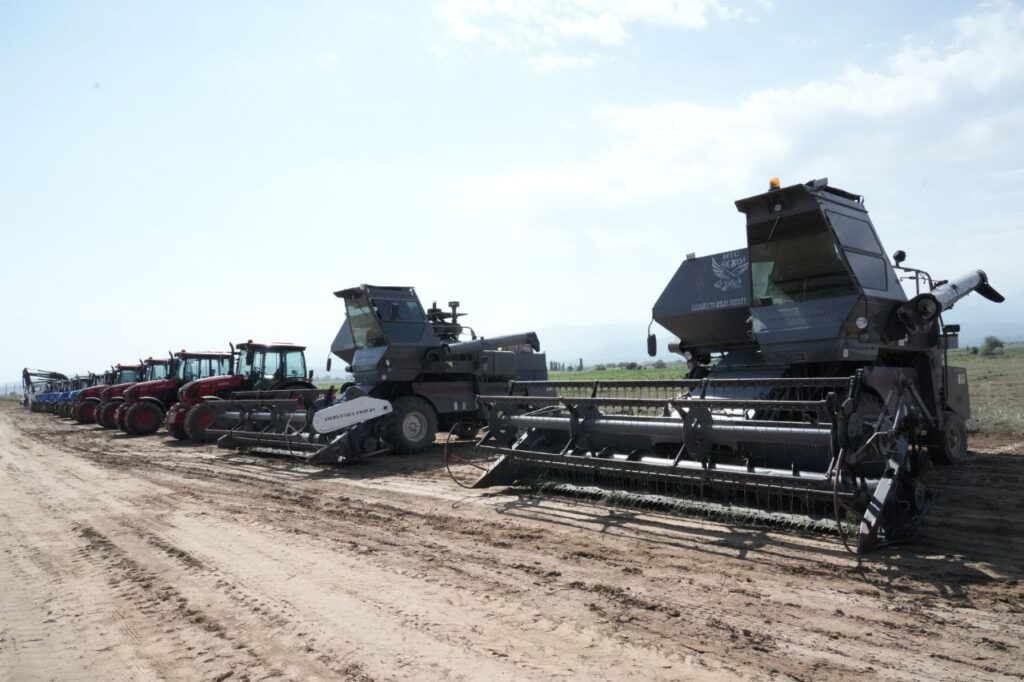
In 2025, approximately 50,000 hectares of agricultural land in Kyrgyzstan were left uncultivated, according to the National Statistical Committee. This figure represents a significant portion of the country’s total arable land area, which stands at 1.292 million hectares. 

Experts attribute the sharp decline primarily to a lack of moisture during the spring growing season. More than half of the affected land, over 25,000 hectares, suffered from irrigation failures due to the deteriorating state of the country’s water infrastructure. An additional 5,000 hectares lie in inaccessible or rocky terrain, while about 8,000 hectares were previously reassigned for industrial or urban development.

The committee also noted a year-on-year increase of 1,100 hectares in the area of fallow land. In the Talas region alone, 25% more land could have been cultivated under better conditions. Across Kyrgyzstan’s regions, the share of idle arable land currently ranges between 10% and 20%.

The Ministry of Economy and Commerce reported that the water shortage not only reduced the amount of cultivated land but also impacted crop yields. Many crops ripened several weeks earlier than usual, accelerating the harvest period. As a result, the growth rate of gross agricultural output slowed by more than 2% in the first half of 2025.

However, not all sectors were negatively affected. The gross harvest of melons and gourds rose by nearly 13%, vegetable production increased by 12%, and potato yields were up 10% compared to the previous year.

Kazakhstan Trials Ultra-Fast 10G Internet

Kazakhstan has launched a pilot project to test wired internet speeds of up to 10 Gbit/s in its capital, Astana. The initiative is part of a broader strategy to modernize the country’s digital infrastructure and improve access to high-performance internet services. 

First Technology Trial

The pilot project is being implemented under a memorandum of cooperation between Huawei Technologies Kazakhstan and Astana Innovations JSC. During a recent presentation, participants were introduced to a new generation of networking equipment, including optical terminals, OLT systems, and Wi-Fi 7. In a designated demo zone, guests tested the service and confirmed its stability and high performance.

Speed measurements during the trial showed data transfer rates reaching up to 9,490 Mbps, sufficient for uninterrupted use of bandwidth-intensive applications such as 8K video streaming and cloud gaming.

Stakeholder Perspectives

Gizat Amyrgaly, Chairman of the Board at Astana Innovations JSC, underscored the significance of the rollout: “The launch of 10G in Astana is a strategic step toward building a next-generation digital infrastructure. It is important for us that innovations quickly transition from testing to practical use, delivering tangible benefits to residents and businesses.”

Sun Yaxiu, CEO of Huawei Technologies Kazakhstan, also highlighted the project’s national relevance: “We are proud that Huawei’s 10G PON technology is being introduced for the first time in an open, public project. Ultra-high-speed wired internet will open up new possibilities for the digital transformation of the urban environment, as well as for business, education, and healthcare.”

Rauan Kabdrakhimov, CEO of Enterprise CO Beeline, stated the company’s intention to move swiftly from pilot testing to real-world deployment: “Our priority as a digital operator is to apply cutting-edge technology to deliver the best customer experience. We are pleased to be a technology partner in this important initiative.”

What Is 10G PON?

10G PON refers to the next generation of wired broadband capable of speeds up to 10 gigabits per second. Unlike mobile technologies such as 4G or 5G, where the number represents a generational standard, the “10” in 10G PON denotes actual data speed.

The idea for the pilot network was first discussed in June 2025 during the China-Central Asia Forum. At that time, the Astana City Administration and Huawei signed a cooperation agreement supporting the future deployment of 50G PON and other advanced telecom solutions in the capital. 

Experts say the successful trial of this technology could pave the way for the widespread introduction of advanced digital services throughout Kazakhstan.

Mass Evacuation from Kyrgyzstan’s Seven-Thousanders, But One Climber Remains Trapped

A major rescue operation has concluded in Kyrgyzstan, where military pilots evacuated 62 climbers and tourists from the high-altitude peaks of Pobeda and Khan Tengri. The evacuation was prompted by life-threatening conditions, including strong winds and a heightened risk of avalanches that left hundreds stranded.

An international group of climbers had earlier become trapped on Victory Peak, where an Italian citizen died during the descent. A helicopter dispatched by the Kyrgyz Ministry of Defense was forced to make an emergency landing on the slope. Fortunately, the crew and rescuers sustained only minor injuries. Given the extreme altitudes, only military helicopters are capable of operating in the area, prompting authorities to deploy additional forces.

Once weather conditions temporarily improved, two military helicopters conducted six flights, evacuating climbers from various countries, including Germany, the United Kingdom, Russia, China, and Kazakhstan. Some were flown to the Yuzhny Enilchek and Polyana base camps at approximately 5,000 meters, while others were hospitalized in Karakol. Those seriously injured are expected to be transferred to Bishkek for further treatment.

Meanwhile, a 47-year-old Russian climber remains stranded at around 7,000 meters after breaking her leg during the descent. German and Italian climbers provided emergency assistance, including a tent, sleeping bag, and food supplies. Two attempts to evacuate her without professional support failed. One of the rescuers, an Italian climber, succumbed to severe hypothermia and died.

According to the Kyrgyz Ministry of Emergency Situations, the stranded climber has survived for seven days at this extreme altitude.

“She is alive and has been in high-altitude conditions for seven days. Preparations are underway for a rescue operation to transport her,” the Ministry of Defense stated.

The situation remains critical as weather conditions continue to shift rapidly, diminishing the chances of a successful rescue with every passing hour.

Tokayev to Visit Kyrgyzstan for High-Level Talks on Aug. 21–22

Kazakhstan’s President Kassym-Jomart Tokayev is due in Kyrgyzstan for an official visit at the invitation of President Sadyr Japarov, with the main program set in Bishkek. An announcement, carried by state media, confirmed the trip and outlined that talks would take place on deepening political and economic ties. Local authorities have introduced traffic restrictions for Aug. 21–22, indicating a two-day schedule including protocol events and bilateral meetings.

The leaders are expected to review cooperation across trade, transit, and energy, and to convene the Supreme Interstate Council, the highest bilateral forum, to sign documents prepared by their foreign ministries in recent weeks. Diplomatic sources say deliverables could include measures to ease border procedures and timelines for joint infrastructure projects.

A Busier, More Formalized Partnership

Kazakhstan and Kyrgyzstan have intensified engagement through 2024–2025 with frequent ministerial contacts, new investment pledges, and coordination on water-energy policy. In early August, the countries’ foreign ministers initiated a 2025–2027 cooperation plan for presidential approval at the upcoming summit. Energy is central: the governments, together with Uzbekistan and international partners, have advanced groundwork on the Kambarata-1 hydropower plant, a flagship project intended to expand clean generation and regulate seasonal flows in the Syr Darya basin.

Economically, both states are members of the Eurasian Economic Union, giving their businesses a shared customs space and labor mobility framework — a recurring theme when leaders meet to resolve practical bottlenecks in border trade and logistics. Business groups on both sides are also pushing for upgrades to road and rail crossings and for the expanded use of digital customs tools.

Tokayev’s program is expected to include a formal meeting with President Japarov, a session of the Supreme Interstate Council, and a signing ceremony. While detailed communiqués typically follow the talks, officials in Bishkek and Astana have signaled that this visit aims to translate recent preparatory work into specific targets on trade, transport, and energy, setting the tone for the next phase of Kazakh–Kyrgyz relations.

Has Kyrgyzstan Benefited From Its Membership of the EAEU?

On the sunlit shores of Lake Issyk-Kul this August, Kyrgyzstan played host to leaders from across the Eurasian Economic Union (EAEU). On August 14-15, officials from Armenia, Belarus, Kazakhstan, and Russia descended on the resort town of Cholpon-Ata for a meeting of the Eurasian Intergovernmental Council, accompanied by ceremonies to mark a decade since Kyrgyzstan joined the Moscow-led economic bloc.

The Kyrgyz government issued a commemorative stamp to celebrate the anniversary, while the guest of honor, Russian Prime Minister Mikhail Mishustin, arrived with pledges of deeper integration. Rosatom, Moscow’s nuclear agency, signed agreements to build Kyrgyzstan’s first wind farm near Issyk-Kul, while the union’s five governments also agreed to recognize each other’s digital documents, and talks continued on a long-awaited gas union.

Mishustin also caused a stir on social media by addressing the Kyrgyz honor guard in their own language. The words “Salam Asker” (hello, soldiers) were enough to draw appreciation from a Kyrgyz society unused to hearing Russian politicians use any language but Russian in its former colonies.

The flattery was all part of the choreography: in return, Kyrgyz government officials and state media fell in line to proclaim the benefits of EAEU membership.

But have these benefits been worth it? Or has the EAEU merely tethered Bishkek to a partner whose grip is more suffocating than supportive?
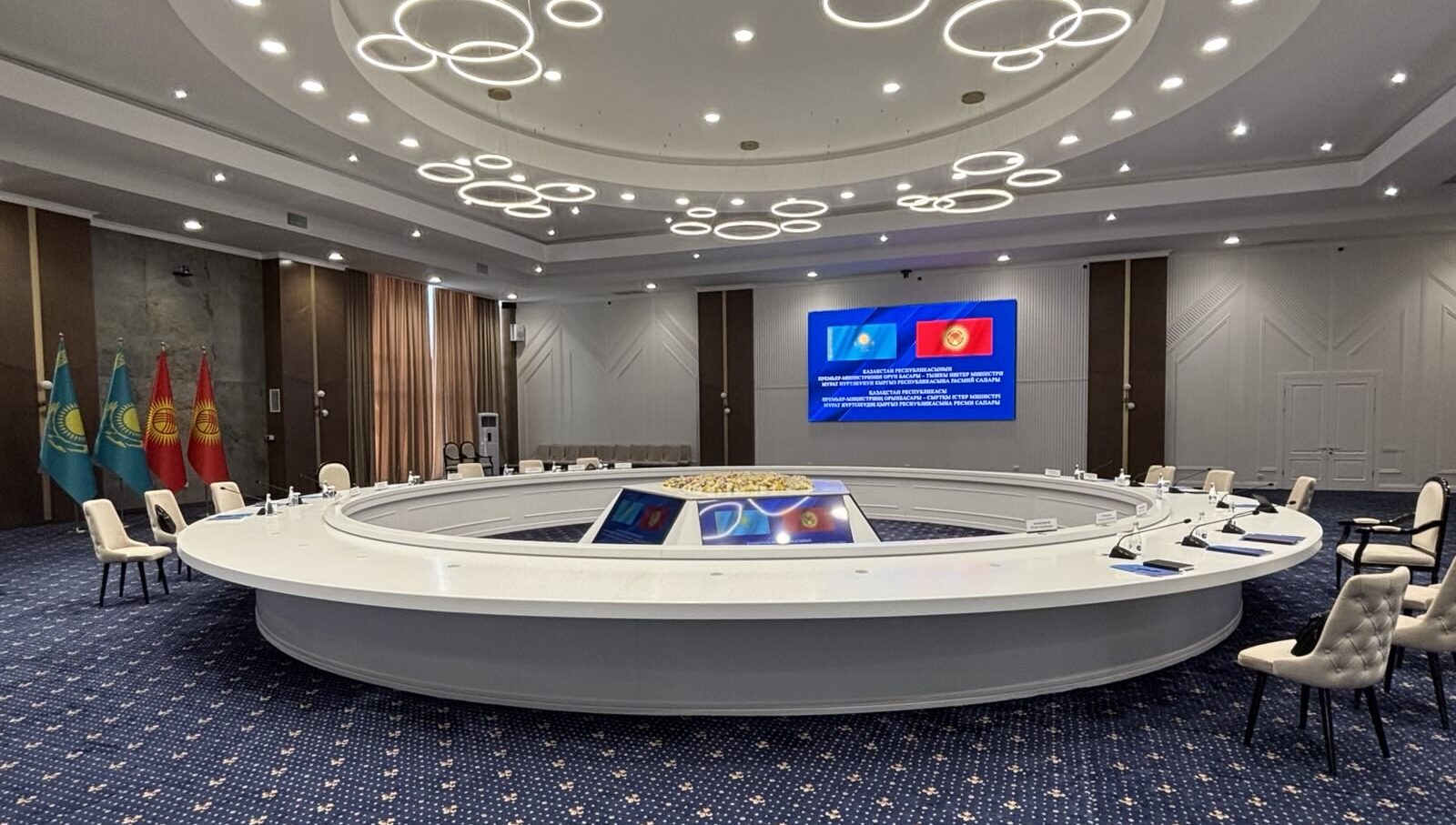
The Conference Hall at Cholpon-Ata, where the council meeting took place; image: Joe Luc Barnes

The Case for the Union

Kyrgyz officials are keen to emphasize the upsides. In an interview with state mouthpiece Slovo.kg, former economic minister Arzybek Kozhoshev said that joining the bloc had eased conditions for Kyrgyz migrant laborers in Russia and Kazakhstan.

“With the accession of the Kyrgyz Republic to the EAEU, the conditions of stay and work of citizens of the Kyrgyz Republic in other EAEU countries have changed significantly,” Kozhoshev said, highlighting simplified entry, no requirement to take a Russian language exam, equal access to health insurance, and even the right to draw pensions on par with local workers.

For a country where remittances have accounted for around 25% GDP over the past decade, these measures are not insignificant. Kyrgyz drivers, once barred from operating commercial vehicles in Russia, now enjoy full rights. Digital labor platforms like Work Without Borders make it easier to find jobs, and migrant workers in Russia pay the same flat 13% tax as local workers.

In short, for the hundreds of thousands of Kyrgyz toiling in Moscow, Novosibirsk, and Almaty, the EAEU has meant fewer hurdles and more predictability. It’s worth bearing in mind that other potential labor destinations, such as Korea, the United States, or the European Union, are not handing out hundreds of thousands of visas to Kyrgyz citizens every year.

Kremlin officials have also stressed that Kyrgyzstan pays lower tariffs on Russian gas – only $150 per 1,000 cubic meters, due to its EAEU membership. That said, given Russia’s current oversupply of gas with the closure of the European market, this is not as beneficial as it once was. Neighboring Uzbekistan is not an EAEU member and has been paying around $160 per 1,000 cubic meters since 2023.

The Kyrgyz government is also keen to link the country’s recent economic growth to EAEU membership. In his interview with Slovo, Kozhoshev unleashed a blizzard of statistics in an attempt to correlate recent economic growth with union membership.

“The average annual GDP growth in the period 2015-2023 is 3.9%, nominal GDP growth has increased threefold, namely from 401.0 billion som to 1.2 trillion som. Budget revenues increased 3.3 times to 391.9 billion som. GDP per capita is equal to $1,163 in 2015, and $1,969in 2023, an increase of 1.7 times,” he said.

While this argument can be questioned (are there not other factors which have led to growth?) it seems EAEU membership has offered a significant tailwind in recent years, particularly with Kyrgyzstan benefiting from what might be called “sanctions arbitrage”.

Unsanctioned Growth

Since Russia invaded Ukraine and the subsequent Western sanctions, Kyrgyzstan has become a significant re-export hub for Moscow. In the auto sector, for example, with Western companies refusing to sell to Russia, entrepreneurial Kyrgyz businesses have been importing BMWs from Germany or Toyotas from Japan before selling them on to the Russian market for a healthy profit.

Many Russians in search of a new vehicle have turned to China, and even here, Kyrgyzstan has benefited. Upon accession in 2015, Bishkek negotiated temporary exceptions to EAEU customs duties on vehicles. By 2023, these duties were 15%, compared to up to 25% in Russia, in addition to a lower rate of VAT. These two factors led to the widespread funneling of Chinese car purchases through Kyrgyzstan. This loophole was closed to an extent in 2024, with the Kremlin putting pressure on Bishkek to raise its customs duties, but that did not stop an estimated 60,000 Chinese vehicles from being purchased through Kyrgyzstan in early 2023 alone.

Cars are just one example; the dramatic rise in the import and export of sanctioned dual-use goods has led many to conclude that Kyrgyzstan has been one of the key enablers of Russia’s war machine.

The World Bank estimated that the VAT alone from the “transit trade” contributed around KGS 25.2 billion ($300 million) to the government coffers in 2022, and KGS 37.9 billion ($433 million) in 2023, the latter figure representing around 3.3% of the country’s entire GDP.

While critics call it sanctions-busting, Bishkek sees it as opportunistic trade. In June 2023, the Kyrgyz government changed the way it records export statistics in an attempt to mask some of the more brazen deals, but this has not prevented numerous sanctions monitoring visits by EU officials and sanctions on several banks and companies by the United States.

However, from an economic perspective, the fact that no severe penalties have materialized has made this somewhat of a bonanza period for the Kyrgyz economy, and all linked to its customs-free EAEU membership.
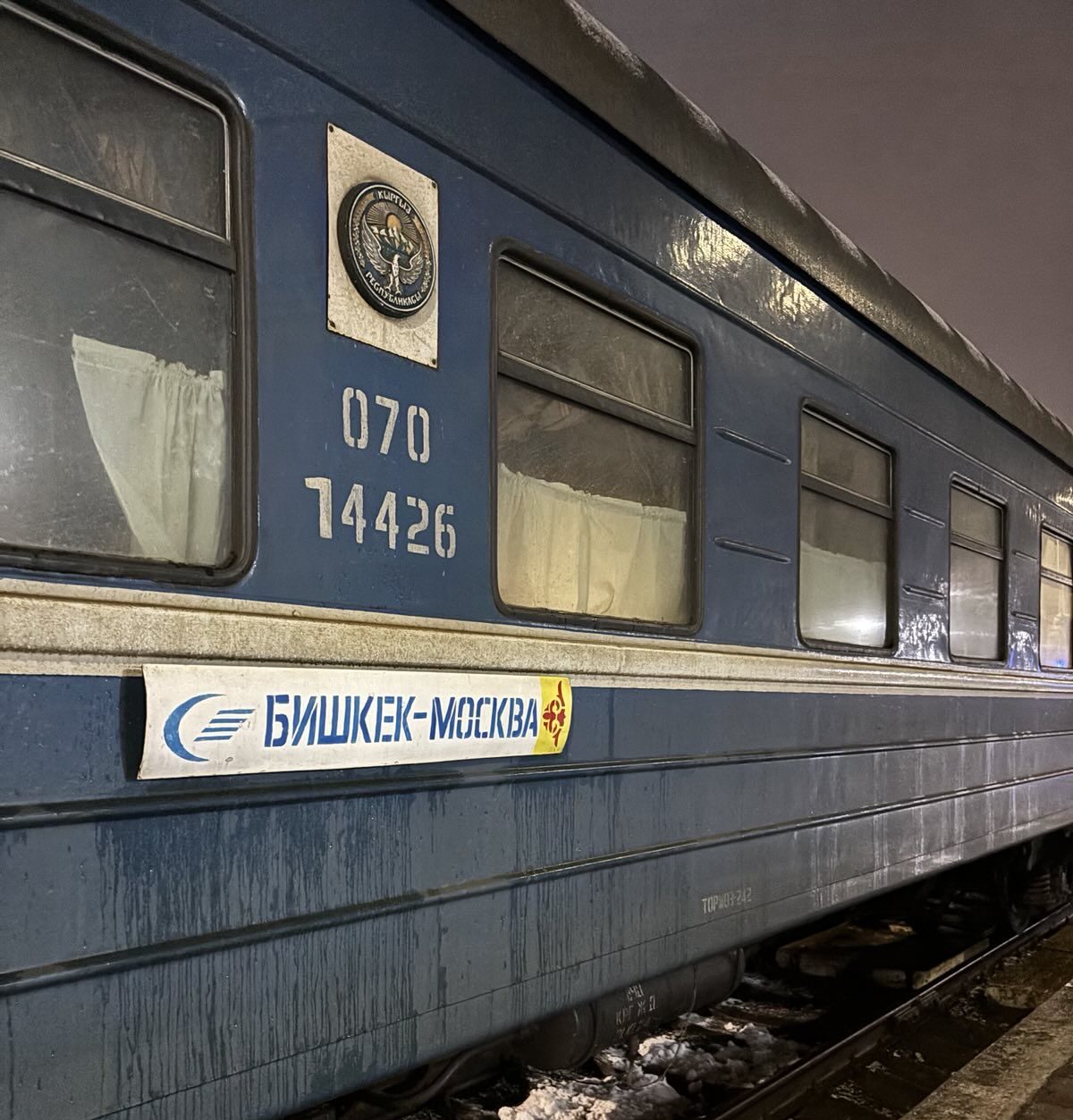
A Bishkek train bound for Moscow; image:: Joe Luc Barnes

The Limits of Integration

There are, nevertheless, some serious flaws in the architecture of the union. First, the migrant question cuts both ways. Access to the Russian labor market may be easier, but in some ways, that is a disadvantage: some unscrupulous employers prefer to hire cheaper illegal migrants or expect Kyrgyz citizens to work for less, due to the extra costs and bureaucracy involved with taxes and social security payments.

Kyrgyz workers also face racism, police harassment, and sudden deportations. A 2024 poll by the Levada Center showed that 56% of Russians believed people from Central Asia should only be allowed to enter Russia temporarily.

Such stigma has fueled periodic campaigns targeting Central Asian migrants by the Russian authorities. Purported EAEU benefits matter little to those forced to crawl half-naked across the floor of a Moscow bathhouse by overzealous immigration police.

The long-term economic benefits of migrant labor are also questionable – while they bring in quick cash, it means families are divided, children grow up with absent parents, and migrants can find their professional development stymied for the short-term gains from seasonal labor.

Second, the principle of a single market is often abandoned when its larger members seek to exert political pressure. Moscow and Astana will often employ “phytosanitary failings” or “pipeline maintenance” for throttling each other’s exports, while Kazakhstan has a habit of delaying crossings over the Kyrgyz border, sometimes even closing it completely, as it did most famously in 2017, jamming Bishkek’s trade overnight. Such actions undermine the bloc’s founding promise as a free trade union.

Finally, the union acts as a geopolitical bind. By serving as a conduit for sanctioned goods, Bishkek risks alienating Western partners and deepening its reliance on Russia, while also limiting the prospects of deeper integration with its other neighbors. Uzbekistan, Tajikistan, and, most importantly, China, are all outside the bloc, and while the former two have long flirted with joining, there is little sign of a trade deal in sight. Should any future deals materialize, they are likely to serve the interests of Russia, the EAEU’s largest member.

A Double-Edged Decade

On balance, the EAEU has delivered tangible gains: easier migration, expanded trade, and a huge boost to GDP and tax revenues through re-exporting sanctioned goods to Russia. For a landlocked country of seven million, such outcomes are not trivial. As such, dismissing the EAEU as a project that only benefits Moscow overlooks much of the nuance.

Nevertheless, Kyrgyz government policy could be argued as short-sighted: re-exports that may be lucrative today but could trigger headaches tomorrow if Western scrutiny intensifies, or indeed crumble to dust if sanctions on Russia are lifted.

Bishkek’s EAEU commitment has left Kyrgyzstan hanging onto the coattails of Moscow’s rollercoaster economy. This exposes the country to negative shocks, such as the oil price collapse of 2014, as well as the current sanctions-busting benefits. For now, Kyrgyzstan is booming, but what lies next on this wild ride is largely out of Bishkek’s control.