• KGS/USD = 0.01144 0%
  • KZT/USD = 0.00192 -0%
  • TJS/USD = 0.10849 0%
  • UZS/USD = 0.00008 0%
  • TMT/USD = 0.28571 0%
  • KGS/USD = 0.01144 0%
  • KZT/USD = 0.00192 -0%
  • TJS/USD = 0.10849 0%
  • UZS/USD = 0.00008 0%
  • TMT/USD = 0.28571 0%
  • KGS/USD = 0.01144 0%
  • KZT/USD = 0.00192 -0%
  • TJS/USD = 0.10849 0%
  • UZS/USD = 0.00008 0%
  • TMT/USD = 0.28571 0%
  • KGS/USD = 0.01144 0%
  • KZT/USD = 0.00192 -0%
  • TJS/USD = 0.10849 0%
  • UZS/USD = 0.00008 0%
  • TMT/USD = 0.28571 0%
  • KGS/USD = 0.01144 0%
  • KZT/USD = 0.00192 -0%
  • TJS/USD = 0.10849 0%
  • UZS/USD = 0.00008 0%
  • TMT/USD = 0.28571 0%
  • KGS/USD = 0.01144 0%
  • KZT/USD = 0.00192 -0%
  • TJS/USD = 0.10849 0%
  • UZS/USD = 0.00008 0%
  • TMT/USD = 0.28571 0%
  • KGS/USD = 0.01144 0%
  • KZT/USD = 0.00192 -0%
  • TJS/USD = 0.10849 0%
  • UZS/USD = 0.00008 0%
  • TMT/USD = 0.28571 0%
  • KGS/USD = 0.01144 0%
  • KZT/USD = 0.00192 -0%
  • TJS/USD = 0.10849 0%
  • UZS/USD = 0.00008 0%
  • TMT/USD = 0.28571 0%
11 December 2025

Shadows over the Trails: Mystical Legends of the Almaty Mountains

The mountains surrounding Almaty captivate not only with their natural beauty and fresh alpine air but also with the legends that echo along their winding trails. Travelers speak of a ghostly woman in white, a towering old man with a chessboard, and a mysterious “Japanese Road” haunted by the spirits of the past. The vistas are breathtaking, yet around every turn, a chilling tale may be waiting.

Urban legends have become integral to the cultural fabric of the Almaty region, shaped by the imaginations of hikers and storytellers alike. But could there be a grain of truth behind these supernatural accounts?

The Almarasanian Maiden

Most Almaty residents are introduced to local folklore during childhood, particularly during overnight camps in the mountain foothills. Beneath the star-strewn sky and beside crackling campfires, counselors often begin the night’s stories with: “Have you heard the tale of the Almarasanian Maiden?”

The best-known legend describes a spectral woman dressed in white, appearing along treacherous mountain passes. But older residents tell a more detailed and tragic version.

According to this tale, a woman once abandoned by her husband in the Zailiyskiy Alatau mountains was driven to madness. In her grief, she killed her two sons, hanging them from birch trees before taking her own life on a third. Struck by lightning but not destroyed, the three birches remain: two standing strong, the third broken but alive. Climbers later erected two crosses beneath them in remembrance.

Since then, sightings of the woman in white have persisted. She is said to either warn travelers of danger or exact vengeance on those who betray loved ones.

Though the story may sound fantastical, real-life tragedies have kept the legend alive. In May 2025, a rockfall in the Alma-Arasan Gorge killed a young woman and led to the trail’s temporary closure for reconstruction.

In 2009, 11 people died in a horrific accident when a truck collided with a bus stop. While the official cause was listed as a heart attack suffered by the driver, witnesses reported that he remained conscious and tried to steer the vehicle moments before impact. His widow later stated that he had no history of heart problems.

The Japanese Road

After Japan’s defeat in Manchuria in 1945, many prisoners of war were sent to labor camps across the Soviet Union, including Kazakhstan. In Almaty, they constructed what is now known as the Japanese Road.

Built under harsh conditions, the road was originally part of a water supply system connecting Big Almaty Lake to the city.

Modern hikers report an eerie atmosphere. Some claim to see ghostly figures, presumed to be the spirits of those who died building the road. These apparitions are seen as ill omens, urging visitors to leave before nightfall.

The White Old Man

Among the most curious legends is that of a ghostly, two-meter-tall old man with a flowing beard, who carries a chessboard. He appears to hikers and shepherds, silently inviting them to play.

Refusing is said to bring bad luck or worse. But those who offer tea and engage in a few friendly games are said to be rewarded, never losing their way and enjoying peace among the mountains.

The origin of this tale lies in reality. The “White Old Man” was a real person: Dadon, a local topographer known for his encyclopedic knowledge, uncanny stamina, and his habit of always carrying a chess set. Over time, stories of his exploits blurred into myth.

Even during his lifetime, rumors of his ghost began circulating. If the spirit of Dadon still roams the mountains, legend holds that he brings only wisdom and good fortune.

The Abandoned Airfield

Beyond the peaks, in the plains of the Almaty region, lies another eerie site: the abandoned airstrip known as Samsy Airport. Once the subject of viral travel blogs, the location now draws urban explorers and film crews intrigued by its post-apocalyptic atmosphere.

Located in the Zhambyl district, the airfield is home to rusting crop-dusting planes and a cracked runway slowly being reclaimed by nature. While it’s easy to locate online, visiting may cost you, local residents posing as security personnel charge travelers up to 4,000 tenge per person for access.

The true reason for the site’s abandonment remains unclear. No official explanation was ever given for the airfield’s sudden closure, nor for the workers’ decision to leave behind expensive equipment.

Was it simply a case of economic decline, or did something more sinister drive them away?
A Year After Olympic Gold, Uzbek Boxer Mullojonov Enmeshed in Doping Probe

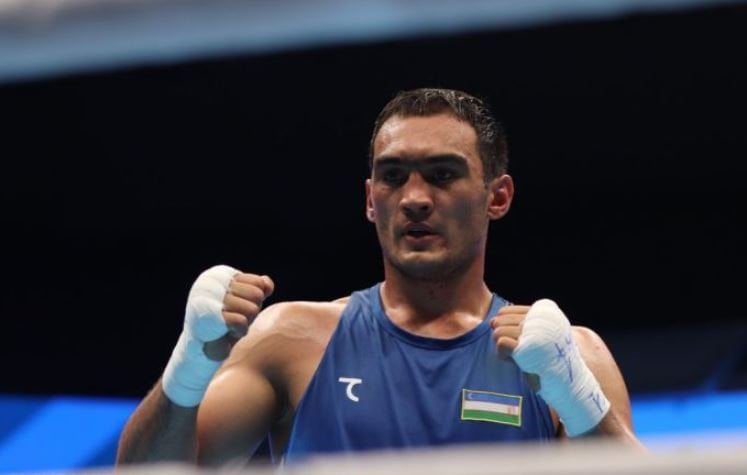
The Uzbekistan Boxing Federation is defending Olympic gold medalist Lazizbek Mullojonov after he tested positive for a banned steroid, saying he may have ingested “prohibited doping substances” during a hair transplant last year. 

The federation responded this week to online commentary about Mullojonov’s case, which threatens to tarnish his heavyweight victory at the Paris games last year. The boxer has been suspended under international anti-doping codes pending the outcome of the investigation. Some media reports have said he could lose his Olympic medal if a doping violation is confirmed, though Uzbek boxing officials say his Olympic result won’t be affected.

“On June 11 of this year, a doping test was taken from our athlete according to international doping rules, and an information letter was submitted to the International Testing Agency (ITA) indicating the presence of prohibited substances based on the test results,” said the federation, stating that Mullojonov had “always” complied with doping rules. 

“Our athlete underwent a hair transplant surgery on November 19, 2024, at a private clinic in Fergana city after the Paris 2024 Olympic Games. It is assumed that during the four-stage surgery and postoperative treatments, he took medications provided by the clinic for treatment, which may have contained some prohibited doping substances.” 

On July 29, the International Testing Agency said it informed Mullojonov that he had tested positive for methasterone, a steroid that can promote fast muscle growth and increased strength. It said he had the right to request an analysis of a second sample, which would confirm or contradict the first test, and that he can also provide explanations for a positive test. 

In line with the World Anti-Doping Code and World Boxing anti-doping rules, “a mandatory provisional suspension has been imposed on the athlete,” said the testing agency, which is based in Lausanne, Switzerland. Mullojonov can challenge the provisional suspension, it said. 

The boxer had reached the quarterfinals of the Boxing Grand Prix in Riyadh, Saudi Arabia, the tournament said on July 27. Two days ago, in an apparent reference to Mullojonov, it said that there was one “adverse finding” among 95 anti-doping tests that had been conducted in connection with the tournament and an investigation is ongoing. 

“The Tournament participant whose sample yielded the adverse finding had won his bouts in Phases 1 and 2. He will not participate in Phase 3,” said the tournament, which is organized by the World Boxing Council. Phase 3 is the quarterfinals stage.

 Mullojonov, 26, also won gold in the super-heavyweight category at the Asian Championships in 2022. Now he awaits a final decision on what the International Testing Agency called “an apparent anti-doping rule violation.”

Shanghai SpaceSail to Deliver Satellite Internet in Kazakhstan

Shanghai SpaceSail, a Chinese low Earth orbit (LEO) satellite operator, has conducted a successful test of the satellite internet service in Kazakhstan’s Almaty region. The test, observed by company specialists who traveled to the country, recorded connection speeds of up to 200 Mbps, according to the Kazakh Ministry of Digital Development, Innovation and Aerospace Industry.

The trial demonstrated the strong potential of Shanghai SpaceSail’s technology, which is designed to provide stable, high-speed internet access even in remote and hard-to-reach areas, regions where traditional fiber-optic infrastructure is not feasible due to economic or technical constraints.

Kazakhstan’s partnership with Shanghai SpaceSail aims to address digital inequality by connecting rural schools, healthcare facilities, and critical infrastructure to reliable broadband services. The initiative is expected to significantly expand access to telecommunications and improve the quality of life in underserved communities.

A Kazakh delegation recently visited Shanghai SpaceSail’s headquarters in Shanghai to observe the company’s technological solutions and satellite production process. Shanghai SpaceSail plans to officially begin operations in Kazakhstan in 2026.

The company is currently expanding its global footprint and is reportedly in negotiations with over 30 countries. It aims to have more than 648 satellites in orbit by the end of 2025 and 15,000 by 2030.

EDB Database Reveals How Crucial Central Asian Countries Are To Eurasian Transport Network

The Eurasian Development Bank (EDB) has unveiled the Eurasian Transport Network Observatory, a comprehensive database monitoring infrastructure development across 13 countries in the region: Azerbaijan, Armenia, Afghanistan, Belarus, Georgia, Iran, Kazakhstan, Kyrgyzstan, Mongolia, Russia, Tajikistan, Turkmenistan, and Uzbekistan.

As of July 1, 2025, the database includes 325 infrastructure projects both ongoing and planned, with a total estimated investment of $234 billion. Over 51% of these projects are in the road transport sector.

Russia accounts for seven of the ten largest infrastructure projects within the network. The Northern Eurasian Corridor is the most capital-intensive, requiring $78 billion, more than one-third of the network’s total projected investment.

Central Asia plays a pivotal role, representing over 22% of total investments in the Eurasian Transport Network. The region hosts or plans 90 infrastructure projects valued at approximately $53 billion. Kazakhstan alone accounts for roughly 44% of these initiatives.

Nearly two-thirds of Central Asian investments are allocated to highway infrastructure, underscoring the strategic priority placed on enhancing road connectivity to support regional trade and international integration.

Top 10 Transport Projects in Central Asia:

  • China-Kyrgyzstan-Uzbekistan Railway – $4.7 billion
  • Tashkent-Andijan Toll Highway (Uzbekistan) – $4.3 billion
  • Balykchy-Kochkor-Kara-Keche-Makmal-Jalal-Abad Railway (Kyrgyzstan) – $4.1 billion
  • North-South Railway (Tajikistan) – $3.9 billion
  • Center-West Highway (Kazakhstan) – $2.6 billion
  • Ashgabat-Turkmenabat Highway (Turkmenistan) – $2.4 billion
  • Serakhs-Mary-Serkhetabat Highway (Turkmenistan) – $2.2 billion
  • Dostyk-Moyinty Rail Section Modernization (Kazakhstan) – $2 billion
  • Sherkhan-Kunduz-Mazar-i-Sharif-Herat-Turgundi Railway (Tajikistan-Afghanistan-Turkmenistan) – $2 billion
  • Zhezkazgan-Arkalyk-Petropavlovsk Motorway Reconstruction (Kazakhstan)

The EDB notes that international development banks and other multilateral institutions are well-positioned to offer both technical and financial support, particularly in landlocked and mountainous countries where infrastructure gaps are most acute.

Kazakhtelecom CEO Confirms 2026 Launch of Caspian Submarine Cable Project

Kazakhstan and Azerbaijan have entered the active implementation phase of the long-anticipated submarine fiber-optic cable (SFOC) project across the Caspian Sea. According to Bagdat Mussin, CEO of Kazakhtelecom JSC, the underwater cable system is scheduled for completion and launch by the end of 2026.

First proposed in 2019, the project involves the construction of two parallel fiber-optic lines, spanning approximately 380 to 400 kilometers, to connect the digital infrastructures of Kazakhstan and Azerbaijan.

Originally, Kazakh telecom operators Transtelecom and KazTransCom participated alongside Azerbaijan’s AzerTelecom. However, by 2022, the Kazakh companies had exited the venture, and in 2023, Kazakhtelecom assumed the lead role on behalf of Astana.

On August 22, 2023, Kazakhtelecom and AzerTelecom formalized their partnership by signing a joint venture agreement in Amsterdam.

Mussin stated that national operators have now completed site surveys of the coastal infrastructure, identifying locations for both a beach manhole and a cable landing station. A specialized survey vessel, currently operating from the Kazakh port of Bautino, is mapping the seabed to assess depth, terrain, underwater currents, and geological conditions to finalize the cable route.

“The bridge’s capacity is designed to meet future demands and will support at least 400 Tbit/s. When the first byte of data travels through this artery, the Caspian will become a unique digital bridge between Asia and Europe,” Mussin said.

As previously reported by The Times of Central Asia, the total cost of the project is estimated at $50.6 million.

The cable is part of a wider regional initiative to advance digital transformation and sustainable connectivity across Eurasia.

Kyrgyzstan Secures €9 Million in EIB Funding for CASA-1000 Energy Project

The Kyrgyz Ministry of Finance has approved the signing of a €9 million financing agreement with the European Investment Bank (EIB) to support the ongoing implementation of the CASA-1000 regional energy project.

Under the terms of the agreement, the EIB will provide the Kyrgyz government with a 29-year loan, including an eight-year grace period, at an interest rate of 3.6% per annum. The funds will be used to complete infrastructure work under CASA-1000, a cross-border initiative aimed at exporting surplus summer electricity from Kyrgyzstan and Tajikistan to Afghanistan and Pakistan.

According to the Ministry of Finance, the funds will be re-lent to the state-owned National Electric Grid of Kyrgyzstan (NEGK), the country’s main electricity transmission operator and the contractor responsible for CASA-1000 infrastructure in Kyrgyzstan.

Officials stated that the loan will not place additional pressure on the state budget. Repayment will be made through revenue generated by NEGK from electricity exports to South Asia. In line with the Kyrgyz Constitution, the agreement requires parliamentary approval by the Jogorku Kenesh before the funds can be disbursed to a dedicated Ministry of Finance account.

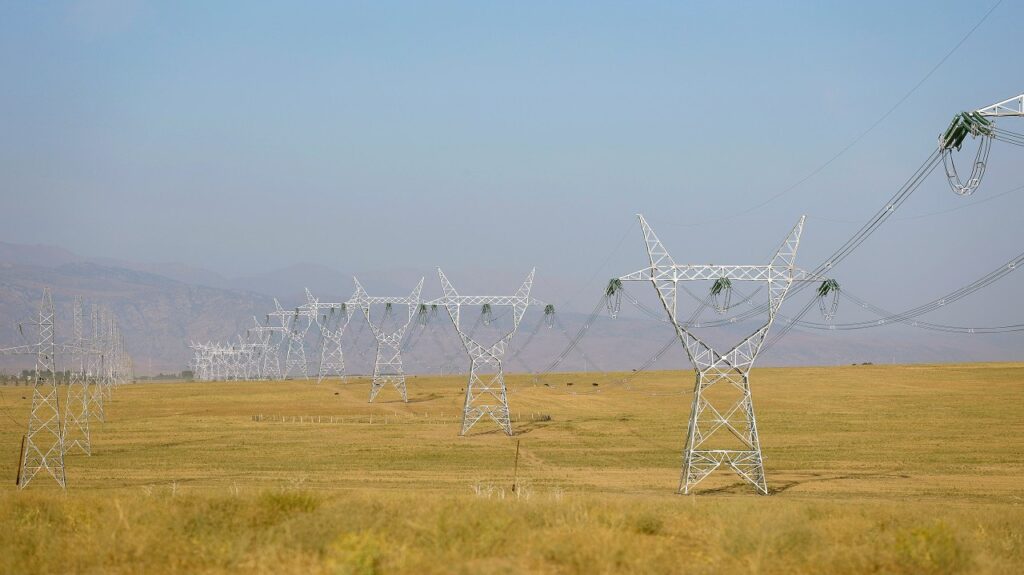
The CASA-1000 project is now in an advanced stage of implementation. Kyrgyz President Sadyr Japarov and Tajik President Emomali Rahmon recently attended the inauguration of the 480-kilometer Datka-Sughd high-voltage transmission line, which connects the two countries’ power systems. This event marked the completion of all CASA-1000 infrastructure in Kyrgyzstan.

Construction continues in southern Tajikistan, Afghanistan, and Pakistan. The full CASA-1000 corridor spans four countries, with a total transmission line length of 1,400 kilometers and an estimated total cost of $1.1 billion. Initial electricity deliveries to Afghanistan and Pakistan are scheduled for 2027.