• KGS/USD = 0.01144 0%
  • KZT/USD = 0.00194 0%
  • TJS/USD = 0.10879 -0.18%
  • UZS/USD = 0.00008 -0%
  • TMT/USD = 0.28571 0.28%
  • KGS/USD = 0.01144 0%
  • KZT/USD = 0.00194 0%
  • TJS/USD = 0.10879 -0.18%
  • UZS/USD = 0.00008 -0%
  • TMT/USD = 0.28571 0.28%
  • KGS/USD = 0.01144 0%
  • KZT/USD = 0.00194 0%
  • TJS/USD = 0.10879 -0.18%
  • UZS/USD = 0.00008 -0%
  • TMT/USD = 0.28571 0.28%
  • KGS/USD = 0.01144 0%
  • KZT/USD = 0.00194 0%
  • TJS/USD = 0.10879 -0.18%
  • UZS/USD = 0.00008 -0%
  • TMT/USD = 0.28571 0.28%
  • KGS/USD = 0.01144 0%
  • KZT/USD = 0.00194 0%
  • TJS/USD = 0.10879 -0.18%
  • UZS/USD = 0.00008 -0%
  • TMT/USD = 0.28571 0.28%
  • KGS/USD = 0.01144 0%
  • KZT/USD = 0.00194 0%
  • TJS/USD = 0.10879 -0.18%
  • UZS/USD = 0.00008 -0%
  • TMT/USD = 0.28571 0.28%
  • KGS/USD = 0.01144 0%
  • KZT/USD = 0.00194 0%
  • TJS/USD = 0.10879 -0.18%
  • UZS/USD = 0.00008 -0%
  • TMT/USD = 0.28571 0.28%
  • KGS/USD = 0.01144 0%
  • KZT/USD = 0.00194 0%
  • TJS/USD = 0.10879 -0.18%
  • UZS/USD = 0.00008 -0%
  • TMT/USD = 0.28571 0.28%
15 December 2025

Kazakhstan–U.S. Tariff Question Indexes a Broader Geopolitical Pattern

When the United States announced a 25% tariff on selected imports from Kazakhstan, effective August 1, it offered little explanation beyond a vague appeal to restoring the trade balance. At first glance, this seemed routine, indeed almost perfunctory. However, the timing, context, and symbolic weight of the move suggest otherwise. Kazakhstan’s exports to the U.S. are modest, and key commodities are unaffected, yet the signal was received clearly in Astana.


What the Tariff Means in the Broader Picture

In the current phase of the international system’s evolution, tariffs no longer function solely as instruments of commercial redress. They have become vectors of strategic pressure, deployed to influence positions in a broader geopolitical context. From this perspective, Kazakhstan appears less as a trade partner than as a node within a larger and shifting strategic-connectivity network.

To interpret the tariff imposed by the United States on Kazakhstan as a bilateral irritant would be to miss its deeper significance. The target may be marginal in economic scale, but the symbolism is central. What is at stake is not merely the movement of goods, but the movement of expectations. What is at issue is how middle powers such as Kazakhstan read global cues and signal their response. The tariff is a point of entry into an evolving geoeconomic pattern.

Kazakhstan’s answer to the American move thus becomes an exercise in managing uncertainty under shifting rules. Astana has moved quickly by dispatching a delegation, issuing public reassurances, and subtly shifting its narrative. This is not a crisis for Kazakhstan, but it is not something that can be ignored either. What seems to have triggered the tariff is not the trade volume, but the context.

Kazakhstan’s longstanding ties with both Russia and China have complicated its attempts to preserve its autonomous balance in a tightening global field. The U.S. move may be part of a wider American effort to pressure states seen as too hesitant or too exposed. Kazakhstan’s early response is thus less a tactical correction than a move to preempt misunderstanding.

Background: A Cascade of Tariff Announcements

The tariff targeting Kazakhstan came at the end of a months-long sequence of trade announcements that began to accelerate in early 2025; it was not an isolated action. On April 2, under the now-familiar slogan of restoring reciprocity, the Trump administration unveiled a broad tariff package affecting more than 180 countries at a base level of 10%. Russia and Belarus were notably untouched, but Kazakhstan was singled out for a rate of 27%. No one could quite justify why, and Washington did not seem interested in explaining the move.

On July 7, Astana received a second notice: a revised tariff, now fixed at 25%, would take effect on August 1. This replaced the earlier measure and applied to a more specific set of goods. Without mentioning Kazakhstan by name, President Trump followed with a comment on social media about restoring “balanced flows” and correcting “distortions.”

More than twenty other countries — an eclectic list including Brazil, Japan, Laos, Mexico, and others — received similar notices around the same time. The criteria were opaque, with rates ranging from 20 to 50%. In most cases, there was no known dispute. What these countries seemed to share was some vague perception in Washington that they had failed to realign themselves with evolving U.S. expectations — whether on trade, supply chains, or political posture.

Kazakhstan’s inclusion in this group stood out, all the more so given its limited trade volume with the U.S. In 2024, its total exports to the American market were less than one billion dollars, most of which were concerned with commodities exempted from the new tariff. What remains is a small set of industrial exports, plus the question: Why now? The answer likely lies in the pattern of the American tariff policy, in which Kazakhstan is only one of many parts.

Tariffs, Rules, and Institutional Risk

Kazakhstan’s most significant shipments — crude oil, uranium, ferroalloys, and silver — are exempt from the new tariff. These four categories alone accounted for over 90% of total exports to the U.S. in 2024. The new tariff applies only to a narrow segment of Kazakhstan’s exports to the United States, mainly lesser-known industrial items such as steel pipes, specialty chemicals, and certain machine parts.

The real significance of the tariff lies not in revenue loss but in rules-based issues. Kazakhstan joined the World Trade Organization (WTO) in 2015, and WTO members make commitments to stability, predictability, and non-discrimination in market access. The U.S. tariff, by contrast, was announced unilaterally, without consultation, and without any WTO process. Punitive tariffs targeting specific countries outside a formal dispute resolution framework may be incompatible with the obligations assumed under the WTO’s Most Favored Nation (MFN) principle.

For Kazakhstan, the question becomes a tangible reputational risk. The country has heavily invested in its image as a rules-respecting member of the global trading system, so this is not an abstract concern. The WTO’s Director-General has warned that such selective bilateral tariff approaches threaten the core MFN foundation of global trade law.

The country has spent the past decade cultivating foreign capital, especially in infrastructure, mining, and logistics. If American tariff policy starts to look erratic, then other governments and firms may begin building risk premiums into their Kazakhstan strategy.

Kazakhstan’s Countermoves and Strategic Repositioning

In this context, diplomatic action functions as a counter-signal aimed at re-establishing interpretive control. Within days of receiving the July 7 notice, the government of Kazakhstan announced that it would send a senior delegation to Washington. The purpose of this move was to reframe the situation. Kazakhstan was not looking for a public concession but rather, at a minimum, to be heard.

Part of the delegation’s strategy is to shift the conversation away from tariffs and toward strategic value. Kazakhstan has quietly become a meaningful player in the global supply of critical minerals. Its deposits of rare-earth elements, particularly in the Karaganda region, are not to be neglected. Western companies have already begun exploratory partnerships, and it is not impossible that they can tip the conversation in Kazakhstan’s favor.

At the same time, Astana has already begun to assess potential fallout at the domestic level. The exporters affected by the tariff are relatively few in number, and none appear to be existentially threatened. The government may still offer them targeted relief such as export credits, transport subsidies, or tax offsets. Legal consultations are reportedly underway to explore filing a WTO case; this, however, would be a slow process, and likely only a symbolic one.

Possible Scenarios and Their Implications

The tariff’s immediate impact is modest, but its symbolic threshold is real. It introduces friction at a moment when Kazakhstan is seeking a stable economic and diplomatic orientation without crisis. Three scenarios are plausible:

  1. Astana persuades U.S. policymakers to soften or narrow the tariff, an outcome that would validate Kazakhstan’s geoeconomic relevance and normative alignment.
  2. The tariff persists, prompting Kazakhstan to redirect exports or adapt supply chains; such realignment could accelerate its turn toward Eurasian or Southeast Asian partners, while the U.S. remains a symbolic but not a strategic partner.
  3. If similar pressures are exerted against other middle powers, the tariff pattern may herald a broader strategic realignment, as these states will hedge more aggressively as confidence in the multilateral frameworks erodes.

At present, the unfolding of events will control the narrative. The test for Kazakhstan lies not in reversing the tariff itself, but in managing its constraints with sovereign agency. Its ability to navigate this space will determine the trajectory of its profile as a strategic regional actor.

Kazakhstan: Aircraft Debris Found in Search for Missing Military Helicopter

Search teams in Kazakhstan have discovered an oil slick on a lake and aircraft fragments that appear to belong to a military-operated helicopter carrying three people that was reported missing.

Kazakhstan’s Ministry of Emergency Situations launched an intensive search and rescue operation after contact with the EC145 helicopter was lost on Friday in the area of Otar, a village west of Almaty. Satellite detection methods spotted oily water on Lake Sorbulak, about 40 kilometers northwest of Almaty, and searchers working through the night found aircraft debris “presumably belonging to” Kazakhstan’s Air Defense Forces, the ministry said on Friday.

It said echo sounders as well as aerial and underwater drones were being used in the operation.

“About 200 personnel, 40 units of equipment, 15 watercraft, 4 canine units, and 2 aircraft of the Ministry of Emergency Situations are involved,” the ministry said.

The Ministry of Defense said the helicopter had been on a scheduled flight and that “a special commission has been dispatched to determine the circumstances of the incident.”

The Eurocopter EC145 is a twin-engine, light utility aircraft.

Kazakhstan’s Bublik Wins Back-to-Back Tennis Titles on Clay

Another week, another title.

Alexander Bublik of Kazakhstan won the Generali Open in Kitzbühel, Austria on Saturday, just a week after raising the winner’s trophy in Gstaad, Switzerland. Both tennis titles were on clay, a surface he once disparaged.

Bublik beat Arthur Cazaux of France, 6-4, 6-3 in Kitzbühel, pounding groundstrokes and feathering dropshots against a player he had also beaten on the way to the title in Gstaad.

It’s all part of what Bublik, 28, has described as his greatest season on the tour, which includes a quarterfinals run at the French Open and the grass court title at Halle in Germany. He now has won a total of seven ATP Tour singles titles, and his No. 30 ranking is projected to climb after the victory in Austria on Saturday. He struggled earlier in the year and was ranked 82 in mid-March. The Russia-born player stumbled at Wimbledon with a loss in the first round.


Exile and Empire: Dostoevsky’s Years in Semey, Kazakhstan

Semey, KazakhstanIn the windswept, seemingly infinite steppe of eastern Kazakhstan stands a city with a dual, haunting legacy. It is a place where one of the world’s literary giants plumbed the depths of the human soul, and where, a century later, humanity sought to master the power to extinguish itself. This is Semey, formerly Semipalatinsk, a city whose soil is steeped in the memory of both Fyodor Dostoevsky’s exile and the Soviet Union’s atomic ambition.

For Fyodor Dostoevsky, one of Russia’s most celebrated writers, Semey was not a destination of choice but of punishment. Arrested in 1849 for his involvement with the Petrashevsky Circle — a group of intellectuals who read and discussed banned political texts — Dostoevsky was sentenced to death, only to be spared at the last moment in a mock execution ordered by Tsar Nicholas I. His sentence was commuted to four years of hard labour in the Omsk fortress, followed by compulsory military service in Semipalatinsk.

Arriving in 1854, Dostoevsky spent nearly five years in Semipalatinsk, a provincial outpost on the Russian Empire’s edge, where exiles, soldiers, and bureaucrats mingled with Kazakh nomads and merchants. Though his official role was that of a soldier in the Siberian Line Battalion, his time here marked a critical period of transformation — politically, spiritually, and literarily.

Semey offered isolation, but also introspection. Deprived of literary contact, Dostoevsky was forced inward. His exposure to suffering — in prison, in exile, and his struggles with epilepsy — sharpened the moral and psychological vision that would later define Crime and Punishment, The Idiot, and The Brothers Karamazov. In letters from this time, he describes long walks through the barren steppe and his growing fascination with the Kazakh people, whose customs and resilience left a lasting impression.

During his years in Semey, Dostoevsky also began to reengage with the intellectual world. Thanks to the leniency of local officials, he was able to read, write, and eventually re-enter literary circles. It was here he completed Uncle’s Dream and The Village of Stepanchikovo, and began work on Notes from the Dead House, a fictionalised account of his time in prison that marked a decisive shift from romanticism to the raw psychological realism for which he became renowned.

Despite its remoteness, Semey in the 1850s was not without its cultural encounters. Dostoevsky formed a lasting friendship with Chokan Valikhanov, a Kazakh nobleman, ethnographer, and military officer, whose liberal views and deep knowledge of Central Asian culture helped broaden Dostoevsky’s perspective on the empire’s outer subjects. Their conversations influenced Dostoevsky’s thinking on race, empire, and the spiritual dignity of non-Russian peoples — ideas that subtly permeate his later works.

In 1853, aged 18, Valikhanov graduated from the Cadet Corps and was commissioned as a cornet in the Army Cavalry. He was then assigned as an officer to the 6th Regiment of the Siberian Cossack Army. Later, through the Main Administration of the Region, he was appointed as an officer of special assignments.

In 1858–1859, he made his famous journey to Kashgar, for which he became renowned as a courageous traveller. After Marco Polo, he was the first “Europeanized” intellectual to visit Kashgar. Having studied the geography, history, political structure, and culture of this country, which was almost unknown in Europe at the time. The expedition was planned by two main departments of the Russian Empire: the Ministry of Foreign Affairs, represented by its Asian Department, and the General Staff of the Russian Armed Forces. This suggests that the main purpose of the expeditionary caravan was reconnaissance.

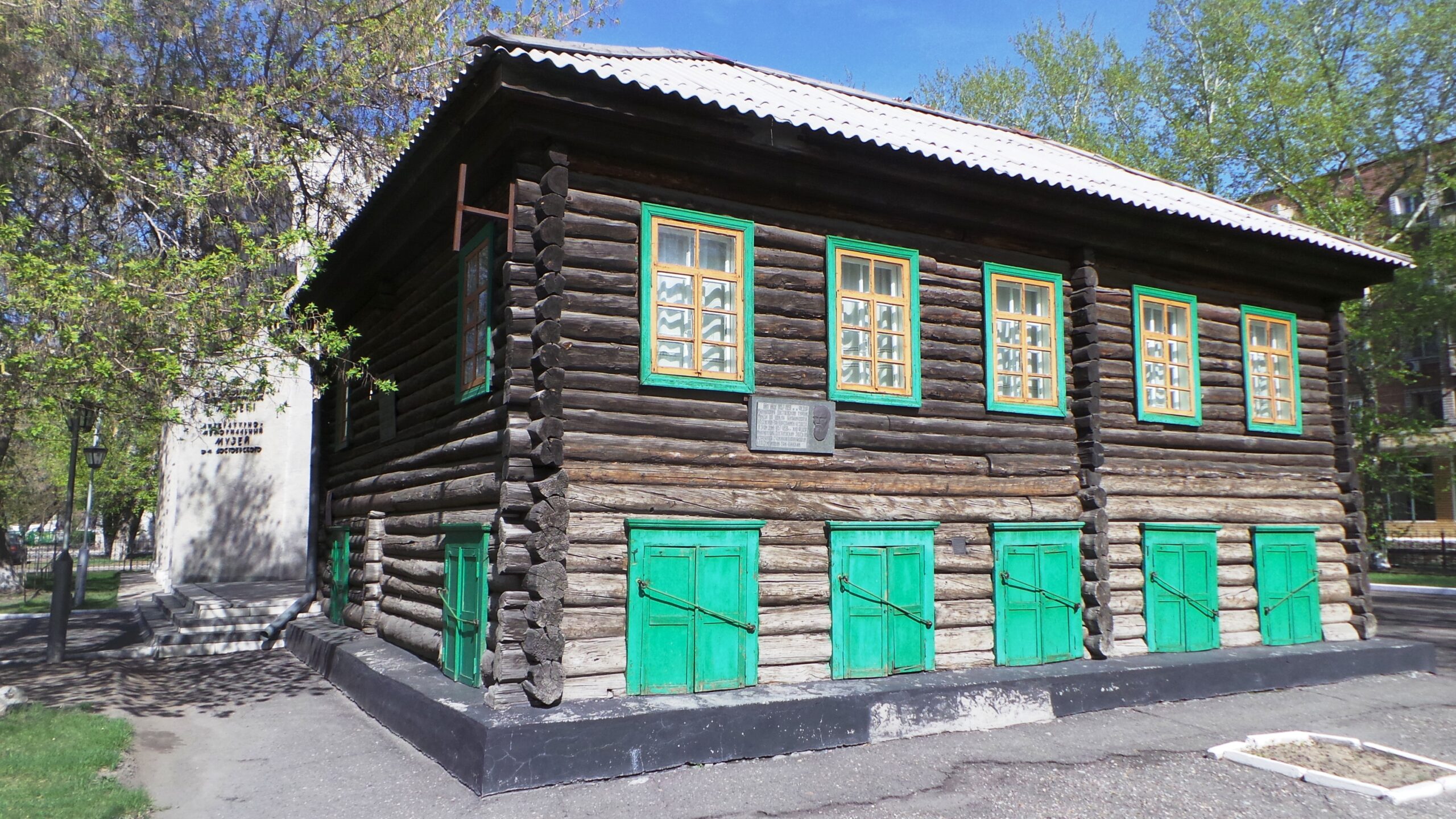
Dostoevsky’s House in Semey; image: Yakov Fedorov

Today, Dostoevsky’s former house still stands in Semey, converted into a museum dedicated to his life and writings. Modest in size but rich in atmosphere, it preserves manuscripts, personal letters, and portraits that evoke the introspective solitude of his exile. A statue of the writer stands in a quiet square, facing the steppe — perhaps as he once did, searching for meaning beyond the horizon.

Yet Semey is also haunted by another legacy: from 1949 to 1989, it lay just 150 kilometres from the Semipalatinsk Test Site, the epicentre of Soviet nuclear experimentation. More than 450 nuclear tests were conducted there, leaving environmental and genetic scars that still shape the city’s identity today. The juxtaposition is startling: a town that once reformed a writer who peered into the abyss of human suffering later became the stage for mankind’s flirtation with annihilation.

In this strange confluence of literature and atomic history, Semey emerges not as a forgotten frontier but as a place that reflects the extremities of human ambition and resilience. It remains, in many ways, a Dostoevskian city, fraught with suffering, yet never fully devoid of redemption.

Kazakhstani Woman Earns Grandmaster Title, Says Chess is “My World”

As Bibisara Asaubayeva of Kazakhstan puts it, she has dedicated 17 of her 21 years of life to chess.

Was it worth it? Well, this month, FIDE, the Switzerland-based governing body of chess, awarded grandmaster status to Asaubayeva, making her the second Kazakhstani woman and the 43rd female player ever to earn the coveted title.

The announcement came on Monday after a FIDE council meeting on July 18 that approved nine other grandmasters, including 15-year-old Kazakhstani Edgar Mamedov. It wasn’t a surprise for the players from Kazakhstan because they had achieved the required ratings two months ago and were awaiting official confirmation.

Still, the accomplishment spurred reflections this week from Asaubayeva, who posted an Instagram slideshow of photos spanning her career, from a young girl perched in front of chessboards at tournaments to a young woman with a wealth of accolades and experience behind her. She described being “haunted” by missed chances or mistakes on the board and said chess was no longer a game for her because it is so much a part of her identity.

“It’s so strange sometimes to look at my childhood photos from tournaments,” she said. “The games, the trips, the emotions — everything seemed so big, so extraordinary back then. I remember how differently I saw chess at the time — with awe, excitement, as if I were entering a fairytale where anything was possible.”

Asaubayeva said losses hurt and she never gets used to them, but they make her more resilient.

“To me, chess isn’t just 64 black and white squares. It’s a whole world. My world. And there’s still so much left to explore,” she said. “And you know… If you ever give it a try — this game will never let you go.”

The first woman from Kazakhstan to become a grandmaster was Zhansaya Abdumalik in 2021.

Asaubayeva won consecutive titles at the Women’s World Blitz Championships in 2021 and 2022. Currently, she is ranked 10th among the world’s highest-rated women with a rating of 2509, according to Chess.com. It stated that she received a wildcard into the Freestyle Chess Grand Slam in Las Vegas and played there a few days ago, but struggled against the world-class competition.

Kazakhstan has been pushing to develop homegrown talent, introducing chess into the curricula of hundreds of schools, training chess teachers, organizing numerous tournaments, and even supporting chess federations in some other Asian countries. At last week’s chess council meeting, delegates confirmed the dates for several upcoming events, including the 2nd FIDE Chess Olympiad for people with disabilities, scheduled to take place in Kazakhstan in October this year.

Charvak Resort Plan Sparks Public Outcry in Uzbekistan

A proposed tourism development at Uzbekistan’s Charvak reservoir has drawn widespread public scrutiny following an announcement by Azerbaijani businessman Emin Agalarov. The project, dubbed “Sea Breeze Uzbekistan,” envisions a vast resort complex covering 500 to 700 hectares and featuring hotels, cottages, pools, sports facilities, restaurants, retail outlets, a bridge across the reservoir, and event venues.

Public reaction has been swift, with critics raising concerns over transparency and environmental impact. The hashtag #SaveChorvoq has gained traction as citizens question the lack of open consultation.

Minister Calls for Transparency and Public Input

Speaking at a July 23 press conference near the Charvak reservoir, Uzbekistan’s Minister of Ecology, Aziz Abdukhakimov, addressed the mounting concerns. He clarified that the project has not yet been formally submitted to the government.

“Frankly speaking, we’ve only heard about the project informally,” said Abdukhakimov, as quoted by Kun.uz. “That’s why we asked the investor to submit official documents. Once we receive them, our ministry, along with the Construction and Water Management Ministries, will conduct a thorough review.”

Abdukhakimov urged the public not to rush to judgment. “Before saying no, let’s see what exactly is being proposed,” he stated. “Once the proposal is submitted, it will be opened for public discussion. No one can secretly approve this project overnight.”

He emphasized that Agalarov was approached due to his track record of developing environmentally compliant projects in other countries. “Otherwise, he has many other offers,” the minister added, noting that Agalarov is also in talks with Kyrgyzstan, Kazakhstan, Turkey, and Montenegro.

Safeguards and Planning

To mitigate environmental risks, Abdukhakimov proposed developing a master plan to delineate zones for recreation and conservation. “We suggest designating specific areas for modern recreation facilities while imposing a moratorium on construction in protected zones,” he said. “This approach ensures the entire shoreline won’t be overtaken by buildings.”

Addressing rumors that construction has already begun, Abdukhakimov clarified that only minor landscaping work has taken place to create a model beach area with umbrellas and leveled ground. “This is not major construction,” he stressed.

On reports that a sales office had opened in Tashkent, Abdukhakimov explained it is linked to Agalarov’s existing Sea Breeze project in Baku, Azerbaijan. “They cannot sell anything in Uzbekistan yet because they don’t own land here and no project has been approved,” he said.

Land Ownership and Oversight

Jo’rabek Ahmedov, governor of the Bostanlyk district where Charvak is located, confirmed that most of the proposed site consists of public reserve land, along with some farmland and plots managed by the forestry service. “Around 100 hectares are under consideration for the first phase,” he said. “But nothing official has been submitted yet.”

Deputy Construction Minister Davronjon Odilov reassured that there are no plans to build within local villages. “Future development will be guided by a comprehensive master plan that aligns with design and environmental standards,” he said.

Officials have committed to full transparency and public participation once the project proposal is formally submitted for review.