• KGS/USD = 0.01144 0%
  • KZT/USD = 0.00198 -0%
  • TJS/USD = 0.10901 0%
  • UZS/USD = 0.00008 0%
  • TMT/USD = 0.28490 0%
  • KGS/USD = 0.01144 0%
  • KZT/USD = 0.00198 -0%
  • TJS/USD = 0.10901 0%
  • UZS/USD = 0.00008 0%
  • TMT/USD = 0.28490 0%
  • KGS/USD = 0.01144 0%
  • KZT/USD = 0.00198 -0%
  • TJS/USD = 0.10901 0%
  • UZS/USD = 0.00008 0%
  • TMT/USD = 0.28490 0%
  • KGS/USD = 0.01144 0%
  • KZT/USD = 0.00198 -0%
  • TJS/USD = 0.10901 0%
  • UZS/USD = 0.00008 0%
  • TMT/USD = 0.28490 0%
  • KGS/USD = 0.01144 0%
  • KZT/USD = 0.00198 -0%
  • TJS/USD = 0.10901 0%
  • UZS/USD = 0.00008 0%
  • TMT/USD = 0.28490 0%
  • KGS/USD = 0.01144 0%
  • KZT/USD = 0.00198 -0%
  • TJS/USD = 0.10901 0%
  • UZS/USD = 0.00008 0%
  • TMT/USD = 0.28490 0%
  • KGS/USD = 0.01144 0%
  • KZT/USD = 0.00198 -0%
  • TJS/USD = 0.10901 0%
  • UZS/USD = 0.00008 0%
  • TMT/USD = 0.28490 0%
  • KGS/USD = 0.01144 0%
  • KZT/USD = 0.00198 -0%
  • TJS/USD = 0.10901 0%
  • UZS/USD = 0.00008 0%
  • TMT/USD = 0.28490 0%
08 December 2025

Turkish Court Orders Deportation of Two Turkmen Bloggers

A Turkish court in the city of Samsun has ordered the deportation of two Turkmen bloggers, Alisher Sakhadov and Abdullah Orusov, despite their applications for international protection. The Turkmenistan Helsinki Foundation for Human Rights reported that the court issued its ruling on June 13, 2025, and officially notified the men’s lawyer on June 27.

The court found both men to be residing in Turkey illegally and rejected their asylum claims. According to documents reviewed by their lawyer, the decisions in the two cases were nearly identical, with some sections reportedly copied verbatim.

Sakhadov applied for protection in April 2023 but was later issued a permanent entry ban under Code G-82, which Turkish authorities assign to individuals deemed threats to national security. The court concluded that he faced no credible risk of mistreatment if returned to Turkmenistan.

Orusov’s case followed a similar pattern. He applied for protection in July 2023 and received the same security designation. The court similarly ruled that his return would not expose him to torture or degrading treatment. Their legal team plans to appeal the ruling to Turkey’s Constitutional Court.

Requests for the release of both men from deportation centers were denied on June 25 and 26.

Alisher Sahatov is one of the most prominent Turkmen activists in Turkey. He became a well-known figure within the diaspora through his YouTube channel Erkin Garaýyş, where he highlighted the challenges faced by Turkmen migrants. Abdullah Orusov was also active on social media, where he regularly criticized the Turkmen authorities. His posts often resonated widely among migrants and human rights advocates.

As previously reported by The Times of Central Asia, another Turkmen activist, Dushemov, completed a four-year prison sentence in June 2025 but was transferred to a pre-trial detention center instead of being released. New charges were filed against him following an alleged altercation with another inmate. Dushemov and human rights organizations claim the case was fabricated to extend his detention, part of what they describe as a broader campaign of repression against government critics.

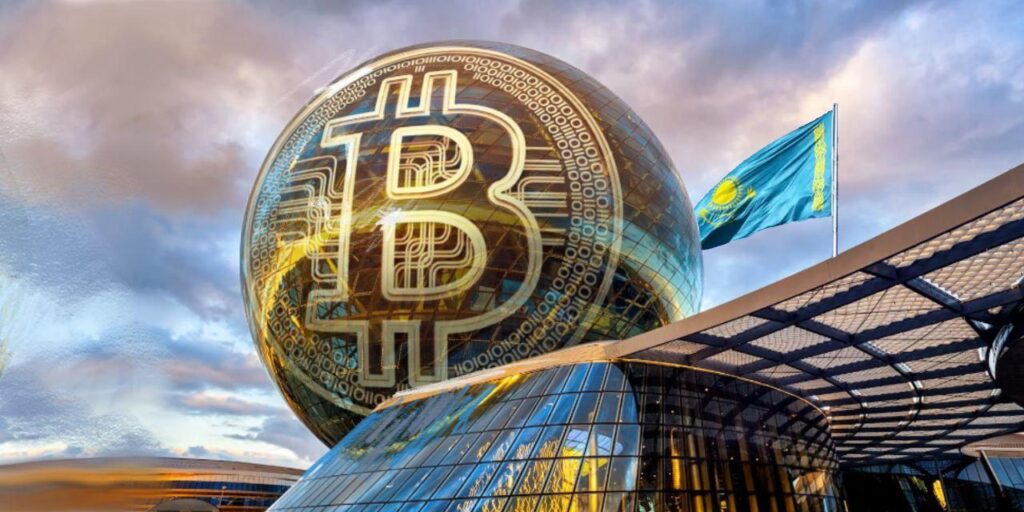
Kazakhstan Sets Sights on Becoming Central Asia’s Blockchain Hub

Kazakhstan is accelerating its efforts to become a regional leader in blockchain and cryptocurrency. Among its latest initiatives is a proposal by the National Bank of Kazakhstan (NBK) to establish a state crypto reserve.

National Strategy and Regulatory Evolution

The NBK recently endorsed the idea of forming a national reserve of crypto assets. This was confirmed in an official response from NBK Chairman Timur Suleimenov to a parliamentary inquiry. The proposal includes creating the reserve through a subsidiary of the NBK focused on alternative investments. Mirroring practices in countries such as the United States, the reserve could be composed of confiscated crypto assets and cryptocurrencies mined with state involvement. Legislative amendments to support this move are expected.

In January, President Kassym-Jomart Tokayev underscored the urgency of developing Kazakhstan’s crypto infrastructure, citing a global shift toward digital assets. Tokayev emphasized the need for a comprehensive national strategy to meet emerging challenges.

Currently, legal cryptocurrency transactions in Kazakhstan can only occur via exchanges operating under the Astana International Financial Center (AIFC). Registered participants include major platforms such as Binance and Bybit.

Expanding Infrastructure and Innovation

The government is also considering the creation of crypto banks, which would regulate the digital asset market, facilitate storage and transactions, and boost the financial ecosystem. These institutions are seen as critical to fostering IT sector growth and blockchain compliance jobs.

There are also plans to establish a licensed national cryptocurrency exchange that would operate nationwide beyond the AIFC.

In May, Kazakhstan announced the launch of a special CryptoCity zone to pilot cryptocurrency-based payments for goods and services. The following month, five banks, Halyk Bank, Forte, Freedom, RBK, and Altyn, joined a NBK pilot program to introduce crypto cards. These cards, linked to wallets on AIFC-registered exchanges, allow for the real-time conversion of crypto into tenge for payments and cash withdrawals, including at physical retail terminals.

Mining: Prospects and Pressure

Kazakhstan has had a complex relationship with cryptocurrency mining. Between mid-2021 and early 2022, the country ranked third globally in Bitcoin mining, driven by low energy costs and an influx of miners from China. At its peak in January 2022, Kazakhstan accounted for 13.22% of global mining power.

However, the surge in mining led to severe energy shortages. While enthusiasm for mining has returned, President Tokayev called in March 2025 for renewed investment in digital mining infrastructure.

First Deputy Minister of Digital Development Kanysh Tuleushin has championed state-regulated mining as a potential revenue source and a catalyst for modernizing the energy grid. He pointed to models such as the U.S., where miners help balance grid loads, and to Kazakhstan’s “70/30” initiative, which allocates 30% of newly modernized thermal power plant capacity to miners and 70% to the national grid.

Tuleushin also emphasized the potential for repurposing associated petroleum gas to generate mining power, thereby reducing emissions and monetizing a previously wasted resource. He argued that legalizing crypto activity nationwide could transform Kazakhstan into Central Asia’s crypto leader, on par with emerging markets in Uzbekistan and Kyrgyzstan.

Energy Shortages and Long-Term Solutions

Despite its ambitions, Kazakhstan’s energy capacity remains a critical constraint. Analysts at energyprom.kz estimate a national electricity shortfall of 5.7 billion kWh in 2025. This follows a 2 billion kWh deficit in 2024, when production totaled 117.9 billion kWh against a demand of 119.9 billion kWh.

Projections indicate a surplus may not emerge until 2027, with significant new capacity planned under the Ministry of Energy’s development roadmap through 2035, including over 26 GW of additional generation.

A key component of this plan is nuclear energy. Rosatom has been selected to build Kazakhstan’s first nuclear power plant by 2035-2036, with a second plant to follow under China’s CNNC. Until then, the grid remains vulnerable.

The Supreme Audit Chamber, meanwhile, has warned that unregulated mining continues to burden the grid. In 2024, miners consumed 901 million kWh, worth 13 billion tenge, without oversight, exacerbating the energy crisis, according to former Prime Minister Alikhan Smailov.

Tariff hikes under the “Tariff in Exchange for Investment” program have further strained households and fueled inflation. The country’s aging infrastructure, 76% of CHP plants are over 50 years old, is also a pressing concern.

Regional Competition

Kazakhstan faces stiff competition in the region. Uzbekistan has prioritized blockchain development, issuing 14 licenses between 2022 and 2024. Its UZnEX exchange has surpassed $1 billion in trading volume and is expanding into NFTs and digital art.

Kyrgyzstan has also enacted comprehensive legislation governing digital assets, requiring licensing for exchanges and mining companies. By 2024, it had 75 registered exchange operators and seven crypto exchanges, with transaction volumes reaching $4.2 billion.

To compete, Kazakhstan must liberalize its regulatory environment and establish a national digital strategy capable of addressing infrastructure challenges and regional competition.

Russian Inflows Drive Kyrgyz Remittance Surge

Kyrgyzstan recorded a sharp increase in remittance inflows during the first five months of 2025, reaching USD 1.367 billion —a 16% rise compared to the same period in 2024, according to data from the National Bank of the Kyrgyz Republic (NBKR).

The increase was particularly notable in April and May, traditionally high-transfer months ahead of the summer season. In May alone, remittances totaled USD 299 million, up from USD 253 million in May 2024.

Russia remains the dominant source of remittances, accounting for 94% of total inflows between January and May. The NBKR reported USD 1.2 billion in transfers from Russia during this period, reflecting a year-on-year increase of USD 188 million.

This growth comes despite a significant drop in the officially registered number of Kyrgyz labor migrants in Russia from 650,000 in previous years to around 350,000 in 2025. Unofficial estimates, however, suggest the actual figure may exceed one million. The higher remittance volume suggests increased per-capita transfers or improved earnings among Kyrgyz migrants.

In 2023, remittances from Russia stood at USD 2.532 billion. Even as the migrant workforce declined sharply in 2024, total transfers from Russia rose by USD 34 million, indicating persistent reliance on income from abroad.

Other countries contributed relatively little to Kyrgyzstan’s remittance inflows. Transfers from the United States edged up to USD 27.6 million in the first five months of 2025, an increase of USD 600,000 from the previous year.

In contrast, remittances from South Korea and Turkey declined sharply. Transfers from South Korea fell from USD 28.2 million to just USD 1 million, while Turkey’s contribution dropped from USD 6.9 million to USD 4 million.

Remittances continue to play a central role in Kyrgyzstan’s economy, historically making up more than 30 percent of GDP. Yet the country’s ongoing reliance on Russia for these financial inflows highlights its exposure to external risks such as geopolitical tensions, currency fluctuations, and changes in foreign labor market policies.

Looking ahead, the NBKR expects the upward trend in remittances to persist through 2025. However, long-term sustainability may hinge on diversifying migration destinations and strengthening domestic employment opportunities.

Kazakhstan to Use Industrial Hemp for Passport Production

Kazakhstan will begin producing high-security paper from domestically cultivated industrial hemp, which will be used in the manufacture of passports and national ID cards, the Ministry of Agriculture (MoA) has announced.

As previously reported by The Times of Central Asia, Kazakh authorities first considered cultivating industrial hemp in 2016, though the initiative remained dormant until recently. In spring 2025, a draft law legalizing the cultivation of non-narcotic hemp was submitted to parliament. It was approved by deputies in June and subsequently signed into law by President Kassym-Jomart Tokayev.

The legislation authorizes the government to determine which hemp varieties are eligible for industrial use, explicitly excluding strains used for narcotics, and outlines procedures for cultivation and processing.

High-Security Applications and Export Potential

At a government briefing on Tuesday, Deputy Minister of Agriculture Azat Sultanov explained the rationale behind the initiative.

“The main product will be high-security paper, which is a valuable export commodity used for the production of identification documents such as passports and other special forms,” Sultanov said. “The range of products being considered by the investor is wide. Market demand will be taken into account, and we believe all the output will go for export.”

The North Kazakhstan Region is currently being considered as the site for the production facility.

Regulated THC Levels and Licenses Issued

Earlier, the Ministry of Agriculture confirmed that the allowed level of tetrahydrocannabinol (THC), the psychoactive component of cannabis, in cultivated industrial hemp would not exceed 0.3%. In contrast, wild hemp found in Kazakhstan can contain up to 15% THC, rendering the industrial variant non-psychoactive.

Deputy Minister of Internal Affairs Sanjar Adilov noted in April that four licenses for industrial hemp cultivation had already been issued. One licensed farming enterprise in Kostanay Region, adjacent to North Kazakhstan Region, is already engaged in hemp cultivation and processing.

Kazakhstan Considers Carbon Accounting System to Boost Emissions Transparency

Aydar Kazybayev, co-founder of the National Academy of Corporate Governance, has proposed the introduction of a carbon accounting system in Kazakhstan. He argues that such a system would enable the automatic calculation of greenhouse gas emissions at industrial enterprises and ensure more transparent and objective reporting.

“Today in Kazakhstan, greenhouse gas emission reports remain virtually unchanged, and in some cases have worsened. This is due to different companies conducting annual verifications without a unified verification history,” Kazybayev said at the Central Asia Thermal Power Forum.

He announced that a digital platform is scheduled for launch by the end of the year, aimed at integrating all combined heat and power (CHP) plants into a single emissions database. The system would allow companies to maintain carbon records independently via an aggregator or delegate the task to operators managing centralized “carbon accounts.”

“Our main objective is to reduce the administrative burden on companies required to submit such reports,” Kazybayev emphasized.

According to Kazakhstan’s most recent official submissions to the UN Framework Convention on Climate Change (UNFCCC), total greenhouse gas emissions stood at 375.4 million tons in 2020, declined to 328.4 million tons in 2021, and rose again to 353 million tons in 2022. The energy sector remains the largest contributor, accounting for 288.5 million tons in 2020, 251.4 million in 2021, and 281.9 million in 2022.

Kazybayev also cited technological innovations in China as potential models. Specifically, he highlighted China’s Smart Green Energy platform, which enables real-time monitoring of coal consumption and emissions, and generates both daily and annual reports. This system, currently in use at all coal-fired power plants in China, costs approximately $30,000.

“Such tools would be highly beneficial for Kazakhstan. They help accurately estimate resource usage and identify inefficiencies,” Kazybayev explained.

He also pointed to China’s modernization of coal-fired thermal power plants, where heat pumps and geothermal technologies are being adopted. These systems extract thermal energy from the air, ground, or water and integrate it into heating networks.

Air pollution remains a critical concern across Central Asia. As previously reported by The Times of Central Asia, the World Bank has attributed over 65,000 premature deaths annually to regional air pollution.

Kyrgyzstan Seeks Foreign Investment in Critical Minerals Sector

Kyrgyzstan is emerging as a potential player in the global critical minerals market and is actively seeking international partnerships to develop its untapped geological resources.

Speaking at the International Forum on Critical Minerals 2025 in Seoul on May 12-13, Deputy Minister of Natural Resources, Ecology, and Technical Supervision Marat Jusupbekov emphasized the country’s growing relevance in the strategic resource sector. He noted that Kyrgyzstan is home to 11 deposits of rare earth elements (REEs), positioning it as a promising destination for investment and cooperation.

“Kyrgyzstan has significant reserves of rare and critical minerals that are essential for the energy transition and high-tech manufacturing. We are open to cooperation with global partners,” Jusupbekov said during his address.

One of the most notable assets is the Kutessay II deposit, which holds more than 63,300 tons of rare earth metals, along with molybdenum, silver, bismuth, lead, and zinc. The government is promoting joint development of this site with the nearby Kalesai beryllium deposit, which contains an estimated 11,700 tons of beryllium. Both deposits are licensed to Kyrgyzgeology, a state-owned enterprise tasked with attracting foreign investment.

Jusupbekov also highlighted the potential of the Kyzyl-Ompol uranium-thorium group, including the Tash-Bulak area, where titanium-magnetite reserves are estimated at 5.5 million tons. This project is licensed to Kyrgyzaltyn, the country’s largest mining company.

The deputy minister underlined the strategic role of critical minerals in the global transition to clean energy and advanced manufacturing. Materials such as lithium, cobalt, manganese, gallium, indium, graphite, and zinc are essential for the production of solar panels, electric vehicle batteries, and other next-generation technologies.

“Kyrgyzstan is committed to modernizing its mining sector by adopting green technologies and responsible extraction practices,” he said. “We invite international partners to co-develop critical mineral projects and advance sustainable industrial growth.”

In December 2024, Kyrgyzstan signed Memorandums of Understanding with South Korea’s Ministry of Trade, Industry and Energy and the Korea Institute of Geoscience and Mineral Resources (KIGAM). These agreements laid the foundation for deeper cooperation and potential South Korean investment in Kyrgyzstan’s mining sector.

The International Forum on Critical Minerals 2025, co-hosted by KIGAM, South Korea’s Ministry of Trade, Industry and Energy, and its Ministry of Foreign Affairs, brought together representatives from 12 countries, including Kazakhstan, Uzbekistan, Tanzania, the Democratic Republic of the Congo, Nigeria, Mongolia, Vietnam, Indonesia, Australia, Canada, and new participants Kyrgyzstan and Tajikistan.