• KGS/USD = 0.01144 0%
  • KZT/USD = 0.00193 -0%
  • TJS/USD = 0.10811 -0.28%
  • UZS/USD = 0.00008 0%
  • TMT/USD = 0.28490 0%
  • KGS/USD = 0.01144 0%
  • KZT/USD = 0.00193 -0%
  • TJS/USD = 0.10811 -0.28%
  • UZS/USD = 0.00008 0%
  • TMT/USD = 0.28490 0%
  • KGS/USD = 0.01144 0%
  • KZT/USD = 0.00193 -0%
  • TJS/USD = 0.10811 -0.28%
  • UZS/USD = 0.00008 0%
  • TMT/USD = 0.28490 0%
  • KGS/USD = 0.01144 0%
  • KZT/USD = 0.00193 -0%
  • TJS/USD = 0.10811 -0.28%
  • UZS/USD = 0.00008 0%
  • TMT/USD = 0.28490 0%
  • KGS/USD = 0.01144 0%
  • KZT/USD = 0.00193 -0%
  • TJS/USD = 0.10811 -0.28%
  • UZS/USD = 0.00008 0%
  • TMT/USD = 0.28490 0%
  • KGS/USD = 0.01144 0%
  • KZT/USD = 0.00193 -0%
  • TJS/USD = 0.10811 -0.28%
  • UZS/USD = 0.00008 0%
  • TMT/USD = 0.28490 0%
  • KGS/USD = 0.01144 0%
  • KZT/USD = 0.00193 -0%
  • TJS/USD = 0.10811 -0.28%
  • UZS/USD = 0.00008 0%
  • TMT/USD = 0.28490 0%
  • KGS/USD = 0.01144 0%
  • KZT/USD = 0.00193 -0%
  • TJS/USD = 0.10811 -0.28%
  • UZS/USD = 0.00008 0%
  • TMT/USD = 0.28490 0%
10 December 2025

“Day J”: Kazakhstan’s Top Journalists Honored in Almaty

On June 27, Almaty hosted the annual “Day J” celebration, marking Kazakhstan’s professional holiday for media workers. Organized by the communications company, 2BAgency, the event brought together journalists, PR professionals, and media representatives to recognize excellence across the country’s media and communications industry.

The highlight of the evening was the presentation of the “Day J” Awards, which featured five primary categories. Both nominees and jury members were selected through open voting on social media by members of the media community.

2025 “Day J” Award Winners:

  • Best Reporter – Pyotr Trotsenko
  • Best Business Journalist – Olga Fominskikh
  • Best Investigative Journalist – Altynshash Smagulova
  • Best Blogger – Rashit Ilyasov
  • Best Host – Marzhan Elshibayeva

Image: Mikhail Karpov

The event also featured a special Grand Prix category, awarded annually to a media figure whose work has made a lasting impact. This year’s Grand Prix went to Nadezhda Plyaskina, a journalist, director, blogger, and actress with over 30 years of experience.

“The Grand Prix is our way of honoring remarkable talent and professional excellence,” said Tatiana Bendz, Director of 2BAgency. “Nadya Plyaskina is a journalist, blogger, actress, and director, a true master of transformation. She’s one of the most vibrant creative figures in Kazakhstan’s media scene, and we’re proud to award her this year’s Grand Prix.”

Special Contests and Media Recognition

In addition to the main awards, two special contests were held during the evening. Earlier this year, Eurasia Insurance Company and 2BAgency launched a competition for the best media coverage of CASCO auto insurance. The winners were announced at the June 27 event:

  • Best Publication in Kazakh – Gaziza Uzak
  • Best Publications in Russian – Irina Ledovskikh, Zhadyra Turgumbayeva, and Tatyana Batisheva

Image: Mikhail Karpov

Media Partners

The event was supported by a wide range of media outlets, including: Tribune, CheckPoint, BesMedia, Shishkin_like, Profit, BlueScreen, Finratings, The Times of Central Asia, Newtimes, Offside, Aleminform, Optimism, and Bizmedia.


Kazakhstan’s Telecommunications Market Set to Slow in Coming Years

Kazakhstan’s telecommunications market is projected to experience a slowdown in the coming years, with average annual growth expected to hover around 6% for 2025-2027, nearly half the rate seen over the past two years. According to a joint study by Russian firm Nexign and the TelecomDaily agency, the sector grew by 11% in 2024, reaching $2.4 billion, the highest figure in three years.

However, analysts attribute this recent surge not to organic market expansion, but to a sharp rise in communication tariffs, which increased by an average of 20%. The price hikes were largely driven by infrastructure modernization costs, the rollout of 5G networks, and increased mobile data usage.

Looking ahead, sector growth is expected to be fueled by expanding the customer base, rising service consumption, and the development of digital offerings. Mobile communications accounted for 17% of telecom revenues in 2024, while internet access comprised a dominant 53%.

In the past two years, mobile data consumption in Kazakhstan has doubled, placing the country among the global top ten for mobile internet usage per capita. As of March 2025, Kazakhstan had 26 million active SIM cards, more than the total population of approximately 20 million, indicating widespread use of multiple connections. Over 18 million people now have access to mobile internet, and another 3.2 million are connected to fixed broadband. The only segment in decline is fixed-line telephony, which saw a 10% drop in subscribers over the past year, falling to 2.3 million.

The study notes that telecom operators will concentrate on expanding 5G coverage, enhancing service quality, and deploying fixed wireless access (FWA) technologies, seen as a more affordable alternative to fiber-optic infrastructure in rural areas.

Kazakhstan is also advancing in satellite communications. In 2024, 750 rural schools were connected to the internet via Starlink, while OneWeb launched a ground control center in the country. The Times of Central Asia previously reported that Starlink’s commercial rollout in Kazakhstan is scheduled for the third quarter of 2025.

The sector could also benefit from the integration of artificial intelligence in public services and various industries, offering potential new avenues for growth.

Nonetheless, key challenges remain for the 2025-2027 period. These include the high costs of extending network coverage to remote areas, escalating prices for imported telecom equipment amid ongoing geopolitical tensions, and intensifying competition among major players.

The primary operators in Kazakhstan’s telecom market include Kazakhtelecom JSC (and its subsidiary Kcell JSC), Beeline Kazakhstan (Kar-Tel LLP), Tele2/Altel (Mobile Telecom Service LLP), Transtelecom JSC, Alma TV (AlmaTel Kazakhstan JSC), and Jusan Mobile JSC (KazTransCom).

AIIB and Uzbekistan Finalize $71.1 Million Loan for Climate-Resilient Rural Roads

Uzbekistan and the Asian Infrastructure Investment Bank (AIIB) have concluded a $71.1 million loan agreement to upgrade rural roads in the Khorezm and Karakalpakstan regions. The deal was finalized during the AIIB’s 10th Annual Meeting in Beijing.

The loan will finance the first phase of the Karakalpakstan and Khorezm Local Roads Network Reconstruction Project, which aims to modernize rural road infrastructure to improve climate resilience and community accessibility. The project is expected to facilitate better access to markets and essential public services for rural populations.

The total cost of the project is projected at $173.4 million, with a second loan tranche planned to cover the remaining amount. The initial phase will prioritize road improvements in Khorezm, while the second tranche will address road upgrades in the Republic of Karakalpakstan.

According to the AIIB, a phased approach will allow Uzbekistan to better manage its fiscal resources and enhance project planning and execution. This method also enables the bank to provide tailored technical assistance and integrate lessons learned from earlier phases into subsequent work.

This initiative builds on a broader partnership between Uzbekistan and the AIIB. In 2024, the bank approved a $250 million program to support the country’s transition to a greener economy. That package includes measures to reduce greenhouse gas emissions, reform climate-related policies, and promote sustainable land and water management, as well as low-carbon transportation and energy solutions.

The AIIB also backs Uzbekistan’s efforts to boost energy efficiency, expand renewable energy capacity, promote e-mobility, and encourage state-owned enterprises to adopt climate risk reporting practices.

The rural roads project aligns with Uzbekistan’s wider development agenda, which includes modernizing infrastructure, revitalizing underserved regions, and fostering long-term sustainability.

Leading French Engineering School to Open Branch in Kazakhstan

The Kazakh Ministry of Science and Higher Education has finalized an agreement with Grenoble INP-Phelma, UGA – France’s premier engineering school specializing in physics, electronics, and materials science, to open a branch campus in Almaty in 2026. The new campus will operate in partnership with Satbayev University, one of Kazakhstan’s top technical institutions.

The agreement was signed by vice presidents of both universities in the presence of Kazakhstan’s Minister of Science and Higher Education Sayasat Nurbek and French Ambassador to Kazakhstan Sylvain Guiguet.

Grenoble INP-Phelma, located in the city of Grenoble, is part of the Grenoble Institute of Technology and is internationally recognized for its excellence in engineering education.

The Kazakhstan branch of Phelma will offer dual degree programs in Nuclear Engineering, Renewable Engineering, and Advanced Studies. The initiative aims to train highly qualified specialists in nuclear and renewable energy, fields of growing strategic importance as Kazakhstan prepares to construct its first nuclear power plant.

Participating students will have the opportunity to undergo practical training at French nuclear power facilities, which operate 56 reactors and supply more than 70% of France’s electricity. This hands-on experience is expected to prepare graduates for careers in Kazakhstan’s evolving energy sector.

The Times of Central Asia previously reported that the Colorado School of Mines will also open its first international campus in Kazakhstan in 2026. That campus will be located in Zhezkazgan, the center of the country’s geological industry.

The Colorado School of Mines has already established a dual degree partnership with Satbayev University in geology, petroleum engineering, and mining, which includes joint research collaborations.

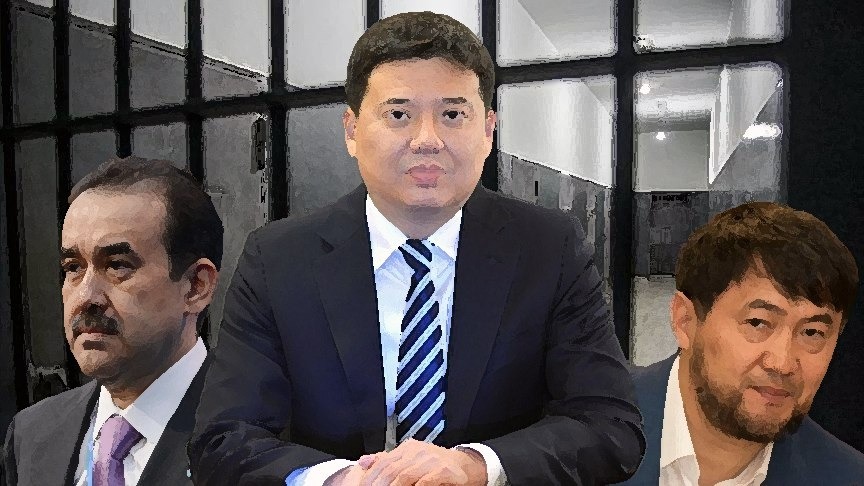
Former Justice Minister From ‘Old Kazakhstan’ Sentenced to Nine Years in Prison

Former Minister of Justice Marat Beketayev has been sentenced to nine years in prison with confiscation of property for crimes linked to large-scale corruption. Beketayev is widely regarded as a representative of the “Old Kazakhstan” of the first president, Nursultan Nazarbayev, a term widely used to describe officials removed from power in the wake of the January 2022 unrest and associated with systemic corruption.

Verdict Handed Down

The Anti-Corruption Service of Kazakhstan announced on June 30 that Beketayev was convicted of fraud, embezzlement on an especially large scale, and illegal participation in entrepreneurial activities. Details of the case remain classified. The charges were formally submitted to the court in March 2025.

Beketayev served as Minister of Justice from 2016 until early 2022. Following the January unrest, he was appointed as an advisor to the Prime Minister but was quietly dismissed in December 2022, a fact that only became public knowledge in February 2023.

He was detained in October 2023 while allegedly attempting to flee the country. According to investigators, he abused his office by lobbying for the interests of an affiliated company and awarding it annual contracts for unnecessary services, actions that reportedly inflicted significant financial damage on the state.

Fallout from the January Events

Beketayev’s dismissal came immediately after the events known in Kazakhstan as “Bloody January” (Qantar), when protests initially triggered by rising liquefied gas prices escalated into nationwide unrest. From January 3-7, 2022, major cities were engulfed in chaos. Government buildings, law enforcement agencies, and military units were attacked; 238 people were reportedly killed, including children and police officers. The worst violence occurred in Almaty, where protesters stormed the city administration, the president’s residence, and the airport.

Order was restored on January 8 with the intervention of the Collective Security Treaty Organization (CSTO), at the request of President Kassym-Jomart Tokayev. Open-source information and official investigations suggest the unrest was orchestrated by supporters of former president Nursultan Nazarbayev, who had stepped down in 2019 after nearly 30 years in power.

In the aftermath, many high-ranking officials were removed or prosecuted. Among them was former Prime Minister and National Security Committee (KNB) Chairman Karim Massimov, who was sentenced to 18 years in prison for orchestrating what authorities describe as a coup attempt. Nazarbayev’s nephews, Samat Abish and Kairat Satybaldy, also faced charges. Abish received an eight-year suspended sentence due to his “sincere repentance,” while Satybaldy, accused of economic crimes, paid approximately 700 billion tenge ($1.5 billion) in restitution and was released.

The post-Qantar purge extended to numerous grassroots organizers and ordinary citizens involved in the unrest. In political discourse, the divide between Tokayev’s supporters and the remnants of Nazarbayev’s influence is often described as a split between “New Kazakhstan” and “Old Kazakhstan.”

Beketayev’s Legacy and Links to Major Scandals

Beketayev is considered an ally of Massimov and thus part of the old power structure. He was also involved in one of Kazakhstan’s most controversial international legal disputes, the case involving Moldovan businessmen Anatol and Gabriel Stati. In 2017, $22 billion from Kazakhstan’s National Fund, composed largely of oil revenue, was frozen due to litigation stemming from the Stati case. The proceedings led to substantial legal costs and reputational damage for the state.

Beketayev’s conviction is seen as another chapter in the government’s ongoing campaign to dismantle the political and financial legacy of “Old Kazakhstan.”

Kazakhstan Transfers Anti-Corruption Authority to National Security Committee

Kazakh President Kassym-Jomart Tokayev has signed a decree dissolving the country’s standalone Anti-Corruption Agency and transferring its functions to the National Security Committee (NSC), in what officials describe as a move to modernize and streamline public administration.

According to the decree, the Anti-Corruption Agency, previously a direct presidential subordinate tasked with both strategic and operational anti-corruption efforts, will now be integrated into the NSC as its sixth division. It joins the ranks of other specialized units including the Border Service, Foreign Intelligence Service, Government Communications Service, Special Division “A” (special forces), and the Aviation Service.

Some responsibilities, particularly those involving the development and implementation of anti-corruption policy, interagency coordination, and public outreach, will be transferred to the Agency for Civil Service Affairs. That agency will also absorb part of the former Anti-Corruption Agency’s staff and resources.

“In order to modernize and improve the efficiency of the public administration system, I hereby decree: to reorganize the Anti-Corruption Agency by merging it with the National Security Committee…” the decree states.

The Anti-Corruption Agency was created in 2014 as the successor to the Agency for Combating Economic and Corruption Crimes, also known as the financial police, which had operated since 1994. Throughout its existence, the agency reported directly to the president and was central to the country’s efforts to combat corruption, from policy design to investigations.

Under the decree, the NSC must draft new regulations for the anti-corruption division and submit personnel redistribution proposals, particularly concerning the Agency for Civil Service Affairs, within one month. Additionally, the government has until September 1, 2025, to prepare and submit a bill to parliament reflecting the institutional changes.

As previously reported by The Times of Central Asia, President Tokayev recently launched a broad reform initiative targeting the entire law enforcement system. The incorporation of anti-corruption functions into the NSC may thus represent only the first phase of a wider restructuring.