• KGS/USD = 0.01144 0%
  • KZT/USD = 0.00211 0%
  • TJS/USD = 0.10554 -0.09%
  • UZS/USD = 0.00008 0%
  • TMT/USD = 0.28530 0%
  • KGS/USD = 0.01144 0%
  • KZT/USD = 0.00211 0%
  • TJS/USD = 0.10554 -0.09%
  • UZS/USD = 0.00008 0%
  • TMT/USD = 0.28530 0%
  • KGS/USD = 0.01144 0%
  • KZT/USD = 0.00211 0%
  • TJS/USD = 0.10554 -0.09%
  • UZS/USD = 0.00008 0%
  • TMT/USD = 0.28530 0%
  • KGS/USD = 0.01144 0%
  • KZT/USD = 0.00211 0%
  • TJS/USD = 0.10554 -0.09%
  • UZS/USD = 0.00008 0%
  • TMT/USD = 0.28530 0%
  • KGS/USD = 0.01144 0%
  • KZT/USD = 0.00211 0%
  • TJS/USD = 0.10554 -0.09%
  • UZS/USD = 0.00008 0%
  • TMT/USD = 0.28530 0%
  • KGS/USD = 0.01144 0%
  • KZT/USD = 0.00211 0%
  • TJS/USD = 0.10554 -0.09%
  • UZS/USD = 0.00008 0%
  • TMT/USD = 0.28530 0%
  • KGS/USD = 0.01144 0%
  • KZT/USD = 0.00211 0%
  • TJS/USD = 0.10554 -0.09%
  • UZS/USD = 0.00008 0%
  • TMT/USD = 0.28530 0%
  • KGS/USD = 0.01144 0%
  • KZT/USD = 0.00211 0%
  • TJS/USD = 0.10554 -0.09%
  • UZS/USD = 0.00008 0%
  • TMT/USD = 0.28530 0%

EBRD Launches Online Mentoring Platform for Entrepreneurs in Tajikistan

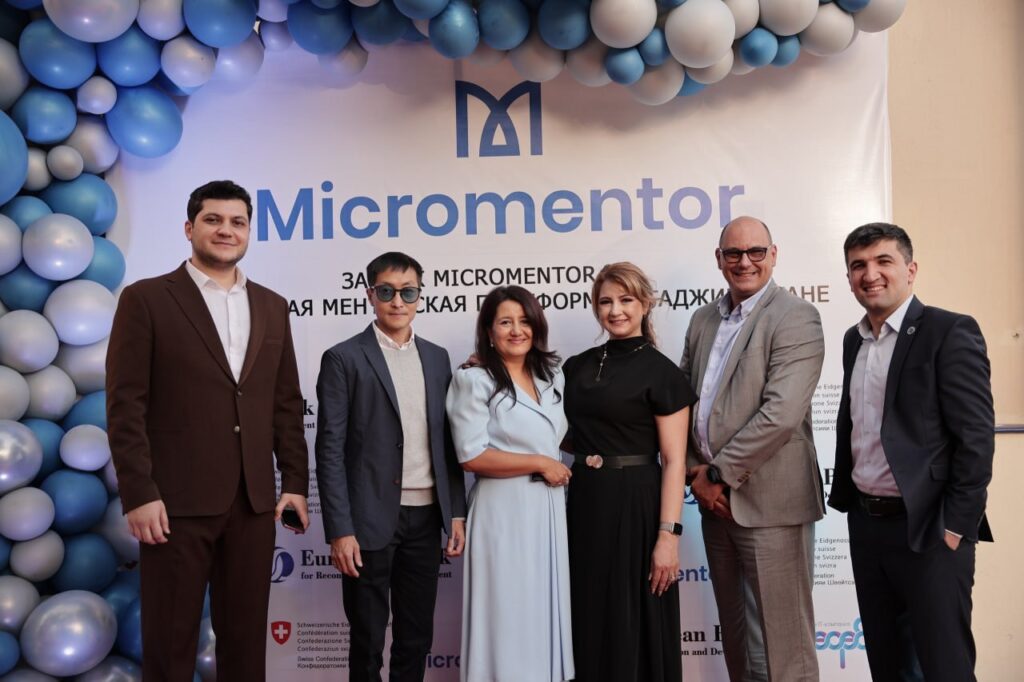
Small and medium-sized enterprises (SMEs) in Tajikistan have a new avenue of support: the European Bank for Reconstruction and Development (EBRD) has launched an online platform offering mentoring and professional consultations. The initiative is funded by the Government of Switzerland.

A Global Community for Tajik Entrepreneurs

The new platform, MicroMentor.tj, connects Tajik business owners with a global network of more than 420,000 entrepreneurs and 120,000 mentors across 180 countries. Available in six languages, including Russian, the service is free and accessible to entrepreneurs even in remote regions of Tajikistan.

The platform aims to expand opportunities for SMEs, foster innovation, support business development, and generate employment. Promotion of the platform within the country is supported by local partner Shedevr, headed by Muboriz Subkhonov.

Mentoring as a Growth Tool

The EBRD has long supported SMEs not only through financial instruments but also via non-financial services such as mentoring, sector-specific consultations, training, and educational events. According to the bank, 77% of entrepreneurs who engaged actively with mentors reported increased revenues.

The new platform builds on the Mentoring for Women Entrepreneurs program, which supported more than 100 participants from Dushanbe, Khatlon, Sughd, and Gorno-Badakhshan Autonomous Oblast (GBAO), with guidance from 50 mentors from Kazakhstan, Kyrgyzstan, and Armenia.

Over a nine-month period, 108 mentor-mentee pairs were formed. Nearly all participants reported tangible outcomes:

  • 95% improved their business skills
  • 93% expanded their businesses
  • 90% created new jobs

EBRD Updates Strategy for Tajikistan

Coinciding with the platform’s launch, the EBRD approved a new country strategy for Tajikistan through 2030, prioritizing structural reforms, private sector development, and sustainable growth in energy, transport, and urban infrastructure.

“The new strategy reflects our commitment to supporting Tajikistan’s economic development through a comprehensive approach combining financial resources, policy dialogue, and technical assistance,” the EBRD press service stated.

The bank plans to support projects that enhance competitiveness and foster technological independence. To date, the EBRD has invested more than €1 billion in Tajikistan’s economy across 185 projects.

According to the latest Regional Economic Prospects report, the EBRD forecasts Tajikistan’s GDP growth at 7% in 2025 and 5.7% in 2026. Key drivers include infrastructure investments, private sector expansion, and advancements in digital technologies and energy.

The new strategy integrates investment, advisory support, and regulatory reform to create a more favorable business environment for Tajikistan’s growing economy.

Uncategorized

Kazakhstan to Invest Up to $19 Billion in Oil Refining Development

Kazakhstan’s Ministry of Energy has unveiled an updated Concept for the Development of the Oil Refining Sector through 2040, aiming to raise the country’s refining capacity to 39 million tons per year. Achieving this goal will require investments ranging from $15 billion to $19 billion.

As previously reported by The Times of Central Asia, an earlier version of the Concept targeted a doubling of refining volumes from 18 million tons to 38 million tons by 2040. The updated version, presented during the Kazakhstan Energy Week 2025 forum in Astana by Talgat Makuov, Deputy Director of the Department of Oil Transportation and Refining, slightly increases that target.

“Expected investments in sector development, according to the Concept, range from $15 billion to $19 billion, enabling an increase in refining capacity from 18 to 39 million tons per year while significantly improving processing efficiency,” Makuov stated. He added that the document, aimed at enhancing Kazakhstan’s energy security, has been approved by the government and developed in coordination with state agencies and key players in the oil and gas sector.

Expansion of Refineries and Petrochemical Complexes

“The Concept envisions expanding existing refineries and constructing high-tech, integrated petrochemical complexes with flexible product lines driven by market demand. These facilities will become long-term, high-value assets, increasing the capitalization of managing companies and attracting investors. They will also serve as the foundation for petrochemical clusters,” Makuov said.

Kazakhstan’s oil and gas chemistry sector is currently advancing in two main directions. The first is oil-based chemistry, such as benzene and paraxylene production at the Atyrau Oil Refinery (ANPZ), with potential for synthesizing more complex organic compounds. The second is gas-based chemistry, which includes the KPI polypropylene project, and planned projects for polyethylene and butadiene production.

Efficiency, Environment, and Innovation

“A key performance target of the Concept is improving the ratio of oil production to refining from 5:1 to 2.5:1, aligning with OECD benchmarks, supported by the introduction of new refining and petrochemical facilities,” Makuov explained. “Environmental standards and emission reductions are a priority, consistent with Kazakhstan’s decarbonization goals and green development agenda. Additionally, efforts are underway to establish applied research capabilities, including the creation of a dedicated R&D institute for oil refining and petrochemistry.”

Makuov emphasized that implementation of the Concept will support the sustainable development of the sector by balancing economic, environmental, and social objectives. It is expected to ensure domestic supply of high-quality petroleum products, increase export potential, particularly to fast-growing Asian markets, create new jobs, and improve the country’s investment appeal.

Earlier this year, Kazakhstan also announced a $15 billion investment in the oil and gas chemical sector through six major projects, aiming to transition from raw material exports to higher-value industrial production.


Touching Fairy Tales: In Ust-Kamenogorsk, Books Are Knitted, Sewn, and Brought to Life

At the A.S. Pushkin Library in Ust-Kamenogorsk, East Kazakhstan region, reading has become a tactile adventure. Here, books aren’t just read, they’re knitted, sewn, and handcrafted. Librarians have discovered a magical way to ignite children’s interest in reading: through tactile books that can be touched, flipped through, and even assembled.

“The main thing is to find an approach to each child. Even if they haven’t been encouraged to read at home, we can change that in the library,” says Dinara Mergenbayeva, head of the Center for Knowledge.

The idea was born from a desire to make books more relatable. “Who says children don’t read? They do, and with great curiosity! They just need something new, lively, and emotional,” she explains.

Knitted Books and Soft Stories

The library’s first knitted book was a Kazakh-language version of the alphabet primer Әліппе, inspired by Kulmay Sembayeva’s Aripler aleminde (“In the World of Letters”). Each letter is paired with a poem and a small, crocheted animal or object, which children can pull from pockets and explore.

“For example, the letter A, next to it are an akhu (swan) and an ayu (bear). We knitted and cut out all the figures ourselves. The materials came from our homes. Even the cover was made from my old suede boots, they’ve found a second life now,” one librarian shares.

Another handcrafted creation is Pushkin’s The Tale of the Fisherman and the Fish. In this interactive version, characters can be moved around, allowing children to change the course of the story. Kids act out scenes, invent new endings, and immerse themselves more deeply in the narrative.

@Yulia Chernyavskaya

There’s even a trilingual crocheted edition of Abai’s The Seasons, in Kazakh, Russian, and English. Its pages include trees, snowflakes, flowers, and ladybugs, all detachable and fastened with buttons. Children can “switch” winter to spring, collect leaves, or “scatter” snow, transforming play into reading.

“This helps develop fine motor skills, imagination, and a love of books. The key is to keep it interesting,” notes Mergenbayeva.

Books You Won’t Find Anywhere Else

Each tactile book is handmade, with production times ranging from three weeks to six months. The entire library staff is involved, from brainstorming to material selection and testing books with children. Special editions are created for older students, including a large-format album commemorating Abai’s 175th anniversary, with sections titled “Abai the Writer,” “Abai the Philosopher,” and “Abai the Musician.”

“If a child remembers even one illustration, that’s a success. A book should leave an impression, visual, emotional, any kind,” says a librarian.

Each edition includes a QR code linking to a digital version in the library’s electronic collection.

When Children Bring Their Parents

At Pushkin Library, reading is a family affair. Every Saturday features shared reading sessions, reinforcing the tradition of reading together.

“The youngest children come with their parents, and later they’re the ones dragging them back. Kids literally pull their moms and dads to the library,” Mergenbayeva smiles.

For teenagers, there’s the Literary HUB, a space for poetry readings, book discussions, and literary debates. Teens choose a book, read it during the week, and then gather to exchange views and even recommend books to adults.

“You should hear the topics they raise! Sometimes adults could really learn from them,” she says.

@Yulia Chernyavskaya


Mergenbayeva believes one reason children lose interest in reading is the lack of modern Kazakh stories that reflect their own lives.

“Children need to recognize something familiar. Our teens live and think differently now but books don’t reflect that. We’re losing touch with their reality,” she says.

One exception is Yeraly’s Fairy Tales, written by nine-year-old Yeraly Pazybekuly. His stories depict life in his native village of Praporshchikovo, its courtyards, neighbors, and animals. The tales are simple, vivid, and remarkably sincere.

The library actively supports young authors. Recently, they celebrated 15-year-old Asyl Sungatkzy, who creates comics based on historical themes.

Reading as a Way of Life

The library’s mission is to make reading a natural and joyful part of children’s lives. Projects include Sham tübindegi ertegi (“Fairy Tales Under the Lamp”), which revives the oral storytelling tradition, and Tales and Legends of East Kazakhstan, introducing children to the region’s diverse cultures.

A new initiative, Super Balakai! (“Super Kid!”), showcases the stories of talented local children. Contests such as “Reading Leader,” “Read and Win!” and “Dedicated to Children” attract wide participation.

“We want books to become part of a child’s life again, not as an obligation, but as a joy,” says Mergenbayeva.

Today, the Pushkin Library is far more than a place where books are stored. It is a creative hub where reading becomes art, and fairy tales come alive through the work of hands, hearts, and imagination.


Kazakhstan’s Two Futures on Display at Energy and Digital Forums in Astana

As the temperatures in Astana dipped below zero this week, the capital played host to two international gatherings that offered sharply contrasting visions of Kazakhstan’s future. On one bank of the Ishim River, industry veterans and government officials gathered for Kazakhstan Energy Week in the cavernous halls of the Independence Palace. Just across town, the Astana Digital Bridge forum drew swarms of young entrepreneurs and tech enthusiasts to the gleaming Expo Center. 

The Old Guard Assembles

Energy Week opened at 10 a.m. sharp on Thursday, October 2nd. Beneath gold-and-jade ceilings, chandeliers clinging to them like stalactites, padded white leather chairs were lined up neatly on stage. They were filled by some of the oil industries leading lights; dark suits were de rigueur. Over lunch, a string quartet performed Gardel’s Por Una Cabeza, while the final evening saw delegates invited to see Verdi’s Rigoletto at Astana’s ostentatious opera house. 

The format was carefully stage managed. Executives delivered their speeches like lecturers at a school assembly, with the audience listening politely. Questions from the floor were not invited.

There was a certain quiet bullishness amongst those present – the air of an industry that had been written off, but far from ready to concede relevance. Oil and gas continue to provide 35% of GDP and 75% of exports, despite talk of an energy transition.

“We expected a tailing off in demand on a global level, and this has not happened,” said Richard Howe, Executive Vice President of Shell’s Exploration and Production division during a panel of energy executives.

Beside him, Askhat Khassenov, Chairman of the Board at KazMunayGas, was a little more smug – “It looks like oil and gas are going to be around for a lot longer than some had anticipated,” he said.

Nevertheless, regular attendees at Kazakhstan’s annual energy shindig noted that the event was notably quieter than in previous years. Russians were absent, and Europeans few and far between. Delegations from neighboring Central Asian and Middle Eastern states padded out the numbers, perhaps reflecting countries in a similar situation.

The audience skewed heavily male and middle-aged. While a side event titled “Women in Oil” took place in a nearby hall, the real worry was generational. Both Howe of Shell and Bakhodirjon Sidikov of Uzbekneftegas admitted that talent – or the lack of it – was their biggest challenge.

Concerns about the lack of top scientists have also been taken up at the highest level. “Today, 90% of university graduates have bachelor’s degrees. Meanwhile, the proportion of PhD holders is less than 1%,” President Kassym-Jomart Tokayev said earlier this week. “Therefore, it is necessary to increase the number of grants for doctoral studies, with preference given to technical specialties.”

If the message of Energy Week was that Kazakhstan’s present still runs on oil and gas, it was also clear the sector is worried about who will run it tomorrow. 
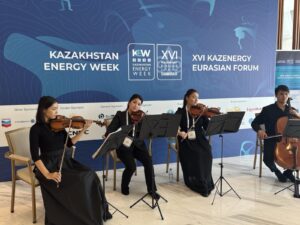
Image: Joe Luc Barnes, TCA

New Kazakhstan

For the future talent, you only had to drive a few minutes to the Expo Center, where Astana Digital Bridge was in full swing. If Energy Week was polished but staid, here the halls were packed with enthusiastic youth. Long queues snaked outside, the kind more often seen at rock concerts.

The language was different too. At Energy Week, everyone addressed one another as “colleagues” and “partners”. At Digital Bridge, it was simply “friends”.

The crowd responded accordingly, breaking into spontaneous applause during keynote speeches with local tech titans. They were motivational pitches to a generation that sees technology as the only real ladder of social mobility in Kazakhstan. At every panel the unspoken, aspirational message was “you can do this too”.

“The main thing is that being IT gives you a road to becoming independent,” said Tolkyn, an IT worker attending the event, told The Times of Central Asia. “It offers great opportunities for Kazakhs to work abroad, to earn good money and build an international career, and to support your parents. And all of this through honest work: in IT, your success is more or less a function of your hard work. Even if you have connections, if you’re not bright, you’re not going to get a job.”

Thousands of young Kazakhs crammed into sessions on fintech, artificial intelligence, cryptocurrency and venture capital. 

On the exhibition floor, Sairan, a young salesperson for Crocus, a company developing a hotel management platform called ChekInn, explained his choice of career. “I work in tech marketing,” Sairan says enthusiastically, “I went into it because it’s well paid, plus I’m very sociable so it gives me the chance to meet people.”

Nearby, Aigerim, a medical student volunteering at the stand for Remind.ai, a start-up focused on detecting early signs of Alzheimer’s, took a broader view. “I believe in the power of tech to do good,” she said. “As a medical practitioner, I can help one person at a time, whereas technology helps me to scale up that ability.” 

The government is keen to blow wind into these sails. “We have set ourselves a clear goal: Kazakhstan must become a truly digital country within three years,” Tokayev declared while opening Digital Bridge. 

While developing its own digital infrastructure, including building its first supercomputer and announcing plans for one more, Astana has also positioned itself as a haven for Russian and other post-Soviet tech entrepreneurs seeking a new base since 2022. One blockbuster panel featured Timur Turlov and Arsen Tomsky, two Russian founders of Kazakhstani SuperApps Freedom Holding and InDrive appearing alongside local hero Mikhail Lomtadze, founder of Kaspi.kz, Kazakhstan’s biggest tech success story.

Even Pavel Durov, also of Russia and the founder of Telegram, met with Tokayev at the Akorda before taking part in one of the panels. Telegram has officially joined Astana Hub, opened an office in Kazakhstan, and launched the Alem.AI AI laboratory. 

Image: Joe Luc Barnes, TCA

An Ambitious Tech Agenda

The big question is whether Kazakhstan can make the leap from hydrocarbons to high tech. Other petro-states have tried. Dubai, often invoked as the city that Astana would like to emulate, has recast itself as a global logistics and fintech hub. Kazakhstan appears to be trying to follow suit.

Some evidence suggests it could. Kaspi.kz has already expanded into Turkey through its purchase of a controlling share in e-commerce firm Hepsiburada, which now has 17 million users. Lomtadze also floated an ambition to rival Yandex, the ubiquitous taxi and delivery provider across the post-Soviet space. Turlov has spoken of pushing into the Tajik market and has openly asked the government to champion Kazakh digital firms abroad, particularly against Chinese competition.

But for all its elegance and finesse, the newest generation of technology, particularly AI, is also energy-hungry. And it is here that the two fora agendas may dovetail.
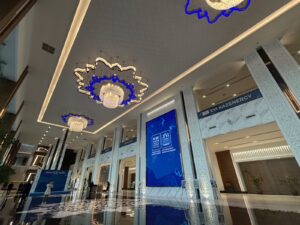
Image: Joe Luc Barnes, TCA

Two Astanas, One Future

Tokayev’s recent address to the National Council on Science and Technology, delivered days before both events, struck a stark tone. “The future of our country, its place among the world’s leading nations, depends on its implementation,” he said of the national drive toward digitalisation and AI. “Clearly, as digitalization and artificial intelligence develop, the country’s energy demand will grow rapidly,” he said. “Therefore, it is necessary to use energy sources efficiently.”

Tokayev evidently believes that the country cannot be underutilizing its massive energy capacities if it is to compete in the technologies of the future.

Last week he notably echoed Donald Trump in dismissing climate change as a “fraud” and praised Kazakhstan’s coal sector. “The U.S. president rightly said, ‘I don’t like wind, I like coal,’” he said. “Kazakhstan produces 113 million tons of coal annually … this is our asset.”

For a country already on the frontlines of desertification and water stress, it was an uncomfortable message to square with international expectations, but it appears that the president sees the AI race as equally existential.

“We have no right to lag behind global progress in our development,” Tokayev said. “Ultimately, this is a question of Kazakhstan’s survival as an independent country.”

But the question is whether it can persuade its young people to persevere with the energy industry when the attractions are elsewhere.

“I never thought about working in the oil and gas industry,” said Tolkyn. “The money is great there – and I’m aware that people in Western Kazakhstan feel like they foot the bill for the lifestyles of people in Almaty and Astana, but I’d be uncomfortable living in a place with a lot of emissions and pollution. IT gives you flexibility, you can be part of any industry – in finance, in medicine, even in oil and gas!”


Uncategorized

Uzbekistan to Co-Host FIFA U-20 World Cup in 2027 with Azerbaijan

It’s been a big year for Uzbekistan’s football ambitions. 

In June, the national team qualified for the 2026 FIFA World Cup, securing a 0-0 draw against the United Arab Emirates in Abu Dhabi that was enough to propel Uzbekistan into the main draw. It is the first time that Uzbekistan, which has built up its sports infrastructure over the years, has qualified in the country’s 34 years of independence.  

Now Uzbekistan and Azerbaijan are celebrating their joint appointment as host nations for the FIFA U-20 World Cup in 2027. The announcement was made on Thursday at a meeting of the FIFA Council in Zurich, Switzerland. 

“Great News!” the Uzbekistan Football Association said

“This competition is considered the second most significant men’s national team tournament organised by FIFA, after the FIFA World Cup itself,” said the association, adding that Uzbekistan had gained hosting experience in recent years by staging some big international football events. 

Last year, Uzbekistan hosted the FIFA Futsal World Cup, a fast-paced variation of football that is played indoors. Some 52 matches were played during the contest. The cities of Tashkent, Andijan and Bukhara hosted games and tournament organizers received generally positive reviews.  

FIFA, football’s governing body, has been helping the Central Asian country to modernize its football facilities by funding pitch construction, floodlight installation and the renovation of a stadium. 

Azerbaijan, in the South Caucasus region, is also delighted with the prospect of co-hosting the FIFA event in 2027, describing it as a showcase for its good relations with Uzbekistan. 

The decision “is a clear indication of the friendly relations between the heads of state, the policies aimed at the welfare and development of the countries, as well the special attention and care shown to sports in both countries,” said Rovshan Najaf, president of the Association of Football Federations of Azerbaijan. 

The two nations have worked to strengthen diplomatic and economic ties, agreeing this year to a goal of boosting bilateral trade and investment to $1 billion annually by 2030. 

The FIFA U-20 World Cup is held every two years. Argentina hosted it in 2023 and this year’s tournament is currently underway in Chile.

Uncategorized

First Kazakh Woman Heads to Space with Blue Origin

Kazakh entrepreneur Danna Karagussova is set to make history as the first woman from Kazakhstan to travel into space. She will join Blue Origin’s upcoming New Shepard NS-36 mission, marking both a personal milestone and a significant event for her country.

Suborbital Flight on New Shepard

Karagussova will be one of six passengers aboard the suborbital spacecraft, alongside United States entrepreneur Jeff Elgin, engineer Clint Kelly III, startup founder Aaron Newman, Ukrainian businessman Vitalii Ostrovsky, and one participant who has chosen to remain anonymous. For Kelly, this will be his second spaceflight after his participation in the NS-22 mission.

Blue Origin has confirmed that the upcoming launch will be its 15th crewed mission. To date, the company’s spacecraft have carried 75 people beyond the Kármán line, the internationally recognized boundary of space. The launch date has not yet been disclosed, but the event will be livestreamed on BlueOrigin.com, X, and YouTube, beginning 30 minutes before liftoff.

Who Is Danna Karagussova?

Karagussova brings more than 25 years of experience in media, distribution, and event management. She is the co-founder of Portals, a project that combines digital self-regulation tools with science and art. Outside of business, she has climbed both Mount Kilimanjaro and Mount Elbrus, reflecting her resilience and determination.

Now, she is turning her focus to space, which she describes not as entertainment but as a profound and transformative journey. Writing on Instagram, she said: “The future of humanity is tied to space. By exploring new horizons, we not only develop technologies but also expand our own potential. For me, the NS-36 mission is part of a research project and a step toward a dream I have pursued for many years.”

Kazakhstan’s Other Space Initiatives

Karagussova’s mission comes as Kazakhstan expands its space research efforts. In Astana, a unique isolation experiment known as SANA-1 recently began, the country’s first such initiative featuring an all-female crew. Over ten days, participants live inside a spacecraft-simulation module, undergoing medical, cognitive, and engineering assessments.

The project, launched by the Eurasian Ventures Group and supported by Kazakh cosmonaut Aidyn Aimbetov, aims to inspire young people and build interest in STEM fields. It also contributes to the knowledge base for Kazakhstan’s future space programs and highlights the growing role of women in science.