• KGS/USD = 0.01144 0%
  • KZT/USD = 0.00211 0%
  • TJS/USD = 0.10460 0.19%
  • UZS/USD = 0.00008 0%
  • TMT/USD = 0.28490 0%
  • KGS/USD = 0.01144 0%
  • KZT/USD = 0.00211 0%
  • TJS/USD = 0.10460 0.19%
  • UZS/USD = 0.00008 0%
  • TMT/USD = 0.28490 0%
  • KGS/USD = 0.01144 0%
  • KZT/USD = 0.00211 0%
  • TJS/USD = 0.10460 0.19%
  • UZS/USD = 0.00008 0%
  • TMT/USD = 0.28490 0%
  • KGS/USD = 0.01144 0%
  • KZT/USD = 0.00211 0%
  • TJS/USD = 0.10460 0.19%
  • UZS/USD = 0.00008 0%
  • TMT/USD = 0.28490 0%
  • KGS/USD = 0.01144 0%
  • KZT/USD = 0.00211 0%
  • TJS/USD = 0.10460 0.19%
  • UZS/USD = 0.00008 0%
  • TMT/USD = 0.28490 0%
  • KGS/USD = 0.01144 0%
  • KZT/USD = 0.00211 0%
  • TJS/USD = 0.10460 0.19%
  • UZS/USD = 0.00008 0%
  • TMT/USD = 0.28490 0%
  • KGS/USD = 0.01144 0%
  • KZT/USD = 0.00211 0%
  • TJS/USD = 0.10460 0.19%
  • UZS/USD = 0.00008 0%
  • TMT/USD = 0.28490 0%
  • KGS/USD = 0.01144 0%
  • KZT/USD = 0.00211 0%
  • TJS/USD = 0.10460 0.19%
  • UZS/USD = 0.00008 0%
  • TMT/USD = 0.28490 0%

Freight Volumes on Middle Corridor Through Kazakhstan Rise Fivefold in Seven Years

Freight volumes transported along the Trans-Caspian International Transport Route (TITR) through Kazakhstan have increased more than fivefold over the past seven years, highlighting the growing importance of the corridor as companies seek alternatives to routes passing through Russia. According to Kazakhstan’s Ministry of Transport, volumes have risen from 0.8 million tons to 4.5 million tons annually.

Also known as the Middle Corridor, the TITR is a multimodal transport route linking China and Europe via Central Asia and the South Caucasus. The rapid growth of the route reflects wider shifts in Eurasian logistics since Russia’s full-scale invasion of Ukraine in 2022. With many Western companies seeking alternatives to traditional northern routes through Russia, governments and logistics operators across Central Asia and the South Caucasus have accelerated investment in the Trans-Caspian corridor, hoping to position it as a key artery linking Asian manufacturing hubs with European markets.

Container transportation has been one of the fastest-growing segments of the corridor. In 2025, approximately 77,000 TEUs were transported along the TITR. Authorities aim to increase this figure to 300,000 TEUs by 2029.

Despite rapid growth, the corridor still carries far less cargo than traditional northern routes through Russia, underscoring both its potential and the scale of investment still required.

The expansion reflects ongoing infrastructure development and growing cooperation among participating countries and logistics operators. Key contributing factors include improved conditions for international freight transport, such as simplified customs procedures, as well as significantly shorter delivery times, reduced from roughly 28-32 days to 13-17 days. Demand has also risen for integrated “single-window” logistics services designed to enhance transparency and reliability.

Kazakhstan, Azerbaijan, and Georgia continue to coordinate efforts under joint roadmaps to eliminate remaining bottlenecks along the corridor.

To ensure year-round navigation and strengthen competitiveness, Kazakhstan is investing in infrastructure on the Caspian Sea coast. Dredging has already been completed at Kuryk Port, while similar work is planned at Aktau Port this year to increase depth and improve vessel access.

Construction is also underway at Kuryk on the Sarzha multifunctional terminal, a project being implemented in cooperation with Abu Dhabi Ports Group from the United Arab Emirates. The terminal is expected to have an annual capacity of five million tons.

Meanwhile, a container hub has been launched at Aktau Port, further enhancing maritime logistics capacity along the corridor.

Kazakhstan has also expanded its transport infrastructure abroad. A Kazakh-operated terminal with a capacity of 120,000 TEUs has been launched at the Georgian port of Poti, improving cargo handling efficiency along the TITR.

The European Union is also supporting the corridor’s development. A grant has been allocated for the reconstruction of Berths No. 3 and No. 12 at Aktau Port. The funding will be used to purchase wind-resistant ship-to-shore cranes to ensure stable operations during adverse weather conditions.

On the railway side, Kazakhstan is upgrading more than 2,000 kilometres of rail infrastructure connected to the corridor.

In 2025, construction and modernisation work were completed on 911 kilometres of railway lines. Key projects include the construction of second tracks along the Dostyk-Moiynty section (836 kilometres) and the development of a 75-kilometre bypass railway line around Almaty station. Both projects are considered critical components of the Middle Corridor’s logistics network.

The Trans-Caspian International Transport Route is increasingly viewed as a key element of the evolving global logistics system. Participating countries continue to coordinate investment and infrastructure initiatives aimed at improving reliability, expanding throughput capacity, and making the corridor more attractive for international freight operators.
Flower Production and Exports Grow in Kyrgyzstan

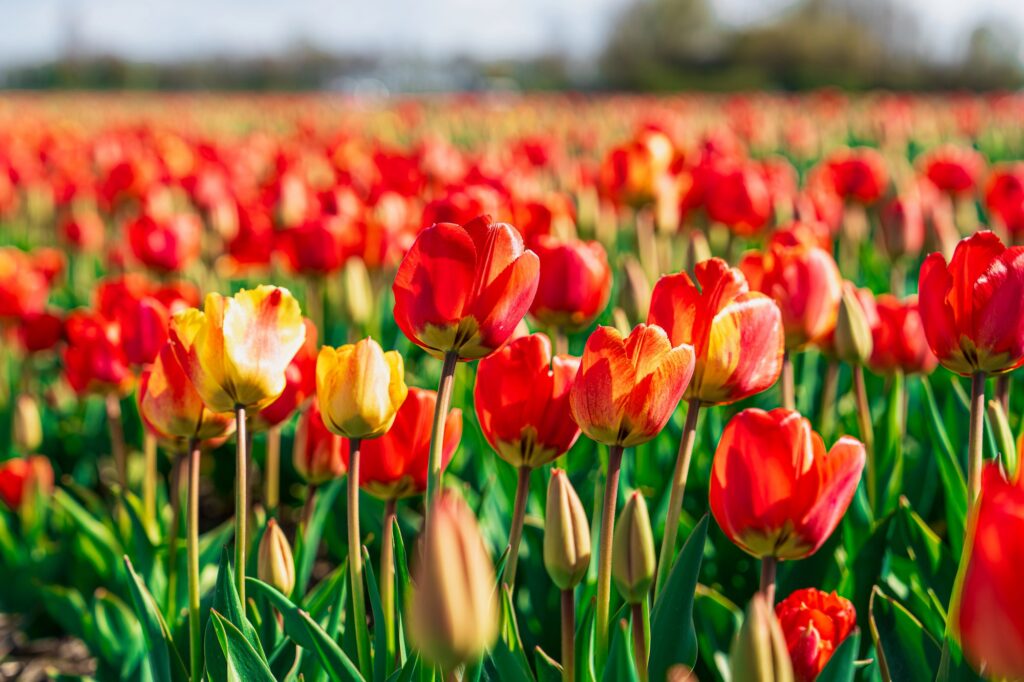
Flower production and exports are continuing to expand in Kyrgyzstan. Since the beginning of the year, the country has exported 17 tons of floral products, according to the Ministry of Water Resources, Agriculture, and Processing Industry.

The main importers of Kyrgyz flowers remain Russia, Kazakhstan, Armenia, and Uzbekistan. According to the ministry, demand is particularly strong in the Uzbek market. Kyrgyzstan has been steadily increasing the volume of flower exports in recent years.

At the end of 2024, exports totalled 13,049,000 flowers. In 2025, this figure nearly doubled to 24,099,000 flowers. The positive trend has continued this year.

“In the first two months of this year alone, 17 tons, or 213,745 flowers, were exported from Kyrgyzstan. Most of the exported flowers were purchased by Uzbekistan, which has become one of the main importers of Kyrgyz floral products,” the ministry said.

Experts note that only a few years ago, locally grown flowers were difficult to find even on the domestic market. Most bouquets sold in flower shops were imported from the Netherlands and African countries.

However, the situation is gradually changing. According to industry specialists, one of the advantages of locally grown flowers is their stronger natural aroma. Many imported flowers are cultivated with a focus on visual appearance and durability during long-distance transportation.

The development of greenhouse floriculture has enabled Kyrgyz producers to gradually secure a significant share of the domestic market.

In the run-up to International Women’s Day on March 8, flower prices traditionally rise sharply. However, this year experts observed a different trend, prices remained close to their usual levels. This was largely due to government-supported tulip festivals organised across the country.

In the Kyrgyz capital, Bishkek, a flower fair was held on Ala-Too Square until March 10, introducing a new format for holiday trade. At the fair, a fixed retail price of $1.20 per tulip was set, while wholesale buyers could purchase flowers at $0.80 each.

In traditional flower shops, prices for similar tulips reached $2.80 per stem, largely because many of the flowers sold there are imported. The main suppliers of imported flowers to Kyrgyzstan are Ecuador, Kenya, and China.

The Netherlands ranks fourth among exporting countries, with approximately three million flowers supplied to Kyrgyzstan.

At the same time, many local producers purchase tulip bulbs from the Netherlands, enabling them to improve product quality and extend the shelf life of flowers grown domestically.

Kazakh Boxer Alimkhanuly Stripped of One of His Two Championship Titles

Kazakh boxer Zhanibek Alimkhanuly has been stripped of one of his two middleweight world championship titles following a doping case but has retained his second belt. The athlete will be eligible to return to the ring at the end of 2026 after serving a one-year suspension.

As previously reported by The Times of Central Asia, in December last year Alimkhanuly found himself at the center of a doping controversy less than a week before one of the most important fights of his career, a unification bout for three middleweight (up to 72.6 kg) titles against Cuban boxer Erislandi Lara. At that time, he tested positive for the banned substance meldonium.

Following several months of proceedings, it was determined that the drug containing meldonium had been taken unintentionally. This finding allowed the potential period of disqualification to be reduced to one year.

The suspension period began on December 2, 2025, the date of the boxer’s provisional suspension from competition. Accordingly, Alimkhanuly will be eligible to return to the ring on December 3, 2026.

At the time of the ruling, the 29-year-old Kazakhstani held two world middleweight titles, under the World Boxing Organization (WBO) and International Boxing Federation (IBF) versions.

The WBO decided not to strip the Kazakh boxer of his championship belt.

“Although the WBO has the authority to strip the champion of his title, we have concluded that, given all the circumstances and his status as a first-time offender, declaring the title vacant would not be proportionate to the punishment,” the organization said in a statement.

In contrast, the IBF ultimately decided to strip the Kazakh boxer of his title.

However, the decision was not taken directly because of the positive doping test. Rather, due to the suspension, the boxer will be unable to defend his title within the time frame stipulated by IBF regulations.

Under the organization’s rules, a champion is required to defend his belt at least once every nine months. Alimkhanuly had been scheduled to defend his title on July 4, 2026, a date that is no longer feasible because of his suspension.

As a result, the IBF Board of Directors declared the title vacant.

The president of the Kazakhstan Professional Boxing Federation, Rakhimzhan Yerdenbekov, said the situation should serve as a serious lesson for the athlete’s team.

“I believe that this situation has been a major lesson for Zhanibek’s team. He will return to the ring even stronger and win all four world belts,” Yerdenbekov wrote on Instagram.

The Alimkhanuly case is the second high-profile doping controversy in Central Asian boxing in a short period. Olympic champion Lazizbek Mullujonov of Uzbekistan was recently banned for three years for violating anti-doping rules.

Kazakhstan Condemns Missile, Drone Strikes from Iran on UAE

Kazakhstan has condemned aerial attacks “from Iranian territory” on the United Arab Emirates, in remarks that emphasized de-escalation and diplomacy while refraining from directly criticizing the Iranian government.

“President Kassym-Jomart Tokayev condemned the missile strikes and drone attacks from Iranian territory on the United Arab Emirates, which resulted in numerous casualties among the population and damage to civilian infrastructure,” according to a statement posted by Aibek Smadiyarov, spokesman for Kazakhstan’s presidency.

“The head of state considers such actions unacceptable, as they lead to a dangerous escalation of the armed conflict in the Middle East,” said the statement, which was released on Tuesday. “In Kassym-Jomart Tokayev’s opinion, the use of diplomatic means is the only correct method of resolving all disputed international issues.”

The statement maintained a diplomatic tone and emphasized de-escalation, differing from a statement from Tokayev several days ago in which he welcomed comments by Iranian President Masoud Pezeshkian about ending Iranian missile and drone attacks on neighboring countries.

However, attacks by Iran on some U.S. allies in the region have continued in retaliation for intense U.S. and Israeli air strikes on Iran that began on February 28.

Without providing evidence, some Iranian officials have claimed that some strikes on neighboring states, including a recent drone attack on Azerbaijan, were false flag operations aimed at undermining the Iranian government. Pezeshkian’s apology for Iranian attacks raised questions about the cohesion of Iranian government narratives following the death of Supreme Leader Ayatollah Ali Khamenei on the first day of the war. His son, Mojtaba Khamenei, was appointed to replace him.

Central Asian countries have been trying to maintain a balance in their public pronouncements on the war, maintaining ties with the Iranian government while expressing support for Gulf Arab countries that have been targeted by Iranian missiles and drones. Central Asia has trade ties with both sides.

Uzbek Grandmaster Abdusattorov Wins in Prague: “I Was Always in Control.”

Nodirbek Abdusattorov of Uzbekistan has risen to fourth in the live chess ratings after winning the Prague Chess Festival Masters this month, following his victory in the elite Tata Steel tournament in the Netherlands earlier this year as well as the 2025 London Chess Classic. 

Abdusattorov now has a classical chess live rating of 2780.3, behind Fabiano Caruana (2793.2), Hikaru Nakamura (2810), both of the United States, and top-ranked Magnus Carlsen (2840) of Norway. The player from Uzbekistan is 21 years old, while the other three players are in their 30s.  

Live ratings are updates of chess ratings that happen after the end of a game in a major tournament. They are based on the official ratings of FIDE, the international governing body of chess, that are updated every month. 

In the final round in Prague, Abdusattorov’s draw against American Hans Niemann was enough to win the tournament. The nine-day event ended on March 6. 

“It went very smooth. I was always in control,” the Uzbek player said in an interview with lichess.org, a chess platform. “Prague is a nice place and a lucky place for me because I won two tournaments here already.” 

Abdusattorov said a lot of people from Uzbekistan came to the venue to support him, and that his strong run began in London last year. 

“It boosts my confidence and everything went my way since then,” he told lichess.org. “It’s continuing to get better and better. But when you are playing against absolutely top players like Magnus, Fabiano and all other super grandmasters, you need to show consistency, you need to prove everything again and again. 

“That’s my mindset for now.” 

According to the Prague tournament website, Abdusattorov said he took a break from the tournament last year after an earlier title there and might try the same schedule again, aiming to return in 2028.

Can Special Economic Zones Become a Driver of Economic Growth in Kazakhstan?

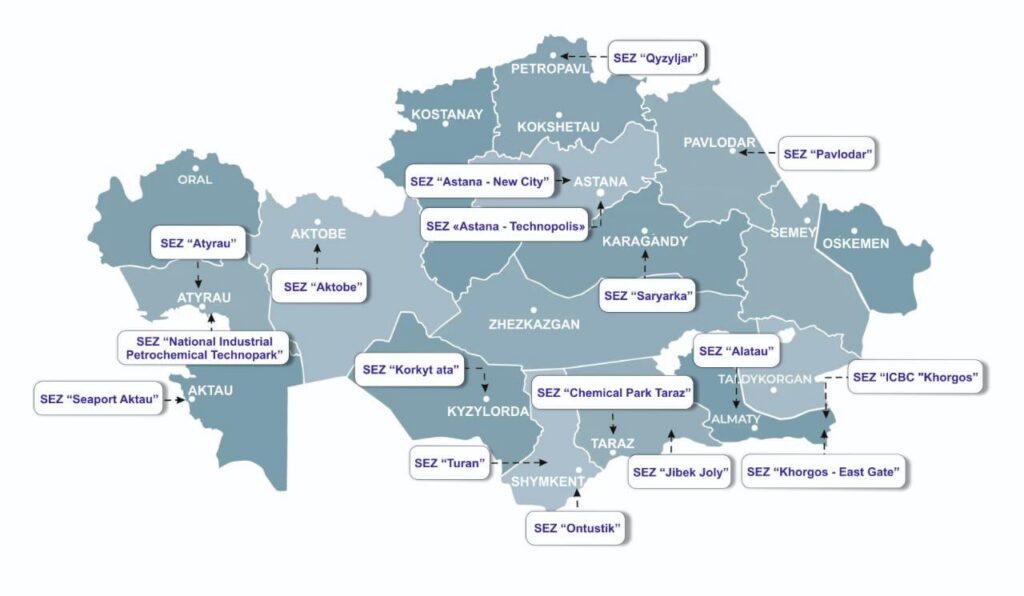
Kazakhstan currently has 17 special economic zones (SEZs) operating across 14 regions, three of which were created in 2025. How effective is this tool for attracting investment, reducing import dependence, and developing exports? And how will the SEZ model evolve within the framework of the Single Coordination Center? Yerlan Kusainov, Deputy Chairman of the Board of JSC Kazakhstan Center for Industry and Export “QazIndustry,” discussed these issues with The Times of Central Asia.

TCA: Kazakhstan currently has 17 SEZs. How many companies operate in them, and what is the total volume of production?

Kusainov: There are 1,144 participants registered in SEZ territories. Of these, 558 projects are already operational, while another 586 are in the implementation stage. Since the establishment of the zones, enterprises have produced goods worth 13.9 trillion tenge (about $28 billion).

The current occupancy rate of the SEZs is 42.4%. This indicator is dynamic and may change as new contracts are signed or as some participants cease operations.

TCA: What types of products are manufactured in the SEZs, and how does this contribute to reducing import dependence?

Kusainov: The SEZs cover a wide range of industries, including manufacturing, construction, transport and logistics, and tourism.

For example, the Aktau Seaport SEZ is implementing projects in the chemical industry, including the production of caustic soda and hydrochloric acid by Topan Chemical Industries. These products are widely used in metallurgy, the oil and gas industry, and water treatment. Previously, a significant portion of such products was imported, but production is now being localized in Kazakhstan.

A major petrochemical cluster is being formed in the Jibek Joly SEZ. Projects there include the production of mineral fertilizers, chemical reagents, and polymer products. Participating companies include HIM-plus, KPM Plast, Chemical Engineering, and C9 Technologies. These projects are expected to supply the domestic market while also supporting exports.

In the Pavlodar SEZ, projects are being implemented in metallurgy and petrochemicals. These include the production of calcined petroleum coke by UPNC-PV, car wheels by Vector Pavlodar, and aluminum ingots and alloys by LeichtMetall KZ and Unimetals. These products are exported to markets in Europe and Asia.

The Ontustik SEZ focuses on the textile industry, where a full cotton-processing cycle has been established, from raw materials to finished products. Enterprises there produce cotton and synthetic yarn, carpets, and other textile goods.

Another important site is the Park of Innovative Technologies SEZ, where projects in digital technologies and electronics are being developed. Key participants include the Institute of Physics and Technology, KT Cloud Lab, which is building a data center, and DS Multimedia CA, which manufactures electronic components.

Together, these projects contribute to reducing import dependence and building export-oriented industries.

TCA: What is the export volume of SEZ enterprises?

Kusainov: The total export volume from SEZ enterprises has reached about $2 billion.

In 2025 alone, exports amounted to approximately $490 million, compared with $148 million in 2021, an increase of 231%.

TCA: How much investment has been attracted through the SEZs?

Kusainov: Over the entire period of operation of the special economic zones, about $9 billion has been invested in SEZ projects overall. Of this total, $6.6 billion was attracted over the past six years.

Foreign direct investment accounts for $2.4 billion of that amount.

In addition, SEZ participants have paid approximately $1.6 billion in taxes and mandatory payments to the state budget.

TCA: How many jobs have been created, and what are the main challenges facing the SEZs?

Kusainov: More than 41,000 permanent jobs have been created through the development of SEZs. One of the key factors for further growth is the availability of ready-made infrastructure. At present, additional financing for SEZ infrastructure is required through 2030.

Around 200 new large-scale projects are expected to be launched, creating more than 19,000 jobs.

To attract investors, three new SEZs were established in 2025: Aktobe, Korkyt Ata, and Atyrau, along with 15 industrial zones.

Priority in SEZs is given to projects involving deep processing in sectors such as agriculture, metallurgy, and the chemical industry.

TCA: How does the differentiated approach to incentives work?

Kusainov: Since 2024, Kazakhstan has applied a differentiated system for providing tax incentives.

Investors can receive tax benefits for periods of 7, 15, or 25 years, depending on the size of their investment.

The principle is simple: the larger the investment, the longer the duration of the tax preferences. The goal of this mechanism is to attract projects with high added value, strong innovative components, and export potential.

The procedure for obtaining SEZ participant status has also been simplified. Investors submit an application and a package of documents. If the requirements are met, an agreement is concluded and a participant certificate is issued.

One of the key advantages of SEZ participation is the availability of ready-made infrastructure, as well as the provision of land plots free of charge for the duration of the incentive period.

Investors also have the right to purchase the land plot after three years of operating a manufacturing project or once the SEZ term expires.

Background

In 2025, three new SEZs were created in Kazakhstan: Korkyt Ata, Aktobe, and Atyrau. The territories of several existing zones were also expanded, including Turan, Aktau Seaport, Pavlodar, Khorgos – Eastern Gate, Saryarka, Jibek Joly, Qyzyljar, and the National Industrial Petrochemical Technopark.

In addition, the government approved the expansion of the Aktau Seaport, Ontustik, Astana-Technopolis, Saryarka, and Alatau SEZs to support airport development and the creation of multimodal air hubs.