• KGS/USD = 0.01144 0%
  • KZT/USD = 0.00211 0%
  • TJS/USD = 0.10460 0.19%
  • UZS/USD = 0.00008 0%
  • TMT/USD = 0.28490 0%
  • KGS/USD = 0.01144 0%
  • KZT/USD = 0.00211 0%
  • TJS/USD = 0.10460 0.19%
  • UZS/USD = 0.00008 0%
  • TMT/USD = 0.28490 0%
  • KGS/USD = 0.01144 0%
  • KZT/USD = 0.00211 0%
  • TJS/USD = 0.10460 0.19%
  • UZS/USD = 0.00008 0%
  • TMT/USD = 0.28490 0%
  • KGS/USD = 0.01144 0%
  • KZT/USD = 0.00211 0%
  • TJS/USD = 0.10460 0.19%
  • UZS/USD = 0.00008 0%
  • TMT/USD = 0.28490 0%
  • KGS/USD = 0.01144 0%
  • KZT/USD = 0.00211 0%
  • TJS/USD = 0.10460 0.19%
  • UZS/USD = 0.00008 0%
  • TMT/USD = 0.28490 0%
  • KGS/USD = 0.01144 0%
  • KZT/USD = 0.00211 0%
  • TJS/USD = 0.10460 0.19%
  • UZS/USD = 0.00008 0%
  • TMT/USD = 0.28490 0%
  • KGS/USD = 0.01144 0%
  • KZT/USD = 0.00211 0%
  • TJS/USD = 0.10460 0.19%
  • UZS/USD = 0.00008 0%
  • TMT/USD = 0.28490 0%
  • KGS/USD = 0.01144 0%
  • KZT/USD = 0.00211 0%
  • TJS/USD = 0.10460 0.19%
  • UZS/USD = 0.00008 0%
  • TMT/USD = 0.28490 0%

Kyrgyz State Mining Company Kyrgyzaltyn Doubles Authorized Capital Through Dividend Recapitalization

The Kyrgyz state mining company Kyrgyzaltyn, which holds most of the country’s mineral deposits, has doubled its authorized capital by converting owed dividends into equity.

According to local media reports citing the Kyrgyz Stock Exchange, Kyrgyzaltyn increased its authorized capital by 5.2 billion soms ($59.6 million) through dividends that were due to the State Agency for State Property Management and the Ministry of Finance.

As a result, the company’s authorized capital now stands at 9.5 billion soms ($109 million). The company has issued 52,000 shares with a nominal value of 100 soms ($1.2) each, to be allocated among employees of the Ministry of Finance and the State Property Fund.

“The shares will be issued in book-entry form and will be paid for from dividends payable on the state-owned stake, as well as the balance from previous issues,” Kyrgyzaltyn said in a statement.

The deadline for placing the shares is December 31, 2025.

This marks Kyrgyzaltyn’s second capital increase this year. In April 2025, the company issued 768,000 ordinary shares, raising its authorized capital by 77 million soms ($883,000) through a full primary market placement.

Kyrgyzaltyn also reported record-breaking profits in the first half of 2025. The company posted a net profit of 17 billion soms ($195 million), five times higher than during the same period last year.

“Today, the Kyrgyz Cabinet is the main investor in state-owned companies. The state is constantly recapitalizing these firms to increase their market value and efficiency,” said Medet Nazaraliev, former director of the Kyrgyz Stock Exchange, in an interview with The Times of Central Asia.

According to Nazaraliev, recapitalization enhances operational efficiency, facilitates the adoption of new technologies, and supports the launch of new business processes. “The company’s share capital increases, and the state’s investment sends a positive signal to other investors,” he said.

“Investors observe improving financial stability and growing capital bases. This, combined with visible state support, makes the company an attractive investment,” Nazaraliev added.

He noted that recapitalization could signal the company’s intent to expand or initiate major new projects.

Earlier this year, Kyrgyzaltyn launched pilot production of titanomagnetite near Balykchy in the Issyk-Kul region. The deposit holds an estimated 20 million tons of reserves, with experts valuing the total mineral content at approximately $1 billion.

Opinion: Washington Meeting and the Shifting Geopolitics of the Caspian

The Washington meeting between Armenia and Azerbaijan, hosted by President Donald Trump on August 8, 2025, may go down as a pivotal moment in the geopolitics of the Caspian and the wider Eurasian space. While on the surface the talks aimed to normalize relations between the two South Caucasus neighbors, the ripple effects extend far beyond bilateral reconciliation. For Azerbaijan, the meeting is not only about ending three decades of conflict with Armenia but also about positioning itself as a central bridge linking the Caspian Basin, Central Asia, and even Europe.

The Caspian region has always been a security crossroads, where energy interests, military presence, and trade routes overlap. Russia’s war in Ukraine, the Iran-Israel conflict, and shifting Western engagement have made the region more volatile. In this context, a potential Armenia-Azerbaijan settlement offers a chance to stabilize the South Caucasus – the natural gateway between the Caspian and Europe.

For Azerbaijan, peace with Armenia would solidify its position in the region where Baku has promoted several important transregional projects such as the Baku-Tbilisi-Ceyhan oil pipeline, the Southern Gas Corridor, and the Baku-Tbilisi-Kars railway. Azerbaijan is heavily investing in the development of the Caspian trade routes, energy infrastructure, and regional connectivity projects such as the Middle Corridor. Stability in the South Caucasus also makes it harder for external actors to exploit divisions – an especially significant factor given the previous attempt to exploit Armenia against Azerbaijan and Türkiye. That strategy brought no tangible results to Armenia, which remained regionally isolated and dependent on Russia. After the military defeats in 2020 and 2023, the Armenian leadership realized that peace and respect for the principle of territorial integrity is a much greater opportunity for the country rather than an irredentist project, which Prime Minister Nikol Pashinyan dubbed “mythical.”

At the same time, a peace framework reduces the risk of military escalation spilling into the Caspian region. Naval modernization efforts by Russia and Iran in recent years have heightened anxieties. In short, normalization indirectly enhances Azerbaijan’s capacity to act as a stabilizing actor within the Caspian basin.

Increasingly, Iran has also spoken about peace and cooperation, especially with Azerbaijan. Relations were tense a few years ago, but the incumbent President, Masud Pezeshkian, questioned the strategy employed previously by the Iranian clerics regarding Azerbaijan, which failed to gain any benefits.

Perhaps the most significant geopolitical dividend for Azerbaijan lies eastward, across the Caspian. The Central Asian states – Kazakhstan, Uzbekistan, Turkmenistan, Kyrgyzstan, and Tajikistan – have long sought secure, diversified links to Europe. Russia’s war has made northern routes through its territory unreliable, while instability in the Red Sea undermines the traditional supply route. That leaves the Trans-Caspian link through Azerbaijan as promising.

The Washington meeting, by promoting the peace agenda, reassures Central Asian partners that Baku is a reliable hub. Azerbaijan, Kazakhstan, and Uzbekistan signed an MOU about the transfer of alternative energy sources to Europe through another potential project – a Black Sea electricity cable from Georgia to Romania and Hungary.

Azerbaijan is trying to move away from a rivalry paradigm to connecting dots – Baku has signed a strategic partnership agreement with China. In the meantime, Azerbaijan’s deepening ties with Türkiye and other Turkic brethren in the Organization of Turkic States (OTS) position it as a natural connector for Central Asia. Baku is also keen on advancing the 5+1 format with Central Asia and other regional platforms such as CICA and ECO.

The fact that the 8 August 2025 meeting was hosted in Washington adds an important dimension despite the uncertain geopolitical situation in Eurasia. For Azerbaijan, U.S. involvement strengthens its hand in showcasing that peace in the South Caucasus is not merely a local issue but one tied to the broader Western strategy of diversifying energy and trade. Central Asian leaders will view U.S. backing of Azerbaijan as an endorsement of the Trans-Caspian route. An important element of the Washington meeting is the so-called TRIPP – Trump Route for International Peace and Prosperity – which will run through the territory of Armenia and connect Azerbaijan’s mainland with its Nakhchivan exclave. It resolves the disagreement between Azerbaijan and Armenia, while potentially opening up the opportunity for a wider connectivity network.

The 8 August 2025 Washington meeting was about more than reconciliation between Armenia and Azerbaijan. It was about reconfiguring the strategic landscape of the Caspian region. For Azerbaijan, it opened a broader perspective in both the West and the East, including anchoring itself as an important bridge to and from Central Asia.

If the momentum holds, Baku could emerge not only as a key energy and transit hub but also as a political actor capable of shaping Eurasian politics through a peace agenda. Much, of course, depends on whether agreements reached in Washington translate into tangible results on the ground. For Armenia, in its turn, it will mean the end of isolation and dependence. But one thing is clear: the implications of this meeting stretch far beyond the Caucasus – they reach across the Caspian and into the very heart of Central Asia. It should be viewed, however, not as geopolitical rivalry, but as an invitation to all parties that are willing to act in good faith.


The views expressed in this article are those of the author and do not necessarily reflect the official policy or position of the publication, its affiliates, or any other organizations mentioned.

Five-Year Plan for Food Independence in Tajikistan Faces Tough Questions

The Tajik government has approved a new Food Security Program for 2026-2030, aiming to drastically reduce reliance on food imports and enhance the sustainability of Tajikistan’s agricultural sector.

Progress and Persistent Challenges

The initiative is backed by a budget of 378.2 million somoni (approximately $41.6 million), with nearly 80% funded by international donors.

The program’s architects express confidence that Tajikistan can fully meet domestic food needs by 2030, while also improving food quality and accessibility across all social strata.

Indeed, progress has been made. In the early 2010s, Tajikistan met only 70% of its food requirements. By 2024, this figure had risen to 80%. Last year alone, agricultural output increased by 10%, with notable growth in cereals, melons, and fruit production.

Still, significant structural problems persist:

  • Wheat, sugar, and vegetable oil remain heavily import-dependent
  • Domestic meat production covers only about half of national demand
  • Irrigation infrastructure is outdated and inefficient
  • Climate risks, including droughts, floods, and glacial melt, pose growing threats

Additionally, food remains a heavy financial burden: more than 50% of household budgets are spent on food, leaving many families vulnerable to price fluctuations.

Key Objectives and Measures

The program outlines several goals:

  • Increase agricultural output by at least 10% by 2028
  • Raise investment in the sector by 15% compared to 2025
  • Modernize irrigation systems and improve processing infrastructure
  • Introduce digital tools and climate-resilient farming practices

By 2030, the government pledges to reduce household food costs, improve livestock productivity, develop logistics infrastructure, and launch targeted support and educational campaigns for vulnerable groups.

Budget Breakdown

The $41.6 million budget is allocated as follows:

  • $18.7 million – land reclamation and restoration
  • $6 million – agricultural machinery and equipment
  • $5.5 million – development of food and logistics infrastructure (warehousing, cold storage, processing, and transport)
  • $2.5 million – organic crop protection
  • $2.2 million – climate adaptation and sustainable agriculture
  • $1.2 million – livestock development
  • $770,000 – breeding and seed production
  • $407,000 – agricultural digitization
  • $550,000 – nutrition and public awareness programs

Funding sources:

  • 79% from international donors
  • 14% from the state budget
  • 7% from the private sector

Major risks to implementation include climate-related disasters, deteriorating irrigation networks, technological lags, volatile global food prices, and geopolitical instability.

To mitigate these, the government plans to establish a monitoring and early warning system alongside rapid crisis-response mechanisms.

Reality or Ambition?

The Ministry of Agriculture, along with regional authorities, will oversee implementation. Monitoring will adhere to national standards to ensure transparency.

Experts agree the program is ambitious and its success hinges on the pace of agricultural modernization and efficient resource management.

Tajikistan’s goal is clear, but success will depend on whether ambition is matched by sustained implementation and adaptability.

Uzbekistan and Chinese Biotech Firm Plan Joint Agri-Projects

Uzbekistan’s Deputy Minister of Investment, Industry and Trade, Ilzat Kasimov, met with representatives of China’s Xinjiang Huijia Biotechnology to discuss launching joint initiatives in agriculture and biotechnology, including the adoption of modern farming technologies.

Following the talks, both parties agreed to deepen cooperation and pursue new projects in Uzbekistan’s agricultural and biotech sectors.

Founded in 2021, Xinjiang Huijia Biotechnology is a leading Chinese producer of stevia and natural sugar substitutes. The company processes around 10,000 tons of stevia annually. Its sweetener products, plant-derived, significantly sweeter than sugar, and nearly calorie-free, are widely used across the food, pharmaceutical, cosmetic, and chemical industries.

According to the ministry, cultivating stevia and developing sugar substitute production in Uzbekistan would allow the country to enter the rapidly growing global market for natural sweeteners, driven by increasing demand for healthier food options.

This agro-biotech collaboration marks another step in the accelerating economic partnership between Uzbekistan and China. Bilateral trade reached approximately $14 billion in 2024, up from $13 billion the previous year, with both sides aiming to raise the figure to $20 billion in the near future.

Chinese business activity in Uzbekistan has expanded significantly. As of early 2025, around 3,467 Chinese companies were operating in the country, an increase of over 1,000 from the previous year. Officials report that Chinese investment in Uzbekistan has grown fivefold since 2017, with a joint project portfolio exceeding $60 billion across sectors including energy, infrastructure, manufacturing, and smart agriculture.

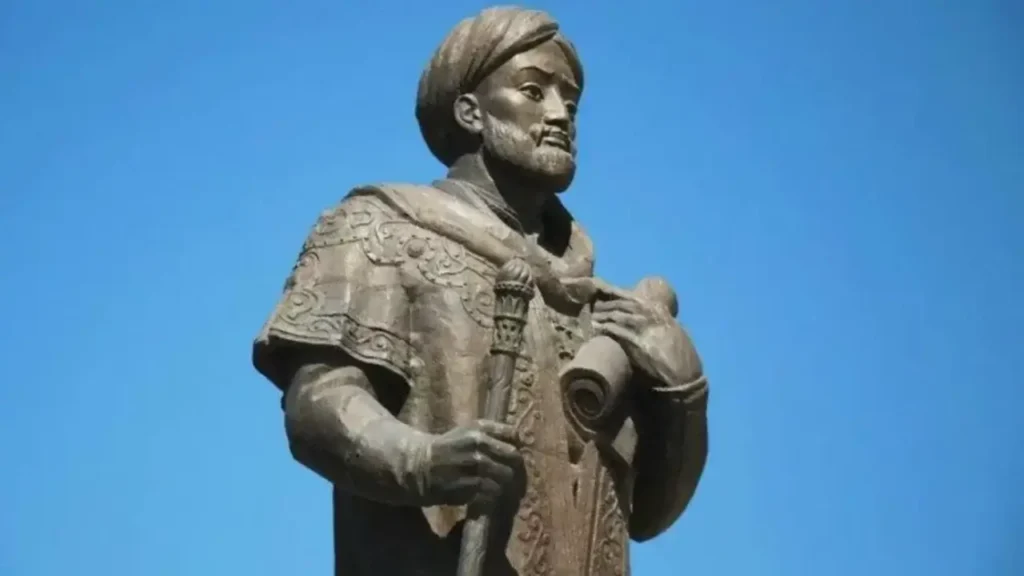
Afghanistan Dismantles Navoi Statue, Plans New Memorial Amid Uzbek Backlash

The Taliban authorities in Afghanistan have dismantled the statue of renowned Timurid-era poet and thinker Alisher Navoi in Mazar-i-Sharif, according to a report by Amu.

Local sources told the outlet that the monument, located in the telecommunications square of the city’s third district, was completely removed. The decision has drawn criticism from Uzbek cultural figures and officials, who argue that the Taliban are disregarding the spiritual heritage of other peoples and eroding the region’s historical and cultural uniqueness.

In response, Uzbekistan’s Ministry of Foreign Affairs, through spokesperson Ahror Burhonov, sought clarification on August 21. “As soon as we learned that the monument to the great poet and thinker Alisher Navoi in Mazar-i-Sharif had been dismantled, Uzbekistan’s Foreign Ministry immediately contacted representatives of the Afghan authorities to obtain an official explanation,” Burhonov said.

Initial explanations from Afghan officials claimed the statue’s location was not dignified enough to properly honor Navoi. They announced plans to construct a new memorial complex, which would include a new statue, restored inscriptions on Navoi’s life and work, and the renaming of the square in his honor.

Burhonov added that Afghan authorities had expressed regret over the statue’s removal without prior consultation with the Ministry of Culture or the public. He emphasized that the Afghan side reaffirmed its commitment to preserving Navoi’s legacy and pledged to take appropriate measures to commemorate him respectfully.

Alisher Navoi (1441-1501), born in Herat, modern-day Afghanistan, is widely recognized as the father of early Turkic literature. He remains a powerful cultural symbol for Uzbeks and other peoples across Central Asia.

The statue had stood in Mazar-i-Sharif for approximately 17 years. It was previously damaged before its complete removal.

As reported by Dunyo, Afghan officials reiterated that the statue’s location was unsuitable and reaffirmed plans to establish a larger and more dignified memorial site. The new monument is expected to include multilingual plaques in Uzbek, English, Dari, and Pashto, recounting Navoi’s life and contributions.

At a public event on August 21 attended by local officials, diplomats, and journalists, Mazar-i-Sharif Mayor Abdurahman Himmat said that Afghans deeply respect Navoi’s legacy. “We will turn this monument into a worthy place of remembrance for both local residents and foreign visitors,” he stated.

Himmat noted that around 40 projects are currently planned in the city, including restoration efforts for monuments dedicated to cultural icons such as Navoi, Magtymguly Pyragy, and 13th-century poet Jalal ad-Din Rumi. He also highlighted the construction of the Imam al-Bukhari madrasah, supported by Uzbekistan, as a symbol of close bilateral ties. The project was first announced by Uzbekistan last year.

Jafar Fattayev, head of the Uzbek Council in Mazar-i-Sharif, welcomed the Afghan initiative, calling it a gesture of respect for Navoi and Uzbek cultural heritage.

Kazakhstan Introduces Criminal Liability for Stalking

For the first time, Kazakhstan has established criminal liability for stalking at the legislative level, according to the General Prosecutor’s Office.

New Article in the Criminal Code

On July 16, 2025, President Kassym-Jomart Tokayev signed a law amending the Criminal Code to include Article 115-1, titled “Stalking.”

The article defines stalking as the unlawful pursuit of an individual through persistent attempts to establish contact or conduct surveillance against their will, causing significant harm but without the use of physical violence.

Punishments include a fine of up to 200 monthly calculation indices (MCI), up to 200 hours of community service, or arrest for up to 50 days. If stalking involves threats, blackmail, or invasion of privacy, it may be prosecuted under other provisions of the Criminal Code.

“The purpose of introducing this liability is to protect victims at an early stage and to establish zero tolerance for violent and aggressive behavior,” the Prosecutor General’s Office stated.

From Proposal to Law

The idea to criminalize stalking was first raised in 2023 during a coordination council meeting at the Prosecutor General’s Office. Marat Abishev, head of the Service for the Protection of Public Interests, highlighted the growing prevalence of obsessive harassment, particularly targeting women.

“Women are increasingly faced with the phenomenon of stalking, that is, obsessive persecution,” he said.

Abishev noted that many countries, including Germany, the US, Canada, the UK, Norway, Poland, Moldova, the Netherlands, and India, have long established criminal penalties for stalking.

In contrast, Kazakhstan lacked even administrative regulation until now. Abishev initially proposed studying the issue and introducing relevant amendments to the Code of Administrative Offenses. However, the country has since taken a stronger stance by enacting full criminal liability.

The General Prosecutor’s Office urges citizens not to ignore signs of stalking. “In such situations, it is necessary to immediately contact the internal affairs authorities,” the agency advised.

How to Identify Stalking

In an interview with MIR24.TV, lawyer Artem Baghdasaryan explained that under the new Kazakh legislation, stalking involves intrusive, repeated attempts to contact or monitor a person against their will, resulting in significant psychological or personal harm but without physical violence.

He emphasized that stalking is defined by systematic behavior rather than isolated incidents.

Key indicators include:

  • Continuous surveillance near the victim’s home or in public
  • Frequent phone calls, text messages, or unwanted social media interactions
  • Collecting personal data without consent, such as routes or contacts
  • Lurking in public places frequented by the victim

Internationally, this list often includes online harassment and the sending of unsolicited gifts.

Comparison with International Practice

Many Western countries have recognized stalking as a criminal offense since the 1990s, with laws in the US, UK, and Germany carrying prison terms for offenders.

In contrast, Russia has not yet adopted a separate criminal statute. There, lawmakers have proposed a phased approach: beginning with administrative liability and restraining orders, followed by criminal prosecution for repeat offenses.

“While Kazakhstan has taken a decisive step by introducing a criminal article right away, Russia is moving toward gradual regulation,” Baghdasaryan noted.

In his view, both approaches aim to protect fundamental human rights to privacy and personal security.

With this reform, Kazakhstan becomes one of the first countries in Central Asia to explicitly criminalize stalking and intrusive interference in private life.