• KGS/USD = 0.01144 0%
  • KZT/USD = 0.00192 -0%
  • TJS/USD = 0.10849 0.37%
  • UZS/USD = 0.00008 0%
  • TMT/USD = 0.28571 0.28%
  • KGS/USD = 0.01144 0%
  • KZT/USD = 0.00192 -0%
  • TJS/USD = 0.10849 0.37%
  • UZS/USD = 0.00008 0%
  • TMT/USD = 0.28571 0.28%
  • KGS/USD = 0.01144 0%
  • KZT/USD = 0.00192 -0%
  • TJS/USD = 0.10849 0.37%
  • UZS/USD = 0.00008 0%
  • TMT/USD = 0.28571 0.28%
  • KGS/USD = 0.01144 0%
  • KZT/USD = 0.00192 -0%
  • TJS/USD = 0.10849 0.37%
  • UZS/USD = 0.00008 0%
  • TMT/USD = 0.28571 0.28%
  • KGS/USD = 0.01144 0%
  • KZT/USD = 0.00192 -0%
  • TJS/USD = 0.10849 0.37%
  • UZS/USD = 0.00008 0%
  • TMT/USD = 0.28571 0.28%
  • KGS/USD = 0.01144 0%
  • KZT/USD = 0.00192 -0%
  • TJS/USD = 0.10849 0.37%
  • UZS/USD = 0.00008 0%
  • TMT/USD = 0.28571 0.28%
  • KGS/USD = 0.01144 0%
  • KZT/USD = 0.00192 -0%
  • TJS/USD = 0.10849 0.37%
  • UZS/USD = 0.00008 0%
  • TMT/USD = 0.28571 0.28%
  • KGS/USD = 0.01144 0%
  • KZT/USD = 0.00192 -0%
  • TJS/USD = 0.10849 0.37%
  • UZS/USD = 0.00008 0%
  • TMT/USD = 0.28571 0.28%
11 December 2025

Wallet in Telegram Launches in Uzbekistan, Expanding Crypto Access to Millions

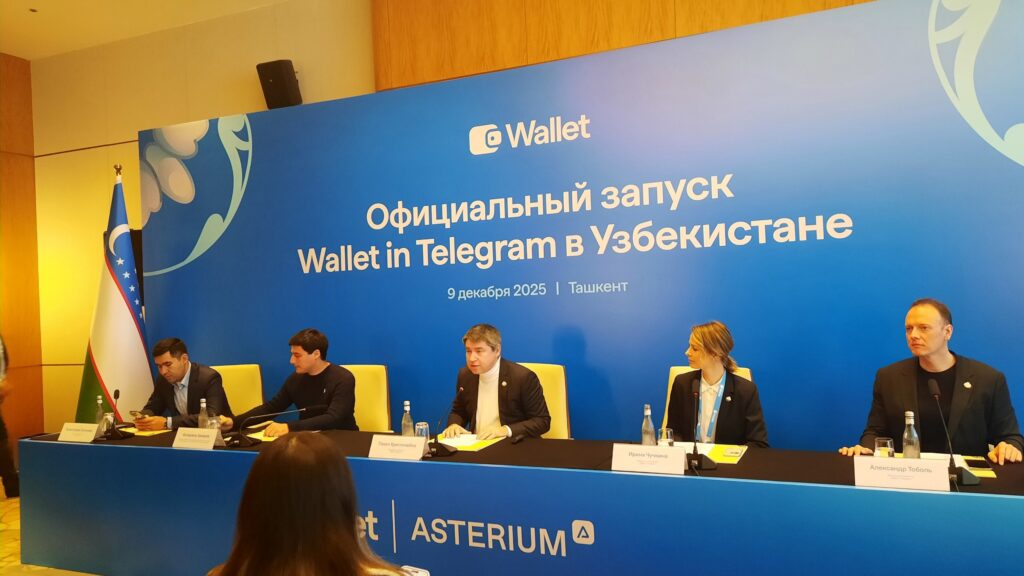
Wallet in Telegram, a global digital asset service integrated directly into the Telegram messaging app, officially launched in Uzbekistan on December 9, opening up crypto access to more than 27 million local users. The move marks a major expansion of Telegram’s financial ecosystem and reinforces Uzbekistan’s role as a regional leader in regulated digital finance.

The service allows users to buy, store, and transfer cryptocurrencies without needing to install additional applications. Registration takes only seconds, and transactions can be completed using local payment systems such as Humo, Visa, and Mastercard. Wallet currently supports Bitcoin, Toncoin, USDT, and over 200 other digital assets.

According to the company, the goal is to make crypto transactions as seamless as sending a message, an especially relevant approach in Uzbekistan, where Telegram usage exceeds 88% of the internet-connected population. By embedding financial tools into an everyday platform, Wallet aims to normalize digital asset use and broaden access to global financial technologies.

The technical infrastructure for Wallet’s Uzbekistan launch is provided by Asterium, the country’s largest crypto ecosystem and a key fintech player. Asterium is responsible for ensuring secure transactions, identity verification, and data protection. “Our mission at Asterium is to make working with crypto assets simple and accessible for everyone. Wallet in Telegram reflects our product philosophy: it is convenient, transparent, and secure, meaning it is genuinely useful for people,” said Komilhodja Sultonov, CEO of Asterium.

The service was licensed by Uzbekistan’s National Agency for Perspective Projects (NAPP), the regulatory body overseeing the digital asset sector. Uzbekistan has developed one of Central Asia’s most comprehensive legal frameworks for crypto, with a strong focus on user protection and structured innovation.

In response to questions from The Times of Central Asia, NAPP clarified how Wallet aligns with current regulations. Askarjon Zakirov, Head of the Crypto-Assets Turnover Sphere Development Department, emphasized that Uzbekistan legally distinguishes crypto assets from fiat currency. “Firstly, we say that a crypto asset is not a means of payment or a monetary equivalent,” he said.

@TCA/Sadokat Jalolova

Zakirov explained that crypto is treated as a form of property under Uzbek law. As such, transferring cryptocurrency is regarded as a transfer of property rights rather than a financial transaction with monetary obligations.

Pavel Khristolubov, COO of Fintech and Web3 at Wallet in Telegram, also underscored the platform’s commitment to regulatory compliance. “It’s very important for us to operate within the framework of our license. This means we don’t compete with local payment systems,” he said. Khristolubov added that Wallet users can choose between custodial services and non-custodial, on-chain options, offering varying degrees of freedom and security.

Andrew Rogozov, CEO of The Open Platform (TOP), the technology company behind Wallet, described Uzbekistan as one of the world’s most dynamic digital markets. “By combining Telegram’s scale with regulatory clarity and high mobile adoption, we see Uzbekistan as a model for how emerging markets can leapfrog into convenient, technology-driven finance,” he said.

Globally, Wallet in Telegram has over 150 million registered users. Its launch in Uzbekistan follows its U.S. debut in July 2025, with expansion planned in at least 15 more countries over the next two years.

One of the most promising opportunities for Uzbekistan may be the integration of Wallet into Telegram’s broader digital economy. Irina Chuchkina, Chief Growth Officer at Wallet in Telegram, noted that the platform enables monetization tools for creators, media channels, and online communities. “Some blockchain supports the Telegram economy in general. It’s not localized to a particular country or market,” she said, describing crypto wallets as “a fundamental pillar of our super app strategy.”

Chuchkina also highlighted future features such as Ton Connect, a blockchain-based tool for digital service authorization. While not all services will be available in Uzbekistan from the outset, she said these examples illustrate the platform’s long-term potential.

Uzbekistan has positioned itself as a transparent, well-regulated digital asset hub. The arrival of Wallet in Telegram reinforces this status and introduces a major global player into the country’s fast-growing fintech landscape.

Almaty Scientists Develop Innovative Method to Extract Valuable Materials from Agricultural Waste

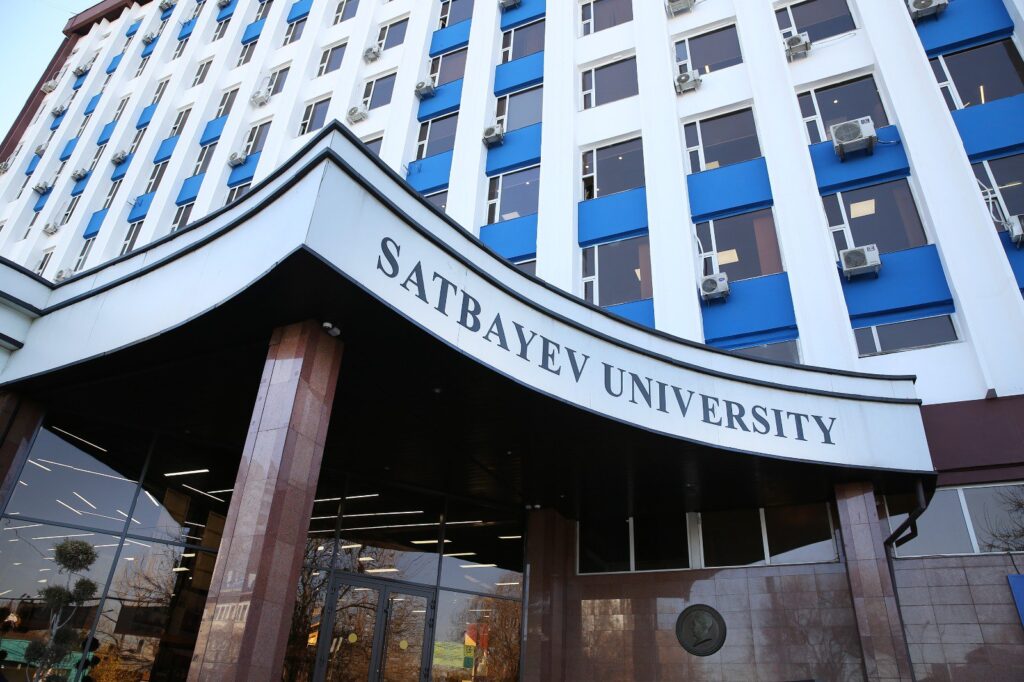
Researchers at Satbayev University in Almaty have unveiled an innovative technology that extracts high-value materials from sugar beet pulp, the primary byproduct of sugar production, accounting for up to 80% of all biomass.

Under the guidance of Associate Professor Sana Kabdrakhmanova, postdoctoral researcher Faisal Kholiya and PhD student Meruert Imanbek employed advanced hydrothermal synthesis techniques to derive high-quality pectin suitable for use in the food and pharmaceutical industries, cellulose with a yield of approximately 35%, and photoluminescent carbon quantum dots ranging from 8 to 14 nanometres, all from sugar beet waste.

The extracted materials have diverse applications, including product shelf-life extension technologies, drug delivery systems, modern diagnostic medicine, and various nanotechnology solutions.

“Our project is a striking example of the transformation of agricultural waste into high-quality, premium materials,” said Kabdrakhmanova, who leads the project.

The research was conducted at the International R&D Center for Advanced Functional Materials and Composites, part of the Department of Chemical Processes and Industrial Ecology at the Omirkhan Baikonurov Institute of Mining and Metallurgy at Satbayev University.

The findings underscore the potential of agricultural waste processing as both a sustainable and economically viable approach.

Particular attention has been given to the photoluminescent carbon quantum dots produced through the project. These nanoscale particles are used in medical diagnostics, biological sensors for cellular research, LED components in electronics, and nanodevices in photonics.

As previously reported by The Times of Central Asia, Kazakh scientists are actively pursuing other innovative recycling technologies. One such project, led by the Kazakh Road Research Institute, involves developing methods to restore worn asphalt for reuse in road repair and construction.

Kyrgyzstan Secures Exclusive Rights to World Nomad Games Brand

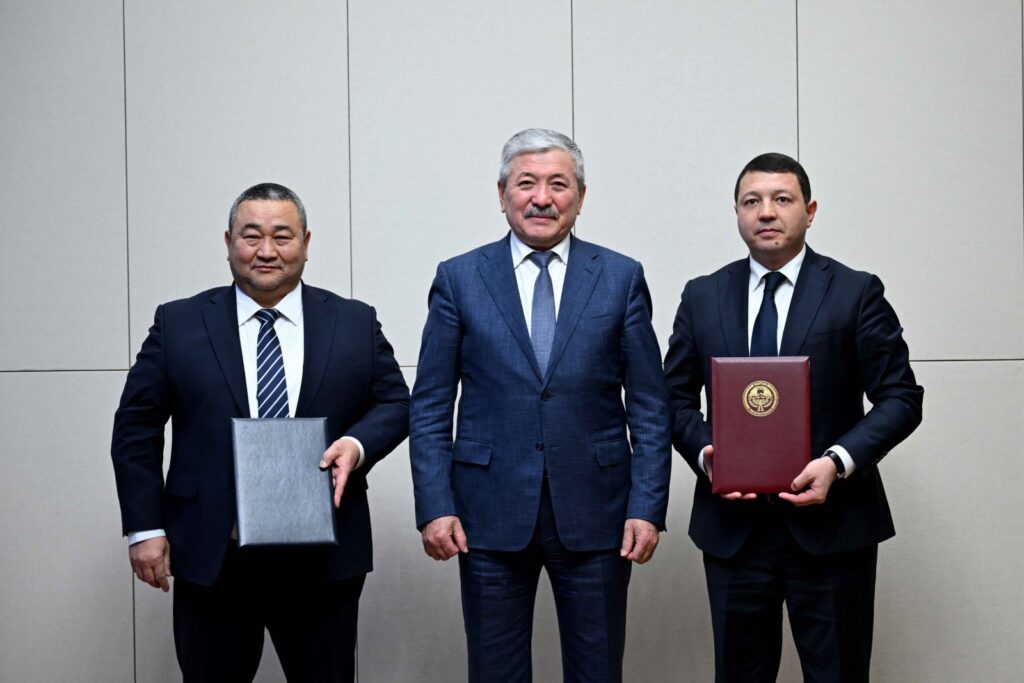
On December 9, Kyrgyzstan officially received the exclusive rights to the World Nomad Games trademark in a formal handover ceremony attended by Chairman of the Cabinet of Ministers Adylbek Kasymaliev.

Over the years, the Games have evolved into a major international festival showcasing Central Asia’s rich cultural traditions through events featuring birds of prey, equestrian sports, traditional wrestling, archery, and displays of physical skill and endurance.

The rights were transferred by Askhat Akibayev, the founder of the World Nomad Games and former Plenipotentiary Representative of the Kyrgyz Government in the Issyk-Kul region.

Kasymaliev praised Akibayev’s foundational role in developing the Games into a globally recognized cultural and sporting event. “Over the past decade, the World Nomad Games have become one of the largest global platforms for promoting ethnic culture, the values of nomadic civilization, and traditional sports,” he said. “Today, this project is a true national brand for Kyrgyzstan, the flagship of our state’s cultural diplomacy, and an important symbol of our international authority.”

Launched by Kyrgyzstan in 2012, the World Nomad Games aim to revive and preserve the cultural heritage of nomadic civilizations. The inaugural Games were held in September 2014 in the resort town of Cholpon-Ata on the shores of Lake Issyk-Kul. Kyrgyzstan also hosted the second and third editions in 2016 and 2018. The 2022 Games were held in Turkey, and the 2024 edition took place in Kazakhstan.

Kyrgyzstan will host the sixth World Nomad Games from August 31 to September 6, 2026.

South Korea Sees Surge in Tourist Interest in Kazakhstan

Kazakhstan is emerging as a leading travel destination in Central Asia for South Korean tourists, with interest surging by 295% from January to October 2025, according to data from the digital tourism platform Agoda.

Kazakh Tourism, the national tourism company, said that the data reflects a sharp rise not only in actual visits, measured through accommodation bookings but also in search queries for travel to Kazakhstan. The increased availability of direct flights between the two countries has played a significant role in this growth. Agoda reports that the launch of the Incheon-Almaty route by Eastar Jet boosted interest in Almaty, with search activity jumping by 348%.

Shymkent, located in southern Kazakhstan, also saw an 89% rise in interest from South Korean travelers. This increase coincides with the May launch of a direct Incheon-Shymkent flight by SCAT Airlines. Meanwhile, Air Astana has expanded its services with more frequent flights from Seoul to both Almaty and Astana.

“We are seeing a clear increase in interest among South Korean travelers in destinations that combine adventure, culture, and authenticity, with Central Asia standing out as a region of growing interest,” said Jay Lee, Agoda’s regional director for North Asia.

Interest from South Korea is part of a broader regional trend. Agoda reported a 225% rise in search activity for the four main Central Asian destinations, Kazakhstan, Uzbekistan, Kyrgyzstan, and Tajikistan, compared to the same period last year.

Kazakh Tourism noted that it has been actively promoting the country’s tourism potential in South Korea through B2B meetings and information tours aimed at fostering cooperation between leading tour operators.

While Agoda’s figures highlight a significant uptick in online interest, Kazakh Tourism’s own data shows more moderate growth in actual tourist arrivals. From January to September 2025, the number of South Korean visitors to Kazakhstan rose by 25% year-on-year, reaching over 41,300 people. This made South Korea the fifth-largest source of tourists to Kazakhstan, following China (693,000 visitors, up 42%), India (113,000), Turkey (over 103,000), and Germany (more than 81,000).

According to the Border Service, Kazakhstan welcomed more than 12.2 million foreign visitors in the first nine months of 2025, 730,000 more than during the same period in 2024.

As previously reported by The Times of Central Asia, Kazakhstan has also taken the regional lead in medical tourism this year, surpassing its Eurasian neighbors in growth and infrastructure development.

Kazakh Singer Dimash Kudaibergen Named UN Global Goodwill Ambassador

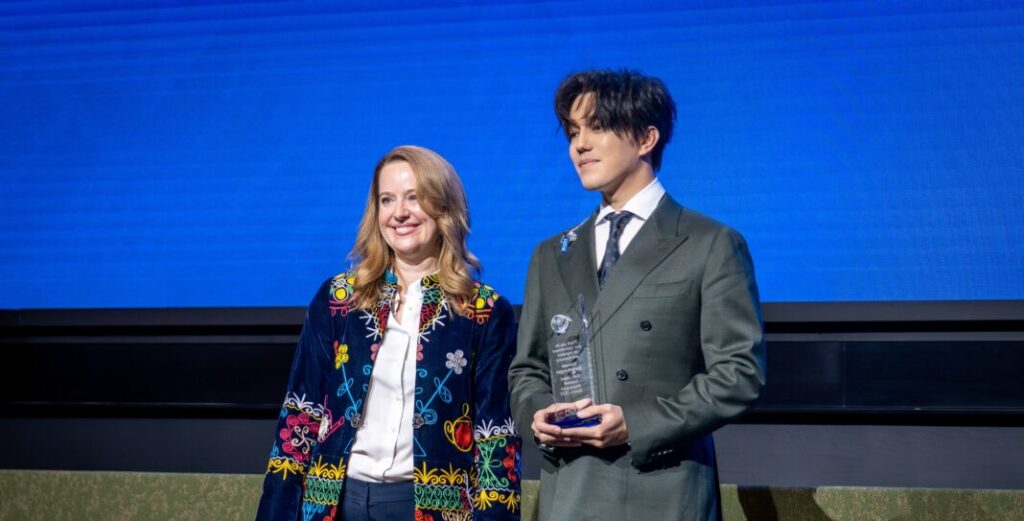
On December 8, during the annual session of the International Organization for Migration (IOM) Council in Geneva, world-renowned Kazakh singer Dimash Kudaibergen was officially appointed a Global Goodwill Ambassador.

The announcement, highlighted on the artist’s official website, reflects his “long-standing commitment to supporting people in crisis situations.”

Kudaibergen had previously served as the IOM’s Regional Goodwill Ambassador since 2024, using his global platform to raise awareness about the challenges facing migrants, promote their integration, and participate in various humanitarian efforts.

His engagement with the IOM deepened in 2025. The artist took part in the organization’s Ramadan campaign, voiced strong opposition to human trafficking, and met with IOM Director General Amy Pope to reaffirm his support for ongoing humanitarian programs.

Throughout his global “Stranger” tour, Kudaibergen championed messages of inclusivity and sustainability, performing in cities including New York, Mexico City, Barcelona, London, and Berlin. More than 100,000 attendees around the world heard his call to support the IOM’s mission. His performance of the iconic composition “S.O.S d’un terrien en détresse” at the Council meeting became an emotional highlight of the session.

“Dimash uses his voice not only to touch the hearts of his listeners, but also to help people affected by crises to be heard and seen,” said Pope, praising the artist’s impact.

Addressing member state delegations, Kudaibergen said, “Receiving the title of Global Goodwill Ambassador is an incredible honor. I accept it with great humility and a strong sense of responsibility.”

The IOM, established in 1951, is the leading intergovernmental organization in the field of migration and joined the United Nations system in 2016. Over the years, other UN Goodwill Ambassadors have included Angelina Jolie, Shakira, David Beckham, and Lionel Messi.

Dimash Kudaibergen is a People’s Artist of Kazakhstan (2023) and Kyrgyzstan (2025). Known for his extraordinary vocal range spanning seven octaves and seven semitones (G0 to D8), he blends pop, opera, and traditional Kazakh musical elements in his performances.

Kazakhmys Announces Shareholder Transition Amid Strategic Industry Shift

Kazakhstan’s Kazakhmys Corporation has announced the signing of a framework agreement initiating the transfer of ownership to a new shareholder, according to a statement from the company’s press service.

The agreement was reached jointly by Kazakhmys President Vladimir Kim and Chairman of the Board of Directors Eduard Ogai. It sets in motion the procedures for a share transfer, with a formal purchase and sale agreement to follow once all obligations are fulfilled in accordance with legal requirements.

The corporation emphasized that the process will be conducted in strict compliance with the law. In Kazakhstan’s mining and metallurgical sector, such transactions require authorization from the Ministry of Industry and Construction as well as the Agency for the Protection and Development of Competition.

Kazakhmys also confirmed that notification procedures for partners, creditors, minority shareholders, and other stakeholders have begun.

“According to the signed document, the upcoming change of shareholder will not affect production or operations. All contractual obligations and employee social guarantees will remain intact, and job stability will be fully maintained. Kazakhmys will continue to operate normally, with current and planned projects implemented in line with its strategic roadmap,” the company stated.

This announcement follows reports that Kazakh businessmen Shakhmurat Mutalip and Nurlan Artikbayev are in talks to acquire stakes in two of the country’s largest industrial players, KazZinc and Kazakhmys. Mutalip, who owns Integra Construction KZ, has reportedly been offered a 70% stake in KazZinc by Glencore. Artikbayev, majority shareholder of Qazaq Stroy, is negotiating a stake in Kazakhmys.

Both entrepreneurs recently met with President Kassym-Jomart Tokayev to discuss the role of private business in infrastructure development. Artikbayev, ranked 44th on the Forbes Kazakhstan 2025 list, met with the president on November 4, followed by Mutalip on November 21.

Analysts view the potential transactions as part of a broader effort to consolidate domestic control over Kazakhstan’s strategic industrial assets.