• KGS/USD = 0.01144 0%
  • KZT/USD = 0.00209 0%
  • TJS/USD = 0.10523 0%
  • UZS/USD = 0.00008 0%
  • TMT/USD = 0.28530 0%
  • KGS/USD = 0.01144 0%
  • KZT/USD = 0.00209 0%
  • TJS/USD = 0.10523 0%
  • UZS/USD = 0.00008 0%
  • TMT/USD = 0.28530 0%
  • KGS/USD = 0.01144 0%
  • KZT/USD = 0.00209 0%
  • TJS/USD = 0.10523 0%
  • UZS/USD = 0.00008 0%
  • TMT/USD = 0.28530 0%
  • KGS/USD = 0.01144 0%
  • KZT/USD = 0.00209 0%
  • TJS/USD = 0.10523 0%
  • UZS/USD = 0.00008 0%
  • TMT/USD = 0.28530 0%
  • KGS/USD = 0.01144 0%
  • KZT/USD = 0.00209 0%
  • TJS/USD = 0.10523 0%
  • UZS/USD = 0.00008 0%
  • TMT/USD = 0.28530 0%
  • KGS/USD = 0.01144 0%
  • KZT/USD = 0.00209 0%
  • TJS/USD = 0.10523 0%
  • UZS/USD = 0.00008 0%
  • TMT/USD = 0.28530 0%
  • KGS/USD = 0.01144 0%
  • KZT/USD = 0.00209 0%
  • TJS/USD = 0.10523 0%
  • UZS/USD = 0.00008 0%
  • TMT/USD = 0.28530 0%
  • KGS/USD = 0.01144 0%
  • KZT/USD = 0.00209 0%
  • TJS/USD = 0.10523 0%
  • UZS/USD = 0.00008 0%
  • TMT/USD = 0.28530 0%

Kyrgyzstan and China Launch Joint Project to Preserve Ancient Silk Road City

Kyrgyzstan and China have launched a joint initiative to conserve the Ak-Beshim archaeological site, the ruins of the ancient city of Suyab, a major Silk Road settlement in the Chui Valley in northern Kyrgyzstan. This project marks a significant step in cultural cooperation between the two countries, focused on preserving shared heritage along one of history’s most storied trade routes.

The Ministry of Culture, Information and Youth Policy of Kyrgyzstan and China’s Dunhuang Research Academy have established a joint laboratory for cultural heritage preservation, which will lead conservation efforts at Ak-Beshim.

Located 7 kilometers southwest of Tokmok, the site of Suyab was a prominent cultural and commercial center from the 5th to 8th centuries. It served as the capital of the Western Turkic Kaganate and a key hub for Sogdian merchants along the Chang’an-Tian Shan Corridor, an ancient Silk Road route currently nominated for UNESCO World Heritage status.

Chinese sources suggest that Tang dynasty poet Li Bo (701-762/763) may have been born in Suyab. Archaeologists have also uncovered what is believed to be the oldest Christian structure found in Kyrgyzstan: a Nestorian church dating to the 7th or 8th century.

Preliminary fieldwork has already been conducted, and a conservation plan for Ak-Beshim has been drafted. The new lab is expected to serve as a regional center for cultural heritage protection, promoting research and conservation at other Silk Road sites across Belt and Road Initiative (BRI) countries.

Suyab declined in the 11th century with the rise of Balasagun, another historic city in the Chui Valley near the famed Burana Tower. Nevertheless, its historical significance continues to attract scholarly and public interest as Kyrgyzstan deepens its commitment to preserving regional cultural landmarks.

Officials from both countries emphasized that the project supports broader goals of cultural diplomacy and historical preservation, creating a bridge between ancient civilizations and contemporary international collaboration.

Kazakhstan to Require Up to 3 Million Skilled Workers in Coming Years

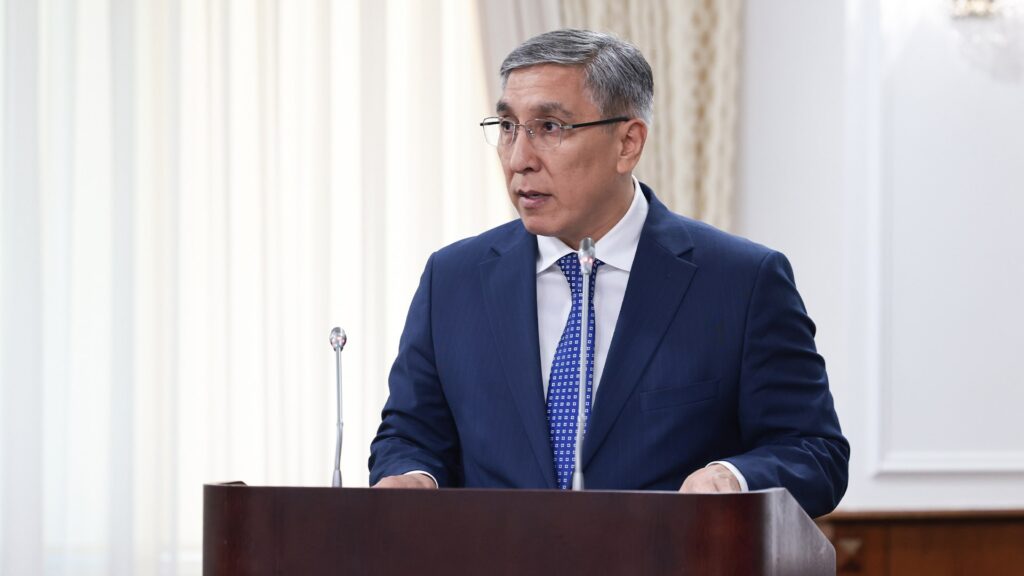
Kazakhstan will need approximately 3 million qualified specialists over the next three to five years, according to Deputy Minister of Labor and Social Protection of the Population Askar Biakhmetov. Speaking at a recent government meeting, Biakhmetov emphasized that this forecast should guide national strategies in education, vocational training, and workforce retraining.

Workforce Priorities

Data from the Ministry of Labor show that the highest demand (29%) will be for professionals in public services, including government administration, education, healthcare, and social security. This is followed by business services (21%), logistics and transport (16%), industry (13%), and construction and agriculture, each accounting for 7%.

“These data must be taken into account when approving professional standards, developing educational programs, allocating state education grants, and organizing retraining initiatives,” Biakhmetov said.

He noted the importance of prioritizing retraining programs, as automation and technological change continue to render many professions obsolete, while new sectors demand different competencies. Structural issues persist, including uncompetitive wages and regional imbalances in the labor force, particularly a labor surplus in the south and shortages in the north. Internal migration has also led to oversaturation in major urban centers, straining social and municipal infrastructure.

The Ministry also flagged informal employment as a major challenge. In 2024, an estimated 30% of the working-age population were employed without pension contributions. Moreover, about 30% of university graduates are working in fields unrelated to their studies.

“Often, graduates don’t study what they want due to low grant scores. As a result, they are trained in one field but work in another,” Biakhmetov explained.

By 2025, Kazakhstan’s economically active population is projected to reach 11.3 million, about 60% of the total population of 20.3 million. The unemployment rate currently stands at 4.6%. Looking ahead, the annual growth of the labor force is expected to hit 360,000 by 2035.

To address the evolving demands of the economy, the Ministry of Labor is developing an AI-based digital platform designed to identify skills gaps across enterprises and match individuals with relevant job vacancies or training programs.

Linking Investment to Job Creation

Prime Minister Olzhas Bektenov underscored the need for both foreign and domestic investors to take greater responsibility for employment generation within the scope of active and planned investment projects. He stipulated that at least 30% of investment budgets should be allocated to wages.

“An Innovative Project Navigator has been developed to monitor employment trends and ensure investors meet their obligations. Currently, the system covers only large projects, but by September 1, data on all investment projects for 2025-2027 must be entered,” Bektenov said.

He also ordered that key performance indicators (KPIs) for regional and municipal leaders regarding employment expansion be introduced starting in 2026.

As previously reported by The Times of Central Asia, 979,000 people were employed in Kazakhstan in 2024.

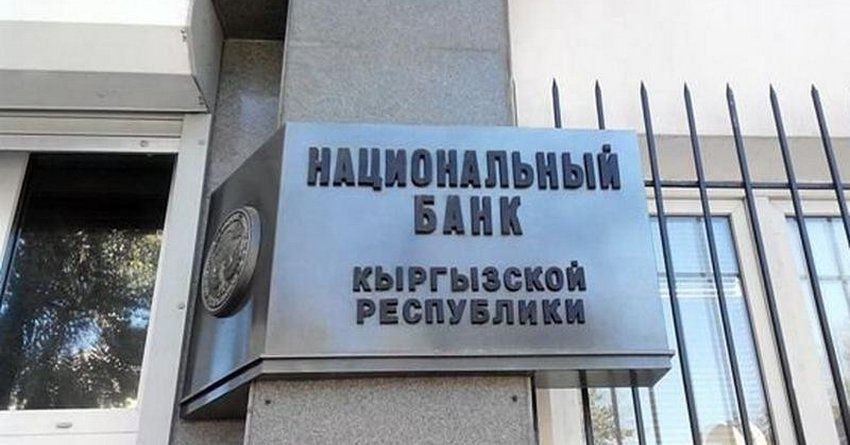
Public Confidence in Kyrgyz Banking Sector Rises Amid Robust Growth

Kyrgyzstan’s banking sector recorded strong performance in the first half of 2025, signaling growing public trust and active private sector engagement. The latest data from the National Bank of the Kyrgyz Republic (NBKR) shows marked increases in total assets, deposits, and loans, reflecting both economic resilience and successful monetary policy implementation.

According to the NBKR, the total assets of commercial banks have risen by 24% since the beginning of the year, reaching $11.63 billion. Deposits increased by 20% to over $8.05 billion, while the loan portfolio expanded by 22.5% to $4.8 billion. The central bank emphasized the sector’s stability and high liquidity in the national currency.

“The monetary policy being pursued allows us to maintain stability in the interbank money market. The banking system continues to enjoy high liquidity in the national currency. The National Bank is conducting operations to maintain a balanced level of money supply in the economy,” the NBKR stated.

The sector’s expansion has also been fueled by the adoption of digital banking technologies and the removal of fees for interbank transfers between individuals. In the first six months of 2025, QR code-based non-cash payments surged more than twelvefold in volume and twentyfold in value. Altogether, 167 million transactions totaling $3.16 billion were processed.

“From October 23, 2024, until the end of 2025, Kyrgyzstan has a ban on charging individuals fees for transfers in som via mobile apps and internet banking,” said NBKR Chairman Melis Turgunbaev.

The regulator also pointed to the strength of the broader Kyrgyz economy and the relative stability of the currency market. Nevertheless, inflationary pressures are mounting amid ongoing geopolitical tensions and shifting global trade dynamics. Price volatility in food and raw materials markets has been particularly acute, driven by external economic shocks and rising inflation in key partner countries.

To curb inflation and stabilize the domestic economy, the NBKR raised its key policy rate by 25 basis points to 9.25%. The central bank expects the rate adjustment to help preserve consumer purchasing power and support household financial stability.

Kyrgyzstan Begins Dried Apricot Exports to China

Kyrgyzstan has launched exports of dried apricots to China, with the first 23-ton shipment dispatched on July 29. The delivery comes after Chinese authorities approved Kyrgyz dried apricots for import, following Kyrgyzstan’s successful compliance with Beijing’s sanitary and quarantine standards.

According to the Kyrgyz Ministry of Water Resources, Agriculture and Processing Industry, this marks a significant step in expanding agricultural exports to China and sets the stage for broader trade in fruit and vegetable products.

The milestone follows the July 11 signing of a bilateral agreement to construct a food safety and quarantine laboratory in Bishkek. The facility will test agricultural goods destined for China to ensure they meet the country’s stringent import regulations.

Deputy Prime Minister Bakyt Torobayev noted that Kyrgyz-Chinese trade grew by 44.7% in 2024, reaching $5.3 billion. Exports from Kyrgyzstan to China surged to $2.04 billion, representing a 93-fold increase compared to 2023.

Agriculture has emerged as a key area of bilateral cooperation. In 2024, trade in agricultural products between the two nations totaled $153.3 million, up by $33 million from the previous year.

Kyrgyz authorities are now seeking to expand the list of approved exports. Negotiations are underway to finalize four additional protocols with China, covering dried fruits, cattle hides, meat, and animal feed. These efforts aim to diversify Kyrgyzstan’s agricultural exports and enhance its position in the Chinese market.

Officials see China’s rising demand for agricultural imports as a major opportunity for Kyrgyz farmers and exporters, particularly as the country continues to invest in infrastructure and quality assurance systems to support trade growth.

Kazakhstan Reports 134 Human Trafficking Cases in First Half of 2025

July 30 marks World Day Against Trafficking in Persons, established by the United Nations General Assembly in 2013. On this day, global attention turns to one of the gravest human rights violations: the exploitation of men, women, and children in various forms.

According to Kazakhstan’s Ministry of Internal Affairs, 134 human trafficking-related crimes were recorded in the first six months of 2025. The country has maintained an anti-trafficking program since 2002, implemented with the support of the International Organization for Migration (IOM). Over this period, 1,891 victims of labor and sexual exploitation have received assistance.

“This day reminds us that human trafficking remains one of the most serious violations of human rights, affecting millions of men, women, and children around the world. No country is immune, whether it is a country of origin, transit, or destination,” the IOM stated.

Organized Crime and Exploitation

The 2025 IOM campaign theme is “Human Trafficking is Organized Crime – End the Exploitation.” According to the UN, 74% of traffickers are affiliated with organized criminal networks. Between 2020 and 2023, over 200,000 cases of human trafficking were officially reported worldwide, though experts caution the real figure is likely far higher due to underreporting and lack of awareness.

Kazakhstan’s Role in Regional Trafficking Trends

IOM data from 2004 to 2020 indicate that Kazakhstan was the leading destination country for human trafficking victims in Central Asia, with 1,741 cases of exploitation documented. Other destination countries included the UAE (61 cases), Turkey and Russia (28 each), and Iran (7), among others.

In terms of origin countries, Uzbekistan accounted for the highest number of trafficking victims (944), followed by Kazakhstan (774), Kyrgyzstan (72), and Russia (28). Smaller numbers came from Tajikistan, Mongolia, Ukraine, the Philippines, and several other countries.

@iom.int

Victim Demographics and Exploitation Types

Among the identified victims, 52% were men (981), 47.9% were women (907), and 0.1% (3 individuals) identified as transgender. The majority were working-age adults: 35.8% were aged 18-25, while 36.4% were over 30.

Labor exploitation was the most common form, accounting for 1,151 cases (60.9%), followed by sexual exploitation with 711 cases (37.6%). Other forms, such as forced begging, childbirth, or participation in armed conflicts, made up 1.5% (29 cases).

Support Mechanisms and Legal Developments

Until 2020, IOM played a central role in assisting victims with repatriation, shelter, psychological support, medical care, and documentation. In recent years, these responsibilities have increasingly shifted to the state.

In 2024, Kazakhstan enacted a new Law on Combating Trafficking in Persons, developed by the Ministry of Internal Affairs with IOM’s technical support. The legislation outlines protections for victims and mandates public awareness campaigns.

OCA Magazine Shines Spotlight on Education in Eurasia

The latest edition of OCA Magazine (UK) focuses on the challenges and opportunities facing education in Central Asia, the CIS, and neighbouring regions. The special issue, OCA Magazine: Education, explores digital transformation, women’s access to higher education, and the drive to modernise universities in a fast-changing global environment.

The special edition includes success stories from Kazakhstan’s Al-Farabi Kazakh National University and Saken Seifullin Kazakh Agrotechnical Research University, where AI, digital campuses, and international double-degree programmes are reshaping learning. The issue also features insights from British tourism expert, Sophie Ibbotson, who predicts that by 2033, tourism in Uzbekistan could generate over 290,000 direct jobs, making hospitality and creative education a national priority.

The Methodica School and Tashkent International School, pioneers of innovative and multicultural learning, are also in the spotlight, as well as Tajikistan’s cultural renaissance, where music education and the work of composer Tolibkhon Shakhidi exemplify the fusion of tradition and modernisation.

The edition, supported by Hertfordshire Press and the Eurasian Creative Guild (London), is distributed to universities, diplomatic missions, and cultural institutions worldwide. A digital version is available at ocamagazine.com.