• KGS/USD = 0.01143 -0%
  • KZT/USD = 0.00193 -0%
  • TJS/USD = 0.10881 0%
  • UZS/USD = 0.00008 0%
  • TMT/USD = 0.28575 0%
  • KGS/USD = 0.01143 -0%
  • KZT/USD = 0.00193 -0%
  • TJS/USD = 0.10881 0%
  • UZS/USD = 0.00008 0%
  • TMT/USD = 0.28575 0%
  • KGS/USD = 0.01143 -0%
  • KZT/USD = 0.00193 -0%
  • TJS/USD = 0.10881 0%
  • UZS/USD = 0.00008 0%
  • TMT/USD = 0.28575 0%
  • KGS/USD = 0.01143 -0%
  • KZT/USD = 0.00193 -0%
  • TJS/USD = 0.10881 0%
  • UZS/USD = 0.00008 0%
  • TMT/USD = 0.28575 0%
  • KGS/USD = 0.01143 -0%
  • KZT/USD = 0.00193 -0%
  • TJS/USD = 0.10881 0%
  • UZS/USD = 0.00008 0%
  • TMT/USD = 0.28575 0%
  • KGS/USD = 0.01143 -0%
  • KZT/USD = 0.00193 -0%
  • TJS/USD = 0.10881 0%
  • UZS/USD = 0.00008 0%
  • TMT/USD = 0.28575 0%
  • KGS/USD = 0.01143 -0%
  • KZT/USD = 0.00193 -0%
  • TJS/USD = 0.10881 0%
  • UZS/USD = 0.00008 0%
  • TMT/USD = 0.28575 0%
  • KGS/USD = 0.01143 -0%
  • KZT/USD = 0.00193 -0%
  • TJS/USD = 0.10881 0%
  • UZS/USD = 0.00008 0%
  • TMT/USD = 0.28575 0%
20 December 2025

China’s Jiangsu Province and Soho Holding Group to Build Multifunctional Center in Astana

Kazakhstan’s Minister of Trade and Integration, Arman Shakkaliyev, visited China on April 3, where he met with officials from Jiangsu Province and representatives of Jiangsu Soho Holding Group in Nanjing, the province’s capital. During the meeting, the Chinese side presented design concepts for a planned multifunctional center to be built in Kazakhstan’s capital, Astana, in 2026.

According to the trade ministry, the future center will strengthen Kazakh-Chinese trade and business relations. It will serve as a venue for showcasing Chinese and Kazakh goods, hosting business negotiations, registering trade transactions, and providing consulting services. The complex will also include a trade pavilion, a cultural center, and an office for Jiangsu Soho Holding Group.

The sides also discussed plans to hold a Jiangsu Province goods exhibition in Astana from June 11 to 13, to coincide with the upcoming Central Asia-China summit. As part of his visit, Shakkaliyev toured the Central Asia-Jiangsu Trade Center and the National Pavilion of Kazakhstan in Nanjing, which opened in September 2024. The trade center is a multifunctional platform promoting exports from Kazakhstan, Uzbekistan, Tajikistan, and Turkmenistan, and is designed to increase Central Asian access to the Chinese market.

Shakkaliyev also held talks with Eurasia Construction Capital Co. Ltd, which is planning to launch an investment project in Kazakhstan’s Atyrau region to establish a private special economic zone (SEZ) or industrial park. The initial investment is estimated at $100 million. Seven major Chinese companies, specializing in petrochemical products, renewable energy, and construction materials, have expressed interest in participating in the SEZ. The minister affirmed the government’s full support for the initiative, highlighting its potential to develop high value-added production in Kazakhstan.


Thousands of Liters of Illegally Sold Fuel Uncovered in Southern Kyrgyzstan

Tax authorities in Kyrgyzstan have uncovered thousands of liters of unmarked fuel during a recent raid in the southern cities of Batken and Osh, the State Tax Service has announced. According to the agency, inspectors discovered 950 liters of unmarked diesel fuel at a gas station in Batken region and an additional 35,547 liters at an oil depot in Osh.

“The total volume of unmarked fuel amounted to 950 liters in Batken Region and 35,547 liters in Osh. The materials have been forwarded to supervisory authorities for appropriate legal action,” the service commented.

Mandatory fuel labeling was introduced in Kyrgyzstan on October 1, 2024, under legislation requiring both imported and domestically produced fuels to be marked with a molecular identifier. This molecular marker, provided by the State Tax Service, is added to fuel to confirm its legal origin. The system aims to combat fuel smuggling and ensure tax compliance across the oil and gas sector.

Kyrgyzstan receives most of its fuel and lubricants from Russia at domestic Russian prices and without export duties. This arrangement makes fuel in Kyrgyzstan considerably cheaper than in neighboring Uzbekistan and Tajikistan, a factor that has contributed to illicit fuel trade in the region. The government’s crackdown underscores its intent to enforce tighter regulatory oversight in a sector prone to tax evasion and smuggling.

Uzbekistan Launches $153 Million Forest Restoration Project with World Bank Support

Uzbekistan, in collaboration with the World Bank, has launched a major initiative to restore forests and rehabilitate degraded lands across the country. The Uzbekistan Resilient Landscapes Restoration Project (RESILAND) was officially announced during the Samarkand Climate Forum on April 5.

The World Bank will provide $153 million in funding, consisting of a combination of low-interest loans and grants. This initiative forms part of a broader regional strategy aimed at combating land degradation and enhancing climate resilience throughout Central Asia.

RESILAND will initially target six provinces: Samarkand, Surkhandarya, Syrdarya, Jizzakh, Namangan, and Kashkadarya. Its objectives include forest restoration, improved land management, and the creation of new jobs through afforestation and nature-based business ventures.

Uzbekistan’s Minister of Ecology, Aziz Abdukhakimov, emphasized that the project will play a critical role in helping the country achieve its goal of expanding forested areas to 6.1 million hectares by 2030. “The project will also support food systems, infrastructure, and nature tourism,” he said.

Currently, only 10.6% of Uzbekistan’s territory is forested. In recent years, the government has intensified efforts to increase forest cover, particularly on the desiccated seabed of the Aral Sea.

Tatiana Proskuryakova, World Bank Regional Director for Central Asia, welcomed the initiative, noting, “The World Bank values the opportunity to support the government of Uzbekistan in its efforts to restore degraded lands.”

As part of the project, Uzbekistan plans to rehabilitate forests on 176,000 hectares, improve pasture conditions, combat soil erosion in mountainous regions, and develop agroforestry and industrial forest sectors. An additional 5,000 hectares will be allocated for the cultivation of medicinal plants.

RESILAND will also provide support for small and medium-sized enterprises, offer training for local farmers, and promote eco-tourism in protected areas. The initiative includes plans to improve the infrastructure of the Forestry Agency and to launch Uzbekistan’s first National Forest Inventory.

A new partnership between the Forestry Agency and the Green University near Tashkent will further use grant funding to advance forestry education and research.

The project is part of the wider RESILAND CA+ program, which encompasses similar initiatives in Kazakhstan, Kyrgyzstan, Tajikistan, and Turkmenistan.

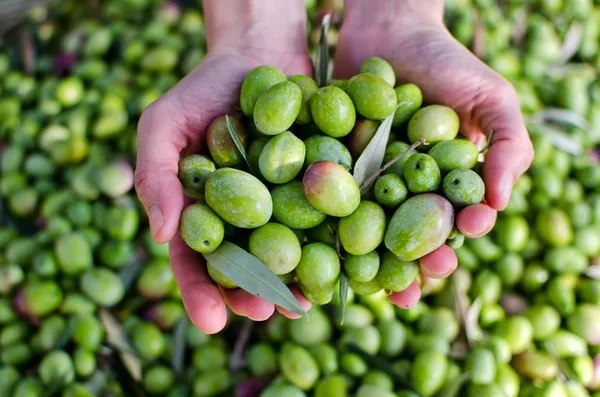
Kazakhstan Launches $20 Million Olive Cultivation and Oil Production Project

A major agricultural initiative valued at $20 million is underway in Kazakhstan, where the country’s first olive plantations have been established. By 2025, the total cultivated area is expected to reach 100 hectares.

Laying the Groundwork for Investment

Kazakhstan’s Minister of Agriculture, Aidarbek Saparov, recently met with George Svanidze, President of Global Olive Corporation, to discuss the ongoing implementation of the olive cultivation and olive oil production project.

Launched in 2023, the project is a joint effort involving Kazakh companies QVM Technology, Ordabasy Group, and Ervira, in partnership with Georgia’s Olive Georgia. Initial pilot plantations were established in the Zhetysu, Turkestan, and Mangistau regions, where over 6,000 olive seedlings were planted, an effort that achieved a remarkable 99.7% survival rate.

From Pilot Plantings to Industrial Production

In spring 2024, the project expanded with new seedlings imported from Spain and Turkey. By the end of 2025, the cultivated area is expected to reach 100 hectares, with the first harvest anticipated within five years.

Saparov emphasized the strategic value of the initiative, which aligns with Kazakhstan’s broader efforts to expand its food processing industry:

“Our goal is to increase the share of processed agricultural products to 70%. The development of the olive industry is strategically important for the agro-industrial complex. We are committed to providing comprehensive support for this project,” Saparov said.

Target: One Million Trees and Domestic Oil Production

George Svanidze outlined ambitious plans to establish a sustainable olive industry in Kazakhstan, including planting up to one million olive trees, constructing a modern olive oil production facility, and setting up a nursery for seedling propagation.

“We are ready to bring in international experts, train Kazakhstani agronomists, and share advanced technologies,” said Svanidze.

According to preliminary estimates, annual yields could reach 150,000 tons of olives, enabling the production of up to 30,000 tons of olive oil.

Kazakh partner QVM Technology confirmed the Ministry of Agriculture’s active support for the project. The meeting concluded with the signing of a Memorandum of Understanding and the preparation of a Road Map outlining the key implementation stages.

Exotic Crops on Kazakh Soil

Kazakhstan has previously experimented with cultivating non-native crops. In Turkestan region, bananas are grown successfully on a five-hectare plantation, yielding around 1,000 tons. Local authorities are also supporting efforts to expand tropical fruit cultivation, including mangoes and avocados, on a planned 90-hectare site.

These initiatives reflect Kazakhstan’s commitment to modernizing its agricultural sector, diversifying crop production, and enhancing both food security and export potential.

Kazakhstan to Receive 3.7 Billion Cubic Meters of Syr Darya Water in 2025

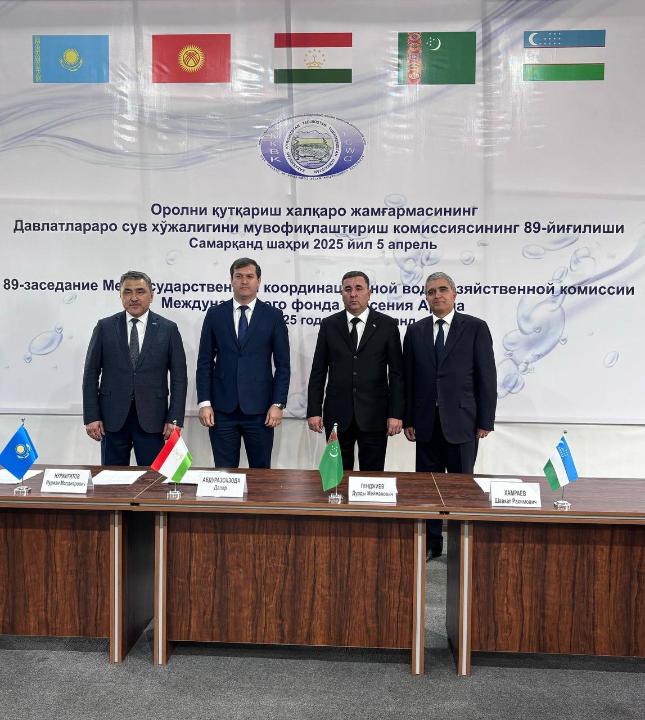
In the 2025 irrigation season, Kazakhstan is set to receive approximately 3.7 billion cubic meters of water via the Syr Darya River. The agreement was finalized during negotiations involving officials from Tajikistan, Turkmenistan, and Uzbekistan.

The deal was reached at the 89th meeting of the Interstate Water Commission of Central Asia, held in Samarkand, Uzbekistan.

As part of the agreement, Kazakhstan will receive 909 million cubic meters of water through the interstate Dostyk Canal during the irrigation period. Additionally, 975 million cubic meters are slated for transfer to the Northern Aral Sea.

“We began negotiations last year, we must prepare for the water season in advance, particularly in the southern regions where every drop counts. All water from the Syr Darya will be collected in the Shardara Reservoir and directed toward agricultural needs. At present, we are channeling floodwaters into lakes and rivers and storing them in reservoirs,” said Kazakhstan’s Minister of Water Resources and Irrigation, Nurzhan Nurzhigitov.

A day earlier, Nurzhigitov also addressed a climate forum in Samarkand. He noted that Uzbekistan had supplied 12.6 billion cubic meters of water to Kazakhstan from October of last year through April 1, exceeding the planned amount by 1.7 billion cubic meters.

Earlier reporting by The Times of Central Asia highlighted that eight regions in Kazakhstan face a heightened risk of spring flooding.

Tajik Ophthalmologist Parvina Mirakhmedova Wins Innovation Award in London

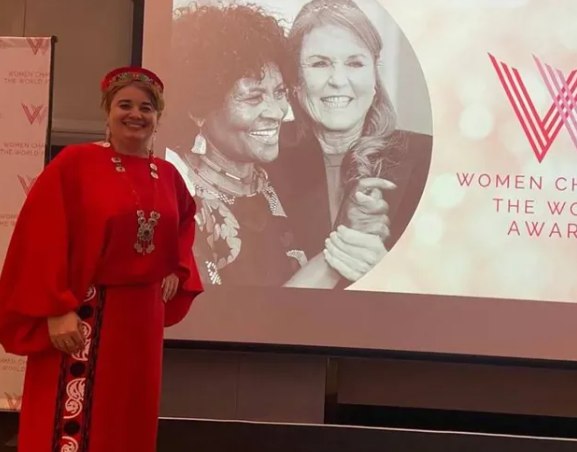
Parvina Mirakhmedova, a Tajik ophthalmologist and researcher, has won international acclaim at the prestigious Women Changing the World Awards, held in London. She was the only representative from Central Asia among participants from 55 countries.

Mirakhmedova was nominated in three Industry Award categories: Women in Health, Tech Innovation, and Innovation. She won the Tech Innovation Award and took second place in the Women in Health category.

Sarah Ferguson, the Duchess of York, personally presented Mirakhmedova with the Golden Heart Award, honoring both her professional accomplishments and the broader social impact of her work.

In her acceptance speech, Mirakhmedova expressed gratitude to those who supported her journey to London, emphasizing the importance of showcasing Tajikistan’s scientific talent on the global stage.

Transforming Ophthalmology with Innovation

Over recent years, Mirakhmedova has significantly advanced the field of ophthalmology. She developed a new diagnostic algorithm for early-stage glaucoma detection, dramatically lowering the risk of vision loss.

Additionally, she created cell-counting software that has standardized the diagnosis of ocular inflammation, notably improving treatment accuracy for uveitis. Her work has been published in peer-reviewed journals indexed in Scopus.

Among her most accessible innovations is a Telegram bot (@ophthalmo_test_bot) that helps doctors monitor inflammation in uveitis, enabling timely treatment adjustments.

Personal Struggles Behind the Science

Mirakhmedova’s professional journey is rooted in personal adversity.

“I lost my father to cancer, and later, my mother became seriously ill. I experienced first hand what patients and their families endure,” she said.

These experiences inspired her to drive change in Tajikistan’s medical system. She advocates for the integration of global medical innovations, asserting, “The world is moving forward, innovations are transforming medicine, and Tajikistan must not fall behind.”

A Decade of Determination

Mirakhmedova began her career at the international Solim Med and private Nurafzo clinics and underwent further training in Germany. Initially, her ideas were met with skepticism.

“Innovations are always resisted at first. But eventually, they become indispensable,” she noted.

Despite early challenges, she remained committed to her vision, bolstered by support from her mentors at the Abuali Ibni Sino Department of Ophthalmology at the Tajik State Medical University, her family, and her own perseverance.

Reaching the award finals marked a turning point.

“I felt a deep sense of satisfaction. To those who once said my ideas were useless, this is the answer,” she said.

Her recognition in London is not just a personal triumph, it affirms her contributions to medicine on an international scale and signals the potential for transformative change in ophthalmology across the region.