• KGS/USD = 0.01144 0%
  • KZT/USD = 0.00212 0%
  • TJS/USD = 0.10432 -0.29%
  • UZS/USD = 0.00008 0%
  • TMT/USD = 0.28490 0%
  • KGS/USD = 0.01144 0%
  • KZT/USD = 0.00212 0%
  • TJS/USD = 0.10432 -0.29%
  • UZS/USD = 0.00008 0%
  • TMT/USD = 0.28490 0%
  • KGS/USD = 0.01144 0%
  • KZT/USD = 0.00212 0%
  • TJS/USD = 0.10432 -0.29%
  • UZS/USD = 0.00008 0%
  • TMT/USD = 0.28490 0%
  • KGS/USD = 0.01144 0%
  • KZT/USD = 0.00212 0%
  • TJS/USD = 0.10432 -0.29%
  • UZS/USD = 0.00008 0%
  • TMT/USD = 0.28490 0%
  • KGS/USD = 0.01144 0%
  • KZT/USD = 0.00212 0%
  • TJS/USD = 0.10432 -0.29%
  • UZS/USD = 0.00008 0%
  • TMT/USD = 0.28490 0%
  • KGS/USD = 0.01144 0%
  • KZT/USD = 0.00212 0%
  • TJS/USD = 0.10432 -0.29%
  • UZS/USD = 0.00008 0%
  • TMT/USD = 0.28490 0%
  • KGS/USD = 0.01144 0%
  • KZT/USD = 0.00212 0%
  • TJS/USD = 0.10432 -0.29%
  • UZS/USD = 0.00008 0%
  • TMT/USD = 0.28490 0%
  • KGS/USD = 0.01144 0%
  • KZT/USD = 0.00212 0%
  • TJS/USD = 0.10432 -0.29%
  • UZS/USD = 0.00008 0%
  • TMT/USD = 0.28490 0%

South Korea to Support Electric Transport Infrastructure Development in Bishkek

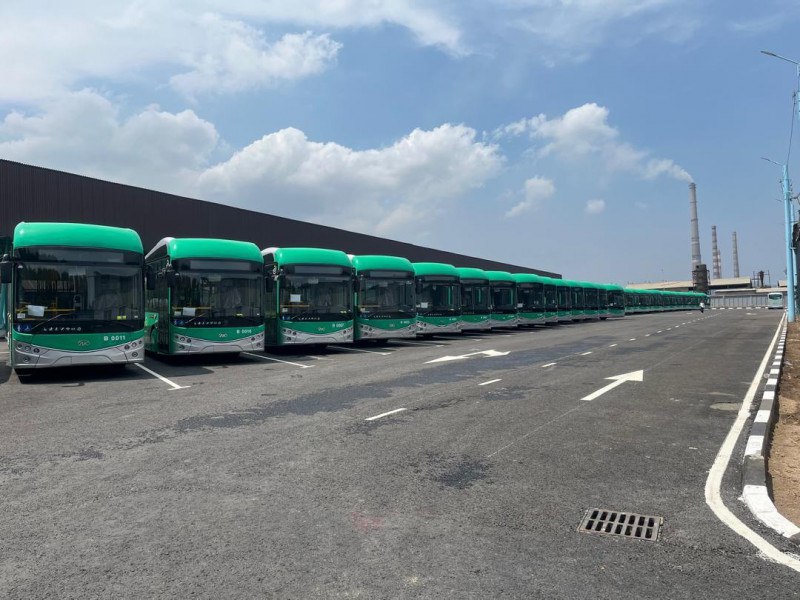
South Korean companies will assist Bishkek in building a modern charging infrastructure for electric public transport, following agreements reached between Kyrgyz Deputy Minister of Economy and Trade Sanzhar Bolotov and representatives of the Korea Environmental Transport Association, along with several private firms.

The collaboration aims to jointly develop, implement, and operate a state-of-the-art network of charging stations for electric buses in the Kyrgyz capital. It also includes the introduction of improved environmental practices.

“The South Korean side expressed its readiness not only to help with infrastructure, but also to transfer to Bishkek expert knowledge and technology in the field of eco-friendly transport, as well as to conduct extensive information campaigns to promote electric transport among the population,” the Kyrgyz Ministry of Economy and Trade stated.

The agreement also encompasses a range of environmental initiatives. South Korean experts will assist Bishkek in improving air quality and reducing carbon emissions, critical objectives for a city frequently plagued by severe air pollution, particularly in the autumn and winter months.

An important component of the agreement is the training of young specialists in South Korea. “Particular attention will be paid to the formation of a system of interaction between industry and the academic community, which will ensure the employment of trained specialists and the development of local expertise in the field of charging infrastructure operation,” the ministry added.

Bishkek has pursued a consistent strategy of replacing traditional public transport with electric alternatives. Initially, the city phased out route taxis, replacing them with buses powered by gas and petrol. More recently, city authorities purchased 120 electric buses manufactured in China, with some units already delivered, through a project in collaboration with the Asian Development Bank. Concurrently, the city has begun phasing out its aging trolleybus fleet, a move that has sparked public debate. The infrastructure previously used for trolleybuses is being repurposed for the electric bus network. However, the process has faced delays, and several tenders for modifying the existing contact network have been cancelled.

Starting in 2025, the popular Ala-Archa Nature Park will ban entry for vehicles with internal combustion engines. Tourists will be transported exclusively by municipal electric buses or allowed to use their own electric vehicles.

Kazakhstan Aims to Revive Investment Appeal Amid Global Headwinds

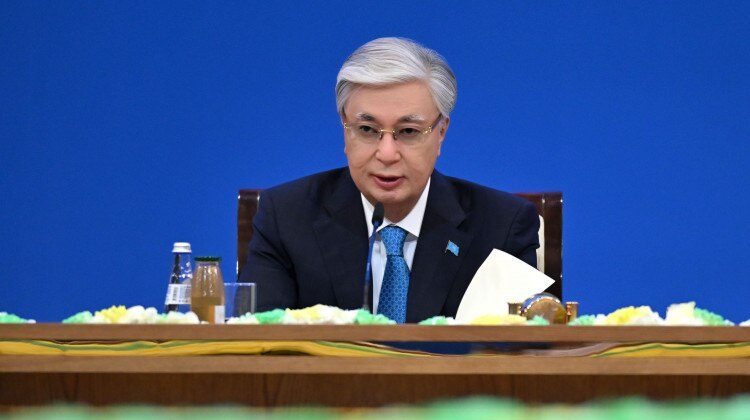
Kazakhstan’s President Kassym-Jomart Tokayev has convened the 37th plenary session of the Foreign Investors Council, reaffirming its strategic role in ensuring the country’s economic sustainability and attracting international capital. Operating for over two decades, the council continues to serve as a vital platform for dialogue between the state and global business leaders.

Despite global headwinds, sluggish GDP growth, inflation, and disrupted supply chains, Kazakhstan has shown economic resilience. According to Tokayev, the country’s GDP grew by 6% in the first five months of 2025, driven by gains in transport, logistics, construction, trade, mining, and manufacturing.

New Tools to Support Investors

Tokayev announced the creation of an Investment Task Force, which has resolved issues surrounding 137 projects totaling $70 billion. To safeguard investors from undue inspections and state pressure, a “prosecutor’s filter” has been introduced.

Kazakhstan has also launched a National Digital Investment Platform, providing integrated government services through a single portal. A revised Tax Code, now under Senate review, proposes incentives for exporters and producers of high-value goods.

Image: akorda

Sectoral Focus: Mining, Manufacturing, and Logistics

Mining remains a key economic pillar, with major international players such as Rio Tinto, Fortescue, Ivanhoe Mines, First Quantum, and Teck Resources establishing operations in the country. The proposed tax reforms aim to stimulate the domestic processing of raw materials.

In industrial production, firms like Alstom, Stadler, and Wabtec are investing in rolling stock, manufacturing, and maintenance. Wabtec, meanwhile, is planning a $200 million investment in alternative fuel technologies.

Kazakhstan also ranks among the world’s top grain exporters and holds the sixth-largest area of agricultural land. Multinationals, including PepsiCo, Fufeng Group, and Dalian Hesheng, are investing in the agro-industrial sector, enhancing both value-added production and technology adoption.

The nation has initiated large-scale infrastructure projects: by 2029, it aims to reconstruct 11,000 km of railways and build 5,000 km of new highways. Key segments include Dostyk-Moyinty, Bakhta-Ayagoz, and Altynkol-Zhetigen. In 2025 alone, more than 13,000 km of roadworks are also scheduled. Terminal expansions at Almaty, Kyzylorda, and Shymkent airports have also been completed, increasing their combined capacity sixfold.

Digital Future and Artificial Intelligence

Kazakhstan now ranks among the top 30 countries in digitalization, according to the United Nations. Over 4,000 entities, including cryptocurrency exchanges, are registered with the Astana-based MCCE. Tokayev announced the launch of a CryptoCity pilot zone, enabling real-world digital currency transactions.

With over 89% of transactions now cashless, Kazakhstan is positioning artificial intelligence as a cornerstone of its digital sovereignty and future competitiveness.

Image: akorda

Foreign Investment Challenges

The forum featured remarks from key international stakeholders, including EBRD President Odile Renaud-Basso, ADB Vice President Bhargav Dasgupta, and representatives from VEON, CNPC, and Alstom, as well as Kazakhstan’s Minister of Industry, Yersay Nagaspayev, and the Head of the Association of Foreign Investors, Erlan Dosymbekov.

However, Tokayev’s pro-investment declarations come amid sobering data. For the first time in three decades, Kazakhstan lost its lead in Central Asia for foreign direct investment (FDI). According to the United Nations Conference on Trade and Development (UNCTAD), net FDI inflows were negative in 2024, at $2.55 billion, a decline of $6.3 billion year-on-year and the first such drop since 1992.

Uzbekistan emerged as the new regional leader with $2.8 billion in FDI, followed by Turkmenistan ($1.6 billion), Kyrgyzstan ($705 million), and Tajikistan ($291 million).

Globally, FDI declined by 11% to $1.5 trillion in 2024, marking a second consecutive year of contraction due to geopolitical tensions, high borrowing costs, and tightening monetary policy.

Against this backdrop, Tokayev’s calls for reforming Kazakhstan’s investment landscape carry added urgency. Analysts stress that rhetoric must be matched by action: reinforcing property rights, strengthening the rule of law, and upholding transparent, stable investment rights will be essential for regaining investor confidence.

Kazakhstan Acts Swiftly on Middle East Crisis: Citizens Evacuated, Flights Suspended

In the wake of escalating hostilities in the Middle East, Kazakhstan has undertaken swift measures to safeguard its citizens and adapt its aviation policies. On the night of June 13, Israel launched “Operation Lion’s Roar,” targeting military and strategic sites in Iran, citing concerns over Tehran’s nuclear capabilities. The offensive triggered international concern and widespread flight restrictions, which affected Kazakhstani citizens in the UAE, Iran, and Israel.

Stranded Tourists and Initial Evacuations

In its immediate response, Kazakhstan’s Aviation Administration imposed a full ban on flights through the airspace of Iran, Israel, Syria, Jordan, Iraq, and Lebanon. The directive applied to all Kazakh carriers, both commercial and charter, requiring them to halt operations across the affected regions.

As a result, around 300 Kazakh nationals, primarily tourists, were unable to return home. Despite prior warnings, flights to the UAE continued to depart with full passenger loads, according to Foreign Ministry spokesman Aibek Smadiyarov.

Evacuations began the following day. On June 14, six Kazakh citizens were evacuated from Iran via Azerbaijan. By June 15, another 68 individuals, including diplomats and their families, crossed into Turkmenistan. Kazakhstan’s Ministry of Foreign Affairs expressed its gratitude to Iran, Turkmenistan, Azerbaijan, and other partner countries for facilitating the evacuations.

Further operations saw 332 Kazakh tourists repatriated from the UAE to Almaty on two FlyDubai flights on June 15, with support from the Turistik Kamkor Foundation and the Ministry of Foreign Affairs. As of June 20, an additional 66 citizens had been evacuated from Israel via Egypt, while 78 others left Iran through Armenia, Azerbaijan, and Turkmenistan.

“Thanks to joint efforts, more and more citizens are able to return home safely,” the Foreign Ministry noted.

Ministry Advisories and Air Travel Disruptions

On June 23, the Foreign Ministry issued an official advisory urging Kazakh citizens to refrain from traveling to the Middle East. Those already in the region were instructed to stay alert, avoid large gatherings, monitor official updates, and maintain contact with Kazakh embassies.

Airlines also took precautionary measures. Air Astana extended its suspension of flights to Dubai and Doha through June 24, offering passengers the option of free rebooking or a full refund. SCAT Airlines announced delays to flights bound for Sharm el-Sheikh and Antalya, citing bird strikes and the volatile security environment. The airline also cancelled a flight from Astana to Doha.

By June 24, Dubai’s Al Maktoum and Dubai International airports had resumed full operations. The airspace over Qatar, Bahrain, and Kuwait also reopened. UAE authorities have urged travelers to confirm flight details with their airlines and arrive early at airports.

Kazakhstan Faces Potential Logistics Disruptions Amid Iran-Israel Conflict

Kazakhstan’s Minister of National Economy, Serik Zhumangarin, has warned that the only significant risk to the national economy stemming from the conflict between Iran and Israel is a potential disruption to southern logistics routes.

“We are closely monitoring developments in the Middle East and hope for a peaceful resolution. In terms of losses, we primarily export food to Iran, and we do not expect these events to affect that trade. The population there still needs to be fed. Our main concern is logistics. The only railway line heading south runs through Iran,” Zhumangarin told reporters on the sidelines of a Senate meeting.

The route in question is the Kazakhstan-Turkmenistan-Iran segment of the North-South International Transport Corridor (Zhanaozen-Gyzylgaya-Bereket-Etrek-Gorgan), constructed between 2009 and 2014. The corridor reduces the distance from China to Iran by 500 kilometers when passing through Kazakhstan. However, Zhumangarin noted that Kazakhstan currently transports only a small volume of goods via this route, citing the poor condition of Iran’s railways.

Iran’s railway infrastructure adheres to European standards with a track gauge of 1,435 mm, while Kazakhstan’s railcars are designed for a 1,520 mm gauge. Despite this technical discrepancy, Astana had been seeking to expand freight operations along this corridor. In February 2025, Kazakhstan’s ambassador to Tehran, Ontalap Onalbayev, met with Jabbar Ali Zakaria, head of the Iranian Railway Organization, to discuss plans to increase annual transit freight from 275,000 tons (2024) to 5 million tons.

Following the escalation of the Iranian-Israeli conflict, Kazakhstan is now compelled to evaluate alternative logistics routes, Zhumangarin noted. “We have contingency options; we can route shipments through Georgia or use Chinese ports. This adds complexity to logistics, but if long-term consequences arise, we will adapt and support our business community. It’s too early to make firm predictions,” he stated.

Kazakhstan’s trade turnover with Iran totaled approximately $350 million in 2024, with trade reaching $120 million in the first five months of 2025.

As previously reported by The Times of Central Asia, in response to recent U.S. airstrikes in Iran, Central Asian nations, including Kazakhstan, have urged all parties to pursue diplomatic solutions and avoid any further escalation.

‘Saltanat’s Law’: Have the Lives of Kazakhstani Women Changed?

One year ago, on April 15, 2024, President Kassym-Jomart Tokayev signed a landmark package of legislative amendments aimed at addressing domestic violence in Kazakhstan. Quickly dubbed ‘Saltanat’s Law’ by the public, the reforms are seen as honoring the memory of 31-year-old Saltanat Nukenova, who was brutally murdered by former Minister of the Economy, Kuandyk Bishimbayev.

First Results: Statistics, Challenges, and New Realities

Nukenova’s death and the viral public outcry under the hashtags #SupportSaltanat and #LifeImprisonment, catapulted domestic violence from the policy periphery to a national priority, prompting Parliament to pass amendments within weeks.

The legislation reinstated criminal liability for battery and minor bodily harm, introduced penalties for repeat offenses within a year, prohibited reconciliation in cases involving minors, and instituted life sentences for murder and sexual violence against children. The law came into force on June 16, 2024. One year on, activists say there is enough data to evaluate early outcomes.

Crucially, advocates note that the law has empowered women with legal language: for the first time, they can cite specific criminal statutes rather than relying solely on moral appeals.

Yet, infrastructure has lagged. At the time of the legislation’s adoption, there were 49 crisis centers nationwide; by mid-2025, that number had grown to 69. Still, 85% of districts lack access to shelters. With a population exceeding 1.2 million, Shymkent has only one center despite receiving 11,000 violence-related complaints. The Abay and Kyzylorda regions have none. Funding remains precarious: this spring, the Turkestan region’s largest center nearly closed due to unpaid utility bills. While international organizations provide training and grants, a stable government funding mechanism is still absent.

Voices from Across Kazakhstan

The Times of Central Asia spoke with women from various cities to gauge how the law has impacted daily life and their perceptions of safety.

Kamilla, 21, a barista in Almaty, has observed a subtle shift: “Men have become more cautious, especially older ones. Bosses who used to make threatening or derogatory comments are more restrained now. They fear imprisonment, not just a fine. Still, I’m not confident the police would take my side. Many people still say, ‘It’s your own fault.’ But among my friends, few would ever justify violence. That’s already progress.”

Madina, 19, a student from Taraz, sees increased online engagement: “Now, when someone shares their story, it goes viral,” she told TCA. “People comment, repost, and demand justice. But on the ground, in the neighborhoods, little has changed. Women are still afraid. There’s nowhere to go, and often no family support.”

Gulnara, 39, an accountant in Astana, recalls a neighbor’s silence: “She was often beaten. We offered help, but she waved us off. She didn’t want ‘to air dirty laundry.’ It’s not just about laws, it’s about mentality. Many still see the law as distant, irrelevant to their own lives.”

Dana, 27, a makeup artist in Kostanay, says the law offers emotional support: “When it passed, we felt heard. But we know it’s just a beginning,” she told TCA. “Young people are more outspoken now. Older women still live in fear, especially if they have children. We need education, on TV, in schools, not just punishment.”

Aruzhan, 23, a Social Media Marketing specialist from Taraz, stresses the need for infrastructure: “This is a step forward, yes, but what next? We don’t have a crisis center here. A hotline is fine, but what if there’s nowhere to go? Women need real support – shelters, lawyers, and counseling. A law is a foundation, but we haven’t built the house yet.”

Beyond the Law

When President Tokayev signed into law amendments and additions to legislative acts ensuring the rights of women and the safety of children, the UNDP) in Kazakhstan characterized them as a “crucial step towards equality, justice [and] safety for all citizens” that “lay a foundation for a stable, prosperous society.” The OSCE Programme Office in Astana responded in a similar manner.

‘Saltanat’s Law’ shifted public discourse, placing victims’ rights above clan reputations or local budgets, but legal reform alone may not be enough. Without nationwide access to crisis centers, offender rehabilitation programs, and gender education in schools, the law risks becoming symbolic rather than transformative.

Kazakhstan has taken an important first step. To make it meaningful, the country must transform legislative action into a living support system. Only then will the law evolve from a headline into a quiet, everyday guarantee of safety for millions of families.

Kazakhstan to Hold Banks and Mobile Operators Liable for Online Fraud Losses

Kazakhstan will introduce joint liability for banks and mobile operators in cases of internet fraud involving their infrastructure, President Kassym-Jomart Tokayev announced during an extended meeting of the country’s law enforcement agencies.

Addressing the growing threat of cybercrime, Tokayev emphasized the importance of prevention, noting that many internet and phone scams originate from well-organized criminal networks operating abroad, complicating investigation and prosecution.

“Preventive measures are therefore crucial. Last year, a modern anti-fraud center was established at the National Bank of Kazakhstan to detect and block suspicious transactions,” Tokayev said. “We are now introducing joint liability for banks and mobile operators in fraud cases involving their infrastructure.”

Tokayev also raised concerns over citizens’ involvement in money laundering schemes. “Fraudsters lure people into laundering operations by offering rewards for access to their bank accounts. Many comply without considering the severe legal consequences,” he noted.

A major enabler of these crimes is the widespread use of SIM cards registered under false identities. According to the president, nearly 100,000 such cases have been detected so far in 2025.

The National Bank reported that since July 2024, the anti-fraud center has frozen over 63,000 suspicious transactions worth 2.5 billion tenge (approximately $4.83 million). Common schemes include telephone scams (22%), fake investment platforms (19%), and misuse of so-called “dropper” cards (19%).

Continue reading