• KGS/USD = 0.01144 0%
  • KZT/USD = 0.00212 0%
  • TJS/USD = 0.10456 0.19%
  • UZS/USD = 0.00008 0%
  • TMT/USD = 0.28490 0%
  • KGS/USD = 0.01144 0%
  • KZT/USD = 0.00212 0%
  • TJS/USD = 0.10456 0.19%
  • UZS/USD = 0.00008 0%
  • TMT/USD = 0.28490 0%
  • KGS/USD = 0.01144 0%
  • KZT/USD = 0.00212 0%
  • TJS/USD = 0.10456 0.19%
  • UZS/USD = 0.00008 0%
  • TMT/USD = 0.28490 0%
  • KGS/USD = 0.01144 0%
  • KZT/USD = 0.00212 0%
  • TJS/USD = 0.10456 0.19%
  • UZS/USD = 0.00008 0%
  • TMT/USD = 0.28490 0%
  • KGS/USD = 0.01144 0%
  • KZT/USD = 0.00212 0%
  • TJS/USD = 0.10456 0.19%
  • UZS/USD = 0.00008 0%
  • TMT/USD = 0.28490 0%
  • KGS/USD = 0.01144 0%
  • KZT/USD = 0.00212 0%
  • TJS/USD = 0.10456 0.19%
  • UZS/USD = 0.00008 0%
  • TMT/USD = 0.28490 0%
  • KGS/USD = 0.01144 0%
  • KZT/USD = 0.00212 0%
  • TJS/USD = 0.10456 0.19%
  • UZS/USD = 0.00008 0%
  • TMT/USD = 0.28490 0%
  • KGS/USD = 0.01144 0%
  • KZT/USD = 0.00212 0%
  • TJS/USD = 0.10456 0.19%
  • UZS/USD = 0.00008 0%
  • TMT/USD = 0.28490 0%

Uzbek Citizen Detained in Israel After Video Mocking Civilians During Rocket Alert

An Uzbek citizen working in Israel has been detained after a video circulated online showing him mocking civilians rushing to bomb shelters during a rocket alert.

The video, widely shared on social media, was first posted in a Facebook group for people from Bukhara. It shows people running toward shelters after warning sirens sounded, while the man filming the scene can be heard laughing and making derogatory remarks. In the recording, he says, “Look how the rats are running,” while filming civilians attempting to reach safety during what appears to be a missile warning.

The footage quickly sparked outrage among Israeli social media users, many of whom described the comments as offensive and inappropriate given that civilians were seeking protection from a potential attack.

Posts circulating within the Bukharan community claimed that Israeli singer Avi Hen later recognized the individual on the street and alerted authorities. Police reportedly arrived shortly afterward and detained the man for questioning.

Officials said the detention was carried out on suspicion of incitement and disturbing public order. An investigation into the case is ongoing.

Meanwhile, the Embassy of Uzbekistan in Israel released an official statement addressing the incident. According to the embassy, the episode occurred on February 28, when an Uzbek citizen identified as N.H. uploaded a video to TikTok during a rocket attack while air-raid sirens were sounding.

The embassy said the video contained inappropriate language and was later widely shared across Israeli social media platforms.

The statement added that an Israeli citizen identified as A.H. subsequently contacted the police about the video. After learning about the situation, the embassy’s consular department contacted the Uzbek citizen and held a conversation with him. Embassy representatives also communicated with the Israeli citizen who filed the complaint.

According to the embassy, the Uzbek national is currently safe, and the situation remains under the supervision of the consular department.

Uzbek Citizen Evacuation Flights Continue from Middle East

More than 9,300 citizens of Uzbekistan had been evacuated from countries in the Middle East as of March 5.

According to the press service of Uzbekistan’s Ministry of Foreign Affairs, between March 1 and 10:00 a.m. local time on March 5, a total of 9,361 Uzbek citizens safely returned home from several countries in the region.

Officials said the largest number of evacuees arrived from Saudi Arabia, where 8,114 people were transported to Uzbekistan on both regular and specially arranged charter flights.

Another 1,192 citizens have so far been repatriated from the United Arab Emirates. Smaller groups were also evacuated from other countries in the region, including 23 citizens from Iran, 25 from Bahrain, and seven from Oman.

The ministry said the return of Uzbek nationals is being organized in a structured and phased manner. Officials added that evacuation operations are currently focused on countries whose airspace remains open to civilian flights, with additional flights to be arranged once airspace restrictions are lifted elsewhere in the region.

Separately, Uzbekistan’s Ministry of Transport reported that by March 5 a total of 41 special flights had been carried out to bring citizens home from the Middle East.

According to the ministry, several Uzbekistan-based airlines, including Uzbekistan Airways, Centrum Air, Qanot Sharq, Fly One Asia, Fly Khiva, and Air Samarkand, have been operating evacuation flights.

These included routes from Jeddah and Medina in Saudi Arabia to Tashkent, Andijan, Namangan, Urgench, Qarshi, and Samarkand, as well as flights from Dubai to Tashkent.

Transport officials said that 36 flights departing from Jeddah and Medina transported 7,988 passengers to Uzbekistan. An additional five flights from Dubai carried 838 people.

Several flights were still operating at the time of the ministry’s latest update, including routes from Dubai and Jeddah to Tashkent and Samarkand.

Authorities stated that the evacuation process is continuing step by step and urged Uzbek citizens abroad to remain calm, follow local laws, and rely only on official information issued by Uzbekistan’s diplomatic missions and government agencies.

Prices in Turkmenistan Rise Sharply Due to the Situation in the Middle East

Military activity in neighboring Iran has begun to directly affect Turkmenistan’s economy. Disruptions to supplies from a key trading partner have triggered a sharp increase in prices for food, household chemicals, building materials, and cigarettes. According to retailers, this may only be the beginning as existing stocks are running low and prices continue to climb.

Despite having domestic production, Turkmenistan remains heavily dependent on imports from Iran, particularly for food products, household chemicals, and construction materials.

The conflict in Iran has disrupted established logistics routes, causing prices for several categories of goods to rise significantly across Turkmenistan.

Vegetables and citrus fruits have seen some of the steepest increases. Prices for potatoes and cucumbers have risen by three to three-and-a-half times, while citrus fruits have become about 50% more expensive. Cigarette prices have already increased by roughly 40%, and traders warn that further rises are likely.

At the end of February, a kilogram of potatoes imported from Iran cost between $1.45 and $1.74 in Ashgabat. The price has now risen to $4.93 per kilogram. A similar trend has been observed for cucumbers, whose price increased from $2.32 to $4.93 per kilogram.

Citrus fruits have become even more expensive. Oranges have risen in price from $2.61 to $5.22 per kilogram, while mandarins have increased from $3.48 to $6.38.

Residents of Turkmenistan are also facing higher prices for household chemicals. Although the increase has not yet been as dramatic, retailers say the upward trend is clear. Tobacco products have also risen significantly in price, with cigarettes increasing by an average of about 35%.

The construction sector has also been affected. Prices for cement, wood, metal, and other building materials have increased by around 40%.

These increases are linked to disruptions in established supply routes. Some construction materials were previously imported from the United Arab Emirates via Iran. Businesses are now being forced to search for alternative logistics routes, including through Georgia and Azerbaijan, which significantly increases transportation costs.

On March 4, customs regulation issues were discussed at a meeting of Turkmenistan’s Security Council.

However, according to a report by the state news agency TDH, the head of the State Customs Service, Maksat Khudaygulyev, did not address the current supply disruptions. His remarks focused on the planned development of the agency.

Price increases linked to events in Iran are not new for Turkmenistan. A similar situation was observed in the summer during the 12-day war.

Supply problems also emerged in the fall of 2024, when Iran temporarily closed its border. During that period, vegetable oil prices increased significantly and shortages were reported.

Kazakhstan Increased Agricultural Export Revenue by More than a Third in 2025

Export revenues from Kazakhstan’s agro-industrial complex reached $7 billion in 2025, an increase of 37% compared to the previous year. This was announced by Deputy Minister of Agriculture Yerbol Taszhurekov.

A year earlier, export revenues from agriculture totaled $5.1 billion. That figure was nearly 1.7 times higher than in 2018, when Kazakhstan’s farmers exported $3.1 billion worth of products.

According to Taszhurekov, more than half of the export revenue in 2025, about $3.6 billion, came from processed agricultural products. Supplies of processed goods to foreign markets grew by 35% compared to 2024, when their exports amounted to $2.7 billion.

“Significant growth in production allows us not only to fully supply the domestic market, but also to actively increase export volumes,” the deputy minister said.

He also noted that the share of processed products in total agricultural output continues to rise. While it accounted for about 50% in 2024, preliminary data for 2025 suggests this figure has increased to 60%.

Overall, Kazakhstan’s gross agricultural output rose by 5.9% in 2025, reaching 9.8 trillion tenge (about $19.6 billion).

Among the sector’s key achievements were high yields of grain and oilseeds. Last year, the country harvested 25.9 million tons of grain in net weight, including 19.3 million tons of wheat. A record harvest of oilseeds was also recorded at 4.8 million tons, along with more than 1 million tons of legumes.

According to Taszhurekov, changes in the structure of cultivated areas were the result of a policy aimed at agricultural diversification. The area planted with wheat was reduced by nearly 900,000 hectares, while the area under legumes increased by 275,000 hectares and oilseed crops expanded by more than 1 million hectares.

“This creates a more sustainable agricultural model and expands the raw material base for processing enterprises,” he said.

One of the most promising areas of development remains deep grain processing. By 2028, Kazakhstan plans to launch new production facilities with a total capacity of 5.8 million tons per year. Investment in these projects is estimated at approximately 1.9 trillion tenge (about $3.8 billion), and more than 3,300 jobs are expected to be created.

The product range will also expand, with enterprises planning to produce amino acids, syrups, vitamins, and other high-value processed products.

Taszhurekov also noted the expansion of state support instruments for the agro-industrial complex. Preferential loans have been introduced for processing enterprises to purchase fixed assets at an interest rate of 2.5% and to finance working capital at a rate of 5%.

In addition, investment subsidy programs have been expanded. While the standard reimbursement rate is 25%, it has been increased for several priority sectors, to 40% for sugar production and egg processing, and to 50% for high-tech agricultural industries.

“Thanks to the state support measures adopted, the industry is showing steady positive dynamics,” the ministry representative said.

As previously reported by The Times of Central Asia, Kazakhstan also plans to bring one of its iconic agricultural products, Aport apples, to international markets.

Daines Retirement Leaves Uncertainty for Senate Central Asia Caucus

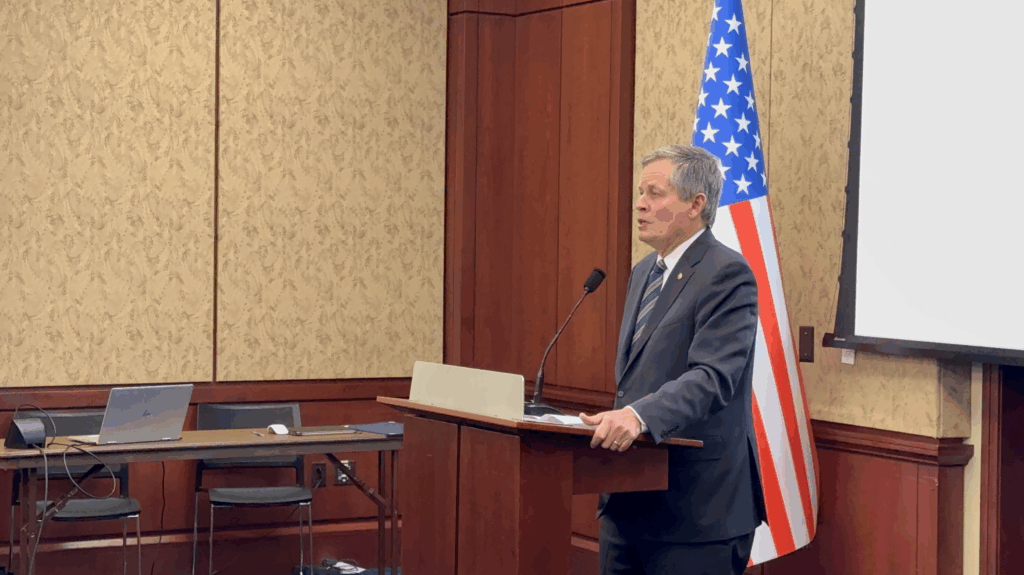
Senator Steve Daines has announced that he will not seek re-election in 2026, a decision that could have implications for congressional initiatives focused specifically on Central Asia. Daines has been among the most active advocates in Congress for strengthening U.S. engagement with the region, particularly on trade policy and economic cooperation with Kazakhstan, Kyrgyzstan, Tajikistan, Turkmenistan, and Uzbekistan.

In 2024, Daines partnered with Democratic Senator Gary Peters to launch the U.S. Senate Central Asia Caucus, a bipartisan forum intended to raise the region’s profile in Washington and encourage cooperation on trade, investment, and security. The initiative reflected growing interest in Congress as Central Asia has gained strategic importance amid shifting global supply chains and efforts by governments in the region to diversify partnerships beyond Russia and China.

One of the caucus’s key policy priorities has been the repeal of the Cold War-era Jackson–Vanik Amendment, which still applies to multiple former Soviet states. Its continued presence in U.S. law is widely viewed as an outdated barrier to deeper economic engagement. Momentum for its repeal has grown as policymakers seek to expand trade with Central Asia and modernize the legal framework governing U.S. economic relations with the region.

Supporters argue that removing the amendment would encourage American investment in sectors such as energy, infrastructure, and critical minerals while aligning U.S. trade policy with Washington’s broader strategic outreach to Central Asia. Debate in Washington over normalizing trade relations has increasingly been framed as part of a wider push to strengthen economic ties with the region. With both Daines and Peters expected to leave the Senate by 2027, the caucus’s founding leadership will soon depart Capitol Hill, potentially narrowing the window for congressional action on the issue.

Turkmen Natural Gas Could Supplement Azeri Supplies to Europe via the Southern Gas Corridor

Turkmenistan views the Trans-Caspian Gas Pipeline project as one of the most important directions for diversifying its energy exports and strengthening energy security on the European continent, Turkmenistan’s former president Gurbanguly Berdymuhamedov said in an interview with the Al Arabiya television channel during his visit to the United States in February, according to official Turkmen media.

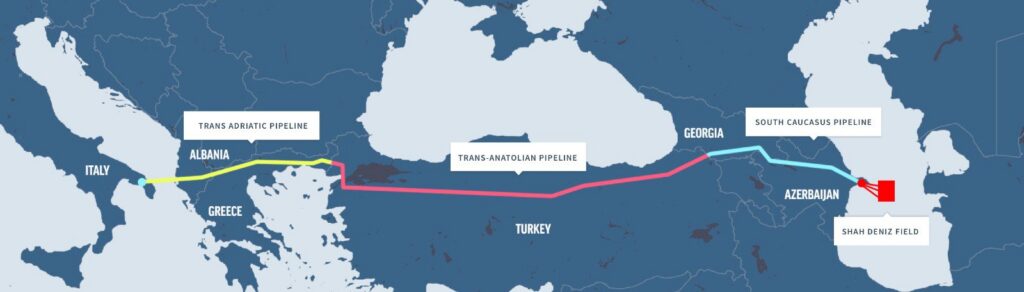
The Trans-Caspian Gas Pipeline is a proposed infrastructure project designed to transport natural gas from Turkmenistan to Azerbaijan across the Caspian Sea, where it could connect to the Southern Gas Corridor (SGC).

The SGC is intended to reduce Europe’s dependence on Russian gas and diversify the continent’s energy supplies by bringing natural gas from the Caspian region to European markets. Its primary supply source is Azerbaijan’s Shah Deniz gas field in the Caspian Sea. The corridor stretches from Azerbaijan through Georgia and Türkiye to Greece, Albania, and Italy.

Turkmenistan is widely viewed as a potential additional supplier for the SGC, which could become increasingly important if Azerbaijani gas alone proves insufficient to meet rising European demand.

Berdymuhamedov said that progress on the Trans-Caspian Gas Pipeline requires resolving international legal issues, particularly those related to the delimitation of the Caspian seabed. A Turkmen-Azerbaijani working commission has been established for this purpose.

“We hope that its work will yield significant practical results,” he said.

Berdymuhamedov also emphasized Turkmenistan’s large hydrocarbon resources, noting that the country ranks fourth globally in proven natural gas reserves.

“For some time in the past, the bulk of Turkmen natural gas exports went to Russia, which received up to 40 billion cubic meters per year. Currently, China is our main gas buyer, with supply volumes at roughly the same level,” Berdymuhamedov said.

He added that Turkmenistan’s policy of diversification allows the country to supply gas within the region through swap arrangements involving Iran and Azerbaijan, as well as Kazakhstan, Uzbekistan, and other neighboring states.

Turkey is also considered a key link for potential Turkmen gas exports to Europe.

Turkish Vice President Fuat Oktay previously said that, in cooperation with Azerbaijan, Turkmen natural gas could be transported through the Trans-Anatolian Natural Gas Pipeline (TANAP), which runs across Türkiye and forms the central segment of the Southern Gas Corridor.

Oktay expressed confidence that negotiations between Turkey’s Ministry of Energy and Natural Resources, the Turkish state energy company BOTAŞ, and Turkmenistan’s state-owned gas producer, Türkmengaz, could soon produce positive results.

He also stated that Turkish state companies are ready to participate in the development of hydrocarbon resources at the jointly developed Turkmen-Azerbaijani Dostluk field in the Caspian Sea.

Speaking at the 12th Ministerial Meeting of the Southern Gas Corridor Advisory Council in Baku on March 3, Zafer Demircan, Turkey’s Deputy Minister of Energy and Natural Resources, highlighted the corridor’s strategic importance.

“There is a strong common understanding of the crucial role of the Southern Gas Corridor in achieving long-term energy supply security,” Demircan said. “This valuable concept is evolving toward a Green Energy Corridor linking states in the Caucasus and Central Asia with Europe. Türkiye is the most feasible route not only for natural gas transportation but also for electricity transmission.”

Participants at the Southern Gas Corridor Advisory Council meeting emphasized the system’s growing role in supplying Azerbaijani gas to European markets. According to Azerbaijan’s Ministry of Energy, the country supplied 12.5 billion cubic meters (bcm) of natural gas to EU member states in 2025, a 53.8% increase compared with 2021 levels.

At the same meeting, EU Commissioner for Energy and Housing Dan Jørgensen said that Caspian gas has already contributed to a sharp reduction in Europe’s reliance on Russian energy supplies.

“With the help of Caspian gas, the EU’s dependence on Russian gas fell from 45% of total imports in 2022 to 12% in 2025, and these numbers will continue to fall,” Jørgensen said. “In less than two years, the remaining 35 billion cubic meters of Russian gas that we are still importing every year will be out of our markets.”

Jørgensen also reaffirmed the EU’s commitment to strengthening regional connectivity with the Black Sea region, Turkey, the South Caucasus, and Central Asia.

“The EU stands ready to explore further opportunities to strengthen energy connectivity and the energy transition in the region, including through the mobilization of guarantees and blended finance instruments,” he said.