• KGS/USD = 0.01143 -0%
  • KZT/USD = 0.00192 -0%
  • TJS/USD = 0.10820 0.19%
  • UZS/USD = 0.00008 0%
  • TMT/USD = 0.28575 0%
  • KGS/USD = 0.01143 -0%
  • KZT/USD = 0.00192 -0%
  • TJS/USD = 0.10820 0.19%
  • UZS/USD = 0.00008 0%
  • TMT/USD = 0.28575 0%
  • KGS/USD = 0.01143 -0%
  • KZT/USD = 0.00192 -0%
  • TJS/USD = 0.10820 0.19%
  • UZS/USD = 0.00008 0%
  • TMT/USD = 0.28575 0%
  • KGS/USD = 0.01143 -0%
  • KZT/USD = 0.00192 -0%
  • TJS/USD = 0.10820 0.19%
  • UZS/USD = 0.00008 0%
  • TMT/USD = 0.28575 0%
  • KGS/USD = 0.01143 -0%
  • KZT/USD = 0.00192 -0%
  • TJS/USD = 0.10820 0.19%
  • UZS/USD = 0.00008 0%
  • TMT/USD = 0.28575 0%
  • KGS/USD = 0.01143 -0%
  • KZT/USD = 0.00192 -0%
  • TJS/USD = 0.10820 0.19%
  • UZS/USD = 0.00008 0%
  • TMT/USD = 0.28575 0%
  • KGS/USD = 0.01143 -0%
  • KZT/USD = 0.00192 -0%
  • TJS/USD = 0.10820 0.19%
  • UZS/USD = 0.00008 0%
  • TMT/USD = 0.28575 0%
  • KGS/USD = 0.01143 -0%
  • KZT/USD = 0.00192 -0%
  • TJS/USD = 0.10820 0.19%
  • UZS/USD = 0.00008 0%
  • TMT/USD = 0.28575 0%
14 December 2025

Uzbekistan Deepens U.S. Partnership Through New Investment Council and National AI Strategy

Uzbekistan is advancing a broad effort to strengthen its relationship with the United States through new economic, diplomatic, and technological initiatives. A presidential decree establishing the Uzbekistan–U.S. Business and Investment Council, alongside a major artificial intelligence partnership with NVIDIA, underscores the country’s strategy to draw investment and accelerate digital development.

A New Platform for Economic Engagement

The creation of the Uzbekistan–U.S. Business and Investment Council follows President Shavkat Mirziyoyev’s recent participation in the C5+1 Summit, where regional connectivity and U.S.–Central Asia cooperation were central topics. The council will be jointly led by the Head of the Presidential Administration and a representative appointed by the U.S. administration, giving both sides a formal mechanism to coordinate investment priorities and oversee major projects.

Uzbekistan expects the platform to support initiatives involving institutions such as the U.S. International Development Finance Corporation, the European Bank for Reconstruction and Development, and the Asian Development Bank. Officials have framed the council as part of a longer-term effort to expand trade, encourage U.S. private-sector engagement, and diversify the country’s investment base.

Expanding Diplomatic Reach

The government is preparing to significantly widen its diplomatic network in the United States. A new Adviser-Envoy will be assigned to the embassy in Washington beginning in 2026 to coordinate investment initiatives linked to the council. Plans are also underway to open additional consulates in Philadelphia, Chicago, Orlando, and Seattle, reflecting both the size of the Uzbek diaspora and growing interest in regional outreach.

Uzbekistan’s shift toward deeper engagement includes a visa-free regime for U.S. citizens starting January 1, 2026, which will allow 30-day stays and support increased travel for business and education. Updates on foreign policy and consular matters are regularly published by the Ministry of Foreign Affairs.

Expanding the National AI Ecosystem

Alongside diplomatic and economic reforms, Uzbekistan is pursuing ambitious plans to grow its artificial intelligence capacity. During a recent visit to the United States, Digital Technologies Minister Sherzod Shermatov held discussions with leaders at NVIDIA on infrastructure development, AI governance, and workforce training. The ministry has positioned the partnership as a key step toward integrating international expertise into Uzbekistan’s digital transformation strategy.

The cooperation includes the development of an AI Excellence Center powered by NVIDIA technology and supported by training programs from the company’s Deep Learning Institute. The center will provide training for educators and specialists, while universities begin preparing to introduce AI-focused academic programs and certification pathways.

A Nationwide Investment in Digital Infrastructure

Uzbekistan plans to deploy two national AI clusters by 2026 with a combined computing capacity of up to one megawatt. One cluster will support academic and research institutions, while the second will focus on public-sector systems and industrial projects, including automation, healthcare analytics, and digital government services. Funding is in place for NVIDIA-powered supercomputers that will be installed at leading universities, with procurement scheduled for late 2025.

The government is also creating an Industrial AI Excellence Center backed by a $3 million investment. The facility is expected to begin operating in 2026 and will concentrate on applied AI fields such as robotics, digital twins, and industrial automation, reinforcing efforts to modernize Uzbekistan’s manufacturing base.

A Coordinated Vision for Modernization

Uzbekistan’s digital ambitions were reinforced during ICT Week Uzbekistan 2025, which brought delegations from more than 50 countries and showcased initiatives designed to draw global technology partners into long-term cooperation.

Together, the new investment council and the NVIDIA partnership illustrate a coordinated national plan centered on strengthening ties with the United States while accelerating the adoption of advanced technologies. The approach combines institutional reforms, foreign investment strategy, and digital infrastructure development, positioning Uzbekistan to compete more effectively in regional and global markets.

As 2026 approaches, the alignment of visa liberalization, expanded diplomatic representation, investment-focused institutions, and large-scale AI infrastructure suggests a period of rapid transformation. Uzbekistan appears to be laying the groundwork for a more globally connected, innovation-driven economic model.

Uzbekistan and U.S. to Create Joint Business and Investment Council

Uzbekistan has announced the establishment of the Uzbekistan-U.S. Business and Investment Council, a new institutional platform aimed at deepening trade, investment, and commercial cooperation between the two countries. The initiative was formalized by a presidential decree signed by President Shavkat Mirziyoyev on November 12.

The council will be jointly chaired by the Head of the Presidential Administration of Uzbekistan and a representative appointed by the President of the United States. It follows agreements reached during President Mirziyoyev’s official visit to Washington from November 4–6, held within the framework of the “C5+1” summit.

The council’s primary objective is to coordinate the development and implementation of strategic business initiatives and major investment and trade projects, while ensuring continuous monitoring of their progress. It will also work to attract new foreign investment through the creation of a dedicated investment fund, with participation expected from institutions including the U.S. International Development Finance Corporation (DFC), the European Bank for Reconstruction and Development (EBRD), and the Asian Development Bank (ADB).

Uzbekistan will also expand cooperation in the IT sector by promoting the products and services of companies based in its national IT Park. Broader plans include diversifying the country’s investment portfolio and foreign currency reserves.

To further strengthen diplomatic and economic engagement, a new position titled Adviser-Envoy of the Presidential Administration in the United States will be established at Uzbekistan’s Embassy in Washington beginning January 1, 2026. The envoy will oversee strategic investment initiatives and coordinate the work of the Business and Investment Council.

The Foreign Ministry has also been instructed to expand Uzbekistan’s diplomatic presence across the United States, with preparations underway to open new consulates in Philadelphia, Chicago, Orlando, and Seattle, cities with significant Uzbek diaspora communities.

Oversight of the council’s operations and implementation of the decree will be led by Saida Mirziyoyeva, Head of the Presidential Administration, who will serve as the Uzbek co-chair of the new council.

The initiative forms part of Uzbekistan’s broader strategy to deepen cooperation with the United States, expand economic engagement, and build stronger institutional ties ahead of the planned visa-free regime for U.S. citizens in 2026.

Uzbekistan currently maintains an embassy in Washington and a Consulate General in New York.

As previously reported by The Times of Central Asia, Uzbekistan will introduce a visa-free regime for U.S. citizens starting January 1, 2026, allowing stays of up to 30 days. The change is intended to broaden engagement between the two countries.

Medieval Wall Paintings Discovered at Ancient Kanka Site in Uzbekistan

Archaeologists in Uzbekistan have uncovered rare wall paintings dating back to the 10th-11th centuries at the ancient site of Kanka in the Tashkent region, according to a report by UzA.

The excavation is being led by researchers from the Institute of History at the Academy of Sciences of Uzbekistan, with support from the Tashkent regional administration. Dilnoza Jamolova, the institute’s deputy director, stated that the mural fragments were discovered within the remains of a large caravanserai located in the shahristan (inner city) of ancient Kanka. The structure, situated approximately 60 meters south of the city’s southern gate, measures around 100 by 70 meters and is noted for its significant architectural features.

Inside one of the caravanserai’s rooms, archaeologists found fragments of wall paintings that had fallen from the walls. The pieces, ranging from 15×20 to 30×35 centimeters, confirm that the building’s interior was once adorned with mural artwork. Experts say the discovery is notable evidence that wall painting, a tradition believed to have declined following the Arab conquest, experienced a revival in the Tashkent region during the 10th and 11th centuries.

Similar wall paintings have been identified at other prominent Central Asian archaeological sites, including Samarkand and Ahsikent. The ongoing study, which involves restorers from the Samarkand Archaeological Institute under the Cultural Heritage Agency, also suggests the existence of a distinct mural art tradition in medieval Tashkent.

In earlier excavations at Kanka in 2023, researchers discovered murals dating back to the 5th-7th centuries. The latest findings are expected to offer new insights into the cultural and artistic life of the region and to deepen scholarly understanding of Tashkent’s medieval heritage.

Previously, The Times of Central Asia reported on another major archaeological discovery in southern Uzbekistan, where scientists found evidence that hunter-gatherer communities were harvesting wild barley as early as 9,200 years ago, challenging long-standing theories about the origins of agriculture in the ancient world.

Uzbekistan Partners with NVIDIA to Build National AI Infrastructure and Training Centers

Uzbekistan is advancing its ambition to become Central Asia’s digital leader through a new strategic partnership with U.S. tech giant NVIDIA, the Ministry of Digital Technologies announced. Minister Sherzod Shermatov met with NVIDIA executives during his official visit to the United States to finalize large-scale initiatives aimed at developing the country’s artificial AI infrastructure and talent ecosystem.

According to the ministry, the collaboration will focus on three core areas: knowledge exchange, education, and infrastructure development. NVIDIA will share international best practices in AI governance, ecosystem development, and industry expertise, using open, non-confidential data.

A centerpiece of the partnership is the creation of an AI Excellence Center based on NVIDIA technologies and training programs. The center will focus on preparing educators and retraining specialists, with the broader goal of integrating AI curricula into Uzbekistan’s higher education system. Training programs will be supported by the NVIDIA Deep Learning Institute, which will offer technical courses and certification.

By 2026, the Ministry of Digital Technologies plans to launch two national AI clusters with a combined computing capacity of up to one megawatt. One cluster will serve educational and research institutions, while the second will support projects in e-government, healthcare, and industrial automation. These initiatives will be carried out through separate agreements, aligned with existing infrastructure and export control requirements.

Uzbekistan’s top universities are also set to receive NVIDIA-powered supercomputing systems. Funding for the project has already been secured, with procurement procedures scheduled for the fourth quarter of 2025.

Additionally, the government will invest $3 million to establish an Industrial AI Excellence Center. This facility will apply NVIDIA technologies to key areas such as digital twins, robotics, and industrial automation. The center is expected to launch in 2026.

The Ministry of Digital Technologies said the agreement represents “an important step in integrating global expertise in artificial intelligence and digital transformation with Uzbekistan’s national priorities for sustainable technological growth.”

The announcement follows the successful conclusion of ICT Week Uzbekistan 2025, the country’s largest tech forum to date, held in September. The event drew over 20 official delegations, 300 companies, and 20,000 participants from more than 50 countries. With artificial intelligence and emerging technologies at the forefront, the forum reaffirmed Uzbekistan’s goal of becoming a regional digital hub and converting global partnerships into long-term innovation and investment pipelines.

The Times of Central Asia recently spoke with Minister Shermatov about Uzbekistan’s efforts to attract investment, prepare its workforce for an AI-driven economy, and ensure data protection as digitalization accelerates.

Kyrgyzstan Launches Autumn Sowing of Winter Crops on 250,000 Hectares

Kyrgyzstan has launched its autumn sowing campaign, with winter crops expected to cover 250,000 hectares, according to the Ministry of Water Resources, Agriculture, and Processing Industry.

To date, over 81,000 hectares, approximately one-third of the planned area, have already been sown with wheat and barley.

“Sowing is underway in all regions of the country. The necessary agricultural equipment has been deployed, and a sufficient amount of seed material has been provided to meet the targets,” the ministry said.

Experts note that work is proceeding within optimal agrotechnical timelines, with the campaign scheduled for completion by the end of November.

In the Chui and Issyk-Kul regions, more than 40% of the targeted areas have already been sown, despite the campaign beginning only a month ago. In an experimental effort, one farm in the Chui region sowed 50 hectares with the Canadian wheat variety “Jersey,” known for its high yield and grain quality.

Farmers state that adherence to agrotechnical standards, including timely soil preparation and the application of modern cultivation techniques, is crucial for achieving strong harvests.

In the Talas region, farmers have already cultivated more than a third of the targeted sowing area. Other regions across the country are also progressing on schedule.

Between Trump and Putin: Tokayev Emerges as a Regional Diplomatic Powerbroker

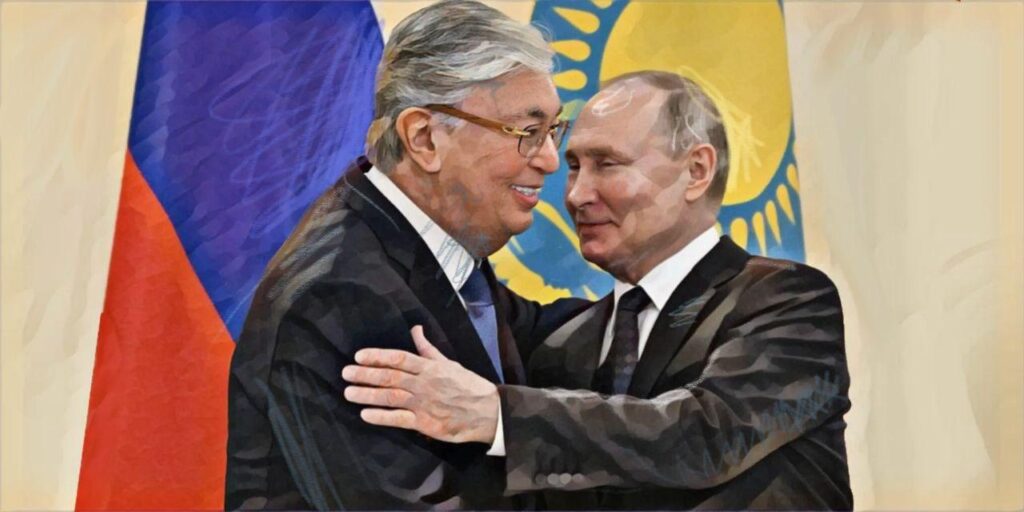
In a striking display of diplomatic balancing, Kazakhstan’s President Kassym-Jomart Tokayev ended 2025 with a high-profile state visit to Moscow, where he and Russian President Vladimir Putin signed a declaration elevating bilateral relations to a comprehensive strategic partnership and alliance.

The visit came just days after Tokayev returned from Washington, where he participated in a summit with U.S. President Donald Trump, and the September meeting with Xi Jinping in Tianjin. Back-to-back high-level diplomatic engagements have underscored Tokayev’s rising stature as a regional statesman navigating the complex geopolitical landscape between Russia and the West, representing a somewhat diplomatic ‘hat trick’ for the Kazakh leader.

Kazakhstan’s multi-vector foreign policy has long sought to maintain balanced relations with Russia, China, the United States, and Europe. This approach allows Astana to position itself as a neutral and pragmatic actor even during periods of geopolitical tension, and explains why Tokayev is one of the few leaders trusted by both Washington and Moscow.

Amid speculation in global media about Kazakhstan’s accession to the Abraham Accords, Tokayev’s stop in Moscow has drawn attention not only for its symbolism but also for its possible behind-the-scenes diplomacy. Kazakhstan’s agreement to sign the Abraham Accords has generated considerable discussion within diplomatic circles. For Washington, Astana’s endorsement signals alignment with U.S. regional objectives in the Middle East, while for Russia, it raised questions about Kazakhstan’s strategic leanings, making Tokayev’s immediate trip to Moscow particularly important. No Central Asian state had previously moved to formally support a U.S.-brokered Middle Eastern diplomatic framework, making Kazakhstan’s position especially noteworthy.

A Private Conversation at the Kremlin

Russian political analyst Arkady Dubnov highlighted the significance of an informal, private meeting between Tokayev and Putin ahead of their official talks.

“The presidents exchanged brief greetings, and then Putin invited his guest to his Kremlin apartment for a private conversation,” Dubnov noted. Tokayev later confirmed that the tête-à-tête lasted over two-and-a-half hours.

Dubnov suggested that such discretion may point to confidential messages being relayed. He cited recent remarks by Finnish President Alexander Stubb, who visited Astana shortly before Tokayev’s Washington trip. Stubb reportedly said that Tokayev could serve as a conduit for communication between Trump and the Kremlin.

Before this, only Chinese President Xi Jinping had been granted such extended privacy with Putin, Dubnov emphasized.

Tokayev is one of the few leaders who has maintained uninterrupted working relationships with both Western capitals and Moscow throughout recent years. His neutral stance on the Ukraine conflict, refusal to recognize breakaway territories, and active participation in U.S.-backed initiatives – combined with Kazakhstan’s deep economic and security links with Russia – place Tokayev in a uniquely credible position. Neither side views him as fully aligned with the other, which increases his utility as a channel for sensitive political messaging.

Kazakhstan as a Strategic Messenger?

Kazakh political analyst Andrei Chebotarev also underscored the potential geopolitical significance of the Tokayev-Putin meeting.

“Most likely, the Russian president was interested in the details of his Kazakh counterpart’s recent visit to the U.S. and his talks with Donald Trump. The interlocutors may also have discussed the prospects for resolving the armed conflict between Russia and Ukraine and Kazakhstan’s possible participation in this process,” Chebotarev suggested.

Of the 14 documents signed during the visit, the most consequential was the declaration establishing a comprehensive strategic partnership. The 42-point document outlines cooperation across politics, security, economic integration, advanced industries, and cultural initiatives.

Chebotarev highlighted the parties’ joint interest in enhancing the Collective Security Treaty Organisation (CSTO), particularly in boosting the combat readiness of its forces and developing biological security cooperation. The declaration also calls for deeper coordination among Eurasian security blocs, including the CSTO, CIS, and SCO, to build a “system of equal and indivisible security.”

Another major outcome, Chebotarev noted, was an agreement to develop a unified Eurasian transport and logistics network. This would link the North-South International Transport Corridor with the Middle Corridor and other regional trade routes. The move comes after the arrival of a Russian freight train at Iran’s Aprin dry port on November 8, marking a key development in overland trade through Kazakhstan.

Symbolism and Strategic Messaging

Political analyst Daniyar Ashimbayev described the summit as a powerful demonstration of bilateral respect, noting that, “The host country showed such a high level of hospitality and protocol that even seasoned diplomats were touched. This is a signal to the outside world: we are talking about an equal and mutually respectful alliance,” Ashimbayev said. 

Ashimbayev and other observers suggest that Tokayev’s visit had a dual purpose: to reinforce the depth of Kazakhstan’s alliance with Russia and to potentially serve as a diplomatic bridge to the United States.

Notably, Russian Foreign Minister Sergey Lavrov was absent from the talks, a significant detail given the formal nature of the visit. According to Kommersant, the absence was “by agreement,” raising questions about the Kremlin’s confidence in its traditional diplomatic channels. Lavrov also missed a Security Council meeting on November 5.

Lavrov’s absence from the talks is seen by many analysts as extraordinary. By protocol, the Russian foreign minister typically attends all high-level bilateral negotiations with heads of state. His second consecutive absence has prompted speculation that the Kremlin is seeking more direct presidential channels at a time of heightened distrust toward traditional diplomatic structures.

A Possible Mediator Between Nuclear Powers?

Tokayev’s unique diplomatic positioning, trusted in both Washington and Moscow, has prompted speculation about a potential mediator role between Trump and Putin. As global tensions persist and the war in Ukraine grinds on, Kazakhstan’s president may find himself navigating high-stakes diplomacy at a level unprecedented for a Central Asian leader.

Whether Tokayev can help bridge divides between the world’s two foremost nuclear powers remains uncertain. But the extended private talks in the Kremlin, and the timing of his back-to-back visits, suggest that he may be one of the few leaders capable of speaking credibly to both sides.

If Tokayev does assume the role of an informal intermediary, it would mark the most significant diplomatic moment for Kazakhstan since independence. At a time when communication between Washington and Moscow has become exceptionally limited, even indirect channels carry weight. Whether this potential role develops further will depend not only on personal trust between the leaders but also on Kazakhstan’s ability to maintain its delicate balance amid growing strategic confrontation.