• KGS/USD = 0.01144 0%
  • KZT/USD = 0.00193 -0%
  • TJS/USD = 0.10811 -0.28%
  • UZS/USD = 0.00008 0%
  • TMT/USD = 0.28490 0%
  • KGS/USD = 0.01144 0%
  • KZT/USD = 0.00193 -0%
  • TJS/USD = 0.10811 -0.28%
  • UZS/USD = 0.00008 0%
  • TMT/USD = 0.28490 0%
  • KGS/USD = 0.01144 0%
  • KZT/USD = 0.00193 -0%
  • TJS/USD = 0.10811 -0.28%
  • UZS/USD = 0.00008 0%
  • TMT/USD = 0.28490 0%
  • KGS/USD = 0.01144 0%
  • KZT/USD = 0.00193 -0%
  • TJS/USD = 0.10811 -0.28%
  • UZS/USD = 0.00008 0%
  • TMT/USD = 0.28490 0%
  • KGS/USD = 0.01144 0%
  • KZT/USD = 0.00193 -0%
  • TJS/USD = 0.10811 -0.28%
  • UZS/USD = 0.00008 0%
  • TMT/USD = 0.28490 0%
  • KGS/USD = 0.01144 0%
  • KZT/USD = 0.00193 -0%
  • TJS/USD = 0.10811 -0.28%
  • UZS/USD = 0.00008 0%
  • TMT/USD = 0.28490 0%
  • KGS/USD = 0.01144 0%
  • KZT/USD = 0.00193 -0%
  • TJS/USD = 0.10811 -0.28%
  • UZS/USD = 0.00008 0%
  • TMT/USD = 0.28490 0%
  • KGS/USD = 0.01144 0%
  • KZT/USD = 0.00193 -0%
  • TJS/USD = 0.10811 -0.28%
  • UZS/USD = 0.00008 0%
  • TMT/USD = 0.28490 0%
10 December 2025

Uzbekistan Looks to Turkmen Gas to Tackle Winter Energy Crisis

Uzbekistan has faced persistent gas and electricity shortages for over 25 years, leaving many citizens to rely on stoves and makeshift heating systems to stay warm during harsh winters. In 2024 alone, 82 people have died, and another 80 remain in serious condition due to carbon monoxide poisoning.

The situation could improve if Uzbekistan shifts to importing natural gas from Turkmenistan. Turkmenistan recently declined to renew its gas contract with Russia, citing its strategy to diversify exports and secure better prices. With natural gas reserves estimated at 17.5 trillion cubic meters, Turkmenistan is a regional energy powerhouse, supplying significant volumes to China while maintaining domestic stability.

Meanwhile, Uzbekistan’s gas production has declined, exacerbating its energy crisis. Despite ranking 17th globally in terms of gas reserves, Uzbekistan produced only 33.48 billion cubic meters of natural gas between January and September 2024 – 4.8% less than during the same period last year. At the same time, energy demand is rising due to population growth and a 6% economic expansion.

Experts suggest that prioritizing imports from Turkmenistan could alleviate Uzbekistan’s energy woes. Former Energy Minister Anvamirzo Khusainov highlights the 1,500-kilometer border shared by the two countries and the existing pipeline infrastructure that could facilitate Turkmen gas imports. However, such a decision would require Uzbekistan to reduce its historical reliance on Russia – a move that carries significant political implications.

The approaching winter may force Tashkent to make this critical choice. Reliable and cost-effective gas supplies from Turkmenistan could provide much-needed relief and help Uzbekistan address its longstanding energy shortages.

British Think Tank: Kazakhstan is a Key Strategic Partner for the UK

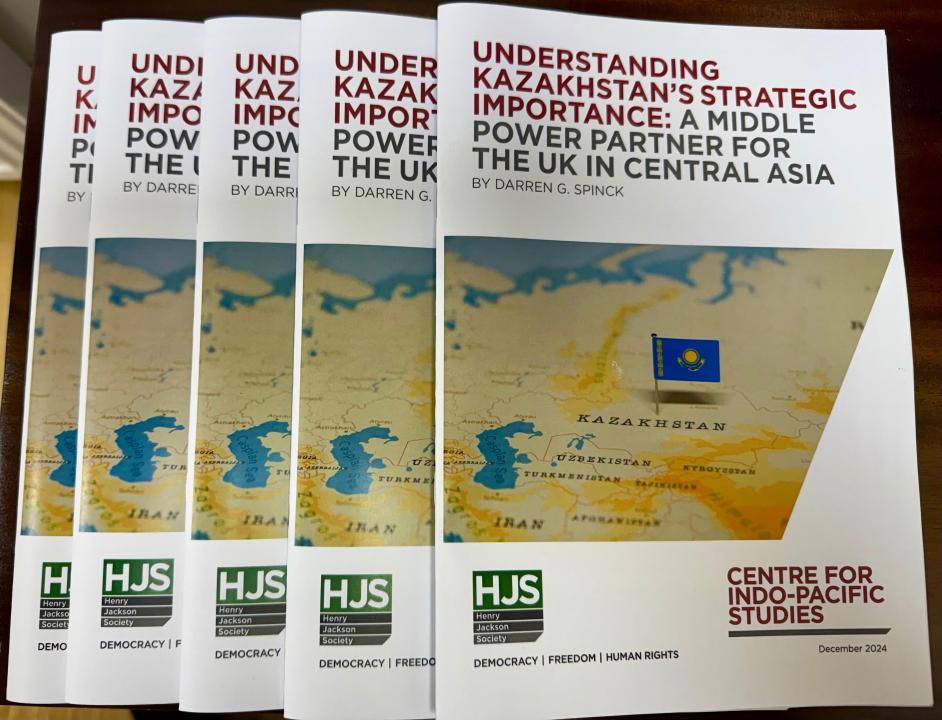
On December 10, the British think tank the Henry Jackson Society presented its research report, “Understanding Kazakhstan’s Strategic Importance: A Middle Power Partner for the UK in Central Asia,” in the UK Parliament.

The event was attended by members of both houses of the British Parliament and featured speeches by prominent figures, including Nusrat Ghani MP, Principal Deputy Speaker of the House of Commons; Magzhan Ilyassov, Ambassador of Kazakhstan to the United Kingdom; Darren Spinck, the report’s author and associate research fellow at the Henry Jackson Society; Ekaterina Miroshnik, Director for Eurasia Infrastructure at the European Bank for Reconstruction and Development (EBRD); and Enzo Satkuru-Granzella, business analyst at the UK Critical Minerals Association.

Exploring Kazakhstan’s Strategic Role

Darren Spinck emphasized that the report examines Kazakhstan’s evolving role as a middle power on the international stage, highlighting its advancements in political reforms and sustainable economic development. It also explores opportunities for enhancing trade and investment between the UK and Kazakhstan, particularly in critical minerals and transit-transport routes. The report includes recommendations for the British Government and Parliament to strengthen this partnership.

Nusrat Ghani MP shared her personal efforts to deepen UK-Kazakh relations during her time as Business and Trade Minister (2022–2024) and Minister of State at the Foreign Office (2024). She expressed confidence that the report would provide members of Parliament with valuable insights into Kazakhstan’s importance as a global actor and as a key partner for the UK in Central Asia.

Kazakhstan’s Global Diplomacy and Strategic Partnerships

Ambassador Magzhan Ilyassov highlighted Kazakhstan’s balanced, multi-vector foreign policy, which aims to safeguard national interests while promoting global security and dialogue. He provided updates on Kazakhstan’s international initiatives, including efforts on nuclear non-proliferation, the proposal to establish an International Agency for Biological Safety (IABS), and the creation of a UN Regional Hub for Sustainable Development Goals (SDGs) in Central Asia and Afghanistan.

Ekaterina Miroshnik from the EBRD underscored Kazakhstan’s role in the Trans-Caspian International Transport Route (TITR), also known as the Middle Corridor. This trade route connects China with Europe and strengthens economic ties between Europe, Central Asia, and China. She highlighted the EBRD’s involvement in Middle Corridor projects, which are key to improving regional trade infrastructure.

Enzo Satkuru-Granzella of the UK Critical Minerals Association noted Kazakhstan’s vast potential to contribute to the global supply chain of critical minerals. With its rich resource base, well-developed infrastructure, and skilled workforce, Kazakhstan is poised for long-term collaboration. He pointed to the Roadmap on critical minerals, signed between Kazakhstan and the UK in March 2024, as a solid foundation for mutual cooperation.

Strengthening Bilateral Relations

Participants at the event acknowledged Kazakhstan’s increasing geostrategic importance as a middle power and explored new avenues for strengthening ties between the two nations. A significant milestone in the bilateral relationship was the Strategic Partnership and Cooperation Agreement, signed by Kazakhstan’s Foreign Minister Murat Nurtleu and the UK’s David Cameron in Astana on April 24, 2024.

Great Britain remains one of Kazakhstan’s top foreign investors. Since 2005, the UK has invested $17 billion in Kazakhstan’s economy, including $795 million in 2023 alone. This investment underlines the robust economic partnership between the two countries.

Uzbekistan Energizes Growth with $7 Billion in New Energy Projects

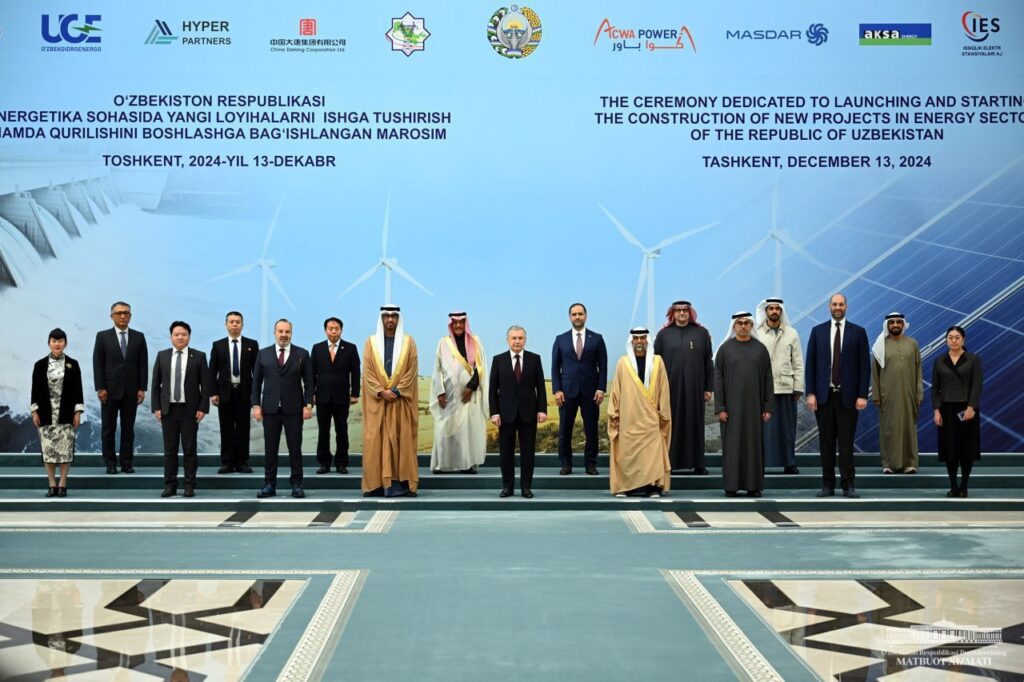
On December 13, Uzbekistan’s President Shavkat Mirziyoyev inaugurated operations for 18 new energy facilities and launched the construction of six additional projects. Together, the 24 initiatives represent an investment of over $7 billion.

The ceremony marked a significant milestone for Uzbekistan’s energy sector, connecting the national power grid to five solar and wind power plants with a combined capacity of approximately 2,300 megawatts. Additionally, five high-voltage substations were commissioned in the Bukhara, Navoi, Namangan, and Tashkent regions. The country’s first energy storage system, with a capacity of 300 megawatts, began operations in the Andijan and Fergana regions.

New power facilities launched include a 400-megawatt plant in Kashkadarya, a modern cogeneration plant in Tashkent, and four small hydroelectric power plants in Andijan, Surkhandarya, and Tashkent regions. Mirziyoyev also initiated construction on six power-generating facilities with a total capacity of 2.5 gigawatts in the Fergana, Samarkand, Navoi, and Tashkent regions, as well as in the city of Tashkent.

These projects will collectively produce an additional 9.5 billion kilowatt-hours of electricity, sufficient to power more than 4 million households. They are also expected to save 2.5 billion cubic meters of natural gas and reduce emissions by 4.6 million tons annually.

Foreign Investment Fuels Energy Transformation

Mirziyoyev highlighted the pivotal role of foreign investment in these initiatives. Companies from the United Arab Emirates, Saudi Arabia, Turkey, China, and Germany are leading the projects, supported by international financial institutions such as the Asian Development Bank, the Islamic Development Bank, the European Bank for Reconstruction and Development, and the World Bank.

Uzbekistan aims to produce 84 billion kilowatt-hours of electricity in 2025—an increase of 25 billion kilowatt-hours compared to 2016. Over the past five years, the energy sector has attracted $20 billion in foreign direct investment. Solar and wind power plants with a total capacity of 3,500 megawatts have already been launched, producing 10 billion kilowatt-hours annually and raising the share of “green” energy to 16% of the total energy mix.

The country’s GDP reached a historic $100 billion last year, and plans are underway to double this to $200 billion by 2030. Such economic growth will drive a 1.5-fold increase in electricity demand over the next five years.

Key Priorities for Uzbekistan’s Energy Sector

Mirziyoyev outlined three strategic priorities for the energy sector:

  1. Expansion of Renewable Energy
    By 2030, Uzbekistan plans to add 19,000 megawatts of renewable energy capacity, increasing the share of “green” energy to 54%. In 2025, the country will commission 18 solar and wind power plants with a combined capacity of 3,400 megawatts, along with energy storage systems totaling 1,800 megawatts. This is expected to boost “green” energy production to 12 billion kilowatt-hours annually.
  2. Liberalization of the Electricity Market
    Uzbekistan will continue to liberalize its electricity market, with plans to establish a competitive wholesale electricity market by the end of 2025. Public-private partnerships will be introduced in energy distribution, and $4 billion will be invested to modernize power grids across the country.
  3. Expanding International Cooperation
    The government will enhance international collaboration in renewable energy, building on recently signed agreements with Kazakhstan, Azerbaijan, and Saudi Arabia. These partnerships aim to export “green” energy to Europe, positioning Uzbekistan as a key player in global renewable energy trade.

A Vision for the Future

Uzbekistan’s ambitious energy initiatives underscore its commitment to sustainable development and economic growth. By leveraging foreign investment, fostering innovation, and expanding renewable energy capacity, the country is positioning itself as a regional leader in “green” energy while meeting the rising demands of its rapidly growing economy.

Akylbek Japarov Dismissed as Kyrgyzstan’s Cabinet Chief

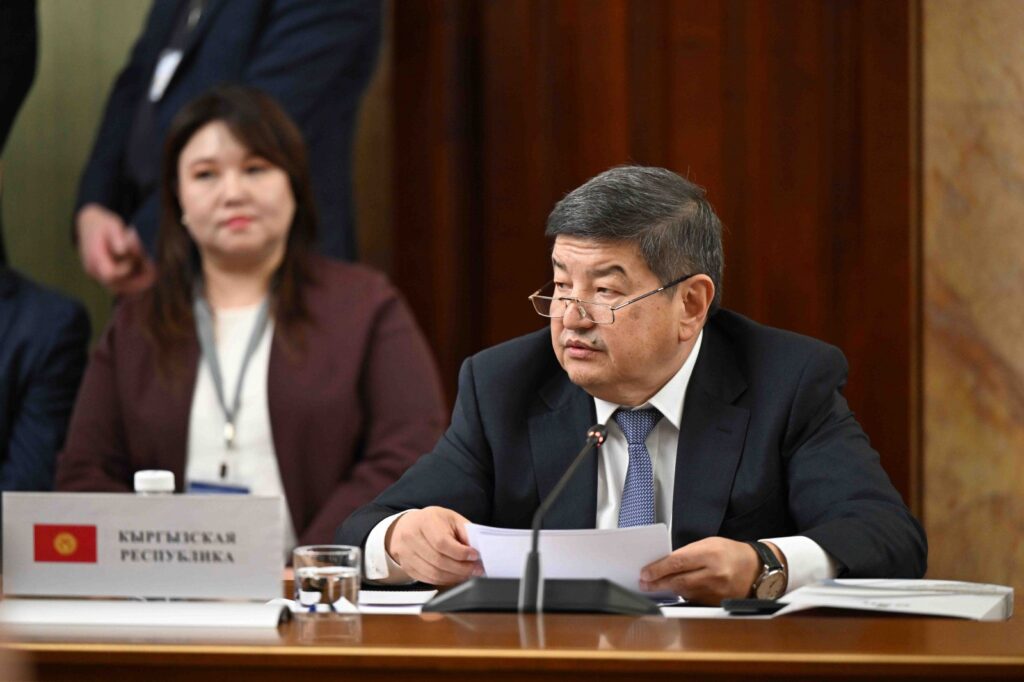
On December 16, Kyrgyzstan’s head of the Cabinet of Ministers and Presidential Administration, Akylbek Japarov was dismissed from his position. Sources within the presidential administration confirmed the news to The Times of Central Asia.

According to reports, President Sadyr Japarov has signed a decree formalizing the resignation. Akylbek Japarov is expected to be appointed as an advisor to the president. In the interim, Adylbek Kasymaliev, the first deputy head of the Cabinet of Ministers, will serve as acting prime minister. The appointment of a permanent successor has yet to be announced.

After a long political career including, holding posts under former president’s Akayev an Bakiev, Akylbek Japarov’s return to the forefront of Kyrgyz politics under President Japarov began in 2021, when he was appointed as an advisor on financial and economic issues. He later served as Minister of the Economy and Commerce, and as Deputy Chairman of the Cabinet of Ministers. On October 13, 2021, he assumed the dual role of head of the Cabinet of Ministers and head of the Presidential Administration, a position he held until his dismissal.

Akylbek Japarov’s tenure as head of government stands out for its longevity. Since Kyrgyzstan gained independence in 1991, the country has seen 33 prime ministers, many of whom served for less than a year, whilst some held office for only a few days. In this context, Akylbek Japarov’s relatively long tenure of more than three years marks a significant achievement in Kyrgyz political history.

From 2000 to 2005, Akylbek Japarov served as a deputy in the Jogorku Kenesh (parliament). Over the years, he held various key positions, including first deputy prime minister, deputy, and chair of the Committee on Budget and Finance. Akylbek Japarov gained particular recognition during his tenure as Minister of Economy and Finance for championing the controversial idea of passports for livestock. This initiative aimed to help farms export meat by providing identification for livestock, thereby improving traceability and quality standards.

New Train Connects Astana and Borovoye Resort in Kazakhstan

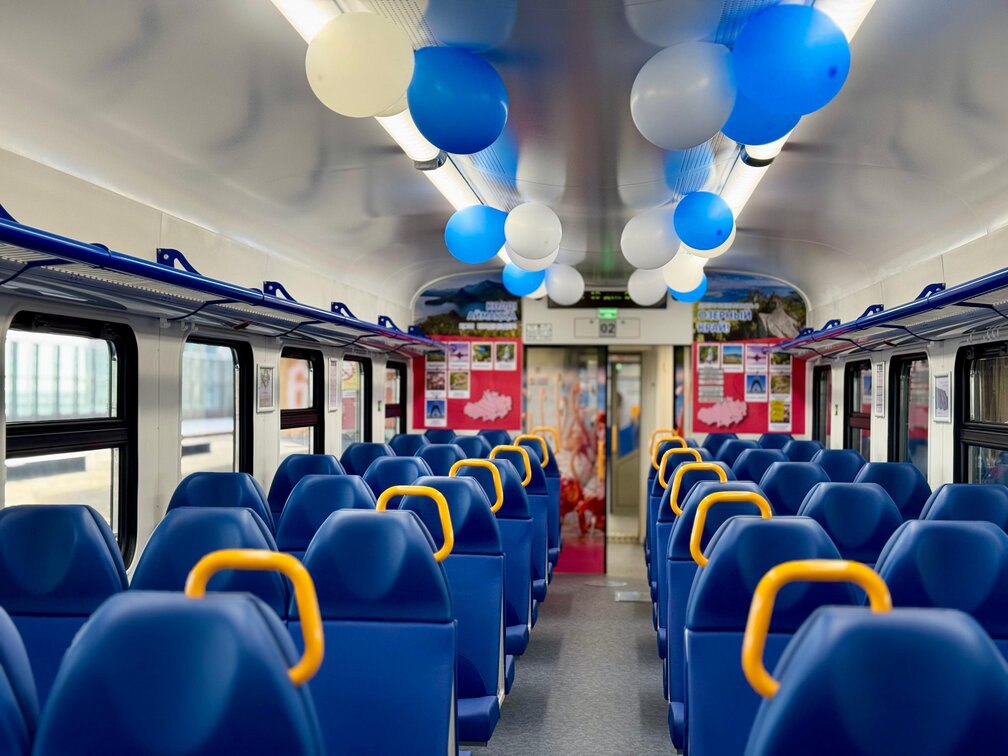
Kazakhstan’s national railways company, Kazakhstan Temir Zholy (KTZ), has announced the launch of a new electric train connecting the capital, Astana, and Borovoye, one of the country’s most popular year-round resorts.

Borovoye is the widespread and commonly used Russian name of the Burabay National Park, located just 250 kilometers north of Astana.

The new train will take passengers from Astana to Borovoye in just 2 hours and 26 minutes, without any stops.

The train, consisting of six modern domestically manufactured carriages for a total of 574 passengers, will run five days a week. It is equipped with USB sockets, Wi-Fi, and bicycle racks. For passengers with disabilities, it has lifts and places for wheelchairs.

Nurtas Karipbayev, Chairman of the Tourism Industry Committee at Kazakhstan’s Ministry of Tourism and Sports, commented: “The launch of a new tourist train is an important step in the development of domestic tourism and the creation of new opportunities for travel in Kazakhstan. We are confident that this train will become a favorite way for residents and guests of our country to get to one of its most beautiful resorts”.

According to the Ministry of Tourism and Sports, over the first nine months of 2024, the number of domestic tourists traveling inside Kazakhstan increased by 562,000 and reached 6 million. The number of foreign visitors was 11.5 million, almost twice as much as in the same period in 2023.

Uzbek Boxer Asadullaev Wins Title, Then Disqualified for Biting

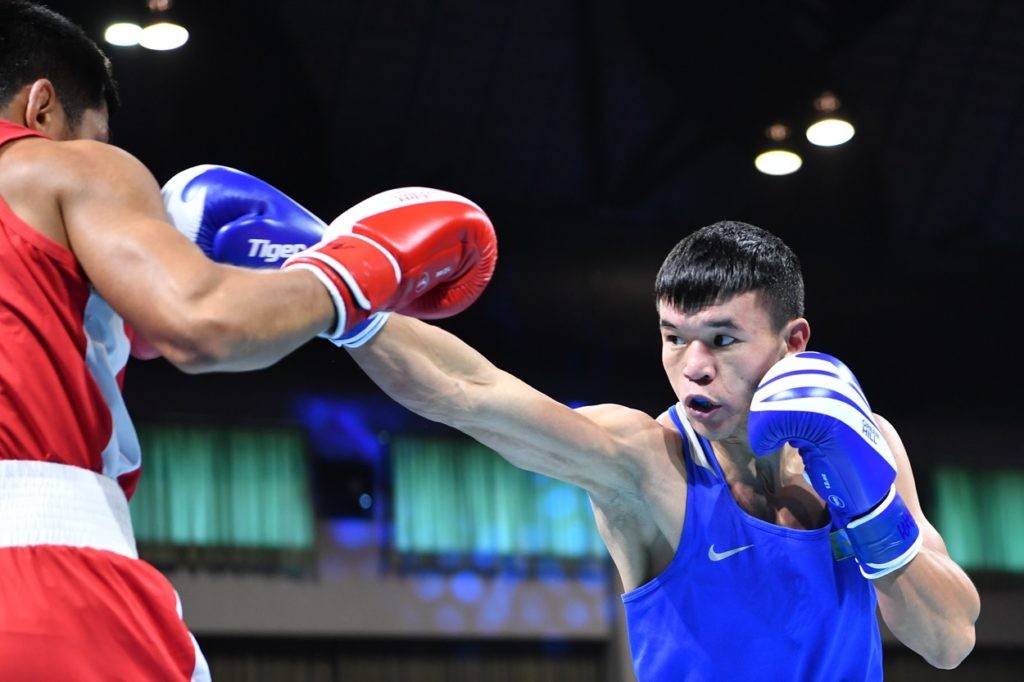
The Asian Boxing Confederation has stripped Uzbek boxer Khavasbek Asadullaev of his winner’s title at the ASBC Asian Elite Boxing Championships, ruling that he bit his Kazakh opponent during the light middleweight (71kg) final bout in Chiang Mai, Thailand.

Kazakh boxer Ablaikhan Zhussupov has been declared the champion following the disqualification of Asadullaev, the confederation said in a statement. It said the ruling came after a protest from the Kazakh Boxing Federation over the foul, which was overlooked by the referee during the fight on Wednesday. 

After the ruling, the Kazakh federation noted on Telegram that Serbian referee Jovana Ugrenovic had not issued any warning to Asadullaev about the violation when it occurred, and that it had photo and video evidence of the foul. The federation said Asadullaev was “suspended from competitions for a certain period.” 

Some media reports said Asadullaev bit Zhussupov on the shoulder. 

Video of the fight shows Asadullaev being declared the winner after a split decision, embracing his opponent and skipping across the ring in triumph.