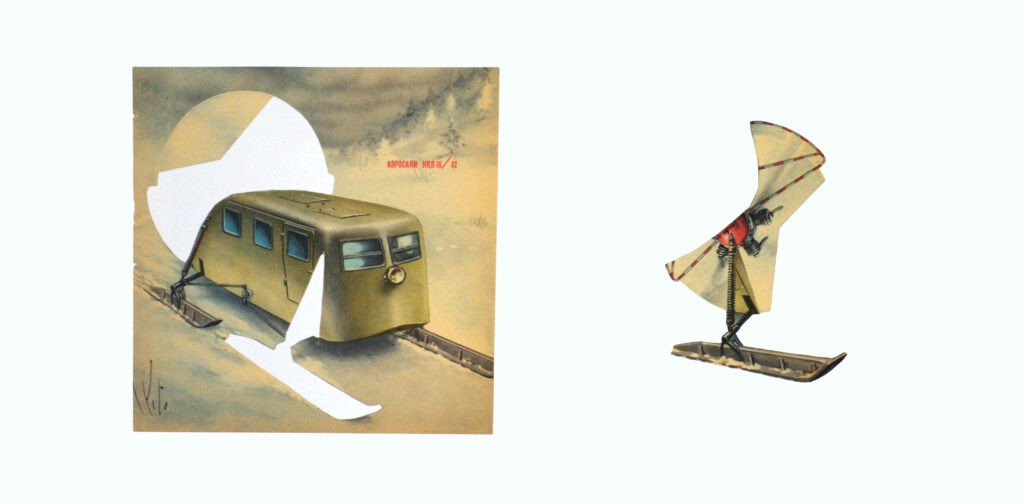
Have you ever had that feeling of “Future Nostalgia” – as Dua Lipa would put it – when looking at old sci-fi movies that imagined a future that never came to pass? The fact that this future didn’t materialise might be as might be seen as both a blessing and a disappointment, as artist Alexander Ugay has us reflecting upon with his Parisian debut.
Born in Kazakhstan to a Korean family deported under Stalin’s regime, Ugay’s work is heavily inspired by his own experience and is layered with echoes of ancestral trauma, the faded promise of Soviet modernity, and the flickering ghost of a future once imagined but that never fully came to fruition.
A child of engineers and inventors, Ugay grew up among circuits and cyanotypes, and in his art, he uses materials such as 8mm film and VHS tape. With this vintage spirit, his body of work looks at the past to speak of the present, and posits a critique of the techno-utopianism of the Soviet 1970s, as much as today’s AI-driven image culture.
In his new show, More than Dreams, Less than Things, at NIKA Project Space Paris, Ugay looks at the origins of image-making both literally and philosophically. Inspired by Ibn al-Haytham’s Book of Optics, the artist reanimates the ancient camera obscura, letting light seep through the book’s pages to birth abstract images: faded records of a presence.
The exhibition, which opened on March 16, explores the tension between technological progress and the way this can be disrupted by the power of imagination and poetry – eminently human things – by looking at the intersection of photography, technology, and diasporic memory.
His show, curated by Elena Sorokina, situates an emergence of Central Asian narratives coming more and more to the forefront of the international art and cultural world of Europe. Through the lens of Soviet futurism, Ugay explores a broader vision of seeing in an age where so much remains invisible.
TCA spoke with Ugay about the way he approaches his art, his sources, and how he conceives images not as finished objects but as processes — mutable, unstable, and deeply human.
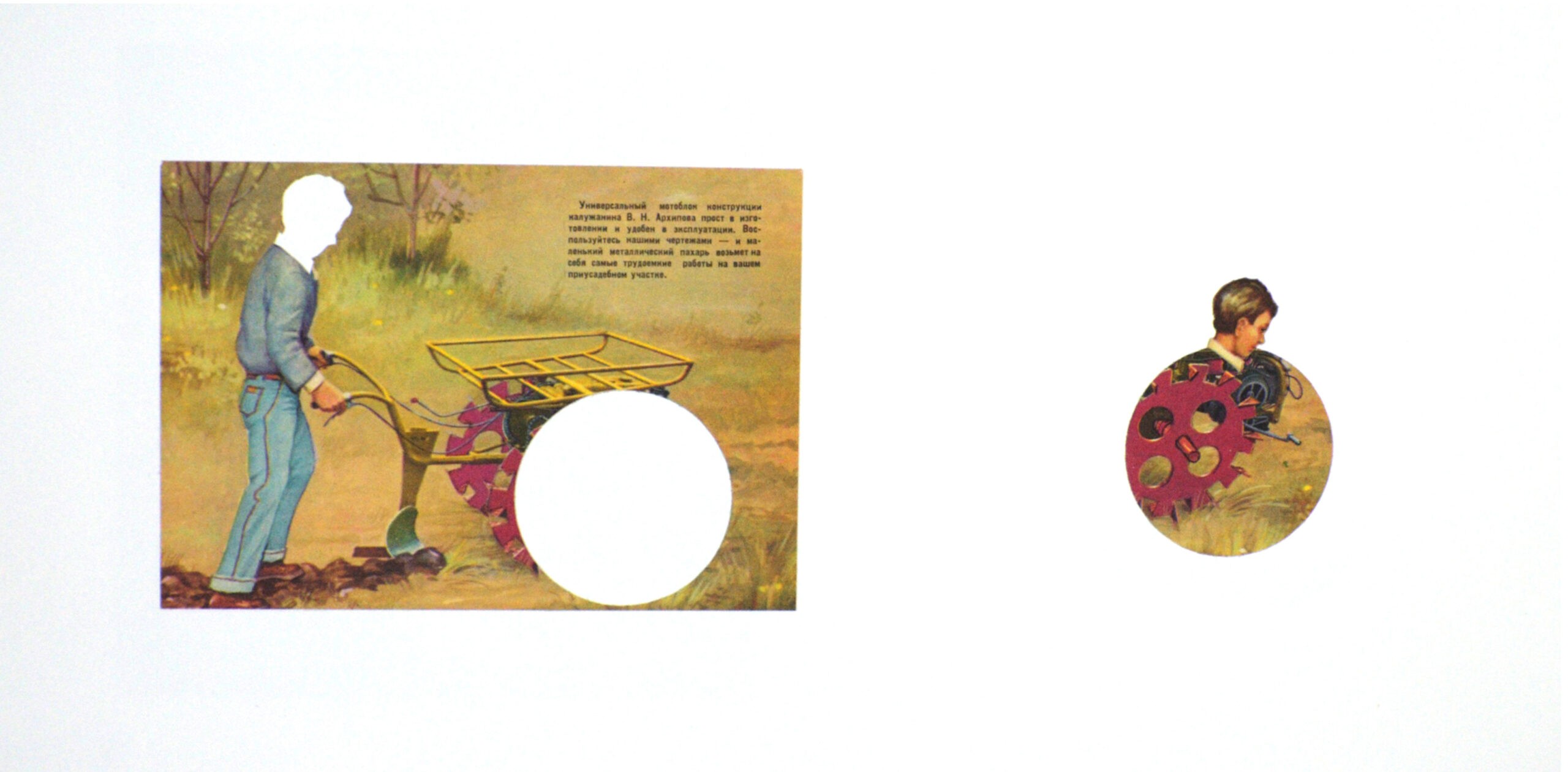
03_Alexander Ugay, More than Dreams, Less than Things. Courtesy of the artist
TCA: Where does the title for your new show, More than Dreams, Less than Things, come from?
The title came about after reading Henri Bergson’s book, Matter and Memory. I really liked the idea that an image is not only the relationship between absence and presence but also intensity and density. This idea made up for my dissatisfaction with the notion of resolution in photography.
The title, in this case, is not just a definition of the image but a key to understanding its substantive basis. The image is the surface of the ‘grand contract’ between necessity and freedom, memory and matter, entropy and being.
TCA: In More than Dreams, Less than Things, you use the camera obscura technique. How does this historical process relate to your exploration of the materiality of images in this exhibition?
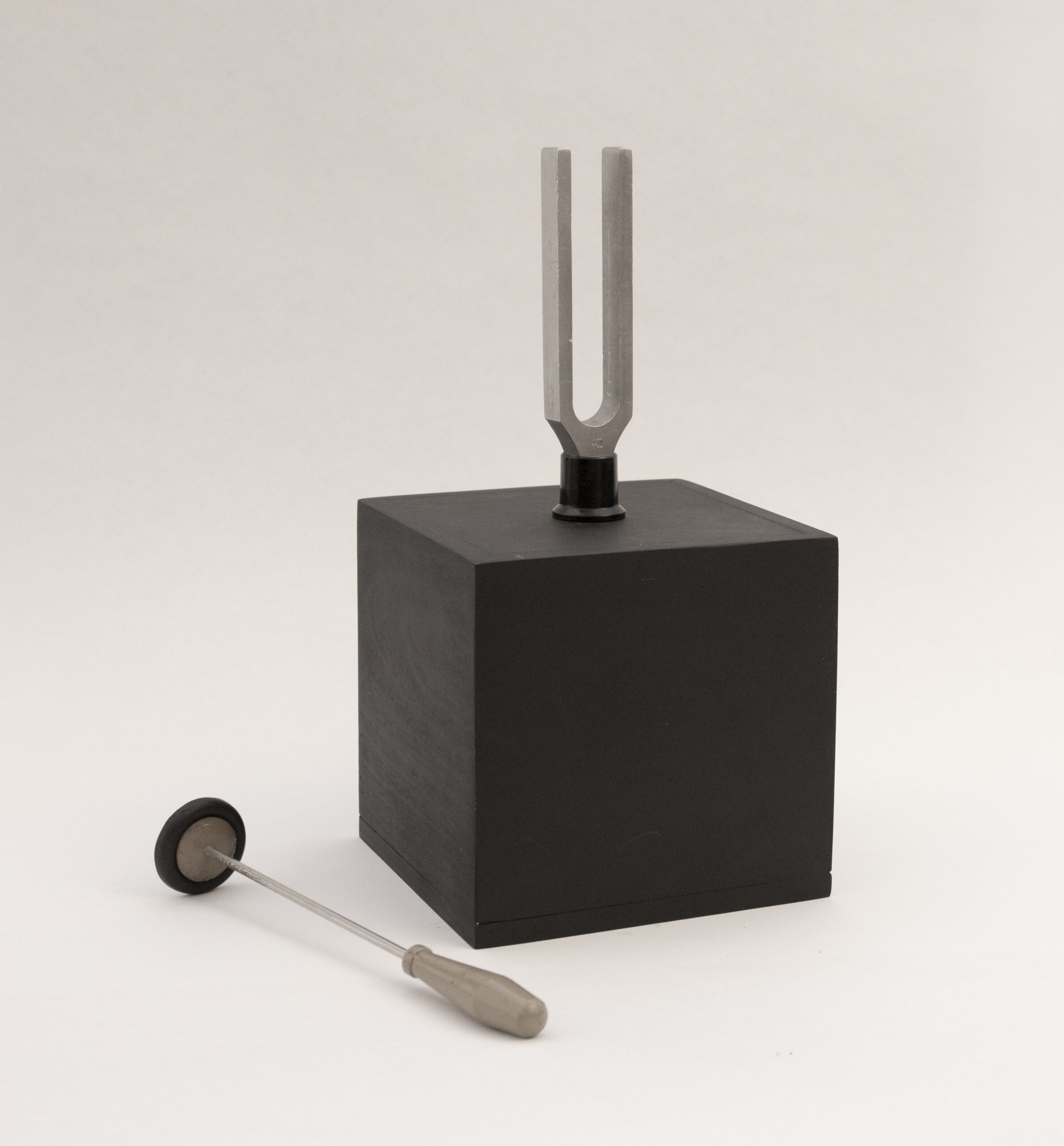
Light and the way of its optical focusing remain unchanged; in this sense, the camera obscura differs little from modern optical systems. What is important is the corpuscular-wave dualism, which, in the language of computer technology, allows light to be both hardware energy and software information at the same time.
It softens binary oppositions of virtual and material through transition to states of forcefields, intensities, and intuition. The camera obscura, in this case, is not only a technical device but a field of tension. As hardware, it transforms energy into information. As software, the camera forms a certain quality of information, a unique ratio of the figurative, abstract, and symbolic.
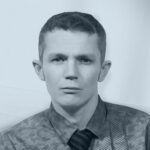
Alexander Ugay. Courtesy of the artist
TCA: Can you trace the beginning of your interest in antiquated futuristic machines, which you find mostly depicted in scientific magazines from the 1970s-80s?
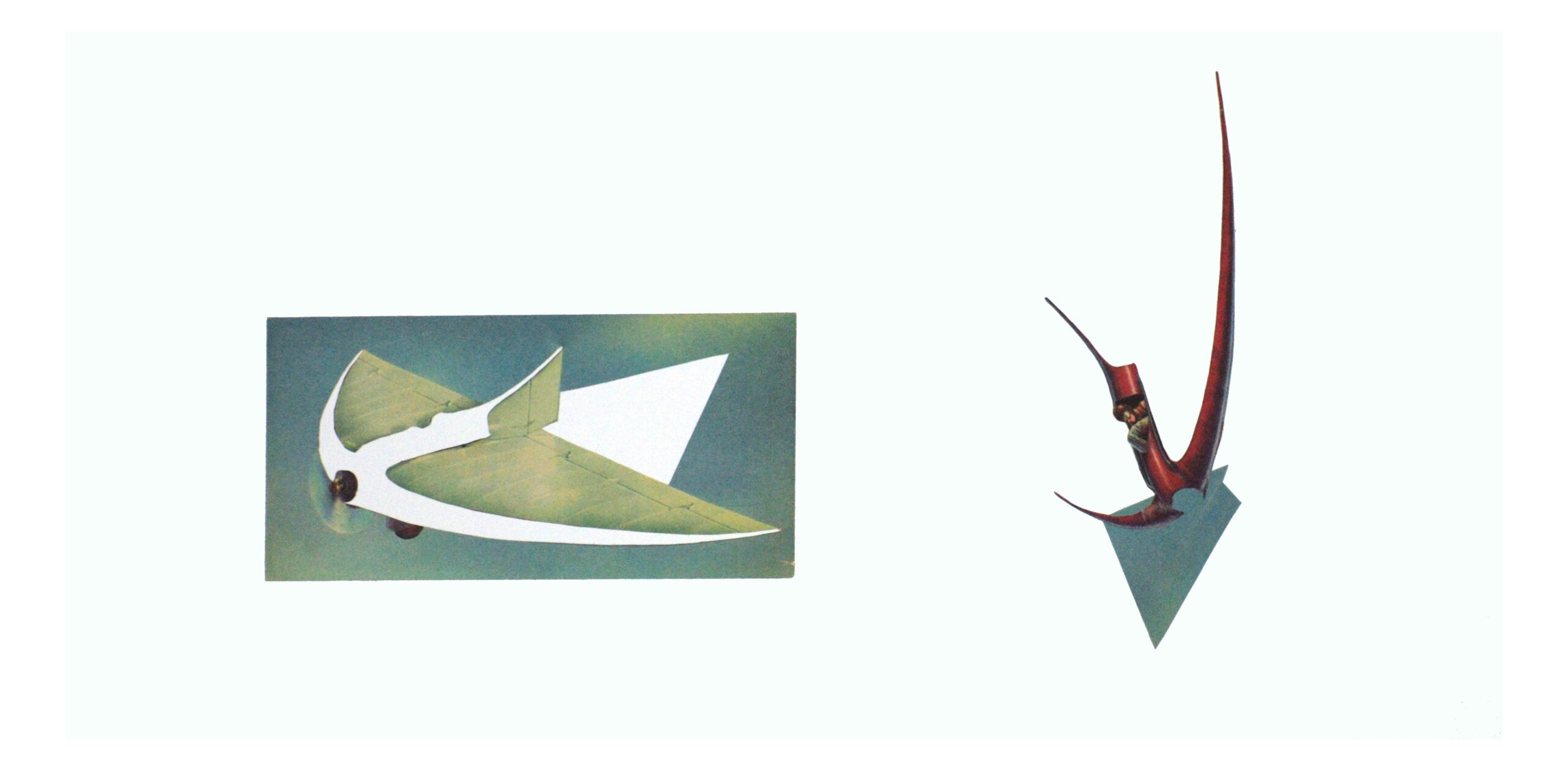
The interest arose most naturally [as] my father was an engineer and inventor. From early childhood, I spent time in his workshop, where there were many interesting objects and constructions in addition to magazines.
It should be noted that the pretensions and intents were not nostalgic or futuristic. Most of the materials and technology were available in one way or another. All things invented or made were paired with practical applications and actually used in everyday life.
It seems to me that it was in that decade that ideology locked people into an unsettling present where the traumatic, uncomfortable past was pushed to the margins of history, and the future was determined by the inevitability of communism. Therefore, the phenomenon of mass interest in invention at that time can be seen as a symptom, as a reaction to the impossibility of working through the past and the lack of alternative spaces for the future.
Alexander Ugay, More than Dreams, Less than Things. Courtesy of the artist
TCA: The exhibition draws on Ibn al-Haytham’s Book of Optics. How did this text inform your approach to combining light, geometry, and abstract imagery in your work?
Alhazen combined the extra-missionary concept of vision (the eye emits visual rays that probe reality) proposed by Euclid with the intra-missionary concept (reality is grasped by the eye through projection on the retina), thus creating the modern theory of vision. If the act of perception/interpretation changes reality itself, then indexical tactility and mimetic grasping is a process of computability and rendering.
Reality then appears as a kind of interface or informational surface of an inaccessible depth.
The Book of Optics established clarity, sharpness, and similarity as the principles that have guided the development of optics and optical media over the last thousand years. All these properties certainly remain relevant in our time, but often not as criteria of truth, but of computability.

Alexander Ugay. Book of Optics. Courtesy of NIKA Project Space
TCA: In your new works, you explore both the work of German theoretician Heisenberg – especially his uncertainty principle – and psychoanalyst Lacan’s theory of the signifier. How do these converge in your photographic practice?
According to the uncertainty principle, it is impossible to measure the position of a particle and its momentum at the same time. Similarly, in psychoanalysis, the object of desire (particle) never coincides with the desire itself (impulse).
Continuing the line of structural similarity, we can say that the unconscious, phantasm, thinking itself have a wave nature while the act of observation, interpretation or choice collapses all potentialities into one single possible option.
The photographic image is a collapsing of the wave function, given the fact that radical improvements in resolution, light sensitivity, and processing algorithms are ‘displacing’ the wave nature from optical media.
In this new project, I’m interested in photography not as a concept of a window or a mirror to memory but as a possible indication of a connection with the information lost after collapse.
Alexander Ugay. Portrait, courtesy of the artist
TCA: The underpinning of the exhibition is heavily charged theoretically, but does your Korean-Kazakh background directly influence your approach to art as a tool for reflecting diasporic memory?
The 1937 deportation of Koreans from the Far East to Central Asia divided time into history and memory, while the collapse of the USSR split memory into accusatory and justificatory.
Since all key assembly points, such as language, tradition, land, and ideology have been alienated or lost, the diasporic memory of the post-Soviet is ambivalent about national identity. It interrupts the silence of memory, usually not as a voice of the lost but as a defensive reaction in the form of resentment or imperial consciousness.
In my practice, I often turn to post-memory, reinvention, and generation. This allows the lost to gain matter and the material to peel off perpendicular to the arrow of time. Materiality acts as a kind of conduit/invention. The silence of memory passes into the silence of the object, which releases images that lead us along the path of unknown return.
Alexander Ugay’s More than Dreams, Less than Things solo exhibition, curated by Elena Sorokina, will be on display at NIKA Project Space Paris until May 17, 2025.