• KGS/USD = 0.01144 0%
  • KZT/USD = 0.00212 0%
  • TJS/USD = 0.10432 -0.29%
  • UZS/USD = 0.00008 0%
  • TMT/USD = 0.28490 0%
  • KGS/USD = 0.01144 0%
  • KZT/USD = 0.00212 0%
  • TJS/USD = 0.10432 -0.29%
  • UZS/USD = 0.00008 0%
  • TMT/USD = 0.28490 0%
  • KGS/USD = 0.01144 0%
  • KZT/USD = 0.00212 0%
  • TJS/USD = 0.10432 -0.29%
  • UZS/USD = 0.00008 0%
  • TMT/USD = 0.28490 0%
  • KGS/USD = 0.01144 0%
  • KZT/USD = 0.00212 0%
  • TJS/USD = 0.10432 -0.29%
  • UZS/USD = 0.00008 0%
  • TMT/USD = 0.28490 0%
  • KGS/USD = 0.01144 0%
  • KZT/USD = 0.00212 0%
  • TJS/USD = 0.10432 -0.29%
  • UZS/USD = 0.00008 0%
  • TMT/USD = 0.28490 0%
  • KGS/USD = 0.01144 0%
  • KZT/USD = 0.00212 0%
  • TJS/USD = 0.10432 -0.29%
  • UZS/USD = 0.00008 0%
  • TMT/USD = 0.28490 0%
  • KGS/USD = 0.01144 0%
  • KZT/USD = 0.00212 0%
  • TJS/USD = 0.10432 -0.29%
  • UZS/USD = 0.00008 0%
  • TMT/USD = 0.28490 0%
  • KGS/USD = 0.01144 0%
  • KZT/USD = 0.00212 0%
  • TJS/USD = 0.10432 -0.29%
  • UZS/USD = 0.00008 0%
  • TMT/USD = 0.28490 0%

Nazarbayev Agrees to Meet Belarusian President Lukashenko

Former Kazakh President Nursultan Nazarbayev has agreed to meet with Belarusian President Alexander Lukashenko, according to a statement released by the Belarusian leader’s press service.

“Today, there was a very warm, friendly conversation between the President of Belarus and the First President of Kazakhstan. Nursultan Nazarbayev cordially congratulated Alexander Lukashenko on his election victory and conveyed his sincere congratulations and greetings to the Belarusian people. Alexander Lukashenko also warmly thanked Nursultan Nazarbayev for his kind words and wishes. The Belarusian leader and the First President of Kazakhstan agreed to find an opportunity to meet and talk in the near future,” the statement read.

The meeting is part of a series of diplomatic engagements Nazarbayev has undertaken recently. In December 2024, he held a high-profile meeting with Russian President Vladimir Putin at the Novo-Ogaryovo residence. That visit sparked considerable public attention in Kazakhstan, with some parliamentarians expressing concern. Mazhilis Deputy Samat Nurtaza stated that such meetings cause him “internal anxiety.” Meanwhile, Deputy Yermurat Bapi suggested that Nazarbayev’s visit to Russia might be linked to the “Kazakhgate-2” case currently under review in the United States.

Lukashenko, who has ruled Belarus since 1994, has faced significant international criticism following his re-election on January 26, a process widely dismissed in the West as neither free nor fair. While the Belarusian Central Election Commission reported that Lukashenko secured 87.6% of the vote, the European Union and other international organizations denounced the results as “fictitious” and criticized the election for failing to meet democratic standards.

Despite the controversy, Lukashenko has received congratulations from various world leaders, including Kazakh President Kassym-Jomart Tokayev, who reportedly congratulated Lukashenko during a phone call. According to the state-run BelTA news agency, the election was monitored by 486 international observers from 52 countries, as well as over 44,000 national representatives. However, independent observers and western governments have cast doubt on the credibility of these reports.

The forthcoming Nazarbayev-Lukashenko meeting is expected to further discussions on regional and bilateral issues, though no specific details have been released.

Criticism of Kazakhstan’s Health Insurance System Reaches Parliament

Members of Kazakhstan’s Mazhilis (lower house of parliament) have voiced strong criticism of the country’s healthcare system, particularly the Social Health Insurance Fund, which they argue has lost public trust. Many citizens reportedly view the quality of medical services as unsatisfactory.

Kazakhstan operates a system of compulsory social medical insurance, wherein doctors’ services are funded through a combination of contributions from working citizens, their employers, and the state budget. These financial contributions are collected by the Social Health Insurance Fund, which then allocates the funds to medical institutions based on the volume of services provided to the population.

Speaking in Parliament, Health Minister Akmaral Alnazarova defended the system, claiming that it has led to improvements in key health and demographic indicators since its introduction.

“Today, 83% of Kazakhstanis are connected to the compulsory social health insurance system, 72% of whom are from vulnerable segments of the population. This demonstrates the availability of medical care in the country,” Alnazarova stated.

However, Mazhilis Deputy Chairman Dania Yespayeva pointed out that despite increasing healthcare budgets, public satisfaction with medical services continues to decline. According to surveys, up to 47% of Kazakhstanis consider the quality of domestic healthcare to be poor.

Deputy Askhat Aimagambetov echoed these concerns, accusing medical institutions of manipulating service statistics to secure additional funding from the Social Health Insurance Fund. He cited a case where a five-month-old child, who had not yet developed teeth, was recorded as having received dental services. Aimagambetov also claimed that hospitals sometimes charge the insurance fund for dozens of services provided to the same patient in a single day – an impossibility.

“The financing system encourages such behavior because payments are based on the quantity of services rendered, not on the effectiveness of treatment. As a result, the [Social Health Insurance Fund] has become a de facto bank for the Ministry of Health. Citizens and doctors alike have become hostages of inconsistent and poorly planned reforms, while the availability and quality of care have deteriorated. The system remains underfunded, and the resources it does have are spent inefficiently,” Aimagambetov stated.

He emphasized the need for stricter oversight of the reports submitted by medical institutions to the insurance fund for reimbursement. Currently, inspections cover only about 1% of these reports, a figure Aimagambetov described as insufficient.

Public dissatisfaction with health care is also reflected in broader trends. As previously reported by The Times of Central Asia, approximately 5% of Kazakhstanis considering emigration cite access to better medical services abroad as a primary reason.

Kyrgyzstan Cautions Citizens as Trump Targets Chicago in Migrant Crackdown

Kyrgyzstan opened a consulate in Chicago in 2022 because of the growing Kyrgyz population there. A Kyrgyz community center operates in a Chicago suburb. Kyrgyz cuisine can be sampled in the so-called “Windy City” as well.

Now the city is a focal point of U.S. President Donald Trump’s plans for the mass deportation of migrants that he says are in the country without permission, and Kyrgyzstan is warning its citizens to follow U.S. immigration law and always carry relevant documents with them.

Some people in immigrant communities in Chicago had been uneasy in the last week, expecting federal raids and arrests after Trump’s inauguration on Jan. 20. The U.S. Immigration and Customs Enforcement agency said on Sunday that operations were conducted in the city “to enforce U.S. immigration law and preserve public safety and national security by keeping potentially dangerous criminal aliens out of our communities.”

Deportations of Central Asians increased in the last year of former President Joe Biden’s term. It is unclear to what extent Trump’s deportation plan, one of his key election campaign pledges, will affect people from Kyrgyzstan and other Central Asian countries who are in the United States. Many of the people likely to be affected on Trump’s watch are from larger immigrant communities, including those with roots in Latin America.

But in an uncertain, fast-moving environment, Kyrgyzstan is warning its nationals not to take any chances.

“Due to recent changes in the United States’ immigration policy, the country’s official authorities are taking measures to stop illegal immigration at the border and identify individuals residing in the country without legal grounds,” the Kyrgyz embassy in Washington said Monday on social media.

Kyrgyzstan advised its citizens “currently in the United States or planning to travel there to strictly adhere to the new provisions of immigration laws and to carry all necessary documents confirming their legal status at all times,” according to the statement. It was accompanied by an image of a loudspeaker blaring the words: “Important message!”

Chicago officials had promised to protect migrants under a “sanctuary city” policy in which they don’t cooperate with federal deportation efforts, placing the metropolis in the crosshairs of Trump’s plan. Chicago is the third-largest city in the United States, with a population of nearly three million.

A 2023 commentary in the Chicago Council on Global Affairs quotes Nurdin Mamatzhan, president of the Kyrgyz Community Center, as saying there are more than 10,000 people from Kyrgyzstan in the Midwestern city. The number is several times higher, according to another estimate.

The Kyrgyz government provided contact details for questions about staying in the United States:

Embassy of the Kyrgyz Republic in the United States and Canada
2360 Massachusetts Avenue, NW, Washington D.C. 20008
Email: kgconsulate.washington@mfa.gov.kg
Phone: +1 202 256 2924, +1 202 449 9823, +1 202 449 9822

Consulate General of the Kyrgyz Republic in Chicago
100 North LaSalle Street, Suite 1610, Chicago, IL 60602
Email: kgconsulate.chicago@mfa.gov.kg
Phone: +1 312 929 3442, +1 312 994 2416

Bishkek Residents Can Now Monitor Air Quality in Real Time

Residents of Bishkek can now track air quality in real-time, thanks to a new initiative by Kyrgyzstan’s Ministry of Natural Resources, Ecology, and Technical Supervision in partnership with Kyrgyztelecom OJSC. Cameras have been installed at strategic locations, including Mount Boz-Boltok, south of the capital, and the Sovmin residential complex in the southern part of Bishkek.

The live camera feeds, available at online.kt.kg, provide the public with a real-time view of air quality and smog levels in the city.

According to the Ministry, the project aims to raise public awareness about Bishkek’s environmental challenges and encourage environmentally responsible behavior among residents. The initiative also serves a broader purpose by creating a database for environmental monitoring and scientific research. Additionally, the availability of real-time footage helps prevent the spread of misinformation, such as the use of outdated video materials to manipulate public opinion.

Air pollution remains a serious issue for Bishkek, a city with over one million residents. The problem worsens during winter, as many households rely on coal for heating, significantly increasing harmful emissions. Bishkek regularly ranks among the world’s top 10 most polluted cities on IQAir’s global air quality index.

This initiative marks a step toward greater transparency and public engagement in addressing Bishkek’s air quality issues. By providing residents with accessible, real-time data, authorities hope to inspire collective action to combat pollution in the Kyrgyz capital.

Satellite Internet Now Available on Astana-Almaty Train in Kazakhstan

Kazakhstan Temir Zholy (KTZ), the national railway company, has launched a pilot project to provide satellite Internet access on its trains. The new service debuted on January 25 aboard the train connecting the capital, Astana, with the country’s largest city, Almaty. Covering a 17-hour journey, the Astana-Almaty train route is one of the most popular in Kazakhstan.

Using satellite technology, passengers can now access apps such as WhatsApp, YouTube, and other video-hosting platforms throughout their trip. However, access to torrent sites and platforms enabling streaming downloads will be restricted.

The initiative is a collaboration between the Ministry of Digital Development, Innovation and Aerospace Industry, the Ministry of Transport, and Jusan Mobile, the official distributor of Eutelsat-OneWeb in Kazakhstan.

Zhaslan Madiyev, Minister of Digital Development, Innovation and Aerospace Industry, described the project as a milestone for digitalizing the country’s transportation network. “The launch of this pilot project on the KTZ train using the low-orbit satellite constellation Eutelsat-OneWeb is an important event in the digitalization of transport,” Madiyev stated. “Thanks to cooperation with partners, we have demonstrated that even in challenging conditions, it is possible to provide passengers with high-speed (50-100 Mbps) and stable internet. This achievement paves the way for further digital transformation in Kazakhstan and enhances travel comfort for our citizens.”

The pilot project also includes the introduction of several technological upgrades to improve the passenger experience. Mobile terminals for conductors have been deployed to facilitate quick ticket verification, while POS terminals allow for cashless payments in the dining car. Additionally, video surveillance systems have been installed to enhance security in railcars.

According to Anuar Akhmetzhanov, Chairman of the Board of JSC Passenger Transportation, the introduction of satellite internet is a key step in modernizing passenger services. He added that in the future, satellite internet access will be expanded to trains operating on other major routes.

Currently, internet access on Kazakh trains is available only when trains travel near cities and villages with cellular network coverage. For the vast stretches of railway running across Kazakhstan’s expansive steppes – often far from human habitation – connectivity has traditionally been unavailable. The adoption of satellite internet technology addresses this gap and ensures seamless connectivity even in remote areas.

For a country as large as Kazakhstan – it is the ninth largest in the world – railways remain a vital mode of transportation. In 2024, KTZ transported 13.6 million passengers, with the Astana-Almaty, Astana-Shymkent, Almaty-Shymkent, Astana-Semey, and Almaty-Semey routes being the most popular.

Tajikistan Nominates National Game and Stories for UNESCO Heritage List

Tajikistan is advancing efforts to preserve its cultural heritage by proposing several national traditions for inclusion on UNESCO’s Intangible Heritage of Humanity list, according to Culture Minister Matlubakhon Sattoriyon. The National Commission for UNESCO is currently reviewing these nominations.

One notable nomination is the traditional game nardbozi, similar to backgammon, which has been submitted jointly with Iran. Tajikistan is also seeking recognition for the folklore tales of One Thousand and One Nights and the Toki tradition, both of which reflect the rich oral storytelling heritage of the Tajik people.

Aminzoda Abdufatto, director of the Research Institute of Culture and Information at the Tajik Ministry of Culture, emphasized that these proposals are part of a broader strategy to preserve Tajikistan’s cultural traditions while promoting them on the global stage.

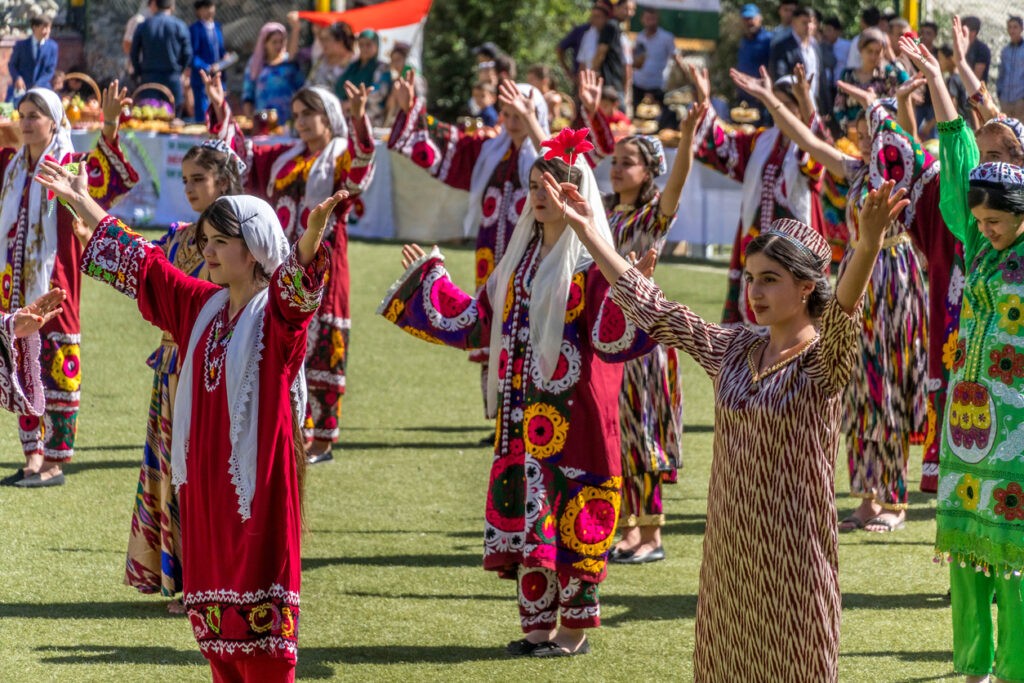
In 2024, Tajikistan successfully inscribed several cultural elements on the UNESCO Intangible Heritage List, including the Meҳrgon festival, a celebration of harvest and gratitude, and the art of playing the rubob, a stringed instrument central to the musical traditions of Tajikistan and neighboring countries such as Afghanistan, Iran, and Uzbekistan.

These recent initiatives underscore Tajikistan’s commitment to cultural diplomacy and its collaboration with neighboring countries in safeguarding shared traditions.

UNESCO’s Representative List of the Intangible Cultural Heritage of Humanity recognizes cultural practices, knowledge, skills, and expressions that communities identify as part of their heritage. This recognition helps raise awareness of cultural diversity and encourages the protection and preservation of these traditions.