• KGS/USD = 0.01144 0%
  • KZT/USD = 0.00212 0%
  • TJS/USD = 0.10456 0.19%
  • UZS/USD = 0.00008 0%
  • TMT/USD = 0.28490 0%
  • KGS/USD = 0.01144 0%
  • KZT/USD = 0.00212 0%
  • TJS/USD = 0.10456 0.19%
  • UZS/USD = 0.00008 0%
  • TMT/USD = 0.28490 0%
  • KGS/USD = 0.01144 0%
  • KZT/USD = 0.00212 0%
  • TJS/USD = 0.10456 0.19%
  • UZS/USD = 0.00008 0%
  • TMT/USD = 0.28490 0%
  • KGS/USD = 0.01144 0%
  • KZT/USD = 0.00212 0%
  • TJS/USD = 0.10456 0.19%
  • UZS/USD = 0.00008 0%
  • TMT/USD = 0.28490 0%
  • KGS/USD = 0.01144 0%
  • KZT/USD = 0.00212 0%
  • TJS/USD = 0.10456 0.19%
  • UZS/USD = 0.00008 0%
  • TMT/USD = 0.28490 0%
  • KGS/USD = 0.01144 0%
  • KZT/USD = 0.00212 0%
  • TJS/USD = 0.10456 0.19%
  • UZS/USD = 0.00008 0%
  • TMT/USD = 0.28490 0%
  • KGS/USD = 0.01144 0%
  • KZT/USD = 0.00212 0%
  • TJS/USD = 0.10456 0.19%
  • UZS/USD = 0.00008 0%
  • TMT/USD = 0.28490 0%
  • KGS/USD = 0.01144 0%
  • KZT/USD = 0.00212 0%
  • TJS/USD = 0.10456 0.19%
  • UZS/USD = 0.00008 0%
  • TMT/USD = 0.28490 0%

Kyrgyz Entrepreneurs Urged to Legalize Income

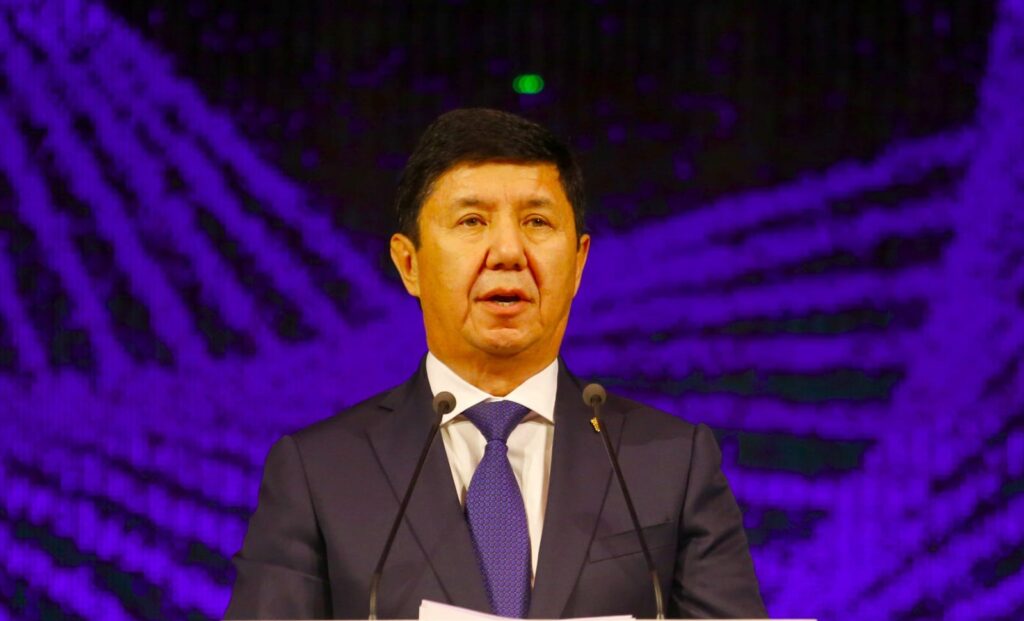
Kyrgyz entrepreneurs have been reminded to legalize their assets as the period for voluntary declaration of income and property nears its end on December 31, 2024. From January 2025, authorities are set to launch extensive inspections of businesses, prompting Temir Sariev, head of the Chamber of Commerce and Industry (CCI) of Kyrgyzstan, to call on business owners to act promptly.

The law on voluntary legalization and amnesty of assets, introduced in 2023, offers citizens a chance to declare their assets with state guarantees of protection against criminal prosecution. By participating in the program, individuals and businesses can secure the preservation of their declared assets.

As previously reported by The Times of Central Asia, in an effort to accelerate this process, President Sadyr Japarov set a public example in early 2024 by legalizing a multi-story building in Bishkek valued at $20 million.

Temir Sariev emphasized that legalizing assets will improve economic transparency, protect citizens’ social and economic rights, and enhance Kyrgyzstan’s attractiveness to investors.

“An obvious benefit of asset legalization is the reduction of the shadow economy,” Sariev noted. According to the Ministry of Economy and Commerce, the shadow economy accounted for approximately 20% of GDP in 2023, although unofficial estimates suggest it could be twice as high. International examples indicate that asset and income legalization reduces the size of the informal sector, increases transparency, fosters competition, and attracts new investments.

While the potential advantages include increased tax revenues and improved public infrastructure, Sariev acknowledged the challenges for businesses transitioning out of the shadow economy. Small and medium-sized enterprises (SMEs) accustomed to operating informally may face difficulties adjusting to legal frameworks and potentially higher tax burdens.

To address these challenges, Sariev highlighted the need for new accounting systems, staff training, and significant government investment in modernizing tax administration.

This summer, the Kyrgyz government introduced changes to the taxation system, replacing voluntary patents – used by hundreds of thousands of businesses and individuals – with a mandatory payment system based on cash register accounting. The shift aims to increase transparency and accountability in the private sector.

The Chamber of Commerce and Industry continues to encourage businesses to take advantage of the current voluntary declaration period to ensure smoother compliance with the evolving economic landscape.

AI in Central Asia: Kazakhstan Unveils Multilingual GPT Model

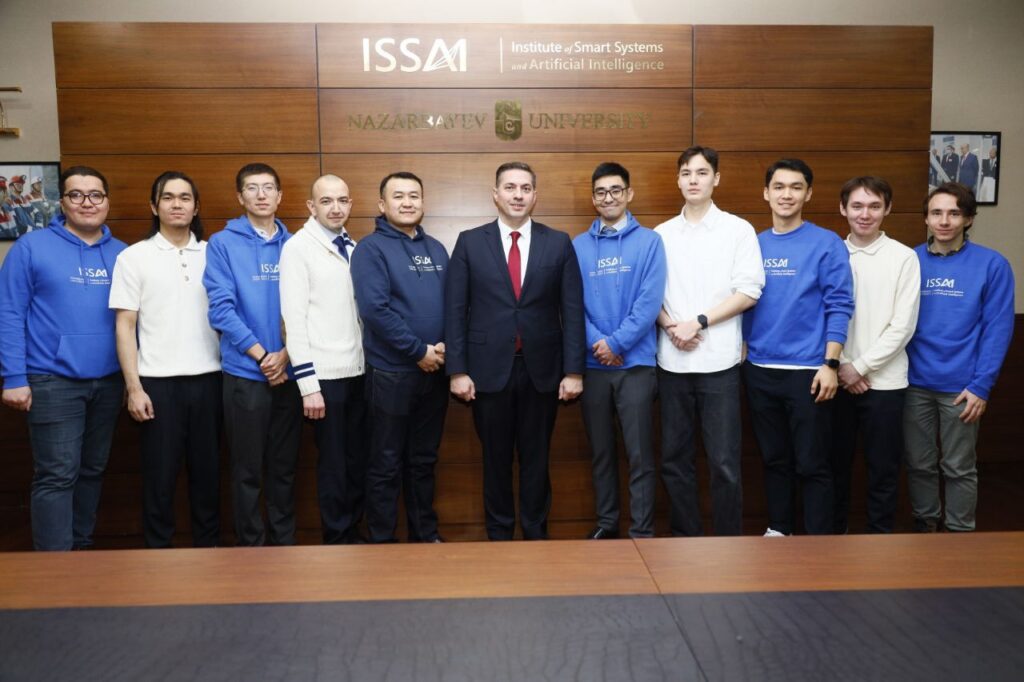
Researchers at the Institute of Intelligent Systems and Artificial Intelligence (ISSAI) at Nazarbayev University in Astana have introduced ISSAI KAZ-LLM, a large language model (LLM) specifically designed for the Kazakh language. Built on advanced neural network technology, the model serves as the foundation for Kazakhstan’s version of a generative AI system similar to GPT.

ISSAI KAZ-LLM is tailored to Kazakhstan’s multilingual and multicultural environment, supporting Kazakh, Russian, and English, with additional functionality for Turkish. The model addresses language barriers and advances the field of generative artificial intelligence for resource-limited languages.

The development team processed and synthesized over 150 billion tokens to ensure high-performance language capabilities. Beyond creating an AI tool, the project also fostered local expertise, involving Kazakhstani researchers at every stage, from data preparation to model implementation. Collaboration with international institutes enabled the creation of language-specific datasets and comparative analysis tools, utilizing input from linguists and state-of-the-art machine translation techniques.

KAZ-LLM has a wide range of applications, including Kazakh language translations, content generation, and bulk text processing. Training data was sourced exclusively from publicly available materials, such as Kazakh websites, news articles, and online libraries, supplemented by contributions from various organizations.

ISSAI director, Prof. Hussain Atakan Varol, told The Times of Central Asia: “This model reflects Kazakhstan’s commitment to innovation, self-reliance, and the growth of its technology ecosystem. Our team developed two versions of ISSAI KAZ-LLM: one with 8 billion parameters and another with 70 billion parameters. Both are built on the Meta Llama architecture, optimized for use on high-performance systems as well as resource-constrained environments. Released under a CC-BY-NC license, the models are available for non-commercial use on the Hugging Face platform.

The ISSAI team is already exploring next-generation AI systems, including language-vision models, while expanding support for additional Turkic and regional languages. These initiatives aim to strengthen regional ties, promote linguistic integration, and create substantial economic and technological opportunities in Kazakhstan and beyond.

Remarkably, this groundbreaking development was accomplished without government funding, with significant contributions from Kazakhstani IT companies.

Kazakhstan is also gearing up to launch the International Center for Artificial Intelligence alem.ai. The center is set to become a hub for transforming the country into an AI-driven economy, fostering innovation, attracting investments, and supporting startups.

By 2029, the export of Kazakhstani AI solutions is expected to reach $5 billion.

U.S. Sanctions on Gazprombank Put Uzbekistan’s $4.8 Billion Copper Ambitions at Risk

Uzbekistan faces a significant economic challenge as U.S. sanctions on Russia’s Gazprombank disrupt the $4.8 billion Yoshlik mine expansion project. The project, managed by state-owned Almalyk Mining and Metallurgical Combine (MMC), is critical to Uzbekistan’s plan to nearly double its copper production by 2026, according to The Diplomat. However, with Gazprombank now excluded from the international payments system, the project’s financing is at risk. The Russian Government directly owns 36.44% of Gazprombank’s capital.

Financing Challenges

The Yoshlik mine expansion aims to increase copper output by 78% and gold production by 50%, making it a cornerstone of Uzbekistan’s economic development strategy. However, Almalyk MMC’s reliance on Gazprombank leaves it vulnerable to delays and potential secondary sanctions.

This situation exacerbated earlier difficulties after U.S. and EU sanctions in 2022 suspended an $800 million tranche from Russian development bank VEB.RF, another key financial backer. Almalyk MMC must now urgently secure alternative financing to keep the project on track.

Russia’s Role in Uzbekistan’s Economy

Russia remains Uzbekistan’s largest trading partner, and remittances from Uzbek workers in Russia account for 18% of Uzbekistan’s GDP. Russia’s involvement in the Yoshlik project began in 2021 when Gazprombank and VEB.RF pledged $2 billion to finance mining equipment purchases.

Impact on European and British Partners

The Yoshlik project also involves significant participation from European and British firms:

  • Germany: Engineering firms such as Thyssenkrupp have supplied critical equipment. Germany’s KfW IPEX-Bank recently arranged $2.55 billion in financing for the project. However, U.S. sanctions on Gazprombank could create legal and logistical hurdles, putting pressure on Germany’s government to reassess its support for exports to Uzbekistan.
  • United Kingdom: The UK has taken a complex position. While it sanctioned Gazprombank in 2014, British firms, including Weir Group, remain involved in the project. In 2024, the U.K.’s export credit agency guaranteed a refinancing deal through Spain’s Santander Bank, reflecting the mine’s importance to British exporters. As reported by TCA, earlier this week, the UK Export Finance (UKEF) guaranteed a €12.6 million ($13.25 million) loan to the Almalyk Mining and Metallurgical Complex to refinance the purchase of fully automated vehicles.

Urgency for Alternative Financing

For Uzbekistan, securing alternative sources of funding is critical. Almalyk MMC must navigate a challenging sanctions landscape while keeping the Yoshlik project on schedule. Failure to do so could not only isolate the company but also hinder Uzbekistan’s broader economic goals, particularly its ambitions to expand its mining sector and boost foreign investment.

Citizens of Turkmenistan Can Apply for Simplified Entry to Russia

Citizens of Turkmenistan are now eligible to apply for a single-entry electronic visa (e-visa) to travel to Russia. This opportunity became available following an order by Russian Prime Minister Mikhail Mishustin, which expanded the list of countries eligible for simplified entry. The list now includes 64 countries, with Turkmenistan among the latest additions.

The e-visa allows entry to Russia for purposes such as tourism, business, humanitarian activities, or visiting relatives and friends. The application process is conducted online through the official portal of the Russian Ministry of Foreign Affairs. Notably, applicants are not required to provide invitations, hotel bookings, or additional documentation justifying the purpose of their travel.

Uzbek Teenager Illegally Earned Over $2.5 Million Through Cryptocurrency

A 17-year-old boy has been detained in the Zhondor district of Uzbekistan’s Bukhara region for allegedly conducting illegal cryptocurrency transactions. Authorities claim the teenager engaged in the acquisition, transfer, and exchange of crypto-assets without obtaining the required licenses. Over the course of his activities, he reportedly amassed approximately 34 billion UZS (around $2.6 million).

Law enforcement officials have filed a criminal case against the teenager under Article 278-8, Part 3, of Uzbekistan’s Criminal Code. This article addresses violations of laws regulating cryptocurrency transactions. Authorities have seized all of the funds the teenager earned through his alleged activities.

A preliminary investigation is ongoing to determine the full extent of the violations and uncover any additional details surrounding the case.

Cryptocurrency transactions in Uzbekistan are tightly regulated, with severe penalties for non-compliance. Under the law:

  • Purchasing, selling, or exchanging crypto-assets without a license is punishable by administrative arrest of up to 15 days or a fine of 20–30 Basic Calculation Units (BCUs). Confiscation of both crypto-assets and associated funds is also mandatory.
  • If an individual continues illegal activities after receiving an administrative penalty, they may face criminal charges, including imprisonment of up to 5 years.
  • Unauthorized cryptocurrency mining can result in administrative arrest of up to 5 days or fines ranging from 20 to 30 BCUs.

For reference, one BCU currently equates to 330,000 UZS (about $25).

To conduct cryptocurrency operations legally in Uzbekistan, individuals and businesses must use licensed service providers. Licensed entities ensure compliance with the country’s strict regulatory framework, minimizing risks for participants in the crypto market.

More Than Half of Uzbeks View Nepotism as a Corruption Problem

According to the United Nations, corruption costs developing countries approximately $1.26 trillion annually. Since 2016, Uzbekistan has undertaken significant reforms to combat corruption, including the establishment of the Anti-Corruption Agency, the simplification of public services, and the full digitalization of public procurement systems.

A recent study conducted by Uzbekistan’s Anti-Corruption Agency, the United Nations Development Programme, and the Anti-Corruption and Civil Rights Commission of the Republic of Korea sheds light on public attitudes toward corruption. The study used surveys, focus groups, and expert interviews, covering all 14 regions of Uzbekistan and gathering responses from 503 participants.

Key Findings

The study revealed that public understanding of corruption in Uzbekistan often focuses on bribery and nepotism. Over half of respondents identified abuse of office and nepotism as corrupt practices. However, less than 40% considered valuable gifts a form of corruption, with many viewings them as gestures of gratitude rather than bribes.

While bribery is widely condemned – 88.4% of respondents disapproved of it – attitudes toward small gifts for good service were more lenient.

Sectors Most Affected

The study highlighted the sectors most susceptible to corruption:

  • Healthcare and Education: Particularly in higher education.
  • Local Governance: Frequent opportunities for misuse of authority.
  • Traffic Safety Services, Internal Affairs, Roads, and Construction: Identified as high-risk areas, with rural residents particularly concerned about corruption in road construction.

Reporting Corruption

Despite witnessing corrupt practices, few respondents report such behavior to authorities. Among respondents:

  • Men: 79.2% were slightly more willing to report corruption than women (70.4%).
  • Women: Showed greater interest in using mobile applications or online portals for reporting (85.2% versus 79.2% of men).
  • Persons with Disabilities: Reported corruption less frequently, but expressed a high willingness to use online tools if made accessible.

Trust in Anti-Corruption Institutions

Trust in anti-corruption institutions varied significantly:

  • Urban Residents: Trusted the media (20.3%) and bloggers (17.3%) more than rural residents.
  • Rural Residents: Had higher trust in the Anti-Corruption Agency (21.4%).
  • Persons with Disabilities: Showed trust in the Anti-Corruption Agency, media, and bloggers.
  • General Public: Less than 5% said they trust no one to address corruption.

Moving Forward

The findings suggest that while public awareness of corruption is growing, attitudes toward certain practices, such as gift-giving, remain complex. Efforts to increase transparency, provide accessible reporting tools, and build trust in anti-corruption institutions are critical to further reducing corruption in Uzbekistan.