• KGS/USD = 0.01143 -0%
  • KZT/USD = 0.00192 -0%
  • TJS/USD = 0.10820 0.19%
  • UZS/USD = 0.00008 0%
  • TMT/USD = 0.28575 0%
  • KGS/USD = 0.01143 -0%
  • KZT/USD = 0.00192 -0%
  • TJS/USD = 0.10820 0.19%
  • UZS/USD = 0.00008 0%
  • TMT/USD = 0.28575 0%
  • KGS/USD = 0.01143 -0%
  • KZT/USD = 0.00192 -0%
  • TJS/USD = 0.10820 0.19%
  • UZS/USD = 0.00008 0%
  • TMT/USD = 0.28575 0%
  • KGS/USD = 0.01143 -0%
  • KZT/USD = 0.00192 -0%
  • TJS/USD = 0.10820 0.19%
  • UZS/USD = 0.00008 0%
  • TMT/USD = 0.28575 0%
  • KGS/USD = 0.01143 -0%
  • KZT/USD = 0.00192 -0%
  • TJS/USD = 0.10820 0.19%
  • UZS/USD = 0.00008 0%
  • TMT/USD = 0.28575 0%
  • KGS/USD = 0.01143 -0%
  • KZT/USD = 0.00192 -0%
  • TJS/USD = 0.10820 0.19%
  • UZS/USD = 0.00008 0%
  • TMT/USD = 0.28575 0%
  • KGS/USD = 0.01143 -0%
  • KZT/USD = 0.00192 -0%
  • TJS/USD = 0.10820 0.19%
  • UZS/USD = 0.00008 0%
  • TMT/USD = 0.28575 0%
  • KGS/USD = 0.01143 -0%
  • KZT/USD = 0.00192 -0%
  • TJS/USD = 0.10820 0.19%
  • UZS/USD = 0.00008 0%
  • TMT/USD = 0.28575 0%
14 December 2025

ADB: Central Asia’s Economic Growth and Decreasing Inflation in 2024

The Asian Development Bank has published its latest report, “Asian Development Outlook (ADO) July 2024: Steady Growth, Slowing Inflation,” in which it has increased its forecast for economic growth in Central Asia from 4.3% to 4.5% in 2024.

In the first quarter (Q1) of 2024, the Kyrgyz Republic is expected to have grown at a rate of 8.8% thanks to robust service and construction industry output supported by both foreign and domestic investment. Other regional economies have also experienced solid economic activity. As a result of a notable increase in exports, which included gold sales, Tajikistan maintained its robust economic trajectory in Q1 2024, with an 8.2% growth rate. Net gas exports and government investment, meanwhile, are Turkmenistan’s primary sources of growth. The first quarter of 2024 also saw 6.2% growth in Uzbekistan, due to a spike in fixed capital investment.

The growth prospects of Kazakhstan, however, the largest economy in the region, remain unchanged. With the main growth drivers being construction, manufacturing, and services, GDP expanded by 3.7% in Q1 2024. This year, manufacturing and construction will continue to be the primary forces behind economic expansion. Strong building growth will be supported by government assistance to victims and restoration of damaged infrastructure following the worst floods in thirty years. Mining is also anticipated to contribute significantly to Kazakhstan’s medium-term growth following the Tengiz oil field expansion project’s completion in Q2 2025.

The ADB has also lowered inflation forecasts for 2024 and 2025. In May 2024, the Kyrgyz Republic experienced a decrease in inflation from 11.3% to 4.6%, primarily due to fluctuations in the prices of essential commodities. Other regional economies are also experiencing a reduction in inflationary pressures. A steady exchange rate and relatively restrictive monetary policy decreased Kazakhstan’s inflation rate to 9.0% from 18.5% from 2023 to January–May 2024. Inflation in Tajikistan for the first four months of 2024 was 3.8%. Inflation in Uzbekistan has also dropped from 11.4% in the previous year to 9.2% in the first five months of 2024.


Direct Flights Between U.S. and Kazakhstan to Begin in Late 2025

Following a meeting between Zhaslan Madiyev, the Minister of Digital Development, Innovation, and Aerospace, and officials from Boeing, the authorities in Kazakhstan have stated that the first B787 “Dreamliner” will be delivered in late 2025, bringing Astana’s long-held goal of direct flights between Kazakhstan and the United States by the end of 2025 a step closer.

This new aircraft will strengthen Kazakhstan’s aircraft fleet, and expand the country’s air route map.

Boeing’s manufacturing facilities are located worldwide, and in 2023 alone, Boeing earned almost $80 billion The company had long been known for its innovative solutions and high-quality standards until a series of crashes and groundings following cost-cutting measures. On average, a Boeing airplane takes off every two minutes worldwide.

Why Does Germany’s New Hydrogen Policy Suit Kazakhstan?

DW shares that Germany has adopted a strategy for importing hydrogen (H2), which is good news for Kazakhstan and a challenge for Russia.

The document, approved on July 24, reportedly outlines plans to replace fossil natural gas with renewable hydrogen. Berlin promises a stable market for H2 producers, as Europe’s largest economy intends to increase its imports due to the lack of domestic production capacity.

Private companies in Germany plan to build a hydrogen pipeline network of about 10,000 kilometers by 2032. Around 40% of this network will be built specifically for hydrogen, while 60% will be adapted gas pipelines. One of these pipelines will be one of the two pipelines previously laid from Lubmin on the Baltic coast to the Czech border, initially intended for Russian gas from Nord Stream.

Germany plans to import 50-70% of its hydrogen needs by 2030, between 95 and 130 terawatt-hours (about 9.5-13 billion cubic meters of natural gas). That’s about as much as Gazprom plans to deliver to the EU this year via the Ukrainian route. Hydrogen demand could reach 500 terawatt-hours by 2045, comparable to the amount of gas supplied through the first Nord Stream before the war in Ukraine.

These plans preclude renewed gas cooperation with Russia, as infrastructure would be adapted to replace natural gas with hydrogen, signaling a long-term change in Germany’s energy policy and a shift from Russian gas.

With its ideal conditions for green hydrogen production in the country’s west, Kazakhstan could become a key supplier for Germany. The strategy envisions a wide range of suppliers to avoid dependence on a single source. Around 40 countries are listed as potential partners, including Kazakhstan and Ukraine. Germany already has specific cooperation agreements with 15 of these countries.

The German economy is preparing to import hydrogen in various forms: gaseous, liquefied, or in the form of hydrogen-containing chemicals such as ammonia and methanol. This diversifies sources and minimizes the risks of dependence on individual suppliers.

Germany’s hydrogen import strategy thus presents significant opportunities for Kazakhstan and other partner countries, creating new prospects for hydrogen exports. At the same time, it presents severe challenges for Russia, limiting its role in Germany’s future energy market.

Iran-Turkmenistan-Kazakhstan-China Rail Transport Route Resumes Operation

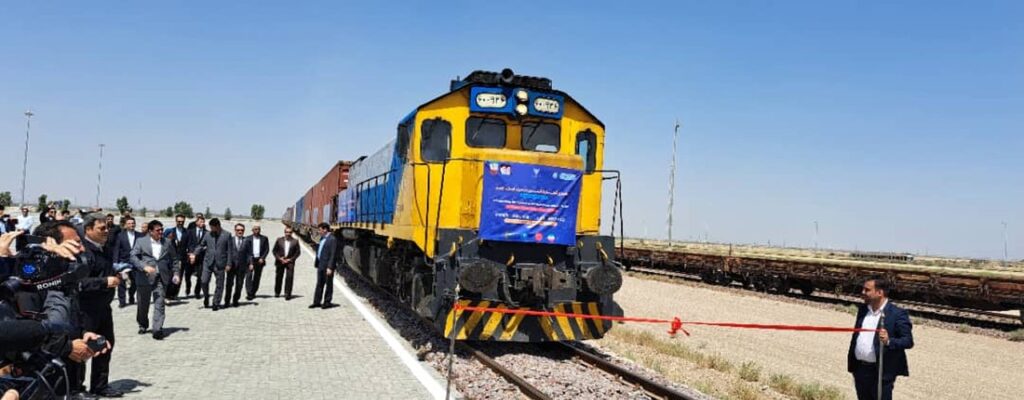
KTZ Express, a subsidiary of Kazakhstan’s national railways company Kazakhstan Temir Zholy (KTZ), and China Railway Container Transport Co. Ltd. have resumed the operation of  container trains on the Iran-Turkmenistan-Kazakhstan-China route.

As reported by KTZ’s press service, representatives of Iran, China, Kazakhstan, and Turkmenistan attended a ceremony on July 21 at Iran’s Aprin station to mark the departure of a container train to China.

The train, consisting of 50 forty-foot containers, will arrive in China within 12 days.

This shipment marks the restoration of the transport corridor, strengthening trade relations between participating countries.

Kazakhstan Looks to Increase Oil Shipment Across Caspian Sea

Kazakhstan’s national oil and gas company, KazMunayGas (KMG), is studying options to increase the shipment of Kazakh crude oil through the Trans-Caspian route. Askhat Khassenov, KMG’s CEO, announced this during negotiations in Baku last week with Rovshan Najaf, president of Azerbaijan’s State Oil Company SOCAR.

In 2022, KMG and SOCAR signed the five-year Aktau-Baku-Ceyhan Oil Transit Agreement to transport 1.5 million tons of crude oil annually.

In 2023, 1.057 million tons of oil were shipped from the Kazakh port of Aktau, and in the first half of this year, the figure exceeded 700,000 tons.

During his visit to Baku, Khassenov visited the BP Sangachal and Azertrans terminals, a Kazakh oil transit hub.

NVIDIA to Launch AI Educational Programs in Kazakhstan

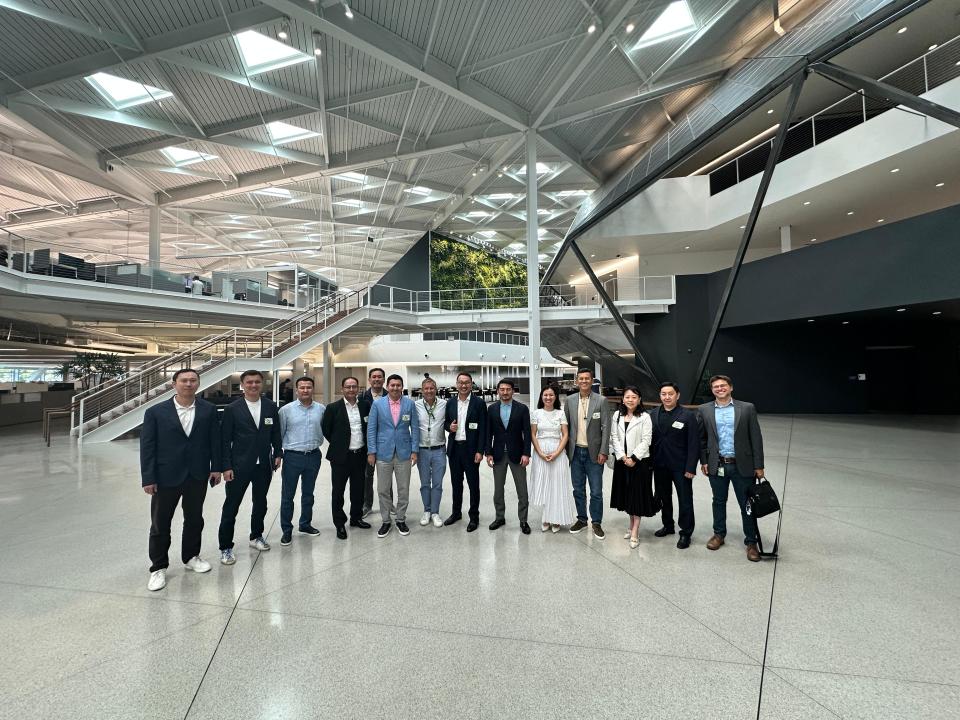
On July 26, a delegation from the Kazakh Ministry of Digital Development, Innovations, and Aerospace Industry visited the head office of US technology corporation NVIDIA in San Francisco, to discuss cooperation in artificial intelligence and supercomputer technologies.

The ministry and NVIDIA have agreed to launch artificial intelligence educational programs in Kazakhstani educational institutions, within the framework of the Deep Learning Institute program. The US company will help create educational content in the Kazakh language.

The parties are planning hackathons and boot camps on artificial intelligence to identify and support talented young specialists in this field. These events will help develop digital skills among young people, and strengthen Kazakhstan’s position as an innovation hub.

The ministry also said it is working to create computing power using NVIDIA chips to develop artificial intelligence in Kazakhstan.