• KGS/USD = 0.01143 -0%
  • KZT/USD = 0.00192 -0%
  • TJS/USD = 0.10820 0.19%
  • UZS/USD = 0.00008 0%
  • TMT/USD = 0.28575 0%
  • KGS/USD = 0.01143 -0%
  • KZT/USD = 0.00192 -0%
  • TJS/USD = 0.10820 0.19%
  • UZS/USD = 0.00008 0%
  • TMT/USD = 0.28575 0%
  • KGS/USD = 0.01143 -0%
  • KZT/USD = 0.00192 -0%
  • TJS/USD = 0.10820 0.19%
  • UZS/USD = 0.00008 0%
  • TMT/USD = 0.28575 0%
  • KGS/USD = 0.01143 -0%
  • KZT/USD = 0.00192 -0%
  • TJS/USD = 0.10820 0.19%
  • UZS/USD = 0.00008 0%
  • TMT/USD = 0.28575 0%
  • KGS/USD = 0.01143 -0%
  • KZT/USD = 0.00192 -0%
  • TJS/USD = 0.10820 0.19%
  • UZS/USD = 0.00008 0%
  • TMT/USD = 0.28575 0%
  • KGS/USD = 0.01143 -0%
  • KZT/USD = 0.00192 -0%
  • TJS/USD = 0.10820 0.19%
  • UZS/USD = 0.00008 0%
  • TMT/USD = 0.28575 0%
  • KGS/USD = 0.01143 -0%
  • KZT/USD = 0.00192 -0%
  • TJS/USD = 0.10820 0.19%
  • UZS/USD = 0.00008 0%
  • TMT/USD = 0.28575 0%
  • KGS/USD = 0.01143 -0%
  • KZT/USD = 0.00192 -0%
  • TJS/USD = 0.10820 0.19%
  • UZS/USD = 0.00008 0%
  • TMT/USD = 0.28575 0%
13 December 2025

Why Is Bishkek Getting Rid of Trolleybuses?

Bishkek City Hall intends to “clean” the city of trolleybuses. According to city officials, the environmentally friendly mode of transportation has become unprofitable; however, residents are against such a decision — citizens claim their opinion is not considered in the municipality.

Almost all trolleybus routes will be removed from Bishkek’s roads, and electric buses ordered from China will replace them. The entire electric infrastructure — wires for trolleybuses — has been dismantled.

In an interview with the state agency Kabar, mayor Aibek Junushaliyev said that the unpopular decision would create more comfortable living conditions for citizens.

“Trolleybuses can only ride on one route, and we cannot temporarily redirect them to other streets. That is, they can only travel on their lines, and during some road closures, it is impossible to change their route. Electric buses and other public transportation are more mobile, and their route can be changed to solve problems with traffic jams in the city. With trolleybuses, such a solution is impossible,” Junushaliyev said.

The mayor explained his decision to remove trolleybuses due to the unprofitability of electric transportation. Allegedly, trolleybus passenger traffic is decreasing year by year. In 2023, trolleybuses moved 8 million people; this year, they moved 3 million fewer.

“Also, trolleybus maintenance is costly. We subsidize more than 200m KGS ($2.3m) for trolleybuses,” Junushaliyev stated.

The Bishkek mayor’s office said it is launching the Open Skies project, which will remove all trolleybus lines in the city because they have reached the end of their useful life.

Interestingly, in 2022, the Bishkek Trolleybus Department signed a contract with the Chinese company Ankai Automobile Co. to bring 120 battery-powered trolleybuses and the entire charging infrastructure to Kyrgyzstan.

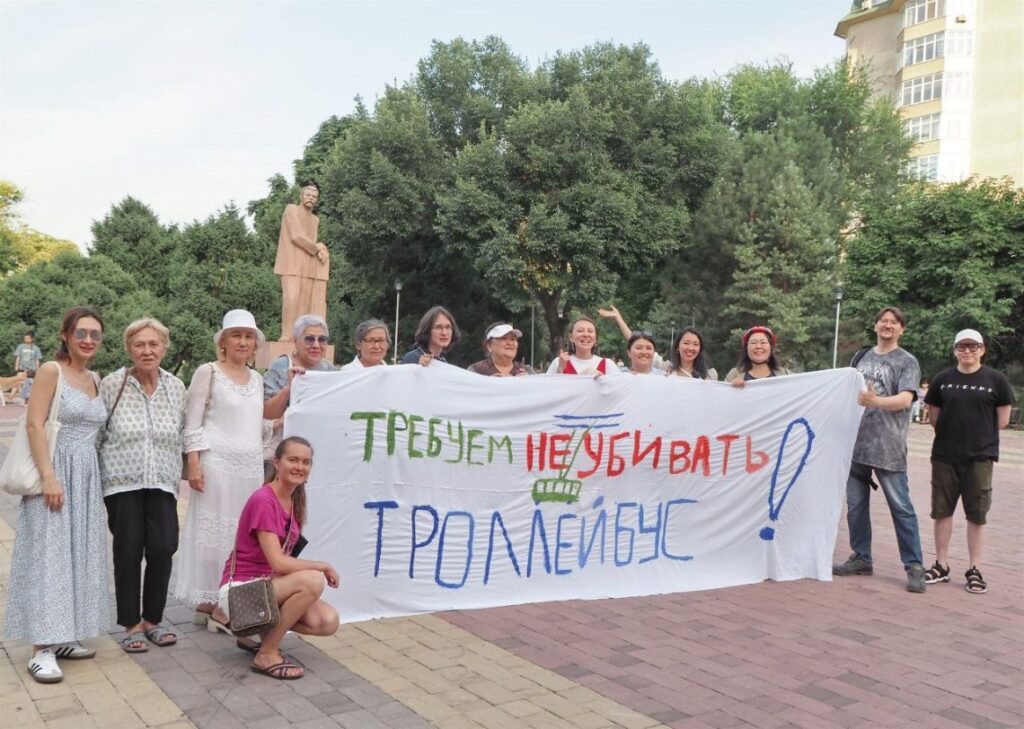
Bishkek residents are outraged by the city authorities’ unilateral initiative. In the past few weeks alone, government agencies have received more than three hundred appeals from citizens to stop the destruction of an ecological mode of transportation.

Activist Darya Nesterova told The Times of Central Asia that the city government deliberately underestimates the number of passengers traveling on trolleybuses.

“City Hall is violating the law. We have regulations according to which such projects must be submitted for public discussion. The townspeople should comment that the mayor’s office has behaved very willfully. They did not listen to the opinion of city deputies or the people; they immediately started cutting trolleybus wires, although they had no legal right to do so,” Nesterova said.

According to her, the destruction of one of the modes of public transportation is sabotage.

“Bishkek City Hall in 2018 took a loan from the European Bank for Reconstruction and Development to upgrade the trolleybus network. This loan the city will repay for another five years. In addition, the bank’s money was used to purchase 50 new trolleybuses capable of serving the city. Therefore, all the talk about the outdated electric fleet is illogical,” Nesterova isaid.

The public doesn’t understand how the capital’s authorities will explain themselves to the creditors—the EBRD gave a loan to reconstruct trolleybus lines in Bishkek. Bishkek wants to transfer the trolleybuses to the city of Osh, but this contradicts the bank’s credit terms.

In the meantime, concerned Bishkek citizens have written a letter to Kyrgyz President Sadyr Japarov asking him to save Bishkek’s trolleybuses, which have been an integral part of the capital for 73 years.
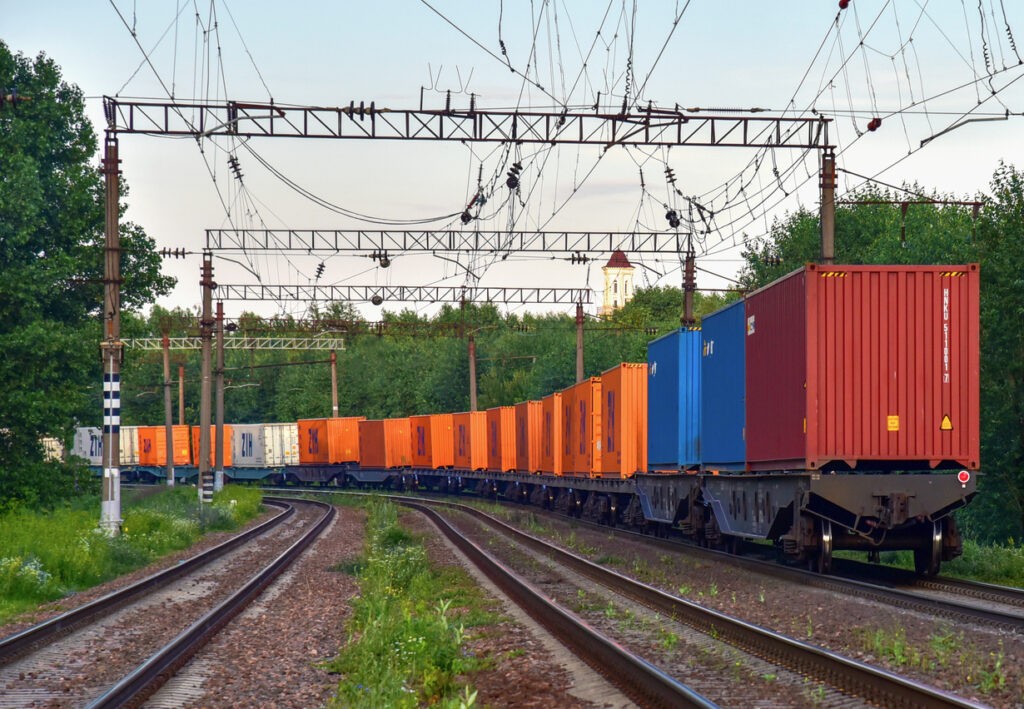
Uzbekistan and Afghanistan Discuss Railroad Projects and Freight Traffic

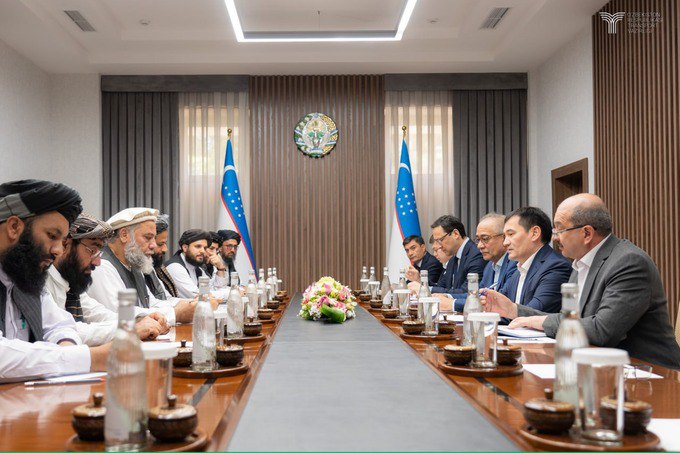
During a visit to Tashkent by a delegation from Afghanistan, representatives of the Uzbek and Afghan governments discussed reducing fees and duties for cargo carriers. A transit agreement between Uzbekistan, Afghanistan, and Pakistan was also discussed.

During the visit, Uzbekistan and Afghanistan extended the contract to reconstruct the Khairaton-Mazar-e-Sharif railroad line for another six months. They also discussed technical studies for the Trans-Afghan railroad project, and scholarships for training Afghan railroaders in Uzbekistan.

The reconstruction of the Hairaton-Mazar-e-Sharif railroad started in February this year. In parallel with the work on the branch line, reconstruction works are underway in park “B” of Hairaton station.

Uzbekistan’s First Deputy Transport Minister, Mamanbiy Omarov, said earlier that freight traffic along the transport corridor between the countries had increased 1.5 times over the past two years. Uzbekistan has provided several privileges for road and rail transportation.
Omarov said the Afghan government will soon introduce equal payments for cargoes from Uzbekistan. He emphasized that transit transportation should develop bilaterally and be mutually beneficial.

Turkmenistan Discusses Transit Logistics With Company From China’s Shandong

Ashgabat recently hosted a working meeting between representatives of the Turkmen Logistics Association and the Chinese logistics company Shandong Hi-Speed Qilu Eurasia Railway Logistics Co., a key operator in China’s Shandong province.

The two sides discussed prospects for cooperation in logistics, noting Turkmenistan’s growing potential as an important transit hub. The country’s convenient geographical location, and its active investment in the development of transport infrastructure — including the automation of customs procedures and the use of modern equipment — are reasons for a recent increase in the volume of cargo transportation through Turkmenistan.

The Chinese delegation led by Liu Junfeng, head of the company’s representative office in Uzbekistan and head of the branch in Kazakhstan, emphasized interest in strengthening cooperation with Turkmenistan. Shandong Hi-Speed Qilu Eurasia Railway Logistics Co. specializes in rail and road freight transportation and has representative offices in many countries.

Central Asia’s Water Crisis

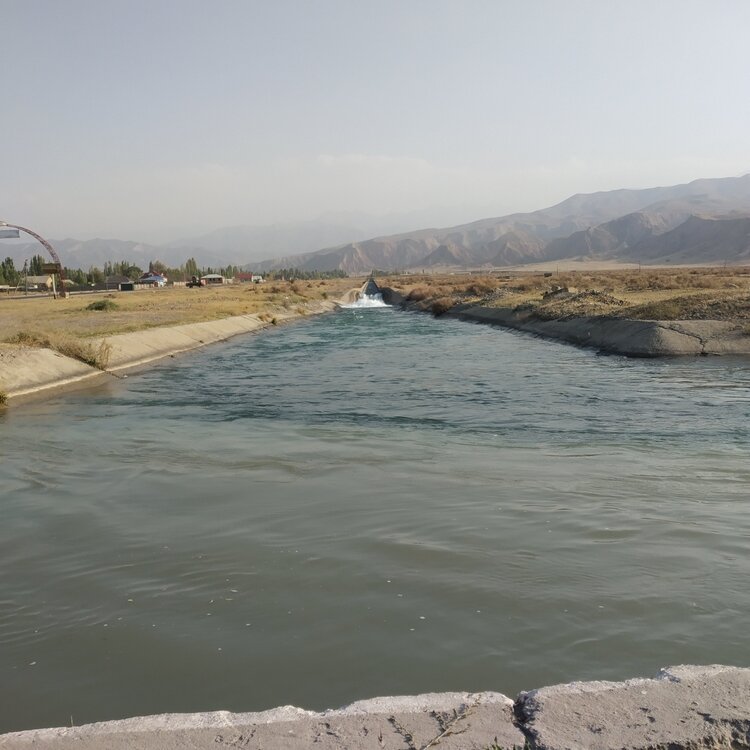
Over 80% of Central Asia’s available water is spent on irrigation, 40% of which is lost during delivery and directly in the fields. Over the coming years, the problem of water shortage will inevitably worsen and with the commission of the Qosh Tepa Canal in Afghanistan, will become chronic from 2028.

The stark warning was issued by Evgeny Vinokurov, Eurasian Development Bank’s (EDB) Deputy Chairman of the Board and Chief Economist during the  “Water, Energy and Food in Central Asia: Partnerships and Projects for Sustainable Development” session at the EDB 2024 Annual Meeting and Business Forum on 27–28 June in Almaty.

The challenges of the Central Asian water and energy complex are too great to be tackled independently by the region’s countries. Historically, Central Asia’s five states have been closely linked by the region’s two largest transboundary rivers, the Amu Darya and the Syr Darya which flow into the Aral Sea basin, home to 80% of the population. Hence, the need for close a intersectoral relationship (nexus) concerning water, energy and food and deep regional cooperation for the effective use of shared water and energy resources to overcome the crisis.

At the session, Askhat Orazbai, Chairman of the Executive Committee of the International Fund for Saving the Aral Sea, stressed the central role played by IFAS in building essential regional dialogue. The Fund is the only regional organization with membership of all five Central Asian states and according to its mandate, was designed to address the region’s complex water-energy nexus. For over 30 years, the Fund has been the key platform for decisions on water resources management at the highest level. Currently being reformed, the Fund’s full potential will soon be fully unlocked.

The session emphasized the urgent need for increased funding to deal with challenges posed by water scarcity. Modernization of the existing irrigation infrastructure is extremely capital-intensive but budgetary funds are inadequate and private investors have shown no interest in the sector.

The contribution of multilateral development banks is therefore critical and encouragingly, over recent years, most of the region’s  MDBs have given special priority to water projects.

The EDB’s Chief Economist Vinokurov pointed out that conservation is key to solving the problem of water scarcity. Highlighting the importance of digital accounting and the introduction of effective irrigation technologies, Vinokurov suggested creating a regional cluster of irrigation equipment. Considering that the region spends from $150 million to $300 million annually on the above, the EDB plans to actively support this sector’s development.

Michael Detlefsen, a UNIDO representative, expressed confidence in the future formation of a regional cluster of irrigation equipment in Central Asia. Over the last two years, the region has seen increased activity from manufacturers from Turkey, China, Israel, and the United States on the organization of local assembly lines. In this regard, the UNIDO representative stressed the importance of working together with the EDB to form such a cluster.


Russian Laboratory to Combat Dangerous Infections in Kyrgyzstan

Russia has allocated funds for the construction of a laboratory in Kyrgyzstan to combat dangerous infections. The announcement was made by a member of the Russian Academy of Sciences, Gennady Onishchenko, during a video conference on biosafety in the countries of the Eurasian Economic Union.

Kyrgyzstan has yet to determine where the laboratory will be located. Russian officials have stated that it cannot be sited near residential areas and prior to its construction, associated personnel — virologists and microbiologists — should be provided with necessary training and equipment.

As reported by 24.kg, the planned laboratory is part of a memorandum of understanding on ensuring biological safety, signed in October 2023 by the governments of Kyrgyzstan and Russia.


Poland Asks Turkmenistan to Open a Consulate in Warsaw

Poland has asked Turkmenistan to consider opening a consulate in Warsaw. The country’s minister of external affairs, Rashid Meredov, announced this at a government meeting on July 5.

Turkmenistan will send an official delegation to Poland in the fourth quarter of 2024 to study the possibility of opening a consulate.

Turkmenistan and Poland have also formed a working group on economic cooperation and plan to organize an exhibition of the Museum of Turkmenistan’s exhibits in Poland in 2025.

The number of Turkmen immigrants in Poland has increased dramatically in recent years. In 2022, Turkey, the most popular destination for Turkmen labor migration, introduced a visa regime at the request of the Turkmen side. The report stated: “The decline of the Turkish economy and the devaluation of the lira also played an important role. Migrants began to look for other options, including Poland. The request to open a consulate is probably related to this, but Rashid Meredov did not mention it in his report. The government of Turkmenistan wants to curb labor migration with bureaucratic obstacles.”

Meredov also announced the expansion of cooperation with other Eastern European countries that are members of the European Union: Hungary, the Czech Republic, Romania, and Slovakia.