• KGS/USD = 0.01144 0%
  • KZT/USD = 0.00193 -0%
  • TJS/USD = 0.10838 -0.09%
  • UZS/USD = 0.00008 0%
  • TMT/USD = 0.28490 0%
  • KGS/USD = 0.01144 0%
  • KZT/USD = 0.00193 -0%
  • TJS/USD = 0.10838 -0.09%
  • UZS/USD = 0.00008 0%
  • TMT/USD = 0.28490 0%
  • KGS/USD = 0.01144 0%
  • KZT/USD = 0.00193 -0%
  • TJS/USD = 0.10838 -0.09%
  • UZS/USD = 0.00008 0%
  • TMT/USD = 0.28490 0%
  • KGS/USD = 0.01144 0%
  • KZT/USD = 0.00193 -0%
  • TJS/USD = 0.10838 -0.09%
  • UZS/USD = 0.00008 0%
  • TMT/USD = 0.28490 0%
  • KGS/USD = 0.01144 0%
  • KZT/USD = 0.00193 -0%
  • TJS/USD = 0.10838 -0.09%
  • UZS/USD = 0.00008 0%
  • TMT/USD = 0.28490 0%
  • KGS/USD = 0.01144 0%
  • KZT/USD = 0.00193 -0%
  • TJS/USD = 0.10838 -0.09%
  • UZS/USD = 0.00008 0%
  • TMT/USD = 0.28490 0%
  • KGS/USD = 0.01144 0%
  • KZT/USD = 0.00193 -0%
  • TJS/USD = 0.10838 -0.09%
  • UZS/USD = 0.00008 0%
  • TMT/USD = 0.28490 0%
  • KGS/USD = 0.01144 0%
  • KZT/USD = 0.00193 -0%
  • TJS/USD = 0.10838 -0.09%
  • UZS/USD = 0.00008 0%
  • TMT/USD = 0.28490 0%
10 December 2025

Pakistan Can Become a Transport Hub for Central Asian Countries

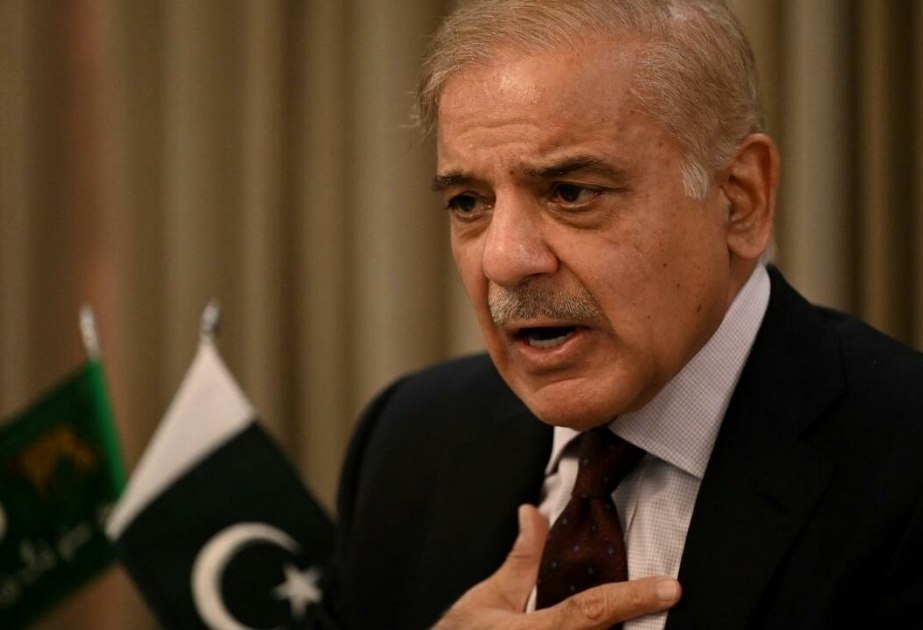
The Prime Minister of Pakistan, Shahbaz Sharif has chosen Tajikistan for his first foreign visit after being re-elected as the head of government. On July 2, he will hold talks with Tajik President Emomali Rahmon in Dushanbe, before traveling with him to the SCO summit in Astana. The head of Tajikistan and Sharif are expected to discuss the implementation of agreements reached during Rahmon’s visit to Pakistan two years ago.

Pakistan’s capital, Islamabad, is interested in speeding up the start of the CASA-1000 energy project and expanding cooperation in transport and security. In exchange, Tajikistan is seeking access to Pakistan’s ports of Karachi and Gwadar. In December 2022, Rahmon visited Islamabad, where eight documents were signed at the end of negotiations with Sharif.

“The fact is that Tajikistan’s intelligence services have historically not had warm relations with Pakistan, whose intelligence services have supported various militant groups in Afghanistan. But times are changing. In addition, it should be noted that today, Pakistan is closely cooperating with China economically and politically in the same way that active cooperation between China and Dushanbe is taking place,” said Alexander Vorobyov, a researcher at the Institute of Oriental Studies of the Russian Academy of Sciences and head of the Center for Public Diplomacy and World Policy Analysis.

According to Vorobyov, improving relations between Tajikistan and Uzbekistan, whose authorities are actively promoting a project to create the Trans-Afghan railway “Termez–Mazar-i–Sharif–Kabul—Peshawar,” will help improve Tajikistan’s transport connectivity with the outside world and offer the possibility of access to South Asia.

The shortest route from Tajikistan to the sea passes through Afghanistan to Pakistan. It is approximately 2,720 kilometers from Dushanbe to Karachi or Gwadar, whilst it is 3,400 kilometers to the Iranian port of Bandar Abbas in the Strait of Hormuz. Tajikistan is separated from Pakistan by the Wakhan Corridor, a narrow strip of territory in the Badakhshan province of Afghanistan. This corridor is about 350 kilometers long. Experts believe that if Afghanistan’s stability and security can be ensured, then Pakistan can become a transport hub for the countries of Central Asia.

Pakistan’s interest in Central Asian meanwhile, lies in energy resources, of which it is desperately short. To access them, the Pakistani government is promoting several major transit projects in the region that will open access to global markets and trade opportunities for the region’s countries.

However, as Hina Rabbani Khar, who served as Pakistan’s deputy foreign minister in February 2023, said, the situation in Afghanistan is preventing Pakistan from realizing its potential in relations with Central Asia. In particular, the Central Asia-South Asia-1000 (CASA-1000) project to transmit electricity from Tajikistan and Kyrgyzstan to Afghanistan and Pakistan still needs to be completed. The World Bank stopped financing the project after the Taliban came to power. Following an appeal by the project’s participants, implementation of CASA-1000 was resumed in May 2024 with the financial support of the World Bank.

In recent years, Tajikistan and Kyrgyzstan have required additional kilowatts, so the completion date of the construction still needs to be determined, leaving Pakistan at risk of being left without Central Asian electricity.

Nevertheless, Pakistan’s cooperation with Central Asia is developing. Islamabad is interested in enhancing trade ties, and joint economic commissions have been established. For example, Pakistan’s trade volume with Tajikistan has increased 1.6 times compared to 2022, reaching $52.7 billion.

According to Vorobyov, if transport links between Central and South Asia reach a new level and trade and economic relations improve, both the Central Asian nations and Pakistan will benefit.

“However, it should be understood that Pakistan is a tough partner for post-Soviet countries in terms of economic relations. Big differences in terms of legislation, poverty of the majority of the population, and poorly developed energy infrastructure all have an impact,” Vorobyov concluded.

Push to Increase Youth Employment in Uzbekistan.

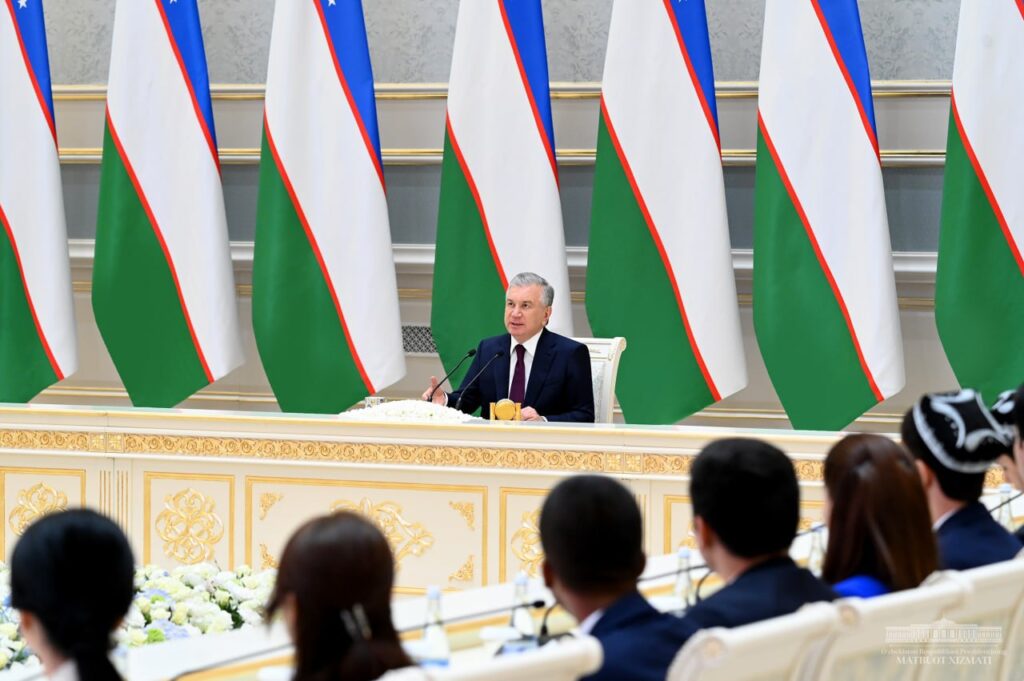
At the meeting on June 28, Uzbekistan president Shavkat Mirziyoyev forwarded a proposal for boosting employment amongst the country’s youth.

According to a report by press secretary Sherzod Asadov,  announced on Telegram, regional and district governors have been instructed to hold job fairs in schools, technical institutes, universities, and recreation parks over the summer, with the aim of placing some 150,000 young people in vacant positions.

The president stressed the importance of organizing construction squads in the summer months and recruiting 100,000 young people for monthly jobs.

He also noted that initiatives offered by businesses for vocational training and employment of young people continue to be supported.

From the 2024/2025 academic year, expenses incurred by entrepreneurs in training and employing students from schools, colleges, and technical institutes are to deducted from the tax base. Student income tax and social tax are set at 1%.

Almaty to Host International Conference KazHackStan-2024

The Kazakh Ministry of Digital Development, Innovation and Aerospace Industry has announced that Almaty is to host KazHackStan-2024 from 11-13 September. Featuring presentations by more than 30 worldwide specialists, the cybersecurity conference is expected to attract over 5,000 visitors from home and abroad.

KazHackStan will represent all aspects of cyber defense. Government & Business Day will provide a platform for discussion on policy and legislation; Secure Development Day, on experiences in secure software development; and HackDay, where experts and novices will learn about hacking techniques and vulnerabilities.

As part of the conference, the Ministry and the Centre for Analysis and Investigation of Cyber ​​Attacks, will conduct a panel session for members of Organization of Turkic States on cybersecurity in the region.

The event will also include a CyberKumbez competition – the largest hacker competition in Central Asia – involving over 100 hackers and representatives of both large companies and government agencies. Models of real IT infrastructure have been prepared for participants to simulate and neutralize virtual threats, to help ensure the future security of the state and society.


Uzbekistan’s Consumer Confidence Index Falls to Record Low

Based on Freedom Finance’s research, Spot has reported that the consumer confidence index in Uzbekistan fell to a record low in May. The indicator reached 126.8 points in May, decreasing by 3.4 points during the month. The decline was recorded in all five sub-indices, with the most substantial decline in economic dynamics in the last year.

The assessment of changes in the economic situation decreased by 117.5 points (-7.8). In March, 58% of Uzbeks had noted that the financial crisis had improved in the last twelve months; but in April, this figure decreased to 53.5%, and in May, to 48%. Just a third of respondents living in Tashkent assessed the economic dynamics positively. In Namangan, the percentage of positive responses decreased from 58.3% to 46.1%, while in five other areas it decreased by between 7 and 9%. The sub-index of changes in citizens’ financial situation also decreased by 128.4 points (-2.9).

Inflation is increasing in Uzbekistan. During the past year, prices have increased significantly—by 48.5% – breaking the record set in October of last year. The share of citizens who noted increased housing and communal services tariffs rose from 21.4% to 44.1% over two months.

Conversely, only 13.2% of participants expect inflation to accelerate next month, and 28% over the course of the year. Expectations of devaluation also decreased: 63.4% expected a substantial weakening of the som against the dollar during the year, and 43.5% in the monthly range.

Freedom Finance analyst Daniyor Orazboev told Spot that the decline in consumer confidence was caused by a “sharp acceleration of inflation due to administrative decisions in Uzbekistan.”

U.S. State Department Criticizes Tajikistan for Religious Restrictions

The U.S. State Department’s 2023 World Religious Freedom Report lists Tajikistan as a country of “particular concern” due to “gross violations of religious freedoms.” The report cited evidence of religious restrictions by the state, including a ban on the hijab, restrictions on minors and women performing namaz in mosques, and the harassment of Jehovah’s Witnesses. The authors of the report also noted that residents of  Tajikistan refrain from freely discussing religion for fear of persecution by the authorities.

This is not the first time the Tajik government has been criticized for restricting religious freedoms, including religious observance, but President Emomali Rahmon continues to support his government’s policy on these issues.

In Tajikistan, 90% of the population is Muslim, predominantly followers of the Hanafi madhhab, whilst 4% are Ismailis. The central part of the Christian community are followers of the Orthodox Church. There are 4,058 religious organizations and associations officially registered in the country, including 66 which are non-Muslim. The authors of the report noted that the activities of these organizations were under strict control.

According to the Tajik Interior Minister, Ramazon Rakhimzoda, 195 alleged members of “extremist” and “terrorist” organizations were detained in Tajikistan in the first half of 2023. The Norwegian human rights NGO for religious freedom, Forum-18, reported that at least 19 people were convicted last year for exercising the right to freedom of worship.

Prime Minister of Kyrgyzstan Holds Meeting with U.S. Business Mission

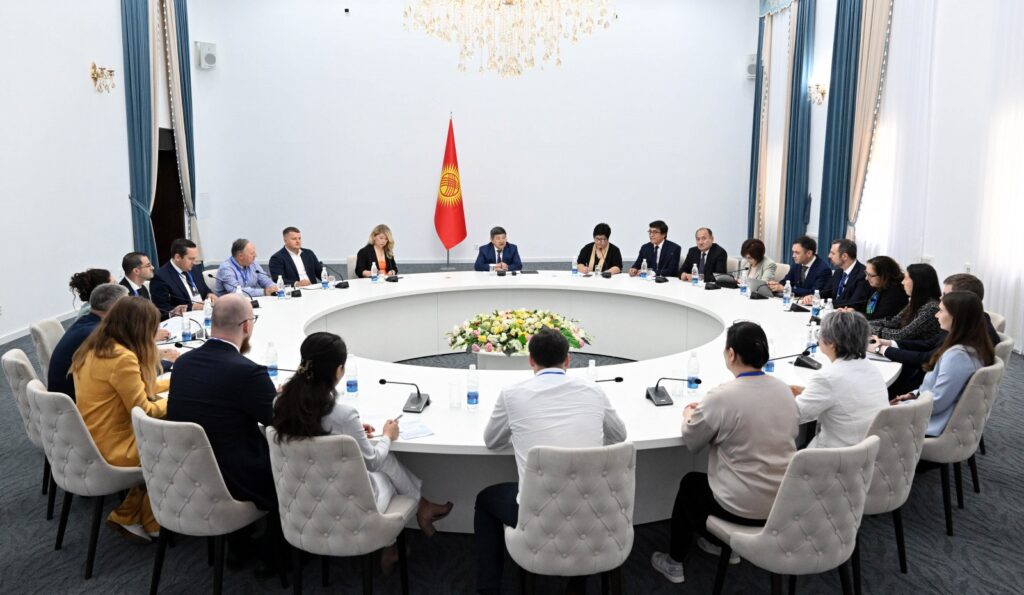
The Kyrgyz Chairman of the Cabinet of Ministers – Head of the Presidential Administration, Akylbek Japarov met with a business mission from the United States. The session was organized by the American-Kyrgyz Business Council, the Cabinet of Ministers of the Kyrgyz Republic press service reported.

Representatives from several significant companies attended the meeting, including Abbott, Coca-Cola, GE Vernova Inc., OpenWay, Thomas Greg & Sons Limited, VISA, White & Case, and Jones Equity Fund. The parties discussed measures to develop and strengthen cooperation between the business communities of Kyrgyzstan and the United States, focusing on inter-bank collaboration, investment, digitization, and energy. Japarov spoke about the favorable investment climate in Kyrgyzstan and the government’s efforts to create convenient conditions for doing business.

During his working trip to the United States in April 2024, Japarov invited American business-people to visit Kyrgyzstan, stating that he hoped the visit would allow American business community to become acquainted with Kyrgyzstan’s trade and investment potential, establish contacts, and cooperate with the local business community.

Representatives of the American companies which are members of the U.S.-Kyrgyz Business Council confirmed their interest in expanding business ties between the two countries.