• KGS/USD = 0.01144 0%
  • KZT/USD = 0.00193 -0%
  • TJS/USD = 0.10811 -0.28%
  • UZS/USD = 0.00008 0%
  • TMT/USD = 0.28490 0%
  • KGS/USD = 0.01144 0%
  • KZT/USD = 0.00193 -0%
  • TJS/USD = 0.10811 -0.28%
  • UZS/USD = 0.00008 0%
  • TMT/USD = 0.28490 0%
  • KGS/USD = 0.01144 0%
  • KZT/USD = 0.00193 -0%
  • TJS/USD = 0.10811 -0.28%
  • UZS/USD = 0.00008 0%
  • TMT/USD = 0.28490 0%
  • KGS/USD = 0.01144 0%
  • KZT/USD = 0.00193 -0%
  • TJS/USD = 0.10811 -0.28%
  • UZS/USD = 0.00008 0%
  • TMT/USD = 0.28490 0%
  • KGS/USD = 0.01144 0%
  • KZT/USD = 0.00193 -0%
  • TJS/USD = 0.10811 -0.28%
  • UZS/USD = 0.00008 0%
  • TMT/USD = 0.28490 0%
  • KGS/USD = 0.01144 0%
  • KZT/USD = 0.00193 -0%
  • TJS/USD = 0.10811 -0.28%
  • UZS/USD = 0.00008 0%
  • TMT/USD = 0.28490 0%
  • KGS/USD = 0.01144 0%
  • KZT/USD = 0.00193 -0%
  • TJS/USD = 0.10811 -0.28%
  • UZS/USD = 0.00008 0%
  • TMT/USD = 0.28490 0%
  • KGS/USD = 0.01144 0%
  • KZT/USD = 0.00193 -0%
  • TJS/USD = 0.10811 -0.28%
  • UZS/USD = 0.00008 0%
  • TMT/USD = 0.28490 0%
10 December 2025

The Taliban’s Border Rhetoric: Pashtun Frontiers, Not Central Asian Borders

Two incidents in mid-October reignited debate over Afghanistan’s borders, particularly its long-disputed frontier with Pakistan. On October 18, Mohammad Nabi Omari, Afghanistan’s first deputy minister for interior affairs, suggested that Afghanistan’s “historical lands” now in Pakistan could one day return to Afghan control. The next day, Qatar’s Ministry of Foreign Affairs referred to “ending tensions on the Afghanistan–Pakistan border” in a ceasefire statement, prompting Taliban objections and a quick retraction.

These remarks revived a longstanding Afghan grievance: the Durand Line, a frontier drawn in 1893 by the British between Afghanistan and British India. No Afghan government has ever recognized it as an international border, and the Taliban refers to it as an “imaginary line.”

The Taliban’s language may alarm some observers who wonder whether such rhetoric could extend beyond Pakistan to Afghanistan’s northern borders with Central Asia. Those frontiers were defined in the 19th century by treaties between the Russian and British empires, with little Afghan involvement.

Yet despite the heated language and recent armed clashes with Pakistan, the Taliban’s stance appears more ideological than expansionist.

The Durand Agreement of 1893 established the boundary between Afghanistan and British India as a line separating their respective spheres of influence. When Pakistan gained independence in 1947, that line became an international border, recognized by all states except Afghanistan. The 2,600-kilometer frontier divided Pashtun and Baloch communities between two countries, leaving deep resentment that continues to shape tensions in the region. Pashtuns still move relatively freely across this rugged border, which has served as a haven for militants for decades.

Afghanistan’s northern borders tell a slightly different story. They were drawn not by Afghan rulers but under the Anglo-Russian Agreement of 1873, which set the Amu Darya River as the boundary between the Russian and British spheres of influence. This arrangement confirmed Afghanistan’s authority over the lands south of the river, including Balkh, Kunduz, and Badakhshan, reinforcing both its territorial control and its legitimacy.

In essence, the demarcation of Afghanistan’s northern boundary was a political gain. While the Durand Line came to represent partition and loss, the 1873 agreement brought Afghanistan new territory and legitimacy as a buffer state between the Russian and British empires. The north is largely inhabited by Uzbeks, Tajiks, and Turkmen, with few Pashtuns. This distinction helps explain why the Taliban’s references to “historic lands” focus on the Durand Line rather than Afghanistan’s borders with Central Asian states.

Afghanistan’s acting defense minister, Mawlawi Mohammad Yaqoob Mujahid, the son of the Taliban’s late founder Mullah Mohammad Omar, recently reiterated that “[the Durand Line] has never been recognized as an official border, and no agreement has been made on this issue.… This is not a decision any government can make; it is a matter for the people.” Deputy Interior Minister Mohammad Nabi Omari’s call for the “return” of historic lands reflects the same ideological stance: a vision of Pashtun unity shaped by popular will rather than a call for military action or unilateral political moves.

The Taliban, a Pashtun-led movement, uses this rhetoric to appeal to supporters on both sides of the Durand Line. It is best understood as a symbolic appeal to Pashtun identity rather than a call for territorial expansion. At its core, it reflects a grievance shared by Pashtuns divided by a colonial-era border, an assertion of identity and dignity rather than a demand for land.

Afghanistan’s relations with its Central Asian neighbors are built on cooperation rather than historical disputes. The Anglo-Russian Agreement ultimately benefited Afghanistan by consolidating control over mineral-rich regions that the Taliban now hopes to develop.

Economically, Afghanistan’s future prosperity depends on stronger integration with its northern neighbors as it seeks to become a regional transit hub through projects such as the TAPI natural gas pipeline, the Trans-Afghan Railway, and the Wakhan Road linking it to China.

For the Taliban, maintaining stability and peaceful relations with Turkmenistan, Uzbekistan, and Tajikistan is a strategic priority. The group has shown no interest in claiming Central Asian territory, recognizing that any such move would threaten Afghanistan’s development and weaken its pursuit of international recognition.

The Taliban’s references to “historical lands” reflect a long-standing national grievance rather than a new geopolitical threat. Its leaders appear to understand that Afghanistan’s future depends on regional stability and economic integration, including progress on the Durand Line dispute and respect for the dignity of the Pashtun people.

Resolving the border dispute with Pakistan will remain difficult given Islamabad’s allegations of Taliban links to the Tehrik-e-Taliban Pakistan (TTP), the TTP’s public pledge of allegiance to the Afghan Taliban, and Pakistan’s concern over growing ties between Kabul and New Delhi. Earlier this month, Pakistan’s defense minister accused the Taliban of allowing India’s influence to reach “both sides” of Pakistan’s borders, a claim reflecting deep mistrust rather than verified policy.

Central Asian states are likely to view the Taliban’s rhetoric as an internal assertion of Afghan identity rather than a signal of aggression. Afghanistan’s priorities remain pragmatic: trade, energy, and diplomacy. In the end, regional security will depend on Afghanistan’s ability and its neighbors’ willingness to turn common borders into opportunities for cooperation.
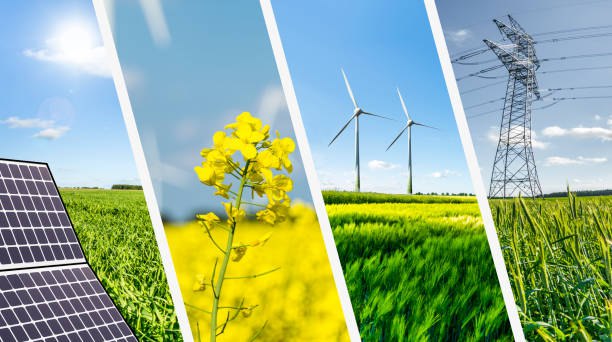

Kazakhstan Unveils Green Energy Transition Strategy at London Forum

Kazakhstan aims to increase the share of renewable energy in its power mix to 50% by 2050, Deputy Minister of Energy Sanzhar Zharkeshov announced at the Future Resilience Forum in London. The international gathering brought together global policymakers, business leaders, and experts to address sustainable development and climate-related challenges.

Zharkeshov stated that Kazakhstan is modernizing its energy legislation to accelerate the green transition. Measures include the introduction of transparent auctions and revised subsoil use regulations, steps that have helped reduce wind and solar tariffs and position Kazakhstan as one of Central Asia’s most attractive clean energy markets.

The country currently operates 158 renewable energy facilities with a combined capacity exceeding 3 GW. By 2035, it plans to add another 8.4 GW. According to the Ministry of Energy, the national targets include reaching a 15% renewable share by 2030 and 50% by 2050.

Kazakhstan’s green energy agenda focuses on two key priorities: expanding power grids to integrate renewable energy sources and deploying energy storage solutions, including pumped storage hydropower stations.

Natural gas remains a strategic “transitional” fuel in Kazakhstan’s energy mix, offering stability while contributing to emissions reductions. The government is actively expanding gasification across regions, converting coal-fired thermal power plants to gas, and upgrading storage and transport infrastructure.

Zharkeshov noted that Kazakhstan remains a reliable energy supplier and a responsible participant in the global energy system. The country supplies about 13 percent of the European Union’s oil imports and is working with Azerbaijan and Uzbekistan to develop alternative export routes across the Caspian Sea.

“The global energy sector is undergoing a transformation driven by emission reduction policies and the shift to low-carbon sources. Kazakhstan is pursuing a balanced approach, reducing greenhouse gas emissions while maintaining energy security,” he said.

He added that despite global economic challenges, Kazakhstan’s energy sector continues to show resilience and is attracting strong interest from international investors.

As previously reported by The Times of Central Asia, Kazakhstan also plans to construct several nuclear power plants, including a joint project with China National Nuclear Corporation (CNNC).

Syrian Government Raid on Foreign Fighters Draws in Uzbek Militants

A Syrian government raid on a compound controlled by French foreign fighters in northern Syria threatened to evolve into a wider conflict after Uzbek Islamist militants arrived to reinforce the French group. 

The fighting that started on Monday reflects the challenges that Syria’s transitional government faces as it tries to restore stability to the country after the 2024 ouster of former leader Bashar al-Assad and the end of more than a decade of civil war. Outbreaks of sectarian violence have disrupted progress. An additional problem is how to handle foreign fighters who originally arrived in Syria to fight al-Assad’s forces, but have turned down an invitation to join the new government’s military. 

“The Syrian transitional government appears to be pursuing a low-level effort to target foreign fighters in Syria who have not integrated into the Ministry of Defense,” the Institute for the Study of War, a U.S.-based research group, said in a report on Wednesday. 

The institute said that Syrian forces targeted a compound run by a group of French militants called Fiqrat al-Ghuraba as well as fighters from the Caucasus in Harem, a city in Idlib province near the border with Türkiye. Fighting broke out and a group of Uzbek foreign fighters deployed to the compound to reinforce the militants, according to the institute. 

Syrian security forces “previously arrested two prominent Uzbek foreign fighters in August 2025, which has led to increased discontent among Central Asian foreign fighter groups,” it said. 

Videos purportedly showing ethnic Uzbek fighters arriving in Harem are circulating on social media. 

An Arabic-language news platform, nabd.com, reported that an Uzbek fighter in one video clip said: “We have gathered in Idlib to support our French brothers.”

The Syrian Observatory for Human Rights, a Britain-based group that tracks events in Syria, said security forces tried to storm the jihadi camp with “light and medium weapons” and that fighting “left several casualties among French migrants and security forces, amid confirmed arrests of French jihadists.”

Syrian authorities said they took action this week after the militants in Idlib had kidnapped a girl and committed other “grave violations” against civilians, the state-run Syrian Arab News Agency reported

Uzbek militants previously collaborated with Hayat Tahrir al-Sham, a group that led the rebel push to overthrow al-Assad. Hayat Tahrir al-Sham, or HTS, had al-Qaida roots but later split off and moved to project a more moderate image under leader Ahmed al-Sharaa, now Syria’s president. On Tuesday, Britain removed HTS from its list of terrorist organizations as it seeks to engage the new Syrian government. The United States took a similar step in July. 

Two mainly ethnic Uzbek groups of foreign fighters in Syria, known by the acronyms KIB and KTJ, retain ties to al-Qaida and the Taliban in Afghanistan, according to an analysis by Kathleen Collins that was published last month by the Combating Terrorism Center at West Point, the U.S. military academy. 

The two groups “constitute a resilient force of battle-hardened fighters, demonstrating remarkable staying power in Syria,” Collins wrote. 

Is TAPI Just ‘TA’ for Now?

The idea for the 1,800-kilometer Turkmenistan-Afghanistan-Pakistan-India (TAPI) natural gas pipeline project has been around for 30 years. There has not been much progress in building the pipeline during those decades.

The chances of seeing TAPI realized seem far away at the moment, considering Pakistan and India were involved in fighting in May of this year, and in October, there were battles along the Pakistan-Afghanistan border.

However, Turkmenistan and Afghanistan are still interested in TAPI, and top officials from those two countries just met along the border to inaugurate a new section of the pipeline, and it looks like, for now, these two countries are enough.

Another Ceremony

Gurbanguly Berdimuhamedov, the chairman of Turkmenistan’s Halk Maslahaty (People’s Council), went to the Turkmen-Afghan border on October 20 to meet with Afghanistan’s Deputy Prime Minister for Economic Affairs, Mullah Abdul Ghani Baradar, for an event inaugurating a new section of TAPI.

The ceremony for the Serhetabat-Herat section of TAPI took place just inside Afghanistan, not far from where top officials from the four countries involved, including Berdimuhamedov, gathered in February 2018 to launch construction of the Afghan section of TAPI. Berdimuhamedov made his only previous visit to Afghanistan during that ceremony, when he, the Afghan president, Pakistani prime minister, and Indian minister for state and external affairs, briefly flew to Herat to continue celebrations marking the launch.

The location of the October 20 inauguration was also not far from the Islim Chesme border crossing, where Berdimuhamedov met with Afghan officials in September 2024 to again launch construction of the Afghan section of TAPI. Baradar and Berdimuhamedov spoke about the project’s importance in fostering greater regional cooperation, the economic benefits of which include creating jobs and providing energy to areas that greatly need it.

Similar remarks were made by Berdimuhamedov and others at previous TAPI launches. Work did finally start after the 2024 launch.

Afghanistan’s Tolo News reported that according to the country’s Ministry of Mines and Petroleum, 14 kilometers of the pipe have been laid, and 70 more kilometers of the route are set for pipeline installation.

Turkmen state media always refers to Berdimuhamedov as “Arkadag,” which means “protector” in the Turkmen language. According to Turkmen state media, the Serhetabat-Herat section of the pipeline is called “Arkadagyn Ak Yoly,” or “Arkadag’s White Road.”

Tolo News also reported that, “Recently, a large quantity of gas transmission pipes was imported from Turkmenistan into Afghanistan.“ It appears the Serhetabat-Herat section of TAPI is making progress, but it could be years before the pipeline goes any farther.

A More Modest Goal

For nearly the entire history of the TAPI project, the major obstacle to actually building the pipeline was the security problem inside Afghanistan. That problem is not over, but it is significantly reduced now that the Taliban are again imposing brutal control over the country.

Military conflicts in recent months between Pakistan and both the other partners in the TAPI project shine a spotlight on another problem that has always raised questions about the viability of the TAPI project.

TAPI aims to carry 33 billion cubic meters (bcm) of gas, 14 bcm each for Pakistan and India, and 5 bcm for Afghanistan. While Berdimuhamedov and other leaders say TAPI promotes regional cooperation, it could just as easily become a weapon. If Pakistan and India again become involved in open hostilities, will Pakistan continue to allow TAPI gas to flow to India?  If Afghan and Pakistani military forces clash again, will Afghanistan let TAPI gas pass into Pakistan?

None of that was mentioned at the October 20 gathering, but there was a hint that Turkmenistan and Afghanistan are immediately only interested in the pipeline shipping gas to Afghanistan.

The deputy spokesman for the Afghan government, Handullah Fitrat, said, “With the completion of this project, or at least its arrival in Herat, Afghanistan will gain access to Turkmen gas, and we will be able to provide gas to the people.”

Terminus Herat

From Herat, the pipeline’s route runs southeast to Kandahar, then east to Pakistan and India, but for the moment, Turkmenistan and Afghanistan might only be interested in seeing the pipeline reach Herat. Afghanistan’s fourth-largest city, Herat has a population of somewhere around 750,000 people. Herat Province is the second-largest province in Afghanistan with a population approaching four million.

Access to a reliable source of energy would be a huge benefit for the province.

The problem is that TAPI is being built to carry 33 bcm of gas, and Afghanistan, with its primitive domestic pipeline infrastructure, can consume only a modest amount of that.

However, Turkmenistan is quickly running out of options for exporting its gas, and it has reached the point where, for Turkmenistan, something is better than nothing.

When China and Russia signed a deal in early September for the construction of the Sila Sibiri-2 (Power of Siberia-2) gas pipeline, it almost certainly meant that the proposed Line D pipeline from Turkmenistan to China will not be built. Line D would carry 30 bcm of Turkmen gas, but Sila Sibiri-2 will bring 50 bcm of Russian gas to China, greatly reducing, if not totally eliminating, China’s need to buy additional Turkmen gas.

China already purchases around 35 bcm of Turkmen gas annually via Lines A, B, and C of the Central Asia-China pipeline network, leading from Turkmenistan.

Turkmenistan had an agreement in 2024 to sell Iraq 10 bcm of gas annually, but that involved a swap deal with Iran, and U.S. sanctions on Iran eventually scuttled the plan.

The Trans-Caspian Gas Pipeline project to bring some 30 bcm of Turkmen gas to Europe has been around as long as TAPI. The only progress on that has been the construction of the 773-kilometer East-West pipeline inside Turkmenistan, completed in 2015, that connects gas fields in the interior to Turkmenistan’s Caspian coast.

Turkmenistan has the fourth-largest gas reserves in the world, some 17 trillion cubic meters. But currently, Turkmenistan is only selling 35 bcm to China, and much smaller amounts to Turkey, some 1.3 bcm this year, but 2 bcm starting in 2026, up to 2 bcm to neighbor Uzbekistan, and 1 to 2 bcm to Azerbaijan.

Curiously, the sales to Turkey and Azerbaijan are both swap arrangements involving Iran, though neither faced the complications of the similar swap deal with Iraq.

So, there are no new customers for Turkmen gas on the horizon. There is a 214-kilometer pipeline inside Turkmenistan that connects to Afghanistan, and there are 14 more kilometers of pipeline on the other side of the border.

International financing for TAPI has always been an issue, so Turkmengaz, the operator of the TAPI project, presumably paid for the pipeline segments recently delivered to Afghanistan.

The fact that Halk Maslahaty Chairman Berdimuhamedov, who was Turkmenistan’s president from 2006-2022, made what was only his second visit to Afghan territory – albeit only a few meters inside Afghanistan – on October 20 further underscores Turkmenistan’s anxiousness to see some progress, anywhere, in selling its gas.

Realistically, Afghanistan can only take volumes of gas that, at most, similar to the amount Turkmenistan ships to Azerbaijan, Turkey, or Uzbekistan.

The good news is that the Taliban government has been able to pay Turkmenistan and its Central Asian neighbors for the electricity they all ship to Afghanistan, so the Taliban government can probably pay for the Turkmen gas also.

If this is not all the Turkmen government hoped for, there is potential consolation at least, as even shipping gas solely to Herat would demonstrate TAPI is viable, and that could convince organizations and countries that have been wary about investing that the project can be realized.

Maria Timofeeva Switches Tennis Allegiance to Uzbekistan

The Women’s Tennis Association (WTA) has officially listed 21-year-old Maria Timofeeva as representing Uzbekistan, marking a change in her sporting nationality. The update, first reported by Championat, now appears on the WTA’s official website, where the Uzbek flag is displayed next to her name.

Born in Moscow, Timofeeva had not made any public statements about a possible change of federation. Speculation arose earlier this year after comments by Russian Tennis Federation President Shamil Tarpishchev, who said several Russian players were considering switching national representation because of ongoing restrictions on tennis events in Russia.

“We have a difficult situation in Russian tennis: no domestic tournaments, no functioning league, and no funding for player development,” Tarpishchev told TASS. “Around a thousand of our players are competing abroad, and about 20 may soon start playing for other nations.”

Timofeeva’s move appears to reflect this broader trend. Although she began her career in Russia, much of her training took place overseas, initially in Slovenia, and more recently in Germany. Her exposure to international academies and competition likely facilitated her transition to the Uzbek Tennis Federation.

Currently ranked 146th in the world, Timofeeva reached a career-high of No. 93 in spring 2024. Her breakthrough performance came at the Australian Open, where she advanced to the fourth round after qualifying, defeating top-tier players including Caroline Wozniacki, Alizé Cornet, and Beatriz Haddad Maia.

The move represents a significant gain for Uzbekistan’s national tennis program, which has been steadily raising its international profile. Timofeeva’s inclusion may enhance the visibility and competitiveness of Uzbek women’s tennis as the country continues to invest in sports infrastructure and athlete development.

Neither Timofeeva nor the Uzbek Tennis Federation has issued an official statement on the change, but her WTA registration signals the start of a new chapter in her professional career.

Kazakhstan Proposes Cash Rewards for Citizens Who Report Drug Crimes

Kazakhstan’s Ministry of Internal Affairs is developing a plan to financially reward citizens who provide information leading to the resolution of drug-related crimes. The initiative was announced by Kuandyk Alzhanov, Deputy Chairman of the Committee on Combating Drug Crime, during a press conference in Astana.

“We are constantly improving legislation related to drug enforcement. Penalties for drug trafficking have been strengthened, and the list of controlled substances is regularly updated,” Alzhanov said. “We are now working with the Prosecutor General’s Office and the National Bank to design a mechanism for converting seized criminal assets into state revenue, and to establish a reward system for citizens who assist in uncovering drug crimes.”

Alzhanov noted that regional and city akims of republican significance will now be personally accountable for the drug situation in their jurisdictions.

The Ministry has also launched a public testing initiative called Test in Every Home, encouraging Kazakhstani parents to use rapid drug tests to monitor their children. “These tests can identify drug use within minutes and help detect addiction at an early stage,” Alzhanov explained.

From January to September 2025, law enforcement agencies seized over 26 tons of narcotics, marking a 35% increase compared to the same period last year. The seizures included more than nine tons of marijuana, over one ton of synthetic drugs, and more than 600 kilograms of hashish. The remainder consisted of raw cannabis plants.

Authorities also reported a sharp rise in illicit indoor drug cultivation. In 2025, police shut down 93 illegal greenhouse “phytolaboratories”, a fivefold increase compared to 2024.

Alzhanov highlighted tougher penalties for synthetic drug production, including new legislation introduced earlier this year mandating life imprisonment for producers. In 2024, 29 synthetic drug labs were dismantled and 419 kilograms of synthetic drugs were seized. In the first nine months of 2025, authorities closed 12 labs and seized over one ton of synthetic substances, almost three times last year’s amount. These seizures prevented nearly 3 million single doses from entering the illegal market.

During the same period, more than 6,000 drug-related offenses were documented, including 1,700 cases of drug sales and 300 cases of large-scale drug storage. Police also dismantled 16 organized criminal groups, three of which operated transnationally. Sixteen group leaders and 60 active members were detained. Authorities also seized roughly 24 tons of chemical substances, including 17 tons of precursors, as well as equipment used in synthetic drug manufacturing.

In addition, officials recorded 379 cases of cultivation of narcotic plants, 117 smuggling incidents, and 170 cases of drug-related propaganda. Volunteer-supported raids removed over 25,000 graffiti and online drug resource links, while more than 35,000 bank cards tied to drug trafficking were blocked. Approximately $4.6 million in related funds were frozen.

As reported previously by The Times of Central Asia, Kazakh authorities seized about six tons of drugs in the first half of 2025 and 21 tons over the entire previous year. This year’s escalation in enforcement underscores a marked intensification of the government’s anti-drug efforts.