• KGS/USD = 0.01144 0%
  • KZT/USD = 0.00196 -0%
  • TJS/USD = 0.10899 -0%
  • UZS/USD = 0.00008 -0%
  • TMT/USD = 0.28490 0%
  • KGS/USD = 0.01144 0%
  • KZT/USD = 0.00196 -0%
  • TJS/USD = 0.10899 -0%
  • UZS/USD = 0.00008 -0%
  • TMT/USD = 0.28490 0%
  • KGS/USD = 0.01144 0%
  • KZT/USD = 0.00196 -0%
  • TJS/USD = 0.10899 -0%
  • UZS/USD = 0.00008 -0%
  • TMT/USD = 0.28490 0%
  • KGS/USD = 0.01144 0%
  • KZT/USD = 0.00196 -0%
  • TJS/USD = 0.10899 -0%
  • UZS/USD = 0.00008 -0%
  • TMT/USD = 0.28490 0%
  • KGS/USD = 0.01144 0%
  • KZT/USD = 0.00196 -0%
  • TJS/USD = 0.10899 -0%
  • UZS/USD = 0.00008 -0%
  • TMT/USD = 0.28490 0%
  • KGS/USD = 0.01144 0%
  • KZT/USD = 0.00196 -0%
  • TJS/USD = 0.10899 -0%
  • UZS/USD = 0.00008 -0%
  • TMT/USD = 0.28490 0%
  • KGS/USD = 0.01144 0%
  • KZT/USD = 0.00196 -0%
  • TJS/USD = 0.10899 -0%
  • UZS/USD = 0.00008 -0%
  • TMT/USD = 0.28490 0%
  • KGS/USD = 0.01144 0%
  • KZT/USD = 0.00196 -0%
  • TJS/USD = 0.10899 -0%
  • UZS/USD = 0.00008 -0%
  • TMT/USD = 0.28490 0%
08 December 2025

Authorities in Turkmenistan Using Cab Drivers As Informants to Identify “Unreliable” Citizens

Turkmen authorities are forcing cab drivers to denounce and identify citizens they consider “unreliable”. This is being reported by Radio Azatlyk.

Ministry of Homeland Security (MHS) officers are reportedly forcing cab drivers to ask passengers various questions to find out their attitudes toward events in the country, and the overall situation.

“MHS officers are using cab drivers in the capital as informants. They try to incentivize these cab drivers with promises to help them if they are stopped by traffic police officers to extort bribes,” one of the capital’s cab drivers said, on condition of anonymity.

In an attempt to recruit cab drivers as informants, MHS officials hint that if the drivers agree to cooperate and provide information of interest to the authorities, their cooperation may also be rewarded financially.

“Security officials instruct drivers who agree to cooperate to ask certain questions. The questions should mostly be put to passengers who are coming from the airport, railway station, shopping centers and bazaars,” said another cab driver.

According to him, in order to strike up a conversation, the MHS officers tell drivers to ask a certain list of questions to gauge their passengers’ opinions and attitudes.

“In this way, they say, they are trying to identify ‘unreliable people’. Some drivers are agreeing to participate in these dirty games,” said a driver from Ashgabat.

Azatlyk is reporting that in recent months the Turkmen authorities have increased control over the country’s citizens. Earlier this year it reported that security agencies were questioning the parents of schoolchildren who used VPN services to visit sites disapproved by the authorities, and that these families were included in the lists of “unreliable families”.

First Uzbek to Receive Doctoral Degree from Harvard Business School

Economist Botir Kobilov has become the first Uzbek to receive a doctoral degree from Harvard Business School (part of Harvard University)  reported Gazeta.uz.

The topic of his doctoral dissertation was “The Role of Information and Data in the Financial Market and Economy”.

According to an earlier report, Kobilov worked as a doctoral student and researcher in empirical law and finance in the corporate governance program of Harvard Law School.

Prior to enrolling at Harvard, he attained a master’s degree in economics from Duke University in the United States and a bachelor’s degree from the Singapore Institute of Management Development in Tashkent. In his early career, he worked as a leading economist at the Central Bank of Uzbekistan.

His key areas of interest include the impact of new technologies and new sources of information on financial reporting, law enforcement, compliance, investor communication and decision-making.

Botir Kobilov now plans to pursue a faculty position at Texas State University.

Kyrgyzstan Proposes To Fine People For Speaking Substandard Kyrgyz

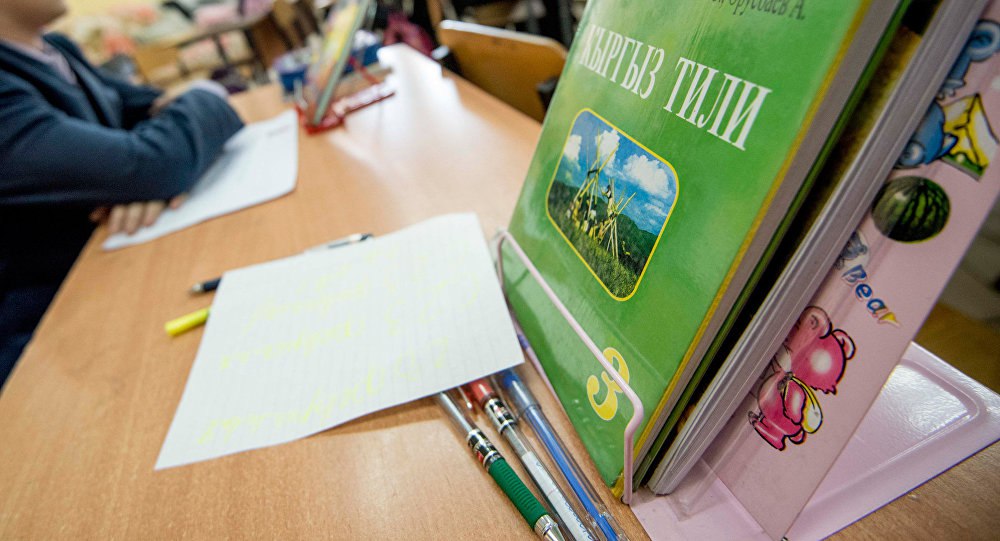
Kyrgyzstan’s National Commission on State Language is proposing to introduce fines for people working in certain jobs if they do not speak Kyrgyz well enough. It has submitted the corresponding bill for public discussion.

The law “On State Language” sets out a list of people who are obliged to know the state language, and use it while performing their official duties — be they in socio-cultural, educational, or other professional spheres.

The National Commission proposes that people working in certain professions must speak Kyrgyz at an average (B2) level if they are ethnic Kyrgyz, and at least the basic level (A2) if they are a member of another ethnic group. Foreign citizens living in the republic, or intending to obtain immigrant status, should speak at least elementary (A1) Kyrgyz.

The draft bill reads: “It is proposed to introduce a new article into the Code of Offenses, according to which violation and non-compliance with the requirements of the legislation on language entails a fine of 5,000 som ($57) for individuals and 17,000 som ($194) for legal entities.

In addition, the National Commission proposes to increase fines for texts in advertising and other visual information that do not meet the standards of literary Kyrgyz language.

Central Asia-EU Conference Focuses on Security Issues

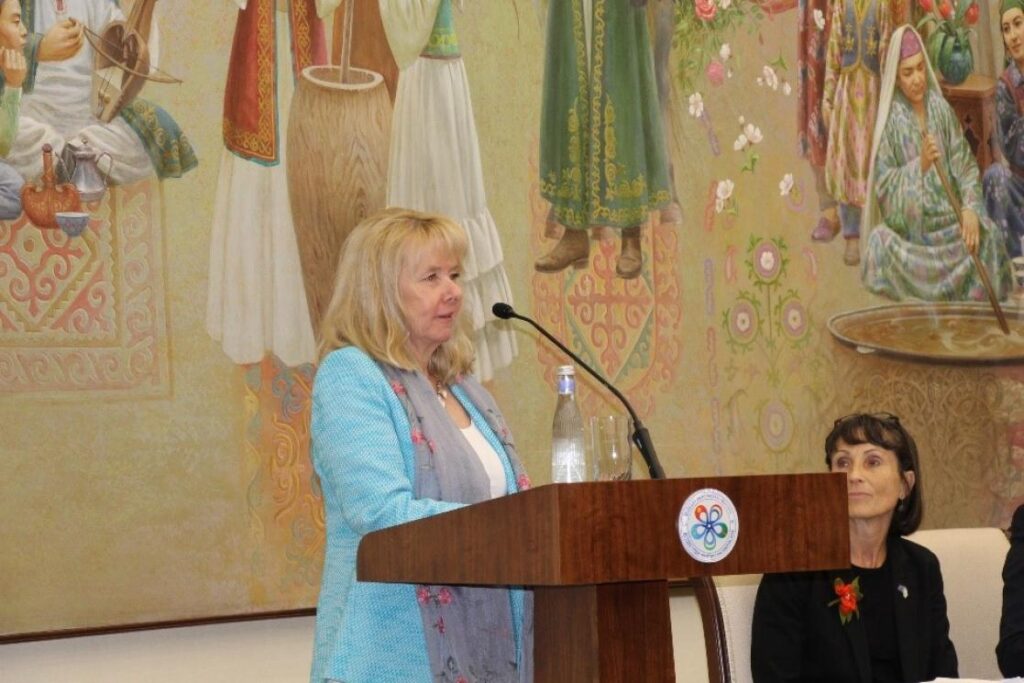
On May 24, the International Institute for Central Asia (IICA) in collaboration with the European Union, hosted a conference in Tashkent entitled “Central Asia – the European Union: a new agenda for security cooperation.”

As reported by the EU Delegation to Uzbekistan, discussions focused on cooperation on security between Central Asian countries and the EU, and in particular, the need to develop new approaches in combating terrorism and organized crime, strengthening cybersecurity, and preventing violent extremism and human trafficking.

Towards this goal and as part of EU-funded security-related projects, thousands of highly qualified specialists have been trained, and border and customs checkpoints modernized in the Central Asian region.

Opening the meeting, European Union Special Representative for Central Asia Terhi Hakala stated: “I was present at the [EU and Central Asia] Leaders’ Meeting in Cholpon-Ata in 2023 when President of Uzbekistan Shavkat Mirziyoyev proposed this conference. We have achieved a lot in our regional cooperation since then and I am glad of this opportunity  to deepen our security cooperation. I am convinced that today’s dialogue  will help us to respond better to rapidly changing security challenges faced by both the EU and Central Asia.”

Endorsing Hakala’s statement, Deputy Minister of Foreign Affairs of Uzbekistan Muzaffarbek Madrahimov said, “Today’s realities confirm the need for a deeper understanding of the indivisibility of threats to the security of Europe and Central Asia, and our common interests in combating transnational threats.”

EU Ambassador to Uzbekistan Charlotte Adriaen likewise reiterated : “In an increasingly interconnected world, no country nor region can tackle the emerging unconventional security threats alone. During today’s discussions, we heard from security experts and practitioners from the EU and Central Asia and took stock of the ongoing cooperation and existing projects”.


Kazakhstani Movies No Longer Playing Just a Supporting Role

Until recently, the idea of Kazakhstani movies grossing a billion tenge ($2.5m) was a pipe dream. But in the last two years several films have earned this amount. The number of films being co-produced with world-leading studios is growing. However, domestic cinema still struggles to overcome funding and content quality problems.

At the end of last year, the romantic comedy Taptym au seni (I Found You) earned more than a billion tenge in just 10 days of screenings. But the real shock came later, when the box office receipts of the suspense film Dastur (Tradition) exceeded a billion tenge after only a week of distribution. In one weekend alone it significantly outperformed Hollywood’s Aquaman.

In just the second half of last year, Kazakhstani films at the domestic box office earned over $14 million. One of the highest-grossing films was Kazakhstani Business in India, directed by Nurlan Koyanbayev. The film grossed over 1.25 billion tenge, and it was followed by Maghan Nazar Audar (Look at Me). The top ten includes Zhaidarman (Cordial), Zhynim Sol (My Gene) and Azhyrasam (Divorced).

Domestic films now account for 30% of total box office receipts in Kazakhstan. Domestic analysts are confident that in the near future Kazakhstani cinema will overtake Uzbekistan to become the leader in Central Asia.

In addition to the national Kazakhfilm studio and private studios, production is being driven forward by the State Center for Support of National Cinema. The Center allocates grants to industry figures on a competitive basis, and although there are heated discussions around the terms of the competition and the awardees, state support has a significant impact on the release of films.

As for the subject matter, comedies are usually the leaders at the box office. They are often devoted to crime, drug trafficking, fraud, dishonest business, and corruption. Romance and historical figure movies remain popular as well. There is also a growing trend of condemning violence against women in the industry. Dastur, for example, tells the story of a rape victim who violently avenges not only the offender but also his neighbors, with whose tacit consent her life and dignity were devalued. Some sources are speculating that there will soon be a film adaptation of the story of the murder of Saltanat Nukenova by former minister Kuandyk Bishimbayev, which has attracted worldwide attention.

A decline in the popularity of western and Russian films, which have led the box office in past decades, is also helping the growth of domestic movies.

The share of international projects in the Kazakhstani film industry is growing. In March, the series Assassins Beginning, produced in Egypt, showed spectacular locations across Kazakhstan, including Charyn Canyon and Kolsai Lakes.

In January Kazakhstan and Nigeria’s ‘Nollywood’ joined forces for the first time to create a movie called Adam Bol. The film will be shown in both countries, with Nigeria steadily taking over movie markets in Africa and Asia.

Joint production helps to not only create jobs in the film industry, but to support businesses as well. At the end of last year, it became known that the American company Wonderhill Studios would launch its first feature film project in Kazakhstan, about a Kazakh girl rider who won a men’s race. Said American screenwriter Tom Nichols: “I was in Astana, traveled around Kazakhstan, talked to the locals. From them I learned about traditions and ceremonies, and it was all so delightful and rich that it gave me all the materials I needed to write the story. The richness of Kazakhstan’s culture impressed me. The tradition of horse racing and the people’s values — I thought this is a story we could show in the United States, and Americans would love it. They will really love the story of a Kazakh girl winning a horse race in the US.”

Kazakh actress Ayanat Ksenbai, known to viewers from the films Nomad and Leila’s Prayer, will play the lead role. The film’s budget will be $45 million, and it the movie will create 2500 jobs in Kazakhstan.

The Kazakhstani movie industry does however still have many problems. Foremost among them are the lack of funding, distribution difficulties — including a shortage of cinemas — and administrative issues. Nevertheless, over the last couple of years, most Kazakhstani films have been breaking even; this is a big step forward.

The Middle Corridor is Being Funded Faster than Expected

According to Samuel Doveri Vesterbye, director of the independent think-tank, European Neighbourhood Council (ENC), a small group of high-ranking cabinet officials, ambassadors and other diplomats met in a closed-door round-table on May 15, representing the EU, Türkiye and countries in the South Caucasus and Central Asia. The meeting, organized by Turkish organizations International Transporters Association (UND) and the Turkish Industry and Business Association (TUSIAD), focused on the synergy between the EU’s Global Gateway initiative and the projects of the Trans-Caspian International Trade Route (TITR).

The fact of the meeting taking place has been confirmed by Türkiye’s Permanent Delegate to the EU. Doveri Vesterbye writes that the meeting “consisted of less than 30 individuals mostly linked to diplomacy, transport, logistics, business, critical infrastructure security, policy-making and supply chains” and “brought together four different Directorate Generals (DGs) and more than 10 nationalities of Director-and-Ambassador level.” Significantly, also according to Doveri Vesterbye, the development of high-level coordination committees is under way.

The meeting’s assessment that the TITR is being funded faster than expected is an extremely positive development. Dr. S. Frederick Starr, a well-known American expert and a Distinguished Fellow for Eurasia at the American Foreign Policy Council, told The Times of Central Asia that “the activation and coordination of both European and Turkish institutions is essential not only for the financing and construction of this mega-project, but also for its successful management thereafter.”

This is a very stabilizing development for international commerce. As other corridors are increasingly volatile, it would help to insulate trade between China and Europe from supply-chain shocks. It will also benefit the participating states themselves. Starr explained that the continuing European and Turkish involvement in building out the TITR “will help the transit states of Central Asia and the [South] Caucasus to balance their relations with China and Europe and will thereby undergird their sovereignties. Such balance creates what is literally a ‘win-win-win’ situation.”

According to a mid-2023 report, prepared jointly by the EBRD and the EU Commission, an estimated €18.5 billion is required in infrastructure investments in order to improve Central Asia’s transport connectivity. Potential growth in transit container traffic by 2040 could be over 40-fold, with significant spill-over effects on education, tech hubs, business and middle-class development.

At the same time, the TITR has been reconceptualized as a driver of regional trade and economic growth along the entire Europe–Türkiye–South Caucasus–Central Asia trajectory, with special attention given to the latter two regions. The EU Commission and the EBRD have already funded €10.5 billion in Central Asia via loans and grant investments promised only a few months ago, in January this year, at the Global Gateway Investment Forum in Brussels. This pace suggests significant commitment by such large bureaucratic organizations, and it augurs well for the unlocking of funds from the European Investment Bank (EIB) for investment in Turkey.

Doveri Vesterbye writes that the heads of EU member-state missions in Brussels (COREPER) will work to synchronize EIB investments, with special attention on reforming the Customs Union, in order to prepare EU decisions in this direction. For example, such seeming minutiae as the facilitation of issuing visas to truck drivers from Türkiye requires attention in order to implement EBRD recommendations to diminish costs associated with otherwise longer waiting times at borders.

Other main recommendations, including from the World Bank report of last year, are to implement digitization, particularly at border-crossings, cut red-tape, including customs-declaration paperwork, and improve logistical bottlenecks. In this last respect, truck transit needs to be improved both in the short and the medium term, and rail transit in the longer term.

More recent work, executed on the basis of the EBRD study, projects that investments of €16.5 billion to improve regulatory frameworks and infrastructure connectivity will increase container traffic from 100,000 Twenty-foot Equivalent Units (TEU, a standard cargo unit equivalent to approximately 35 cubic meters) to 865,000 TEU. This would also decrease Asia–Europe transit times from a month or more to fewer than 13 days. The next EU Commission and European Parliament will likely play a role in the corridor’s development by encouraging or requiring energy investments in hydrogen, solar and wind power for electricity-generation.

More recently, Doveri Vesterbye argues that the Middle Corridor’s assistance in Europe’s relocation of supply chains will help the EU to achieve its desired global strategic autonomy. Elements contributing to this development would include diversification from Chinese raw-material sources at still-competitive economic prices, as well as the maintenance of control over strategic supply and production chains through access to inexpensive energy and key rare metals.

The Middle Corridor is being realized faster than expected, although continued fine-grained attention is necessary for its most efficient implementation. It is part and parcel of the ongoing reconfiguration of global supply chains that will continue over the next decade and a half, as the international system reaches the crisis of tensions arising from the ongoing bifurcation between “Sinosphere” and “Anglosphere” trade routes.

Whether the EU will be able use the build-out of the Middle Corridor to rein Türkiye back towards a Western orientation in the post-Erdogan era remains to be seen. What is clear is that the vision of a robust and efficient Middle Corridor is steadily materializing. The long-term benefits of this initiative extend beyond immediate trade efficiencies. Synchronizing investments and focusing on the modernization of infrastructure will significantly boost the economies of the transit states. In the best of all possible worlds, enhanced connectivity will spur regional development, promote the rise of tech hubs and help to grow a robust middle class in part through increased educational opportunities.

The EU is succeeding in recruiting the Middle Corridor countries into its program emphasizing investments in sustainable energy investments, including hydrogen production and transmission. At a minimum, successful implementation will increase Europe’s resilience against external supply chain disruptions. An often-overlooked consequence is the enhancement of the role of the countries along the Middle Corridor in shaping the outcome of the structural crisis of the international system, which will play out over the next 20–30 years.