• KGS/USD = 0.01144 0%
  • KZT/USD = 0.00194 0%
  • TJS/USD = 0.10879 -0.18%
  • UZS/USD = 0.00008 0%
  • TMT/USD = 0.28490 0%
  • KGS/USD = 0.01144 0%
  • KZT/USD = 0.00194 0%
  • TJS/USD = 0.10879 -0.18%
  • UZS/USD = 0.00008 0%
  • TMT/USD = 0.28490 0%
  • KGS/USD = 0.01144 0%
  • KZT/USD = 0.00194 0%
  • TJS/USD = 0.10879 -0.18%
  • UZS/USD = 0.00008 0%
  • TMT/USD = 0.28490 0%
  • KGS/USD = 0.01144 0%
  • KZT/USD = 0.00194 0%
  • TJS/USD = 0.10879 -0.18%
  • UZS/USD = 0.00008 0%
  • TMT/USD = 0.28490 0%
  • KGS/USD = 0.01144 0%
  • KZT/USD = 0.00194 0%
  • TJS/USD = 0.10879 -0.18%
  • UZS/USD = 0.00008 0%
  • TMT/USD = 0.28490 0%
  • KGS/USD = 0.01144 0%
  • KZT/USD = 0.00194 0%
  • TJS/USD = 0.10879 -0.18%
  • UZS/USD = 0.00008 0%
  • TMT/USD = 0.28490 0%
  • KGS/USD = 0.01144 0%
  • KZT/USD = 0.00194 0%
  • TJS/USD = 0.10879 -0.18%
  • UZS/USD = 0.00008 0%
  • TMT/USD = 0.28490 0%
  • KGS/USD = 0.01144 0%
  • KZT/USD = 0.00194 0%
  • TJS/USD = 0.10879 -0.18%
  • UZS/USD = 0.00008 0%
  • TMT/USD = 0.28490 0%
15 December 2025

Gasoline Smuggling a Growing Business in Kyrgyzstan

Smuggled gasoline is being sold from plastic bottles on the outskirts of Bishkek. This fuel is cheaper than at official gas stations, but motorists say the quality is no worse.
Kyrgyzstan’s State Tax Service of Kyrgyzstan seized almost 100,000 liters of gasoline from illegal fuel and lubricant traders in the first four months of 2024 alone. The sellers were fined one million som ($11,500).
Fines are doing little to stop illegal gasoline sellers. One trader explained to The Times of Central Asia that selling smuggled gasoline is very profitable, earning them about $40 a day. The fine is only $35, and since a violator must be caught to be punished, most go about their business unaffected. As of 2023, the official average salary in Kyrgyzstan stood at $376 a month.
A liter of gasoline at such illegal points costs, on average, 10% less than at official gas stations: the trade is thriving and gaining momentum yearly.
The State Tax Service explained to The Times of Central Asia that their competence includes checking electronic invoices and the presence of cash registers or patents to pay taxes to the state. As a rule, illegal sellers have neither, so they are fined, and their products are confiscated. However, the tax authorities cannot completely stop the activities of traders. Two other government agencies can check fuel sellers: the traffic police and the ministry of natural resources. But Kyrgyzstan has a moratorium on business inspections, so officials’ hands are tied.
Illegal sellers sell both Russian and Kazakhstani gasoline. The supply chain is well organized — tanker truck owners take the fuel from the bases of official gas stations to special storage sites. Then gasoline is poured into plastic containers and sold on highways. The average capacity of a gasoline tanker is about 15 tons, and one tanker can transport up to 100 tons per day.
Despite the ban on exporting fuels and lubricants from Kazakhstan, gasoline and diesel from there are still smuggled into Kyrgyzstan. Points of sale for such fuel are concentrated along the border with Kazakhstan, on the northern outskirts of Bishkek. Kazakh gasoline is cheaper than Kyrgyz, which contributes to its popularity. Fuel from the neighboring country is delivered in hidden containers in ordinary cars and heavy trucks, and there are even secret underground gasoline pipelines in border communities.
The business of selling smuggled gasoline also thrives thanks to corruption. For example, last year, officers of the State Committee for National Security detained several employees of the State Tax Service, who, for a fee, made false transportation documents within the country and false consignment notes and seals.

World Bank to Help Uzbekistan Improve Social Protection

Uzbekistan will receive $100 million from the World Bank to improve its social services. The funds will also be used to set up 50 social service centers, train professionals to work with vulnerable people, and employ people with disabilities.

Under the ‘Inson’ project, various vulnerable groups will be able to receive more social services. There will be an additional $2 million grant to assess the impact of services on the wellbeing of vulnerable children.

“The project will assist in developing the legal and institutional framework for the ‘care economy’ sector in Uzbekistan. It will also help improve access to demanded social services that are still inaccessible to thousands of people, including elderly citizens, people with disabilities, victims of domestic violence, and socially vulnerable children,” said the World Bank’s country manager for Uzbekistan Marco Mantovanelli.

The 50 social service centers are expected to facilitate targeted outreach to those in need, including the creation of a legal framework to improve the quality standards of social services. It is planned to train 1,200 people with disabilities in crafts and vocational skills, half of them young people aged 15-24.

The project will also provide quality legal, medical, psychological, and other assistance to female victims of violence. They will be allowed to learn computer and financial literacy and a profession. It is envisaged to create an adaptive system of social protection for vulnerable people during emergencies and due to climate change.

For 100,000 poor citizens in rural areas, the program will provide seeds for climate-resistant crops, agricultural tools, and training in farming under changing climatic conditions.

Kazakhstan and the Netherlands to Further Bilateral Cooperation

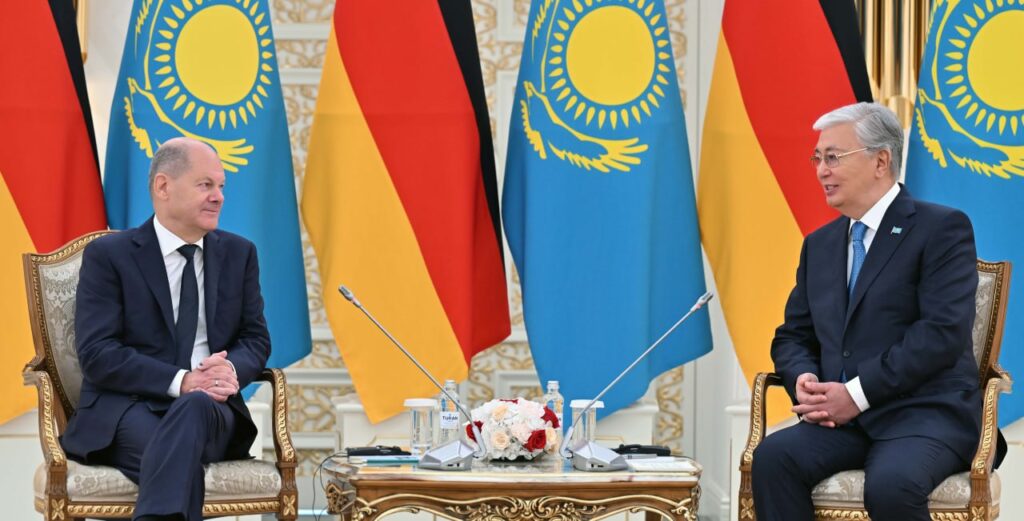
During a working visit to Astana , Prime Minister of the Netherlands Mark Rutte engaged in talks with Kazakhstan President Kassym-Jomart Tokayev.

Rutte had visited Astana back in 2010 during his first trip outside the EU as Prime Minister, and had not been back since his second visit in 2015.

According to reports  issued by press service of the President of the Republic of Kazakhstan, the leaders’ discussions focused on strengthening cooperation in various sectors including trade and economics, energy, and investment, and cultural-humanitarian spheres. Information was also exchanged on their respective countries’ practices regarding  transport, innovation, nuclear energy, agriculture, health, climate, and water management.

Welcoming the opportunity to expand dialogue on the above issues, Tokayev emphasized, “I would like to note the dynamic development of our bilateral cooperation. The Netherlands is the largest investor in our economy. The volume of direct investments has exceeded 120 billion dollars. Our countries are implementing large-scale joint projects.”

Furthermore, the President stated that the Prime Minister of the Netherlands’s visit would provide additional impetus to the development of trade and economic relations between Astana and Amsterdam.

 Mark Rutte expressed his appreciation of the level of bilateral partnership enjoyed by their countries and spoke in favor of intensifying practical cooperation between Kazakhstan and the Netherlands.

 Turning to environmental issues, he confirmed, ” We will be happy to share ideas and developments that we have in the field of agriculture, green energy, water management.”

Views were also exchanged on current issues on the international and regional agenda and both leaders stressed the  importance of continued dialogue within the framework of interaction with the European Union.

Police Officers in Bishkek Fired Over Mob Conflict with Foreign Students

The Kyrgyz Interior Minister and various heads of district police departments, whose duties include ensuring law and order in Bishkek, attended a meeting to discuss the recent mob conflict with foreign-students, wherein the Interior Ministry board of directors and staff members received disciplinary citations.

The head of the Interior Ministry’s Internal Investigation Service, Zholboldu Kochkonov, briefed law enforcers on the results of an internal investigation which was conducted following the events of May 13th and 17th, when foreign students and workers were beaten, and violent scenes erupted on the streets and in several Bishkek hostels.

“A total of 20 employees have been brought to disciplinary responsibility. Of them, 10 employees of the Bishkek Sverdlovsk District Department of Internal Affairs, including the head of the unit, have been relieved of their posts,” Kochkonov stated following the meeting.

According to the head of the Internal Investigation Service, an additional 10 employees of the Bishkek City Main Department and the Sverdlovsk District Department of Internal Affairs were given various types of disciplinary penalties. Kochkonov said that an investigation was launched into the officers’ failure after the May 13th fight, and it was due to their inaction that the conflict escalated into the large-scale riots seen on May 17th.

As TCA reported, on May 13th, a fight between local youths and foreign students took place in a hostel in Bishkek. Four days later, a rally and riots occurred in the center of the city in which around a thousand people participated. More than 40 people were hospitalized.

Following the unrest, President Japarov promised swift action should the events be repeated, stating that, “Anyone, whether he is our citizen or a foreign citizen, who threatens the integrity of our state, organizes chaos, will be punished mercilessly.”

Tajikistan and Russia Discuss Labor Migration, Security

Tajikistan’s president Emomali Rahmon met recently with the Russian minister of internal affairs Vladimir Kolokoltsev in Dushanbe. The statesmen discussed cooperation between two countries’ law enforcement agencies, as well as labor migration from Tajikistan to Russia.

Rahmon spoke about the countries’ joint efforts to combat terrorism, extremism, drug trafficking, and other forms of transnational organized crime.

His press service quotes him as saying: “With satisfaction, it was pointed out the aspiration of the parties to the practical realization of the agreements reached recently at the highest level regarding the resolution of the problems that have arisen in the migration sphere. The leader of the nation emphasized the importance of taking all necessary measures to strengthen the legal and social protection of Tajik labor migrants staying in Russia.”

Kolokoltsev arrived in Dushanbe as part of the next round of negotiations between Russia and Tajikistan on the issue of migration.

Middle Powers Converge: Kazakhstan and Singapore Strengthen Bilateral Ties

During his country’s first presidential-level visit to Singapore in two decades, Kazakhstan’s President Kassym-Jomart Tokayev met with Singapore’s Prime Minister Lawrence Wong on May 23. The meeting represents an alignment of interests and resources between the two middle powers and serves to create a more balanced and cooperative global environment.


Identifying middle powers

When global powers become embroiled in their domestic issues or engage in rivalries that prevent effective international cooperation, middle powers step in to fill the leadership void. For instance, Canada has historically taken a lead in peacekeeping missions under the United Nations, advocating for human rights and mediating conflicts where larger powers are either unwilling or unable to engage.

Middle powers, also referred to as “swing states”, are defined as influential players in international politics who resist taking sides in major conflicts and possess a specific combination of characteristics such as geostrategic location, demography, economic performance, natural resource wealth, military power and/or political influence.

In a January 2024 study, the German Institute of Security and International Affairs (SWS) listed Kazakhstan among twelve notable “middle powers” in the world, who were of great importance to Germany and the EU for either shaping policies or minimizing geoeconomic risks by diversifying foreign policy relations. Kazakhstan possesses immense energy resources and critical materials for the green transition. Bordering Russia, China, and the Caspian Sea, it also offers a land bridge linking East-West and North-South corridors.

Singapore is also considered a middle power with its notable regional and international influence, particularly in the Indo-Pacific region. A highly developed country with one of the highest per capita GDPs in the world, Singapore is the only nation in Asia with a “AAA” sovereign credit rating from all major rating agencies. Additionally, it has one of the highest per capita defense expenditures globally and is among the largest arms manufacturers.


A partnership between Kazakhstan and Singapore strengthens their middle power status

What distinguishes middle powers from smaller powers is their ability to be more independent and active, particularly in the realm of diplomacy. The collaboration between these two leaders, therefore, helps solidify their middle power status.

On a diplomatic level, President Tokayev emphasized Singapore’s role as Kazakhstan’s strategic partner in Southeast Asia and expressed confidence that his state visit would strengthen bilateral relations. For his part, Prime Minister Wong highlighted that Singapore could serve as a gateway for Kazakhstan to engage with Association of Southeast Nations (ASEAN) while Kazakhstan could help Singapore build ties with Central Asia.

Economically speaking, collaboration offers great potential gains for both sides. Currently, over 140 Singaporean entities and joint ventures operate in Kazakhstan, with total investment exceeding $1.7 billion. These numbers are expected to rise through further integration of their economies.

During their recent meeting, the leaders focused on key sectors where Kazakhstan brings high strategic value. For instance, Wong expressed the importation of more agri-food products from Kazakhstan. Singapore’s Indorama Corporation is already in discussions about the production of phosphate fertilizers in Kazakhstan.

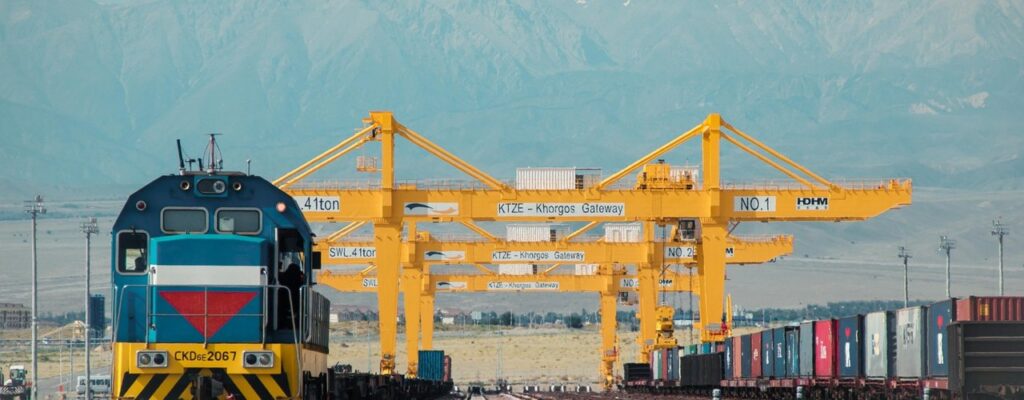
Logistics is another key sector of interest. Singapore is already investing in the Middle Corridor project, which integrates Central Asia into international markets, and is expected to invest further in this area. PSA International, a Singapore-based transport company, will build and develop a container hub in Kazakhstan’s Aktau port on the Caspian Sea. Kazakhstan Temir Joly, the national railway company, signed a memorandum of cooperation with the Port of Singapore Authority to promote “access to a whole network of seaports” and “integration into the global transport and logistics chain” to “significantly simplify the export of products from Kazakhstan to the world markets,” reported the Kazakh Foreign Ministry. Last week, Singapore Post (SingPost) announced a strategic cooperation agreement with Qazpost, Kazakhstan’s national postal operator, aimed at improving logistics and e-commerce growth between the two countries.

The leaders also prioritized the development of Kazakhstan’s energy, critical materials processing, and fin-tech sectors. To enhance bilateral trade and create a favorable business environment in all sectors, Kazakhstan and Singapore signed four agreements covering six areas: economic integration, security, enterprise standards, intellectual property (IP) rights protection, higher education, and legal dispute resolution.


Conclusion

Historically, the European Union, the United States, and Russia have provided the largest Foreign Direct Investment (FDI) in Kazakhstan. In the last year, China has also emerged as a major investor. Now, Singapore is stepping in as another significant player, further diversifying the sources of FDI and strengthening economic ties with Kazakhstan. This collaboration among middle powers to diversify away from traditional larger countries, whose investments often come with political strings attached, is likely to continue. By engaging in these partnerships, Kazakhstan and Singapore can reduce trade dependencies and contribute to a more resilient global supply chain.