• KGS/USD = 0.01143 -0%
  • KZT/USD = 0.00192 -0%
  • TJS/USD = 0.10820 0.19%
  • UZS/USD = 0.00008 0%
  • TMT/USD = 0.28575 0%
  • KGS/USD = 0.01143 -0%
  • KZT/USD = 0.00192 -0%
  • TJS/USD = 0.10820 0.19%
  • UZS/USD = 0.00008 0%
  • TMT/USD = 0.28575 0%
  • KGS/USD = 0.01143 -0%
  • KZT/USD = 0.00192 -0%
  • TJS/USD = 0.10820 0.19%
  • UZS/USD = 0.00008 0%
  • TMT/USD = 0.28575 0%
  • KGS/USD = 0.01143 -0%
  • KZT/USD = 0.00192 -0%
  • TJS/USD = 0.10820 0.19%
  • UZS/USD = 0.00008 0%
  • TMT/USD = 0.28575 0%
  • KGS/USD = 0.01143 -0%
  • KZT/USD = 0.00192 -0%
  • TJS/USD = 0.10820 0.19%
  • UZS/USD = 0.00008 0%
  • TMT/USD = 0.28575 0%
  • KGS/USD = 0.01143 -0%
  • KZT/USD = 0.00192 -0%
  • TJS/USD = 0.10820 0.19%
  • UZS/USD = 0.00008 0%
  • TMT/USD = 0.28575 0%
  • KGS/USD = 0.01143 -0%
  • KZT/USD = 0.00192 -0%
  • TJS/USD = 0.10820 0.19%
  • UZS/USD = 0.00008 0%
  • TMT/USD = 0.28575 0%
  • KGS/USD = 0.01143 -0%
  • KZT/USD = 0.00192 -0%
  • TJS/USD = 0.10820 0.19%
  • UZS/USD = 0.00008 0%
  • TMT/USD = 0.28575 0%
13 December 2025

Kazakhstan Wants to Use AI in Drafting Laws

Kazakhstan is considering introducing artificial intelligence technologies in its legislation development and law analysis. This was recently announced at an international conference on AI and law, Elblog.pl reports.

AI is expected to change the game in legislative efforts, helping in both its organizational and technical aspects. One of its most practical benefits is converting the words spoken by lawmakers into text. More sophisticated uses include drafting legislation and analyzing the impact on proposed laws without human bias.

Kanatbek Safinov, director of the Institute of Parliamentarism of Kazakhstan, noted that AI tools could better allocate significant resources currently spent on the legislative process, such as drafting expert assessments.

“The main task is to create artificial intelligence tools that would make it possible to assess the potential effectiveness of new legislation, thus freeing lawmakers from the hard work of formulating legal texts. This reorientation will allow them to focus on identifying and solving problems of concern to the public,” Safinov believes.

In his opinion, the European Parliament, especially its Greek division, is an ideal role model. The latter uses more than 200 AI tools, 33 of which are directly involved in the lawmaking process.

Poland and Russia Ensure Continued Transit of Kazakh Oil to Germany

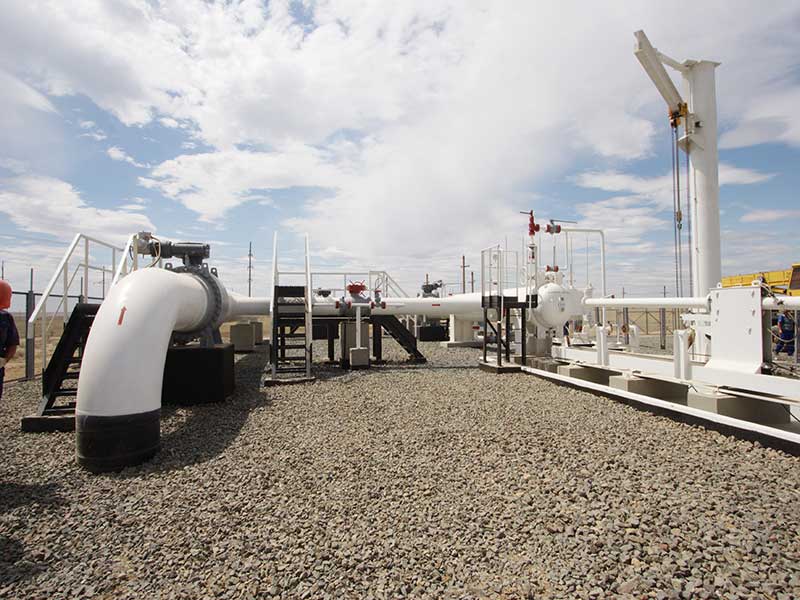
Pipeline operators PERN (Poland) and Transneft (Russia) have agreed to ensure the continued transit of Kazakh oil to Germany,  reported Reuters.

The Druzhba pipeline runs through Russia to the Belarusian city of Mozyr, after which it splits northwards in the direction of Poland and Germany, and southwards, to Hungary, the Czech Republic, Slovakia and Croatia.

The northern pipeline has the capacity to  carry  two million barrels of oil per day from Kazakhstan into Poland.

Back in  April, Transneft warned Kazakhstan that the transit of its oil to Germany could cease as a result of the situation concerning the certification of oil flow meters in Poland.

The devices must be periodically certified for compliance with Russian standards and the verification of oil flow meters on the Polish section of the Druzhba pipeline must be completed by June 5.

To  address the issue , the  Polish pipeline operator PERN, Russian state-owned Transneft, and German refiner PCK Schwedt, which receives supplies from Kazakhstan, have agreed that the German company will maintain oil flow meters on the Polish section of the Druzhba pipeline.

The work required to maintain metering on the Polish section and in turn, remove the risks imposed by  PERN’s sanctions,  are to be undertaken by an unnamed Slovak company.

Rahmon Orders Map of Environmental Hazards

The Government of Tajikistan plans to create an atlas of exogenous geological processes, Sputnik has reported.

The General Directorate of Geology of the Republic will prepare the map and present it to the government for consideration. The President of Tajikistan, Emomali Rahmon, announced this during his visit to the Khatlon region.

According to Rahmon, it is necessary to strengthen early warning systems regarding possible environmental hazards in Tajikistan and to prevent the adverse consequences of such situations. Leaders of regions, cities and districts, together with relevant ministries and agencies, have been instructed to take measures to mitigate the effects of natural disasters and provide assistance to victims.

“In the second ten days of May, as a result of heavy rains, floods and landslides occurred in some areas, causing economic damage as well as human casualties,” Rahmon said. He also emphasized the need to strengthen cooperation with environmental protection, emergency situations and civil defense committees, as well as the State Committee for Land Surveying and Geodesy on early warnings of potential environmental hazards.

Uzbekistan to Establish Atomic Energy Agency

Uzbekistan is to establish an new Atomic Energy Development Agency under the Cabinet of Ministers; raising the level of the agency which currently exists as a subdivision of the Ministry of Energy.

The move supports plans for the construction of Uzbekistan’s first-ever nuclear power plant and aligns with the Presidential Decree “On measures to improve the system of public administration and control in the field of subsoil use, industrial, radiation and nuclear safety, as well as the use of atomic energy,” adopted on 24 May.

Once in operation, the new Atomic Energy Agency will be responsible for state policy in the use of atomic energy for peaceful purposes.

The presidential decree also includes the establishment of a Committee for Industrial, Radiation and Nuclear Safety conducted by the Cabinet of Ministers.

As a national executive body, the committee will be charged with the implementation and coordination of a unified state policy to oversee and ensure safety measures at nuclear energy and nuclear technology facilities and at hazardous production facilities.


Uzbekistan Interested in Afghan Oil and Gas

TOLOnews reports that Russian and Uzbek companies have expressed their intention to develop oil and gas fields in Afghanistan, whilst the interest of other Central Asian countries in this field is also growing.

“Recently, we had meetings with Uzbek companies,” Homayoon Afghan, spokesperson for the Ministry of Mines and Petroleum said. “The Ministry has announced several oil and gas sites to attract investment, including the Herat oil and gas fields.”

Plans for the exploration and extraction of oil, gas and other minerals became one of the main topics discussed during the visit of the delegation of Uzbekistan to Kabul. At that time, it was reported that Uzbekistan wanted to buy more than 1 million tons of coal from Afghanistan.

Also, on May 21 of this year, Uzbekistan sent humanitarian aid to the people affected by floods in Afghanistan. This aid included 48 tons of flour, 22 tons of rice, 100,000 canned goods and 44 tons of pasta products, 96 water storage tanks of 1,000 liters, etc.

The UN World Food Program has reported that more than 300 people have died and 1,000 homes have been destroyed in floods caused by heavy seasonal rains in Afghanistan.

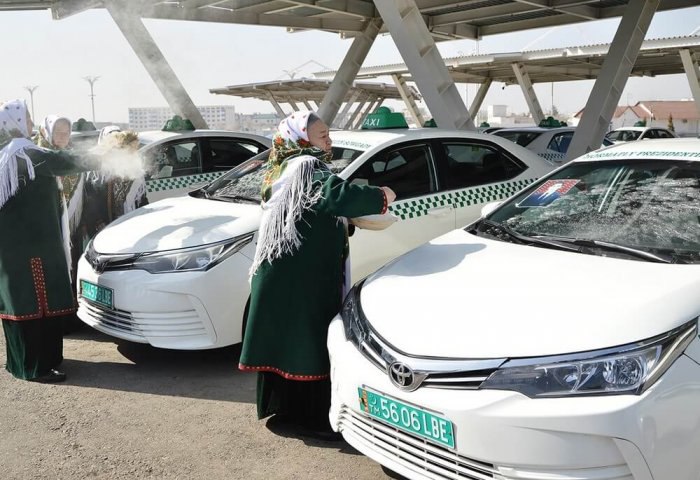
Authorities in Turkmenistan Using Cab Drivers As Informants to Identify “Unreliable” Citizens

Turkmen authorities are forcing cab drivers to denounce and identify citizens they consider “unreliable”. This is being reported by Radio Azatlyk.

Ministry of Homeland Security (MHS) officers are reportedly forcing cab drivers to ask passengers various questions to find out their attitudes toward events in the country, and the overall situation.

“MHS officers are using cab drivers in the capital as informants. They try to incentivize these cab drivers with promises to help them if they are stopped by traffic police officers to extort bribes,” one of the capital’s cab drivers said, on condition of anonymity.

In an attempt to recruit cab drivers as informants, MHS officials hint that if the drivers agree to cooperate and provide information of interest to the authorities, their cooperation may also be rewarded financially.

“Security officials instruct drivers who agree to cooperate to ask certain questions. The questions should mostly be put to passengers who are coming from the airport, railway station, shopping centers and bazaars,” said another cab driver.

According to him, in order to strike up a conversation, the MHS officers tell drivers to ask a certain list of questions to gauge their passengers’ opinions and attitudes.

“In this way, they say, they are trying to identify ‘unreliable people’. Some drivers are agreeing to participate in these dirty games,” said a driver from Ashgabat.

Azatlyk is reporting that in recent months the Turkmen authorities have increased control over the country’s citizens. Earlier this year it reported that security agencies were questioning the parents of schoolchildren who used VPN services to visit sites disapproved by the authorities, and that these families were included in the lists of “unreliable families”.