• KGS/USD = 0.01144 0%
  • KZT/USD = 0.00209 0%
  • TJS/USD = 0.10617 1.05%
  • UZS/USD = 0.00008 0%
  • TMT/USD = 0.28490 0%
  • KGS/USD = 0.01144 0%
  • KZT/USD = 0.00209 0%
  • TJS/USD = 0.10617 1.05%
  • UZS/USD = 0.00008 0%
  • TMT/USD = 0.28490 0%
  • KGS/USD = 0.01144 0%
  • KZT/USD = 0.00209 0%
  • TJS/USD = 0.10617 1.05%
  • UZS/USD = 0.00008 0%
  • TMT/USD = 0.28490 0%
  • KGS/USD = 0.01144 0%
  • KZT/USD = 0.00209 0%
  • TJS/USD = 0.10617 1.05%
  • UZS/USD = 0.00008 0%
  • TMT/USD = 0.28490 0%
  • KGS/USD = 0.01144 0%
  • KZT/USD = 0.00209 0%
  • TJS/USD = 0.10617 1.05%
  • UZS/USD = 0.00008 0%
  • TMT/USD = 0.28490 0%
  • KGS/USD = 0.01144 0%
  • KZT/USD = 0.00209 0%
  • TJS/USD = 0.10617 1.05%
  • UZS/USD = 0.00008 0%
  • TMT/USD = 0.28490 0%
  • KGS/USD = 0.01144 0%
  • KZT/USD = 0.00209 0%
  • TJS/USD = 0.10617 1.05%
  • UZS/USD = 0.00008 0%
  • TMT/USD = 0.28490 0%
  • KGS/USD = 0.01144 0%
  • KZT/USD = 0.00209 0%
  • TJS/USD = 0.10617 1.05%
  • UZS/USD = 0.00008 0%
  • TMT/USD = 0.28490 0%

Kazakhstan to Launch Digital Schools Project

Kazakhstan will launch a pilot digital schools project, Qazaq Digital Mektebi, in September 2026, aimed at reducing disparities in educational quality between rural and urban schools.

The initiative will target under-enrolled schools in seven regions, according to the Ministry of Education.

The project provides for the use of AI technologies to support the teaching of natural sciences, mathematics, and humanities. The approach is intended to help students learn more independently while increasing engagement in the learning process.

The pilot phase will be implemented in the North Kazakhstan, Kostanay, Akmola, Pavlodar, West Kazakhstan, Aktobe, and East Kazakhstan regions. Authorities are currently assessing schools’ technical readiness and digital infrastructure.

Based on the pilot’s results, the government plans to develop a national educational platform offering digital content tailored for rural schools.

The ministry is also considering integrating domestic IT solutions, including the Qalan.kz platform, which incorporates gamification and artificial intelligence elements and has more than 800,000 users. The project is a resident of the technology park Astana Hub.

The ministry expects the initiative to improve access to quality education in rural areas and to form part of the country’s broader digital transformation strategy.

The Times of Central Asia previously reported that Kazakhstan is accelerating the adoption of digital technologies across key sectors, including education.

Uzbekistan Becomes Top International Destination for Russian Airlines

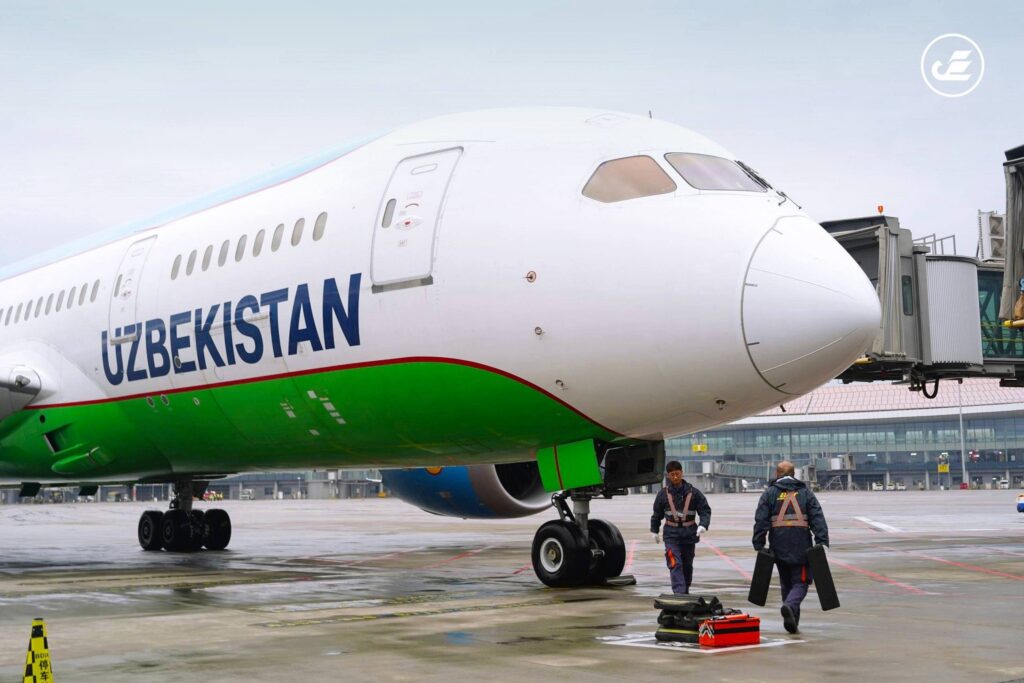
Uzbekistan has become the leading international destination for Russian airlines in the summer 2026 schedule, with flights planned on 67 routes between the two countries, according to data reported by ATO.ru, citing Russia’s aviation authority, Rosaviatsiya.

The figures show Uzbekistan surpassing other popular destinations for Russian carriers, including China and Turkey, by a significant margin. Flights to Uzbekistan will operate on 10 more routes than to China and 12 more than to Turkey. Other traditional leisure destinations, such as Thailand and Egypt, will see considerably fewer routes, with 35 and 33 respectively.

According to the report, this marks a major shift compared to pre-pandemic travel patterns. In 2019, Uzbekistan ranked ninth among international destinations for Russian airlines, with passenger traffic totaling around 1.24 million people, well behind Turkey and China.

The growing number of routes reflects strong demand for travel between the two countries. Analysts attribute this to labor migration, as well as expanding business and tourism ties. Uzbekistan has also gained importance as a transit hub, particularly as Western airspace restrictions now limit routing options for Russian carriers. Tashkent, in particular, has emerged as a key connection point for long-haul travel, including flights to the United States. Uzbekistan Airways remains the only Central Asian carrier operating transatlantic flights to New York.

The trend is mirrored on the Uzbek side. According to earlier estimates by Lufthansa Consulting cited in the report, Russia accounted for 49% of Uzbek airlines’ passenger traffic in 2019, rising to 52% by 2022.

In the current summer schedule, Uzbekistan Airways operates flights to 19 Russian cities, while private carriers such as Centrum Air and Qanot Sharq serve multiple destinations, including Moscow and St. Petersburg. A new airline, FlyOne Asia, is also expected to launch services on five routes from Tashkent to Russian cities.

Previously, The Times of Central Asia reported that Uzbekistan Airways continues to maintain regular operations on Russian routes, including a January incident in which a Boeing 767 flying from Tashkent to Vladivostok made a safe emergency landing in Krasnoyarsk.

Snow Leopard Designated as Official Mascot of World Nomad Games in Kyrgyzstan

The snow leopard has been designated as the official mascot of the sixth World Nomad Games, which Kyrgyzstan will host from August 31 to September 6, it has been announced.

“The snow leopard is more than a symbol of strength. It reflects inner resolve, dignity, and clarity of purpose. It carries the spirit of Kyrgyzstan, the character of nomadic culture, and the energy of forward movement,” the Games’ Secretariat said.

In October 2025, Kyrgyzstan’s Cabinet of Ministers officially designated the snow leopard as the country’s national symbol and approved a corresponding logo.

Snow leopards are considered a key indicator of ecological health in mountainous regions across 12 Asian countries, including Kyrgyzstan. The country has played a prominent role in global conservation efforts, most notably by spearheading a United Nations General Assembly initiative that led to the establishment of October 23 as International Snow Leopard Day.

Launched by Kyrgyzstan in 2012, the World Nomad Games aim to revive and preserve the cultural heritage of nomadic civilizations. The inaugural Games were held in September 2014 in the resort town of Cholpon-Ata on the shores of Lake Issyk-Kul. Kyrgyzstan also hosted the second and third editions in 2016 and 2018. The 2022 Games were held in Turkey, and the 2024 edition took place in Kazakhstan.

Over the years, the Games have evolved into a major international festival showcasing Central Asia’s cultural traditions through events featuring birds of prey, equestrian sports, traditional wrestling, archery, and displays of physical skill and endurance.

In February 2026, the Director-General of UNESCO, Khaled El-Enany, announced the decision to grant the organization’s patronage to the 6th World Nomad Games following an official request from the Kyrgyz government.

The granting of UNESCO’s patronage underscores international recognition of the 2026 Games as an important global initiative for preserving and promoting traditional sports and games, which form part of humanity’s intangible cultural heritage. It is also expected to support broader international participation and raise the global profile of Kyrgyzstan’s cultural heritage.

The opening of the 6th World Nomad Games will take place alongside a summit of the Shanghai Cooperation Organization (SCO), which Kyrgyzstan will host.

Kazakhstan’s Central Bank Links Tenge Strengthening to Rising Oil Prices

Governor of the National Bank of Kazakhstan, Timur Suleimenov, has attributed the recent strengthening of the tenge to rising global oil prices, which have increased export revenues and boosted the supply of foreign currency on the domestic market.

According to the regulator, the tenge appreciated by 3.9% in March, reaching 478.15 KZT to the dollar. The average daily trading volume on the Kazakhstan Stock Exchange increased from $335 million to $372 million, while total trading volume reached $6.7 billion.

Currency sales from the National Fund totaled $400 million, supporting transfers to the state budget. In addition, approximately $391 million was supplied through the mandatory sale of foreign currency earnings by quasi-state sector entities. No foreign exchange interventions were conducted during the period.

As a result, the National Fund accounted for about 6% of total trading volume, or roughly $22 million per day. Exporters remained the primary source of foreign currency supply, Suleimenov noted.

“Kazakhstan’s main export is oil. Prices are rising, volumes remain unchanged, and accordingly, export revenues and currency supply are increasing,” he said.

Preliminary estimates indicate that National Fund currency sales in April will total $300-400 million, broadly in line with March levels.

Suleimenov also said the tenge remains stable despite earlier forecasts by some analysts suggesting a potential weakening to 1,000-2,000 KZT to the dollar. At the same time, he warned of inflationary risks linked to rising tariffs. According to him, the government plans to factor inflationary pressures into future adjustments of utility and fuel prices.

As of April 1, the moratorium on increases in utility and fuel tariffs in Kazakhstan, introduced in October 2025, has expired.

The Times of Central Asia previously reported that economist Aidarkhan Kusainov had suggested the tenge could weaken to 1,000 per dollar or even further, arguing that the national currency is overvalued.

Sindarov Ahead in Candidates, While Asaubayeva Shares Women’s Lead

Javokhir Sindarov of Uzbekistan is leading after four rounds of the FIDE Candidates Tournament, the elite chess contest that will determine the challenger to the world champion. In the women’s competition, Bibisara Asaubayeva of Kazakhstan is tied for first place.

Sindarov, winner of the 2025 World Cup in Goa, India, played with the white pieces and defeated Fabiano Caruana on Wednesday for his third win of the candidates tournament at the Cap St Georges Hotel & Resort near Paphos, Cyprus. Sindarov put early pressure on the American and built a sizeable advantage on the clock.

The 20-year-old Uzbekistani player faces Hikaru Nakamura of the United States in the fifth round on Friday. Featuring eight players, the 14-round tournament began on March 28 and ends on April 16. The winner will challenge the current world champion, India’s Gukesh Dommaraju, later this year.

In an interview with the Lichess platform, Sindarov said preparation was the key to the win over Caruana and he hasn’t been focused on whether other players would catch his early lead in the tournament. He currently has 3.5 points, while Caruana is in second place with 2.5 points.

“I don’t think about this a lot,” he said. “I was just playing chess.”

Sindarov’s style of play often includes “bold sacrifices, energetic attacks, and creative solutions to difficult positions,” making him an unpredictable competitor in Cyprus, according to the candidates tournament website. It noted his strong results at the elite level, among them a gold medal at the Chess Olympiad in 2022 in Chennai, India, “where Uzbekistan sensationally won ahead of many traditional chess powers.”

In the FIDE Women’s Candidates Tournament, Asaubayeva, 22, drew in a game against China’s Tan Zhongyi on Wednesday. The Kazakhstani player and Anna Muzychuk of Ukraine are currently joint tournament leaders with 2.5 points.

Asaubayeva plays against Kateryna Lagno of Russia in round five on Friday. The winner of the tournament will challenge the women’s world champion, Ju Wenjun of China.

Asaubayeva won the Women’s World Blitz Championship in 2021, 2022 and again in 2025. FIDE, the Switzerland-based governing body of chess, awarded grandmaster status to Asaubayeva last year.

“Unlike purely positional grinders, she thrives in active positions where initiative and momentum matter,” says the candidates tournament website, noting the Kazakhstani player’s standout composure in knockout and high-tempo formats.

Literary Competition Showcases Outstanding New Kazakh Novels

The “Modern Kazakh Novel” competition, in partnership with Eurasian Resources Group (ERG), was launched last year as a national cultural initiative.

The project was designed to stimulate the growth of contemporary Kazakh prose and foster closer ties between authors and readers. With more than 3,000 submissions, the competition highlighted the Kazakh public’s interest in literature.

Eight authors reached the final stage of the competition. Seven finalists were each awarded 3 million tenge ($6,300), while the winner of the grand prize received 15 million tenge ($31,500).

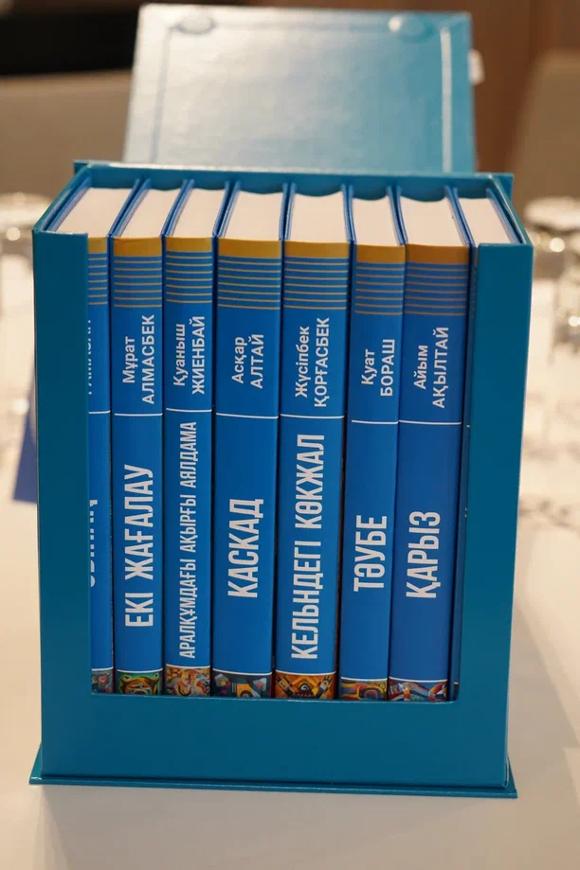
A notable achievement of the initiative was the publication of the shortlisted works. A thousand copies of each novel were printed and officially presented to the public. Of these, 750 copies were transferred to the National Library of the Republic of Kazakhstan, allowing the books to be distributed widely through the national library network.

@ERG

The finalists were Duman Ramazan (with a novel called Trial), Kuanysh Zhienbay (The Final Stop in Aralkum), Nurzhan Kuantaiuly (Unfaithful Game), Askar Altay (Cascade), Murat Almasbek (Two Shores), Kuat Borash (Repentance), and Aiyum Akyltai (Debt).

The grand prize was awarded to Zhusipbek Korgasbek for his novel The Wolf from Cologne. Plans have also been announced to adapt the work into a feature film.

In his message to participants, ERG’s Chairperson Shukhrat Ibragimov highlighted the value of national literature and expressed confidence in contemporary writers. He stressed that national values remain vital for younger generations, as they connect historical heritage with the demands of a rapidly evolving world shaped by innovation and digital technologies.

Ibragimov also noted that one of literature’s key roles is to shape new characters that reflect the realities of each new era. In this context, such competitions create meaningful opportunities for emerging writers and help reinterpret national identity from fresh perspectives.

According to jury chair Qaynar Olzhai, the initiative was initially intended to support novels written in the Kazakh language. Over the course of a year, hundreds of applications were received. From 220 promising novel projects reviewed by experts, five finalists were originally planned. However, due to the unexpectedly high quality and quantity of submissions, the sponsor agreed to expand the shortlist by adding two more finalists.

@ERG

Ultimately, every meaningful achievement is rooted in intellectual and spiritual development. From pilots and mountaineers to global business leaders, many groundbreaking ideas originate from reading and literature.

In this sense, the “Modern Kazakh Novel” project is an effort to support the creative community and encourage literary innovation.