• KGS/USD = 0.01144 0%
  • KZT/USD = 0.00196 -0%
  • TJS/USD = 0.10904 0%
  • UZS/USD = 0.00008 0%
  • TMT/USD = 0.28490 0%
  • KGS/USD = 0.01144 0%
  • KZT/USD = 0.00196 -0%
  • TJS/USD = 0.10904 0%
  • UZS/USD = 0.00008 0%
  • TMT/USD = 0.28490 0%
  • KGS/USD = 0.01144 0%
  • KZT/USD = 0.00196 -0%
  • TJS/USD = 0.10904 0%
  • UZS/USD = 0.00008 0%
  • TMT/USD = 0.28490 0%
  • KGS/USD = 0.01144 0%
  • KZT/USD = 0.00196 -0%
  • TJS/USD = 0.10904 0%
  • UZS/USD = 0.00008 0%
  • TMT/USD = 0.28490 0%
  • KGS/USD = 0.01144 0%
  • KZT/USD = 0.00196 -0%
  • TJS/USD = 0.10904 0%
  • UZS/USD = 0.00008 0%
  • TMT/USD = 0.28490 0%
  • KGS/USD = 0.01144 0%
  • KZT/USD = 0.00196 -0%
  • TJS/USD = 0.10904 0%
  • UZS/USD = 0.00008 0%
  • TMT/USD = 0.28490 0%
  • KGS/USD = 0.01144 0%
  • KZT/USD = 0.00196 -0%
  • TJS/USD = 0.10904 0%
  • UZS/USD = 0.00008 0%
  • TMT/USD = 0.28490 0%
  • KGS/USD = 0.01144 0%
  • KZT/USD = 0.00196 -0%
  • TJS/USD = 0.10904 0%
  • UZS/USD = 0.00008 0%
  • TMT/USD = 0.28490 0%
08 December 2025

Qaz Steppe Innovation Hub Opens in Dubai

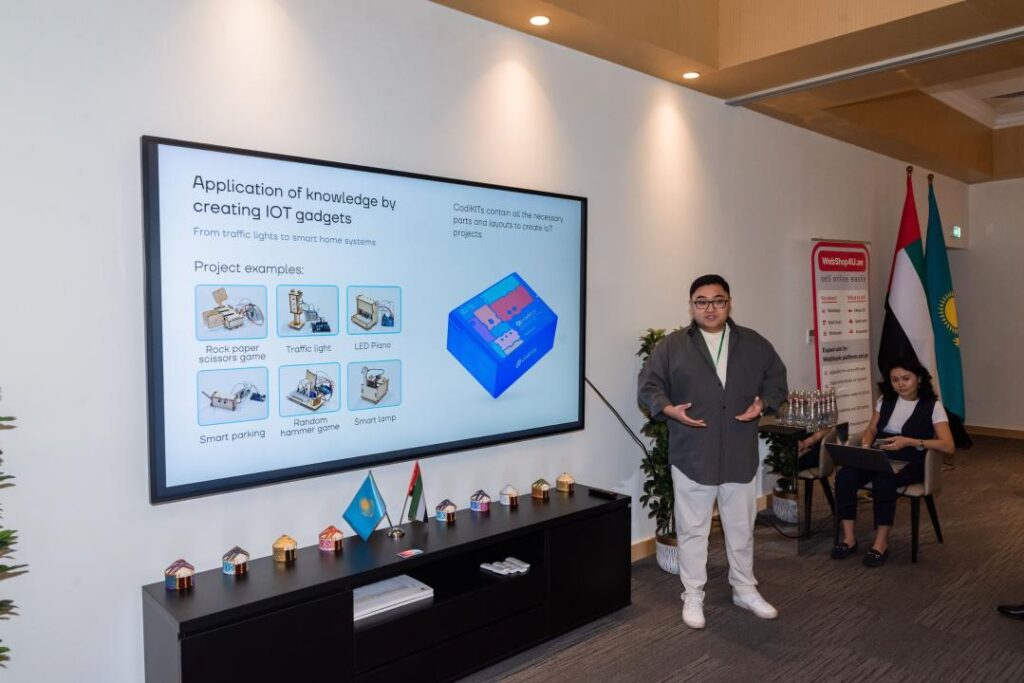
The launch of the Qaz Steppe Innovation Hub took place on March 1st at the Trade House of Kazakhstan in Dubai, UAE.

Attending the opening ceremony, Arman Shakkaliev Kazakh Minister of Trade and Integration reported, “The Qaz Steppe Innovation Hub will help promote the Kazakh IT services sector to international markets, unite the interests of business sectors in Kazakhstan and the UAE, enable the development of mutually beneficial cooperation, and increase the competitiveness of our IT companies.”

To date, the new platform has already helped present 15 Kazakh start-up projects to the Middle East market and in 2023, the export of Kazakhstani IT services reached $500 million compared to $30 million in 2020. A goal to raise the export of IT services to $1 billion by 2026 has now been set by president of Kazakhstan

According to Timur Mauleshov, co-founder of Qaz Steppe Innovation Hub, entry to UAE and Middle East markets will further spur the development of export of high-tech solutions from Kazakhstan.

“The Qaz Steppe Innovation Hub will be a unique platform for the implementation of the ambitious task set by President Kassym-Jomart Tokayev to transform Kazakhstan into an IT country. Since 2021, locally based Kazakh start-ups have attracted investments worth over $1 billion. The technological boom that is happening in the UAE today opens up new prospects for our talented specialists and interesting start-ups.”
Uzbekneftgaz’s Gas Production Target Declines Again

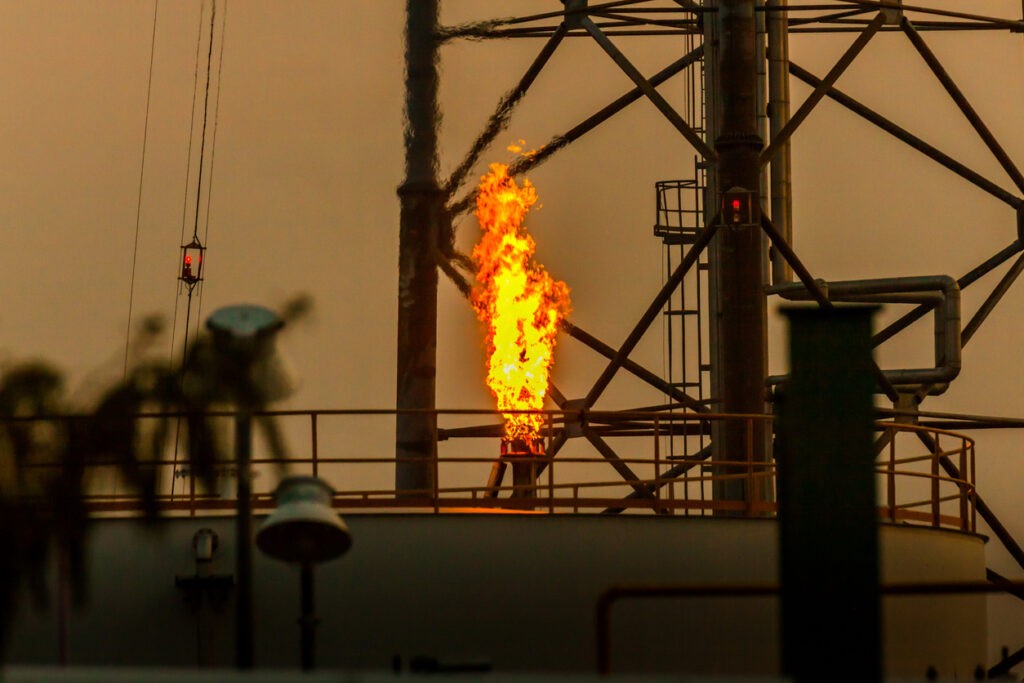
Uzbekistan’s state-owned JSC Uzbekneftegaz plans to produce 29.3 billion cubic meters of natural gas in 2024, according to the Kun.uz website. The company’s gas-production metrics have shown declines for the past three years.

Among the geological and technical scopes of work that lie ahead for Uzbekneftgaz are 42 technological measurements, comprehensive overhauls of 81 wells, and the drilling of 95 operational production wells.

In 2021 and 2022 the company produced 33.9 billion and 32.2 billion cubic meters of natural gas respectively. That means that by the end of 2024 the company will have decreased gas production by 13.6 percent over just three years, considering the production target of 29.3 billion cubic meters this year.

Although official figures for 2023 have not yet been released, Uzbekneftgaz in 2023 twice lowered its full-year 2023 forecast for natural gas production. Initially, at the end of 2022 representatives of the company said that they expected 34.1 billion cubic meters of gas production for 2023, with 1.8 billion of those cubic meters coming from geological exploration. However, the estimate was lowered to 32.8 billion cubic meters in February 2023 and 32.3 billion cubic meters in August of last year.

According to Uzbek statistics, 53.8 billion cubic meters of gas were extracted in 2021 across the country, which then decreased to 51.7 billion cubic meters in 2022, and 46.7 billion cubic meters in 2023.

Turkmenistan and Turkey to Collaborate on Export of Natural Gas to Europe

Turkmenistan and Turkey are to collaborate on a project that will pave the way for transportation of Turkmen natural gas through Turkey to European markets.

A declaration of intent on cooperation in the field of hydrocarbon resources, alongside a memorandum on natural-gas partnership between the Turkmen State Concern Türkmengaz and the Ministry of Energy and Natural Resources of Turkey, were signed by Turkish President Recep Tayyip Erdogan and Turkmenistan’s Chairman of the People’s Council, Gurbanguly Berdimuhamedov at a meeting on the margins of the Antalya Diplomatic Forum on March 1st.

The export of Turkmen gas to Europe will necessitate the construction of a gas pipeline across the Caspian Sea to Azerbaijan; a project revisited since the 1990s but not yet implemented.

Diversification of natural-gas export routes remains a pressing issue for gas-rich Turkmenistan. Today, China is the largest importer of Turkmen gas, transported by pipeline via Uzbekistan and Kazakhstan. Smaller volumes of Turkmen gas are exported to Russia.

Turkmenistan continues to work on the Turkmenistan-Afghanistan-Pakistan-India (TAPI) project to transport natural gas to South Asia. After years of delays in the construction of the Afghan section due to funding and security issues, Turkmen and Afghan authorities are now close to advancing the project.

Kazakhstan Comments on Russian Missile Tests on its Territory

Kazakhstan’s Ministry of Defense has confirmed that Russia tests its missiles inside of Kazakhstan’s borders. The country’s deputy minister of defense Shaykh-Khasan Zhazykbayev has gone on record to say that in Kazakhstan there is a military test range called Saryshagan, where the 110th training center of the Russian Federation does indeed conduct missile tests. Zhazykbayev noted that Russia has a treaty dating back to 1993, according to which it has the right to use this land as a testing ground.

“Missiles of up to 200 kilometers’ range are tested there. There is no infrastructure and population [on] this range, so no one suffers,” said Zhazykbayev. The deputy minister also noted that Russia conducts only 50 hours of missile testing at Saryshagan each year.

The Saryshagan military training range in Kazakhstan is located in the Karaganda and Zhambyl regions, to the northwest and west of Lake Balkhash in the Betpak-Dala steppe. Its construction began in 1956, and its area now holds an active military airfield and several abandoned dirt airfields. The Yekaterinburg to Almaty highway runs through it. Presently it’s considered to be the first and the only military range in Eurasia where missile weapons are developed and tested.

World Bank Supports Development of Tajikistan’s Emerging E-Commerce Market

On March 1st, Dushanbe played host to ‘Elevating Global Access through E-Commerce (E-GATE)’, a conference organized by the World Bank and the IFC. A first for Tajikistan, its goal was to facilitate knowledge and resource exchange amongst the country’s small and medium enterprises as well as with regional and global players in the e-commerce ecosystem.

“Recognizing the pivotal role e-commerce plays in modern economies, the World Bank is actively supporting Tajikistan in its journey to develop appropriate platforms, including E-GATE,” said Ozan Sevimli, World Bank Country Manager for Tajikistan. “The E-GATE program offers Tajik small and medium enterprises highly valuable membership of global B2B e-commerce platforms to access markets unavailable offline, and provide technical support to the government on drafting enabling legislation, and channel global knowledge to Tajik e-sellers through capacity building activities.”

The conference attracted e-commerce stakeholders from Tajikistan, Kazakhstan, Kyrgyzstan, Turkmenistan, and Uzbekistan, as well as global e-commerce giants including Amazon and Alibaba.

In landlocked Tajikistan, as in the whole of Central Asia, the emergence of e-commerce is proving a powerful tool to tap into global markets for locally made products, modernize traditional supply chains, and foster growth in employment opportunities.

To ensure the smooth functioning of E-commerce operations, Tajikistan recently introduced a ‘On Electronic Commerce’ law.

According to ECDB, a specialized e-commerce data analytics company (https://ecommercedb.com/markets/tj/all), Tajikistan is currently one of the smaller markets for e-commerce. The predicted revenue for 2024 is $17.1 million but once developed, is expected to increase by 5.4% per annum resulting in a projected market volume of $21.1 million by 2028.

Kazakhstan’s Improving Corruption Score Leads Central Asian Peers

Transparency International’s annual Corruption Perceptions Index (CPI) for 2023 has been published, with the global anti-corruption organization ranking 180 countries using a 100-point system. On the CPI scale, the higher the score, the lower the degree of corruption.

Kazakhstan achieved the highest ranking  — i.e. the highest score, and the lowest degree of corruption — among Central Asian states, taking 93rd place with a score of 39. The republic improved its ranking by three places compared to 2022, meaning that the level of corruption has improved.

With 33 points, Uzbekistan ranked 121st out of 180 countries in the new ranking, a gain of five places on its ranking for 2022. In 2023’s CPI rating Kyrgyzstan scored 26 points and took 141st place, a rise of one place. Kyrgyzstan now has the same score as Russia.

The lowest absolute CPI scores in the Central Asia region were observed in Tajikistan and Turkmenistan. Tajikistan took 162nd place with 20 points, and Turkmenistan took 170th place with 18 points. Compared to last year, Tajikistan improved by four places on the list, and Turkmenistan gained one spot.