• KGS/USD = 0.01144 0%
  • KZT/USD = 0.00196 -0%
  • TJS/USD = 0.10899 -0%
  • UZS/USD = 0.00008 -0%
  • TMT/USD = 0.28490 0%
  • KGS/USD = 0.01144 0%
  • KZT/USD = 0.00196 -0%
  • TJS/USD = 0.10899 -0%
  • UZS/USD = 0.00008 -0%
  • TMT/USD = 0.28490 0%
  • KGS/USD = 0.01144 0%
  • KZT/USD = 0.00196 -0%
  • TJS/USD = 0.10899 -0%
  • UZS/USD = 0.00008 -0%
  • TMT/USD = 0.28490 0%
  • KGS/USD = 0.01144 0%
  • KZT/USD = 0.00196 -0%
  • TJS/USD = 0.10899 -0%
  • UZS/USD = 0.00008 -0%
  • TMT/USD = 0.28490 0%
  • KGS/USD = 0.01144 0%
  • KZT/USD = 0.00196 -0%
  • TJS/USD = 0.10899 -0%
  • UZS/USD = 0.00008 -0%
  • TMT/USD = 0.28490 0%
  • KGS/USD = 0.01144 0%
  • KZT/USD = 0.00196 -0%
  • TJS/USD = 0.10899 -0%
  • UZS/USD = 0.00008 -0%
  • TMT/USD = 0.28490 0%
  • KGS/USD = 0.01144 0%
  • KZT/USD = 0.00196 -0%
  • TJS/USD = 0.10899 -0%
  • UZS/USD = 0.00008 -0%
  • TMT/USD = 0.28490 0%
  • KGS/USD = 0.01144 0%
  • KZT/USD = 0.00196 -0%
  • TJS/USD = 0.10899 -0%
  • UZS/USD = 0.00008 -0%
  • TMT/USD = 0.28490 0%
08 December 2025

Kyrgyzstan Responds to Climate Change with Artificial Glaciers

Global climate change, a topic which is always on the minds of scientists around the world, has particularly acute effects in landlocked Central Asia, where water has always been in limited supply, the effects of climate change – a topic increasingly on the minds of people around the world – have been particularly acute. In recent years, the shortage of water in rivers and lakes has had an extremely negative impact on agriculture and livestock farming.

With 94% of the country’s landmass covered by mountains, Kyrgyzstan feels the negative effects of climate change first and foremost. A harsh continental climate with a wide range of average annual temperature fluctuations (from +40℃ to -40℃) and low precipitation makes livestock farming difficult. In addition, the inaccessible mountainous terrain makes it challenging for local residents to access drinking water – the main source of which is mountain springs.

Therefore, artificial glaciers have been created to combat the negative effects of rising temperatures. The first project of its kind appeared in the Republic in 2019 in the village of Jergetal in the Naryn Region. By 2021, the total number of artificial ice deposits had grown to eleven.

These numbers continue to grow. In 2022, an artificial glacier was built in the remote pasture of Kara-Dobo in the Jalal-Abad region thanks to the efforts of local residents, and with technical assistance from the UN Food and Agriculture Organization (FAO) and financial support of $5,500 from the UN Peacebuilding Fund. The next year, more villages followed this example to preserve livestock farming in arid areas.

The artificial ice in Orozbekov in the Batken Region is expected to help provide sustenance for livestock belonging to the residents of three villages. “Water for the glacier comes from a mountain spring through pipelines,” Chairman of the Pasture Users Committee of the Orozbekov village area, Eminbek Temirbayev explained. “This system works without requiring electricity.”

It is believed that the world’s first artificial glacier was created in the late 1980s by the engineer, the “Ice Man” Chewang Norphel from the Indian village of Skara in the western Tibetan Plateau. Later, having improved the methods for creating these glaciers, the specialist helped local villagers store and deliver water for fields and pastures.

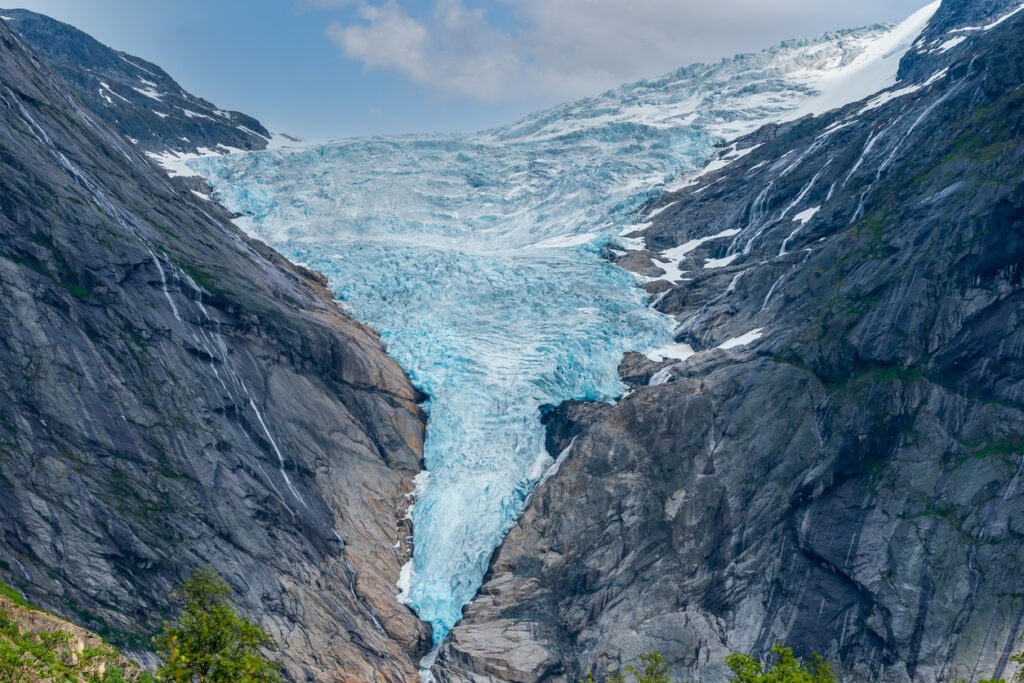
Artificial glaciers are created by freezing a natural spring of water that emerges from a mountain source. Gradually, ice towers of 30 to 50 meters high form around those springs. With warming temperatures, the glacier begins to melt, becoming a prolonged source of drinking water.

The relative cheapness of such structures and the simplicity of their design make artificial glaciers a universal means of providing water to residents in arid and hard to access mountainous areas. People only need to install the pipes, and nature will take care of the rest.
Given the successful experience with the installations in Kyrgyzstan, the authorities are planning to build four more artificial glaciers in 2024 as part of a joint project in the Batken and Leilek districts of Batken Region. According to the Kyrgyz Zhayity Association, there are now 30 artificial glaciers in Kyrgyzstan.

USAID Supports Uzbekistan’s First Green Hydrogen Hub

According to a statement issued by the U.S. Embassy in Uzbekistan on February 29th, the United States Agency for International Development (USAID) is set to introduce a new initiative to support Uzbekistan’s clean energy objectives.

Under Uzbekistan’s “Strategy for the Development of Renewable and Hydrogen Energy,” the region has a target to increase its generation of renewable energy (solar, wind, and hydro) by 25 percent by 2030, and carbon neutrality by 2050.

To support the government’s goals and with the collaboration of the Uzbek Ministry of Energy and energy sector stakeholders, USAID has announced the launch a Green Hydrogen Hub.
Edward Michalski, Acting Director of USAID Mission to Uzbekistan, reported, “USAID is committed to supporting the Central Asian countries in the pursuit of clean energy development and other energy priorities, as not just a goal, but a necessity.”

By helping to further the energy sector’s expertise in clean energy technologies, the Hub will play an important role in shaping the region’s future energy landscape.
A new curriculum on green hydrogen established by USAID in partnership with the University of Delaware, USA, and Tashkent State Technical University, has now been incorporated into a master’s degree program.

Kazakhstan Seeks U.S. Cooperation to Develop Critical Minerals

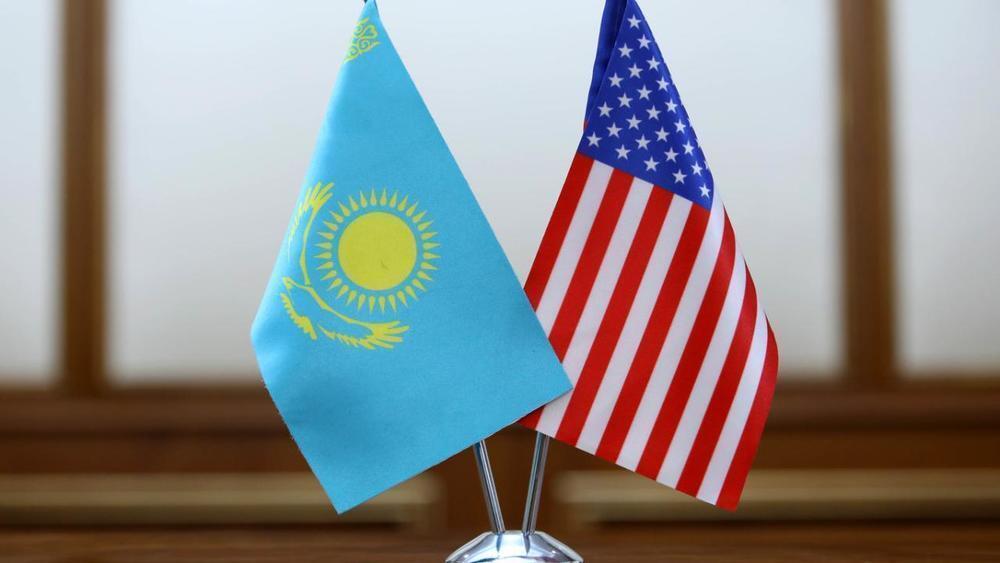
During a visit to the United States on March 1st, Kazakhstan’s Minister of Industry and Construction, Kanat Sharlapaev met David Applegate, director of the U.S. Geological Survey, to discuss expanding bilateral cooperation regarding mineral deposits in Kazakhstan.

Of Kazakhstan’s 50 types of minerals, 17 were identified by the U.S. Geological Survey as critical.

As reported by Sharlapaev, the key aims of future collaborations are attracting investment in geological exploration, mining, and the processing of rare and rare-earth metals, as well as facilitating Kazakhstan’s integration to the global market through cutting-edge technologies and expertise.

Speaking at a roundtable discussion at the U.S. Chamber of Commerce with members of the Kazakh-American Business Council (USKZBC) and representatives of American companies, the minister outlined the benefits afforded by consolidating the partnership between Kazakhstan and the USA.

Emphasis was placed on the strategic potential of mining rare and rare earth metals and the development of related industries. In particular, he cited the importance of creating a cluster of industries in Kazakhstan to produce raw materials for batteries, including nickel, cobalt, manganese, and lithium and with reference to reforms on the use of subsoil to attract investment, encouraged US mining companies to participate in forthcoming auctions in Kazakhstan.

EBRD Announces Third Stage of Funding for Green Projects in Kyrgyzstan

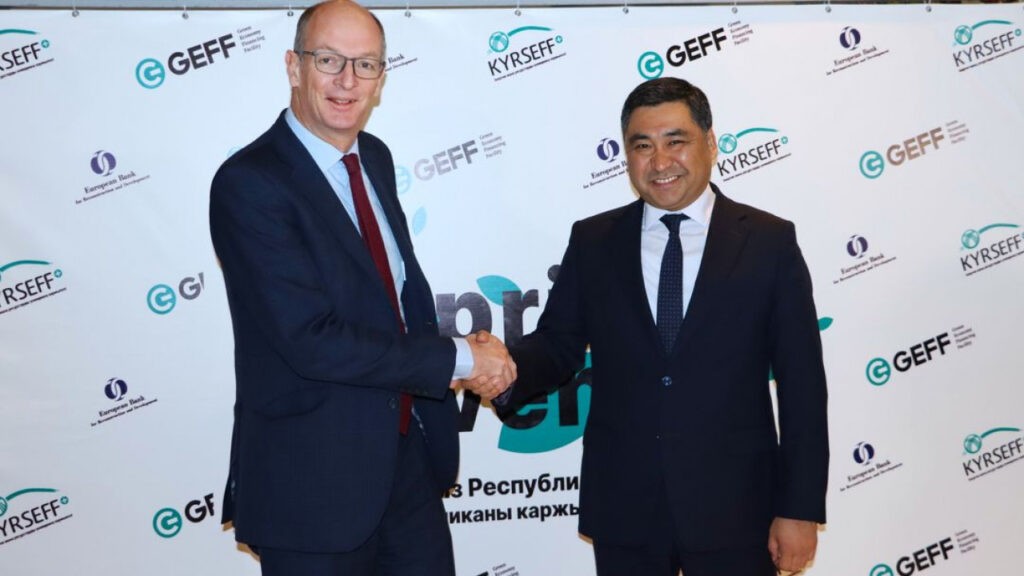
On 29th February, Mark Bowman, Vice President of The European Bank for Reconstruction and Development (EBRD) visited Bishkek to announce a new partnership with Demir Kyrgyz International Bank, FINCA Bank Kyrgyzstan, and Kyrgyz Investment and Credit Bank.

Applauding their commitment, Bowman said, “We welcome partner banks to KyrSEFF III and their participation in our third green financing facility in the Kyrgyz Republic to help address pressing environmental challenges. For more than 10 years, the EBRD, local financial institutions and the authorities have worked together to promote a greener future for the country. We look forward to building on this success.”

Kyrgyzstan’s Minister of Economy and Commerce, Daniyar Amangeldiev expressed gratitude to the EBRD for supporting the KyrSEFF program, which has so far invested more than $55 million in 3,355 energy efficiency projects in Kyrgyzstan.

While previous initiatives focused mainly on energy and resource efficiency, the new Green Economy Financing Facility KyrSEFF III has expanded its remit by investing a further $50 million to support climate resilience and adaptation, reduce pollution and promote the sustainable use of water.

Loans will be offered to relevant small and medium-sized businesses as well as households across the country. Finance will also be available to retailers and producers of material and equipment covered by the KyrSEFF Technology Selector, an online database of energy-saving technologies.

A New Railway Project for China, Kyrgyzstan and Uzbekistan

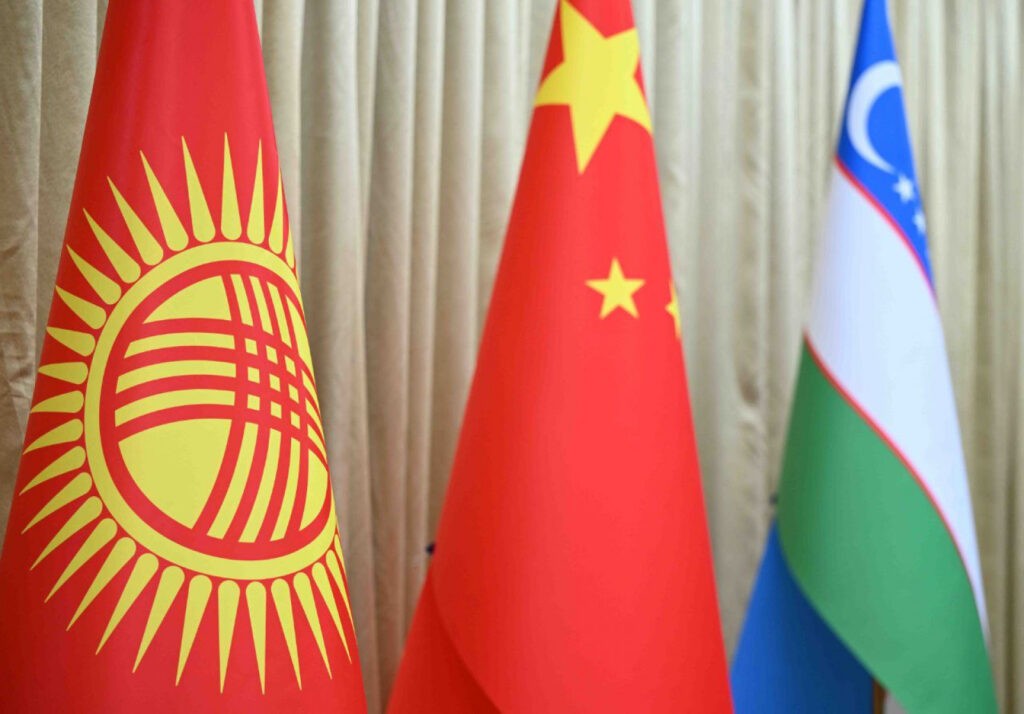
On March 1st, Akylbek Japarov Chairman of the Cabinet of Ministers of the Kyrgyz Republic, Abdulla Aripov Prime Minister of Uzbekistan and Ma Xingrui Communist Party Secretary of China’s western Xinjiang Uygur Autonomous Region, met in Kashgar (Xinjiang) to discuss the construction of the China-Kyrgyzstan-Uzbekistan railway.

Japarov first praised the incentive for its potential to strengthen the development of trade and economic cooperation between the three countries and reported that a jointly funded feasibility study of the project had already been developed and approved.

Uzbekistan’s Prime Minister Aripov expressed his country’s interest in developing multimodal transport routes to support the joint construction of the China-Kyrgyzstan-Uzbekistan railway.

Addressing the insufficient throughput capacity of the Irkeshtam checkpoint on the Kyrgyz-Chinese border, Japarov stated, “increasing the volume of cargo throughput at the Irkeshtam checkpoint is an issue relevant to both the Kyrgyz and Chinese sides, as well as the Uzbek side. It is therefore important that all checkpoints are modernized and equipped with updated means of customs control.”
He then reported that new customs inspection complexes at the Irkeshtam and Torugart checkpoints to be installed this year, will allow up to 125 vehicles per hour to cross the border, and added that the Kyrgyz side aims to increase the throughput capacity of these checkpoints to 1,000 vehicles per day.

In the interest of developing trade and economic ties, the Secretary of Xinjiang’s Party Committee welcomed the Kyrgyz Prime Minister’s proposals and supported his stance that Xinjiang is perceived as a gateway to China from Kyrgyzstan and in turn, several other Central Asian countries.

Przewalski’s Horses to Return to Kazakhstan

In Astana on February 29th, Roman Vassilenko, Kazakhstan’s Deputy Minister of Foreign Affairs, met with a Czech delegation led by Miroslav Bobek, director of Prague Zoo, to discuss the reintroduction of Przewalski’s horses to Kazakhstan.

“We have just begun a new chapter on the return of the last wild horses to their natural habitats,” explained Bobek. “Following the success of the horses’ reintroduction to Mongolia, where the population is now thriving, we were approached by the government of Kazakhstan for the same purpose.”

Under an agreement made during a visit to Astana in April 2023 by the Czech Republic’s Prime Minister Petr Fiala, the ‘Return of the Wild Horses Project’ aims to relocate some forty horses from Europe and over five years, increase their population in the Kazakh steppe ecosystem.

The Kazakh Ministry of Ecology and Natural Resources reported that two Czech Air Force aircraft carrying the first eight horses are scheduled to arrive on June 2nd from Prague and Berlin. They will then be transported to the Altyn Dala state natural reserve in the Kostanay region.

The Przewalski horse named after the Russian who discovered it and known as ‘takhi’ in Mongolia, is a rare and endangered species. Originally found on the steppes of Central Asia, it had disappeared from the wilds by the sixties. Thanks to special breeding programmes in European zoos, the breed was saved from extinction and since the 1990’s, has been gradually resettled in its native lands.