• KGS/USD = 0.01144 0%
  • KZT/USD = 0.00210 0%
  • TJS/USD = 0.10438 0%
  • UZS/USD = 0.00008 0%
  • TMT/USD = 0.28490 0%
  • KGS/USD = 0.01144 0%
  • KZT/USD = 0.00210 0%
  • TJS/USD = 0.10438 0%
  • UZS/USD = 0.00008 0%
  • TMT/USD = 0.28490 0%
  • KGS/USD = 0.01144 0%
  • KZT/USD = 0.00210 0%
  • TJS/USD = 0.10438 0%
  • UZS/USD = 0.00008 0%
  • TMT/USD = 0.28490 0%
  • KGS/USD = 0.01144 0%
  • KZT/USD = 0.00210 0%
  • TJS/USD = 0.10438 0%
  • UZS/USD = 0.00008 0%
  • TMT/USD = 0.28490 0%
  • KGS/USD = 0.01144 0%
  • KZT/USD = 0.00210 0%
  • TJS/USD = 0.10438 0%
  • UZS/USD = 0.00008 0%
  • TMT/USD = 0.28490 0%
  • KGS/USD = 0.01144 0%
  • KZT/USD = 0.00210 0%
  • TJS/USD = 0.10438 0%
  • UZS/USD = 0.00008 0%
  • TMT/USD = 0.28490 0%
  • KGS/USD = 0.01144 0%
  • KZT/USD = 0.00210 0%
  • TJS/USD = 0.10438 0%
  • UZS/USD = 0.00008 0%
  • TMT/USD = 0.28490 0%
  • KGS/USD = 0.01144 0%
  • KZT/USD = 0.00210 0%
  • TJS/USD = 0.10438 0%
  • UZS/USD = 0.00008 0%
  • TMT/USD = 0.28490 0%

More Valuable Than Oil: Why Kazakhstan Is Overhauling Its Water Code

For Kazakhstan, a country with vast territory and high dependence on transboundary rivers, water is becoming an increasingly critical constraint on economic development. Amid climate change, industrial expansion, and deteriorating infrastructure, water scarcity is emerging as a strategic risk, on par with fluctuations in global commodity markets.

Recognition of the issue has been growing for over three decades, but water resource management remained fragmented across environmental, agricultural, and municipal departments, with no unified decision-making center.

A turning point came in 2023, when President Kassym-Jomart Tokayev signed a decree establishing the Ministry of Water Resources and Irrigation. This marked institutional recognition of the water crisis and an admission that the existing governance model no longer matched the country’s needs.

The subsequent step was the drafting of a new Water Code, introducing a fundamental shift in the approach to managing water as a resource.

From Natural Resource to Economic Asset

The previous legislation was hampered by weak enforcement mechanisms. Fines for pollution or exceeding water usage limits were negligible for large industrial enterprises. In many cases, investing in treatment facilities or water-saving technologies was more costly than repeatedly paying fines.

A further constraint was a lack of personnel: only about 70 inspectors were responsible for monitoring water use nationwide, rendering comprehensive oversight unfeasible.

The new Water Code redefines the regulatory philosophy. Water is no longer treated as a near-free natural resource but is now recognized as a strategic economic asset, comparable to hydrocarbons or mineral resources.

The most significant innovation is the shift from punitive measures to economic deterrents. Companies that fail to adopt water-saving technologies risk losing their special water use permits. Continued unauthorized withdrawal is then subject to a fivefold tariff increase.

A Multi-Level Control System

The new enforcement model introduces a tiered response to violations. The first stage includes preventive oversight, during which companies receive instructions and deadlines to address issues. Penalties follow only in cases of non-compliance. Persistent violations may result in full restriction of water access.

The Ministry of Water Resources and Irrigation stresses that the primary aim is not to punish, but to incentivize water conservation and technological modernization. For many industrial enterprises, water is a vital input, making this regulatory shift especially impactful.

Sector-Specific Regulatory Models

The Water Code adopts differentiated approaches based on industry.

Agriculture, which accounts for 60-70% of total water withdrawals, remains the largest consumer. Most of this use is non-recoverable due to outdated irrigation techniques.

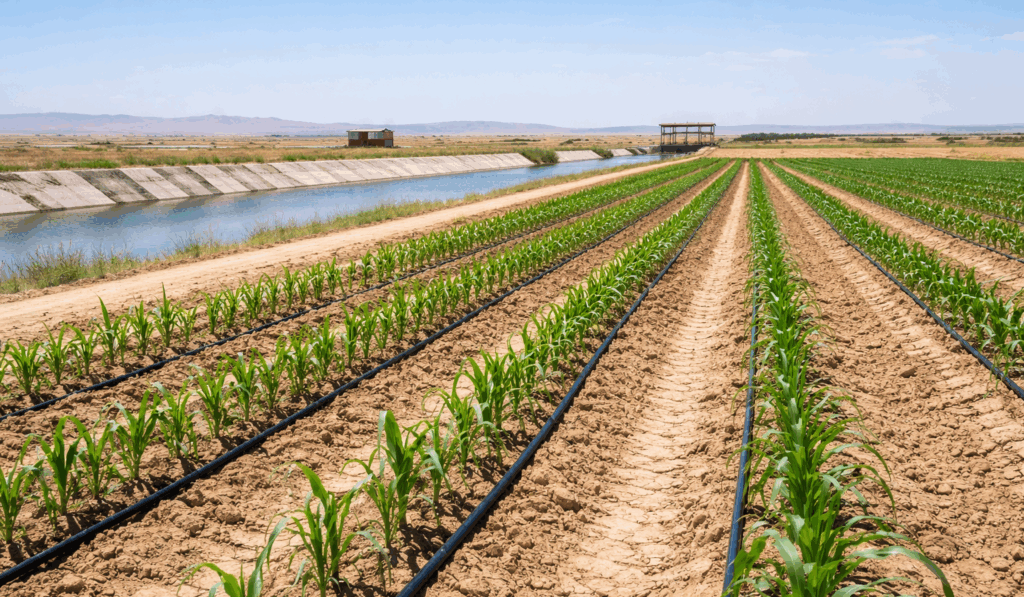
Farmers are offered an incentive-based framework. The state subsidizes up to 80% of the cost for adopting drip irrigation, installing metering devices, and upgrading irrigation infrastructure. Beginning in 2024, projects to repair canals and hydraulic structures, where water losses are critical, are being rolled out.

Small businesses, including car washes, bathhouses, restaurants, and service providers, account for approximately 15% of consumption. These entities fall under the purview of municipal water utilities.

Here, an indirect pressure mechanism is introduced: as water intake quotas are reduced, municipal utilities will be held financially accountable for excess consumption, encouraging them to adopt water-saving solutions for end users.

Digital Oversight Over Manual Inspection

Although the number of inspectors has nearly tripled, and basin inspection units have been established nationwide, the primary emphasis is on digital monitoring tools.

The ministry already deploys drones to create 3D terrain models and detect illegal dams, pumps, and unauthorized canal connections.

By the end of 2026, a unified information system for water monitoring is expected to launch. Modeled on tax control systems, this platform will use algorithms to review enterprise reports and flag anomalies automatically. On-site inspections will be reserved for high-risk cases.

The system will also verify the actual implementation of water-saving technologies, moving beyond mere formal compliance.

Authorities acknowledge that an immediate overhaul is unrealistic. A sudden tightening of regulations could shutter enterprises and trigger social disruption.

Accordingly, the Water Code allows for phased implementation. Core regulations will take effect in 2027, with a transition period extending to 2032. Businesses will have five years to adapt and invest.

Crucially, the ministry underscores that this transition is not a regulatory hiatus; real-time monitoring will continue throughout.

Kazakhstan is entering a phase where sustained economic growth can no longer depend on the unrestrained consumption of natural resources. As water reserves dwindle, the state is compelled to adopt a framework of strict but transparent regulation.

Approximately 200 Million Tons of Radioactive Waste Accumulated in Kazakhstan

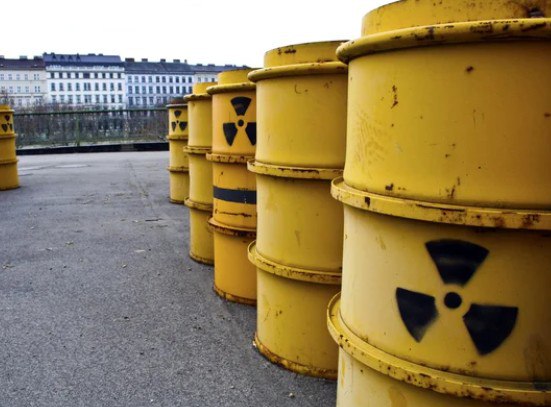
Kazakhstan’s soil is contaminated with radioactive waste, heavy metals, oil, and petroleum products, according to the Central Asia Climate Change and Green Energy Project Office (CACF). The total volume of radioactive materials is estimated at approximately 200 million tons.

These findings are based on the 2024 National Report on the State of the Environment and Natural Resource Use. The document identifies widespread zones of excessive contamination with radionuclides, toxic substances, and heavy metals across the country.

A Radioactive Legacy

Radiation exposure to soil is considered the most hazardous form of contamination. Kazakhstan is home to six major uranium provinces, along with dozens of smaller deposits and ore occurrences, contributing to naturally elevated levels of radioactivity.

Over the full operational period of the country’s uranium mining industry, an estimated 200 million tons of radioactive waste have been generated.

Military infrastructure further compounds the environmental burden. Kazakhstan has four military test sites and the Baikonur rocket and space complex. The zones where rocket booster stages fall span vast areas of Karaganda, Ulytau, Akmola, Pavlodar, and East Kazakhstan regions. According to scientific data, approximately 9.5 million hectares of land are contaminated with the byproducts of rocket fuel combustion and debris.

Elevated levels of radionuclides, heavy metals, and toxic compounds have been recorded in areas surrounding these facilities.

Heavy Metals Intensify the Pressure

Soil contamination is also acute near major cities and industrial centers, exacerbated by the growing number of motor vehicles.

Additional pollution originates from metallurgical and mining operations. In areas around the towns of Ust-Kamenogorsk, Ridder, Zhezkazgan, Shymkent, and Karaganda, the concentrations of lead, copper, zinc, and cadmium significantly exceed permissible limits.

In the Syr Darya River plains of the Kyzylorda region, lead concentrations are double the legal threshold, while nickel levels exceed standards by roughly 1.5 times. Soil degradation is further aggravated by salinization caused by the discharge of highly mineralized drainage water.

Billions of Tons of Industrial Waste

All of Kazakhstan’s industrial regions now contain ecologically hazardous zones, including slag heaps, tailings ponds, mining dumps, and quarries. These collectively cover more than 60,000 hectares.

Enterprises in the non-ferrous metallurgy sector alone have generated over 22 billion tons of industrial waste, including around 4 billion tons of mining byproducts. Of this, more than 1 billion tons consist of toxic enrichment waste, and over 100 million tons are metallurgical waste.

According to the Ministry of Ecology and Natural Resources, Kazakhstan’s total industrial waste volume has reached 31.5 billion tons. More than 1 billion tons of new waste are produced each year, with roughly 70% consisting of man-made mineral formations such as overburden and ash.

Oil Pollution: A Persistent Challenge

Oil contamination is another major environmental threat. In western Kazakhstan, nearly 200,000 hectares of land are affected by oil and petroleum products. The total volume of oil spills exceeds 5 million tons.

The highest levels of pollution have been recorded in the Atyrau region near the Makat field, where petroleum concentrations in soil surpass regulatory limits by more than 1,000 times. Severe pollution has also been reported near the Dossor, Komsomolskoye, Tanatar, Tentexor, and Iskene fields, with exceedances ranging from tens to hundreds of times over permissible levels.

Future Risks Amid Nuclear Expansion

Environmental concerns are gaining urgency in light of Kazakhstan’s nuclear energy plans. The country aims to build at least three nuclear power plants, with construction already underway on the first facility.

In this context, the government is considering the former Semipalatinsk nuclear test site as a potential location for radioactive waste storage.

The accumulation of radioactive and industrial waste over decades now constitutes a critical long-term risk to Kazakhstan’s sustainable development.

A Breakout Year for Contemporary Art in Kazakhstan

The year 2025 marked not only a busy period for contemporary art in Kazakhstan but also a decisive acceleration. Art moved beyond professional circles, claimed urban spaces, entered international agendas, and ceased to be a conversation “for insiders only.” The Kazakhstani art scene spoke with growing confidence both at home and abroad. New institutions, landmark exhibitions, festivals, and global collaborations signaled a pivotal shift: contemporary art has become a visible and integral component of the country’s cultural fabric.

New Museums and Art Spaces in Kazakhstan

Geographically, Almaty emerged as the epicenter of contemporary art activity in 2025. The city saw the opening of key institutions that became new focal points for artists, curators, and audiences.

Opening of the Almaty Museum of Arts (ALMA)

On September 12, 2025, the Almaty Museum of Arts (ALMA) opened its doors in Almaty, becoming one of the largest contemporary art museums in Central Asia. From the outset, ALMA signaled serious institutional ambitions, with a mission to support and study contemporary art processes and situate them within a global cultural context.

The museum’s collection includes around 700 works, more than 70% of which are by notable Kazakhstani artists of the 20th century, such as Zhanatai Shardenov, Tokbolat Togyzbayev, Makym Kisameddinov, and Shaimardan Sariyev. Contemporary artists like Rustem Khalfin, Saule Suleimenova, and Said Atabekov are also prominently featured.

Designed by the British architectural bureau Chapman Taylor, the 10,000-square-meter museum includes expansive exhibition halls (“The Great Steppe,” “Saryarka”), an Art Street atrium, storage and restoration facilities, and a creative workshop, setting a new standard for museum infrastructure in the region.

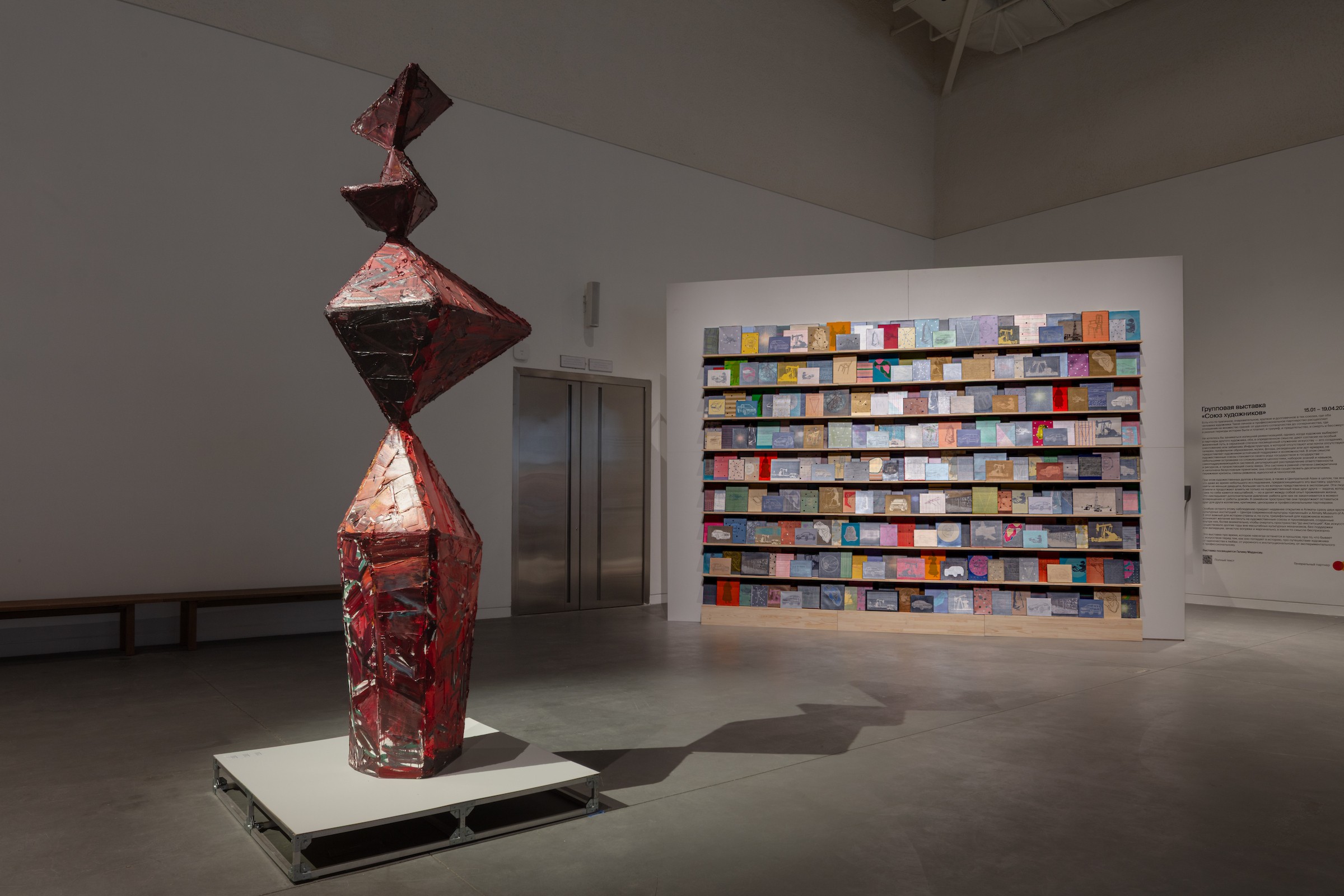
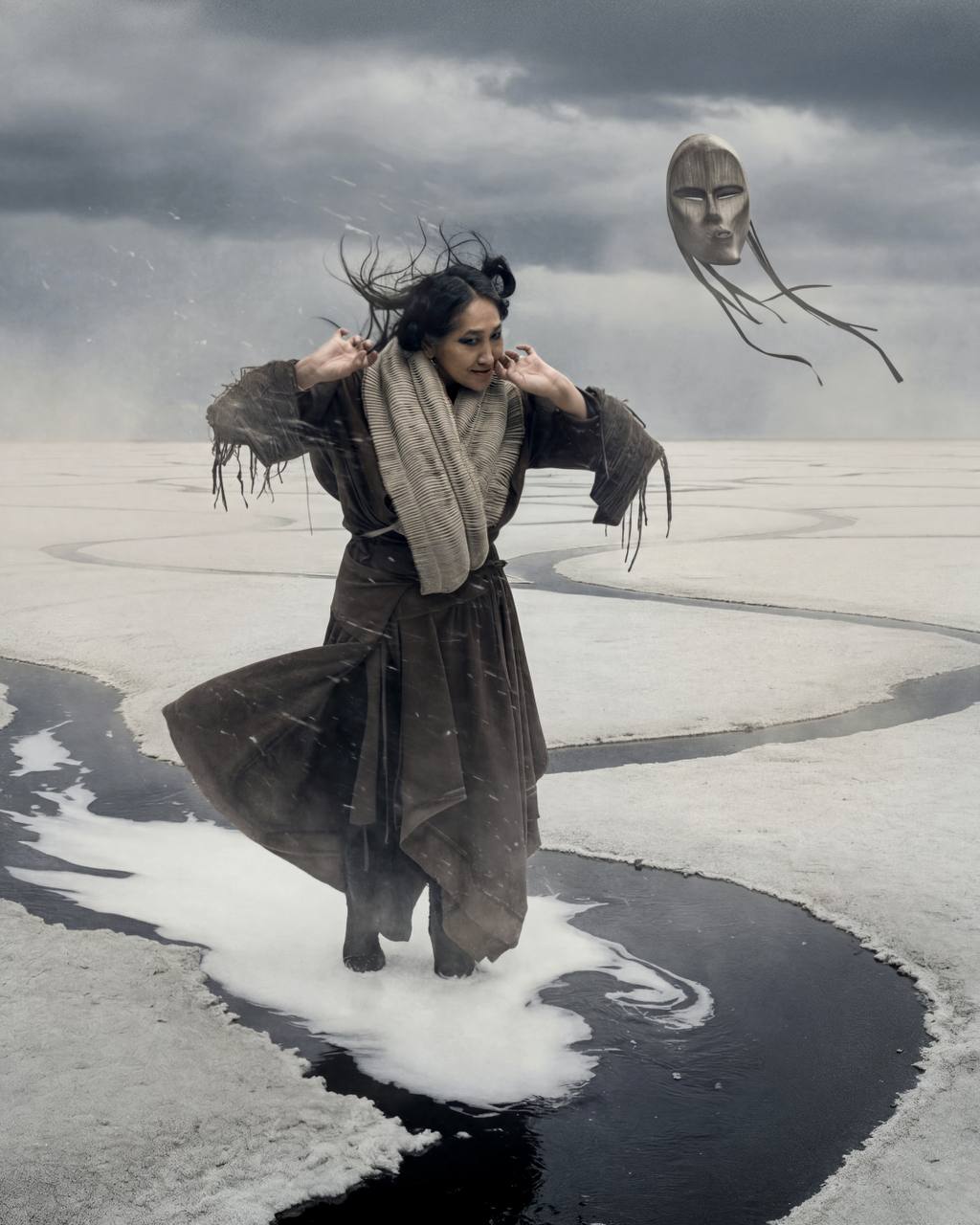
Installation view of “I Understand Everything” – Almagul Menlibayeva (12 September 2025 – May 2026), Almaty Museum of Arts; image: Alexey Naroditsky

Tselinny Center of Contemporary Culture: Reclaiming a Building and Its Meaning

Just days earlier, on September 5, 2025, the Tselinny Center of Contemporary Culture was inaugurated in Almaty. Housed in a restored 1964 Soviet-era cinema, the building underwent nearly seven years of renovation led by British architect Asif Khan. Notably, the facade’s unique sgraffito by artist Evgeny Sidorkin was preserved.

The transformed space now features an exhibition hall, library, cafe, and workshop areas. Its opening was marked by the performance BARSAKELMES, with initial public access free of charge. Tselinny now operates three days a week and serves as a vital platform for exhibitions, education, and creative dialogue.

The Tselinny Center of Contemporary Culture; image: SAPARLAS/Zhanarbek Amankulov

A. Kasteev State Museum of Arts: A New Status and Contemporary Focus

Kazakhstan’s primary national art institution also redefined its role in 2025. Celebrating its 90th anniversary, the A. Kasteev State Museum of Arts was granted National Museum status. In conjunction with this milestone, a new gallery dedicated to contemporary Kazakhstani art from the independence period was unveiled.

The exhibition Memory. Space. Progress brought together works from leading artists, charting the development of artistic practice from the 1990s to the present. Contributors included members of the Shymkent-based Red Tractor group, Almaty conceptualists, and key avant-garde figures such as Sergey Maslov, Rashid Nurekeyev, Almagul Menlibayeva, Shamil Guliyev, Bakhyt Bapyshev, and Said Atabekov. The exhibition featured installations, video art, and futuristic projects, affirming the place of contemporary art in the nation’s cultural heritage.

Major Exhibitions and Art Events Across the Country

Alongside institutional growth, 2025 saw a dynamic program of exhibitions and festivals. Astana, the capital, increasingly positioned itself as a hub for large-scale art events.

BARSAKELMES Performance @Tselinny Center

BARSAKELMES Performance @Tselinny Center

Astana Art FAIR (June, Astana)

Held in the summer, Astana Art FAIR 2025 was one of the largest contemporary art festivals in Central Asia. Centered on the theme Human and Technology, the fair featured artists from more than 15 countries. Astana’s urban spaces hosted expansive outdoor installations and public artworks, while the program included lectures, performances, and multimedia shows, exploring the cultural implications of the digital age and engaging diverse audiences.

TIREK: The Thread of Her Life (December, Almaty)

In December, the socially significant data-art exhibition TIREK was held at Almaty Gallery in collaboration with UN Women. The project addressed women’s health through visual and artistic practices.

Meanwhile, the National Museum of Kazakhstan in Astana hosted a traveling exhibition from the Louvre, featuring antiquities, strengthening cultural ties with leading international institutions. Traditional cultural events such as the Spirit of Tengri ethno-festival and the 10th anniversary of the Almaty Film Festival continued across the country, with contemporary visual art standing alongside music and cinema as a central cultural form.

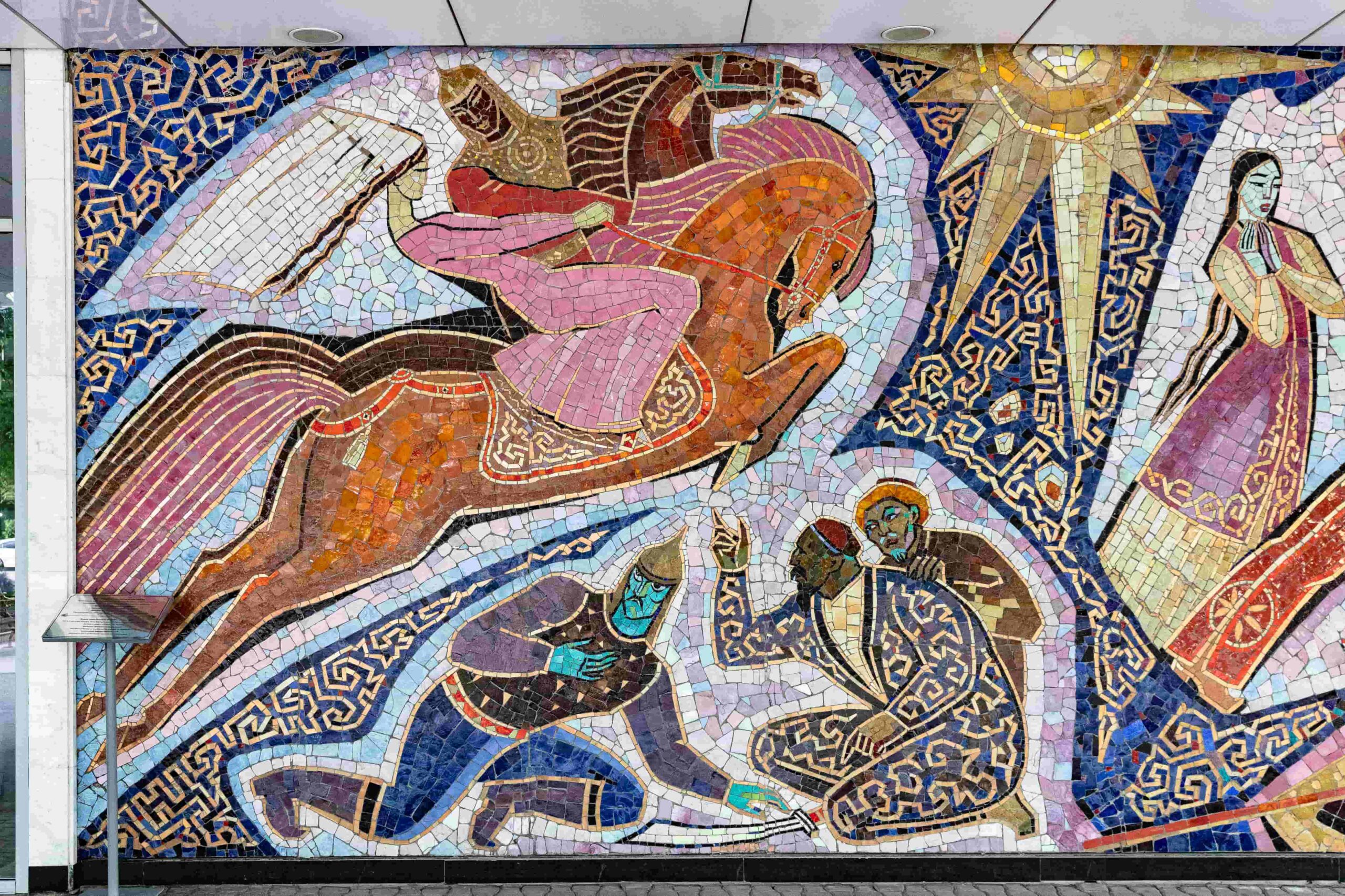
Urban Mosaic @Tselinny Center

Kazakhstani Artists on the Global Stage

If 2025 saw institutional growth domestically, it also marked a confident international presence. Kazakhstani artists were featured in biennials, fairs, and museum projects worldwide, securing a stronger position on the global art map.

Bukhara Biennial 2025

Held from September 5 to November 20 in historic Bukhara, the first Bukhara Biennial featured over 70 art projects. Kazakhstani artists were prominently represented, including Saule Suleimenova, Gulnur Mukazhanova, and Aisultan Seit. Themed Recipe for Broken Hearts, the biennial brought together regional voices, with Kazakhstani contributions emphasizing women’s creative experience and cultural dialogue in the post-Soviet space.

International Art Fairs

Aspan Gallery, based in Almaty, participated for the sixth time in Art Dubai (April 16-20), presenting Gulnur Mukazhanova’s solo project Shadows of Hope. In November, the gallery made its debut at Abu Dhabi Art with works by Erbosyn Meldibekov, whose practice explores post-Soviet architecture, monumentality, and memory.

Recognition and Awards

In July, Belgium’s M HKA Museum of Contemporary Art acquired Said Atabekov’s photographic series Prayer of a Thousand Horsemen, marking an increased European interest in Central Asian art.

At the VIDEOFORMES 2025 media art festival in France, video artist Lyazzat Khanim received a special award from the Puy-de-Dôme Department Council for her project, fresh film, selected from 720 submissions from 63 countries, highlighting a new generation of digital artists from Kazakhstan.

@Tselinny Center

Residencies, Grants, and Cultural Exchange

Summer 2025 saw the launch of the Art Future international residency at Esentai Gallery in Almaty, in partnership with the Embassy of Spain. Spanish photographer Juan Saliket was the central resident, conducting urban research, collaborating with local artists, and culminating in a final exhibition.

Domestically, cultural support continued. At the start of the year, 75 leading cultural figures received state scholarships, supporting a broad range of artistic disciplines, including contemporary visual arts.

Trends and Significance of 2025

Collectively, the events of 2025 signal a new phase in Kazakhstan’s cultural development. With new museums, festivals, major exhibitions, and a growing international footprint, Kazakhstan is increasingly asserting itself as a regional center for contemporary artistic innovation, where a strong connection to cultural heritage is balanced by a forward-looking vision.

Kazakh Government Transfers Control of Controversial Medical Fund to Ministry of Finance

The Kazakh government has restructured the management of the Social Medical Insurance Fund (SMIF), transferring oversight of its operations to the Ministry of Finance. The decision was formalized by Prime Minister Olzhas Bektenov following a comprehensive audit of the fund’s financial activities conducted over the past month.

The SMIF serves as the principal operator of Kazakhstan’s Compulsory Social Medical Insurance (CSMI) system. It collects contributions from employees, employers, and the state, then allocates these funds to medical institutions based on the volume of services rendered.

However, the fund’s operations have faced sustained public and parliamentary criticism. In January 2025, members of parliament declared that the SMIF had lost the public’s trust and called for tighter oversight of its expenditures.

Delayed Audit and Financial Irregularities

Despite growing concerns, a large-scale audit had long been postponed. It was not until December 2025 that the Prime Minister tasked the Ministry of Finance with analyzing the fund’s financial flows.

Finance Minister Madi Takiev presented the audit’s findings last week. According to the government press service, the results raised serious concerns about the overall effectiveness of the country’s healthcare financing model.

Despite a steady rise in expenditures, the Ministry of Finance found that SMIF’s efficiency had not improved. Since 2020, the fund’s investment income totaled $1.1 billion, including $383 million in 2025 alone. A significant portion of these funds, however, was not allocated toward medical services, and instead accumulated in the fund’s reserves.

Overbilling and Digital System Failures

An IT audit of the healthcare information system revealed extensive violations in service reporting. These included billing for fictitious patients, services provided without medical necessity, and instances of double financing. Numerous cases documented implausibly high volumes of procedures performed within short timeframes.

Several high-profile anomalies stood out. In some reports, medical services were recorded for individuals who were deceased at the time. In another case, minors were allegedly prescribed more than a thousand medications in a single day.

Tax authorities also conducted a desk audit of the directors of medical institutions, comparing declared incomes with actual property holdings.

Transition to Centralized Oversight

In response to the audit, Bektenov ordered that all materials be forwarded to law enforcement agencies for further investigation.

This marks the effective dismantling of SMIF’s former autonomous governance model in favor of centralized control by the Ministry of Finance.

The move comes amid rising fiscal pressure on the healthcare system. In 2026, the government will continue to fund medical insurance premiums for socially vulnerable groups. As previously reported by The Times of Central Asia, the state will finance insurance coverage for over one million unemployed citizens.

Kazakhstan and Uzbekistan to Install Hydro Posts on Syr Darya River

Kazakhstan and Uzbekistan are moving forward with the installation of ten automated hydro posts along the Syr Darya River, five in each country, as part of a joint initiative to enhance transparency and accuracy in transboundary water accounting and distribution for irrigation. The project is supported by the German Agency for International Cooperation (GIZ).

The initiative was a key item on the agenda during a January 19 meeting between Kazakhstan’s Minister of Water Resources and Irrigation, Nurzhan Nurzhigitov, and Uzbekistan’s Minister of Water Resources, Shavkat Khamrayev, held in the Kazakh city of Turkestan.

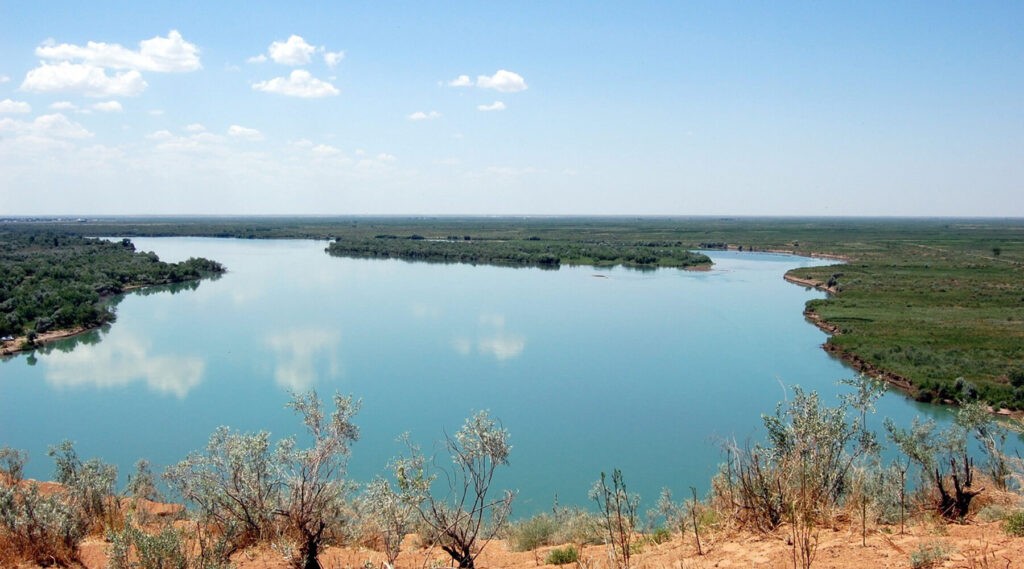
The Syr Darya River is critical for agricultural irrigation across Central Asia, particularly in Kazakhstan’s southern regions, Turkistan, Kyzylorda, and Zhambyl, which depend heavily on its waters. The river originates in Kyrgyzstan and flows through Uzbekistan before entering Kazakhstan.

Nurzhigitov highlighted that Kazakhstan and Uzbekistan signed an intergovernmental agreement last year on the joint management and rational use of transboundary water resources. “The agreement is a significant contribution to the development of water diplomacy in Central Asia and clearly defines key areas for further mutually beneficial cooperation. We intend to continue developing our bilateral partnership in the spirit of good neighborliness, mutual respect, and constructive dialogue,” Nurzhigitov stated.

The ministers also reviewed progress on the maintenance and repair of the interstate Dostyk (Friendship) Canal, which channels irrigation water from Uzbekistan into Kazakhstan. Last year, Kazakhstan undertook mechanized cleaning of the canal’s bed, slopes, and collectors, and carried out repairs on gates and barrier structures. These efforts will continue in 2026.

Given the Syr Darya’s importance to regional agriculture, Kazakhstan and Uzbekistan have also launched a joint project to revise irrigation regimes within the basin. The goal is to optimize agricultural water use and improve environmental sustainability.

According to the Kazakh Ministry of Water Resources and Irrigation, the Aral-Syr Darya basin supplies water to more than 35% of Kazakhstan’s irrigated land, with agriculture accounting for 98% of water withdrawals.

Kazakh officials recently presented water inflow forecasts for 2026 and emphasized the urgency of boosting water-use efficiency amid continued low-flow conditions. Declining inflows into the Naryn-Syr Darya system pose a threat to irrigation supplies for the upcoming growing season.

Tokayev Floats Vice President Post at National Kurultai as Kazakhstan Weighs Political Overhaul

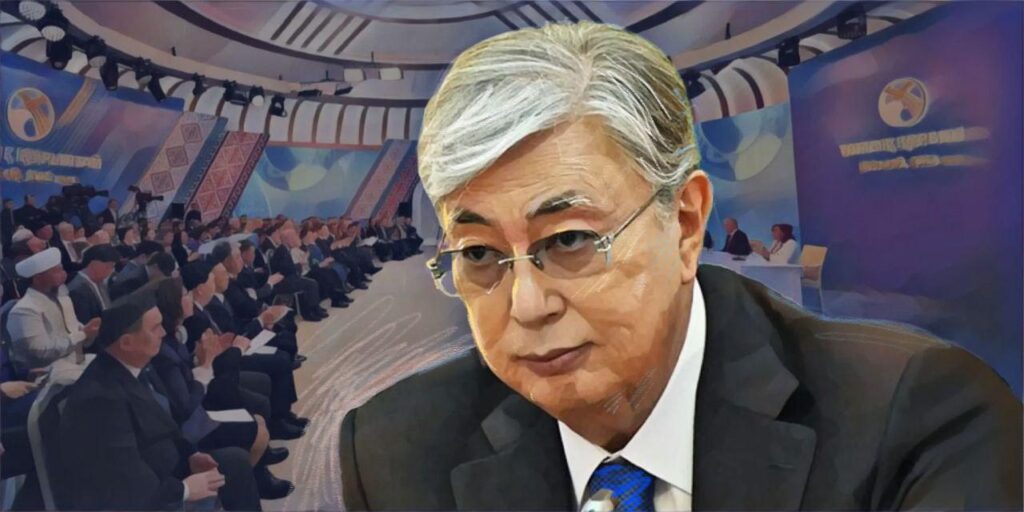
President Kassym-Jomart Tokayev used the fifth session of Kazakhstan’s National Kurultai on January 20 to propose creating a vice president’s post and embedding the new institution in the constitution, as part of a broader package of political reforms aimed at reshaping the country’s system of governance.

Under the proposal, the vice president would be appointed by the president and confirmed by parliament by a simple majority vote. The president would define the vice president’s authority, which could include representing Kazakhstan at international forums and negotiations, representing the head of state in parliament, and engaging with domestic and international organizations in political, scientific, cultural, and educational fields.

“The establishment of this position will stabilize the process of state governance, and will also bring final clarity regarding the hierarchy of power,” Tokayev said at the Kurultai.

Kazakhstan does not currently have a vice president. Executive authority is vested in the presidency, while the government is led by a prime minister, with succession procedures defined by the constitution. Tokayev said the key provisions governing the new post, including its functions, should be enshrined directly in the constitution.

The vice presidency was presented as part of a wider administrative restructuring. Tokayev said several administrative structures that support the current parliament would be abolished, along with the position of state counselor. He added that the functions, structure, and management system of the Presidential Administration would be reformed in line with practical needs.

The Kurultai session in Kyzylorda took place as the administration advances a more far-reaching overhaul of the legislature. Tokayev has promoted a transition from Kazakhstan’s bicameral parliament, composed of the Senate and the Mazhilis, to a unicameral system, arguing that the change would simplify governance and shorten decision-making chains.

President Tokayev at the National Kurultai; image: Akorda.kz

He outlined parameters for a future unicameral parliament, saying it could consist of around 145 deputies, be led by three vice-chairs, and operate with no more than eight standing committees. He also proposed renaming the legislature the “Kurultai,” saying the term reflects historical traditions of popular representation.

The parliamentary reform agenda is being developed by a working group that began reviewing constitutional options in late 2025. The idea of moving to a unicameral system was first raised in Tokayev’s national address on September 8, 2025.

On January 19, Tokayev held a meeting with the working group on parliamentary reform in Astana, where aides reported that the group had reviewed constitutional approaches to reshaping the legislature and discussed key approaches to constitutional reform based on proposals from citizens, experts, and civil organizations.

Tokayev has tied the parliamentary overhaul to a nationwide vote. He reaffirmed that citizens would make the final decision through a referendum and said Kazakhstan is targeting 2027 for a public vote on abolishing the Senate and moving to a unicameral legislature.

The latest reform proposals build on constitutional changes adopted after the unrest of January 2022. In June 2022, Kazakhstan held a nationwide referendum on proposed constitutional amendments, with more than 77% of participating voters approving changes that altered about one-third of the constitution and sought to expand the role of parliament and reshape state governance. The vote followed President Tokayev’s decree in May 2022.

Later in 2022, Kazakhstan’s parliament and Constitutional Council endorsed a shift to a single, non-renewable seven-year presidential term, replacing the previous two-term five-year limit.

Alongside the vice presidency, Tokayev proposed dismantling existing consultative bodies and replacing them with a new institution, the People’s Council of Kazakhstan, known in Kazakh as Qazaqstannyn Khalyk Kenesi. He said the Assembly of the People of Kazakhstan and the National Kurultai had largely fulfilled their historical missions.

Under the proposal, the People’s Council would become the country’s highest consultative body. It would consist of 126 members drawn from ethnocultural associations, public organizations, maslikhats (local elected councils), and regional public councils. All members would be appointed by the president, while the chair would be elected from among the council’s members.

The proposal represents a significant shift for the Assembly of the People of Kazakhstan, established in 1995 and chaired by the president. The Assembly includes more than 500 members and functions as a civil-society platform aimed at preserving interethnic harmony.

Tokayev said proposals raised at previous National Kurultai sessions have resulted in the adoption of 26 laws, including measures related to women’s rights, child protection, gambling restrictions, drug policy, onomastics, and reforms to the state awards system.

The National Kurultai was created in 2022 and holds annual sessions in different regions. Previous meetings took place in Ulytau, Turkestan, Atyrau, and Burabay.

If implemented, Tokayev’s proposals would amount to the most far-reaching institutional redesign since the 2022 constitutional reset, combining a new vice presidency with a unicameral parliament and a reconfigured consultative system. The president did not specify when draft constitutional amendments would be submitted.

Taken together, the proposals would centralize the redesign of executive, legislative, and consultative institutions within a single reform cycle, while deferring questions about the balance of power to a future constitutional debate.