• KGS/USD = 0.01144 0%
  • KZT/USD = 0.00210 0%
  • TJS/USD = 0.10528 0.19%
  • UZS/USD = 0.00008 0%
  • TMT/USD = 0.28490 0%
  • KGS/USD = 0.01144 0%
  • KZT/USD = 0.00210 0%
  • TJS/USD = 0.10528 0.19%
  • UZS/USD = 0.00008 0%
  • TMT/USD = 0.28490 0%
  • KGS/USD = 0.01144 0%
  • KZT/USD = 0.00210 0%
  • TJS/USD = 0.10528 0.19%
  • UZS/USD = 0.00008 0%
  • TMT/USD = 0.28490 0%
  • KGS/USD = 0.01144 0%
  • KZT/USD = 0.00210 0%
  • TJS/USD = 0.10528 0.19%
  • UZS/USD = 0.00008 0%
  • TMT/USD = 0.28490 0%
  • KGS/USD = 0.01144 0%
  • KZT/USD = 0.00210 0%
  • TJS/USD = 0.10528 0.19%
  • UZS/USD = 0.00008 0%
  • TMT/USD = 0.28490 0%
  • KGS/USD = 0.01144 0%
  • KZT/USD = 0.00210 0%
  • TJS/USD = 0.10528 0.19%
  • UZS/USD = 0.00008 0%
  • TMT/USD = 0.28490 0%
  • KGS/USD = 0.01144 0%
  • KZT/USD = 0.00210 0%
  • TJS/USD = 0.10528 0.19%
  • UZS/USD = 0.00008 0%
  • TMT/USD = 0.28490 0%
  • KGS/USD = 0.01144 0%
  • KZT/USD = 0.00210 0%
  • TJS/USD = 0.10528 0.19%
  • UZS/USD = 0.00008 0%
  • TMT/USD = 0.28490 0%

Uzbekistan Uncovers Large-Scale Corruption, Files Charges Against Senior Interior Officials

Uzbekistan has launched criminal proceedings against senior officials in the Ministry of Internal Affairs as part of a sweeping anti-corruption campaign that has exposed extensive financial violations across the country.

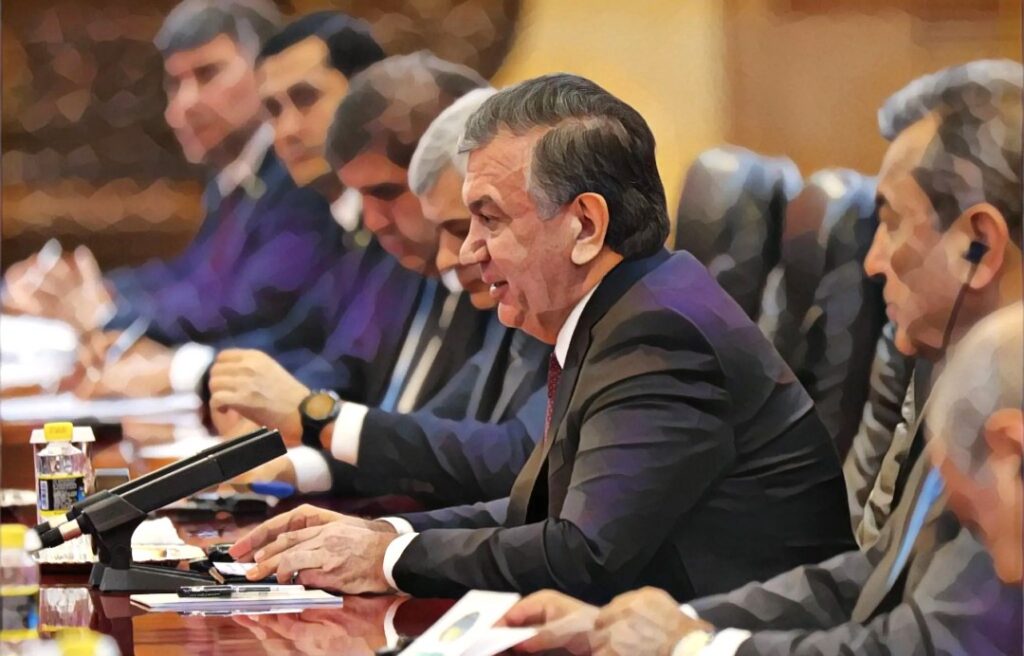
At a government meeting on January 27, President Shavkat Mirziyoyev announced that investigations had uncovered 53 trillion Uzbekistani som ($4.38 billion) in financial irregularities and misappropriated funds. Of that, damage linked directly to corruption schemes totaled 4.2 trillion som ($347.3 million), according to a statement from the president’s press secretary.

Authorities reported that 1.3 trillion som ($107.5 million) in damages has already been recovered, and 55 individuals have been arrested nationwide in connection with corruption-related activities.

Among the highest-profile cases is one involving the Ministry of Internal Affairs. Criminal proceedings have been initiated against Deputy Interior Minister Bekmurod Abdullayev and Rustam Tursunov, head of the ministry’s Penitentiary Department. Investigators allege that 186 billion som ($15.38 million) in budget funds were embezzled through fraudulent state procurement schemes within the ministry.

“Every single som of state money will be placed under strict and effective control. Responsibility is inevitable, and punishment will be severe,” Mirziyoyev said during the meeting.

In addition to budget-related losses, audits also identified more than $8 billion in debt associated with foreign trade operations. Mirziyoyev described the findings as alarming and announced the introduction of internal compliance and anti-corruption systems across government bodies and state enterprises.

He also addressed personnel management within law enforcement. Despite mandatory retirement ages, 55 for colonels and 60 for generals, over 300 officers exceeding these limits are reportedly still in leadership roles. By contrast, all top officials in the Ministry of Emergency Situations are currently under 50 years old.

Mirziyoyev underscored the need to promote a new generation of professional and accountable young leaders while also harnessing the expertise of retired or soon-to-retire officers through mentorship and youth engagement programs.

The meeting concluded with directives to conduct a critical review of officials responsible for oversight and security in state institutions. The initiative is part of a broader effort to strengthen financial discipline and governance throughout the public sector.


Kyrgyzstan Bans Animal Imports from India to Prevent Nipah Virus Spread

On January 28, Kyrgyzstan’s Veterinary Service imposed temporary restrictions on the import of live animals and animal products from India in response to confirmed cases of Nipah virus infections.

According to the World Health Organization (WHO), Nipah virus is a severe zoonotic disease transmitted to humans through contact with infected animals, such as fruit bats or pigs, or through consumption of food contaminated by bat secretions. Human-to-human transmission is also possible through close contact. The virus has an estimated case-fatality rate of 40% to 75%.

Two confirmed cases of Nipah virus were reported in late December in India’s eastern state of West Bengal. Both infected individuals were healthcare workers. Following these reports, authorities in Thailand, Singapore, Hong Kong, and Malaysia intensified airport screenings to contain the risk of cross-border transmission.

Kyrgyzstan’s Ministry of Health has issued a statement urging the public to remain calm, noting that no cases of Nipah virus have been registered in the country. The ministry assured that the healthcare system is prepared to respond swiftly to potential epidemiological threats.

As a preventive measure, sanitary and quarantine controls have been tightened at Kyrgyzstan’s border crossings. The ministry continues to collaborate with the WHO and other international partners to monitor developments and coordinate containment efforts.

In neighboring Kazakhstan, the Ministry of Health issued a similar statement confirming that no cases of Nipah virus infection have been detected and that the epidemiological situation remains under control. As a precaution, Kazakhstan has also enhanced screening procedures at all border checkpoints, with special attention to travelers arriving from India and Southeast Asia.

Russian TV Comments on Central Asia Trigger Strong Reaction from Uzbek Analysts

A recent broadcast on Russia’s state television channel Russia-1 has sparked strong backlash in Central Asia after inflammatory remarks aired on the political talk show Evening with Vladimir Solovyov questioned the independence and foreign policy choices of post-Soviet countries in Central Asia and the South Caucasus.

The controversy began when political analyst Sergey Mikheyev, who served as a representative for President Vladimir Putin during Russia’s 2024 election campaign, criticized Moscow’s approach toward former Soviet republics, calling it “ineffective” and overly generous.

“Our policy toward the post-Soviet space was not very effective,” Mikheyev said. “The situation where Russia owes everyone and no one owes Russia anything is a dead end. We solve many of their problems, labor migration, assistance, many other things and yet we are always the ones who must give.”

He added, “We spoiled them. We spoiled them too much. We will not tolerate this anymore.”

Program host Solovyov supported the tone of Mikheyev’s remarks, adding: “If I am forced to speak about you like this, then think about what you are doing wrong.”

The broadcast quickly spread across social media platforms in Central Asia, prompting swift reactions from regional analysts, particularly in Uzbekistan, who criticized the rhetoric as imperial and patronizing.

Uzbek political scientist and university professor Sherzodkhon Qudratkhodja called the discussion an emotional outburst rooted in nostalgia for a lost empire. “They spoke like sentinels, bitterly offended by the entire former Soviet Union,” he wrote on social media. He added that Mikheyev’s phrase “we spoiled them” infantilized independent states, framing them as unruly children rather than equal partners.

“The logic is simple: if you don’t obey, you’re ‘nervous.’ If you want independence, you’re ‘spoiled.’ Their favorite phrase is that others ‘must know their place,’” Qudratkhodja wrote.

He also rejected the idea that Central Asian countries are exploiting Russia or living at its expense. “No one is blackmailing anyone. No one owes us anything, and we owe no one anything,” he stated, emphasizing Uzbekistan’s commitment to “equal rights and mutual respect in international relations.”

Another Uzbek analyst, G‘ayratxo‘ja Saydaliyev, argued that Mikheyev’s comments reflect a broader worldview within segments of the Russian political elite. “This is an open expression of a geopolitical mindset where Central Asia is not seen as a partner, but as a subordinate,” he wrote. “Independent foreign policy is treated not only as ingratitude but as illegitimate.”

Saydaliyev noted Mikheyev’s additional remarks on Iran and Turkey, interpreting them as evidence of growing Russian anxiety over shifting alliances. He argued that Moscow views Iran as a counterbalance to the U.S. and Turkey, and fears that losing influence over Tehran could further weaken Russia’s position, potentially prompting it to exert more pressure on post-Soviet neighbors.

Turkey’s rising role in Central Asia and the concept of a “Turkic world” were also framed by Mikheyev as a geopolitical threat. Saydaliyev concluded that deeper regional ties with Ankara are being viewed in Moscow not as legitimate foreign policy, but as a challenge to Russian dominance.

“The biggest challenge for Central Asia is to maintain sovereignty in the face of aggressive rhetoric and geopolitical pressure,” he warned.

The analysts also highlighted Mikheyev’s claim that events in Ukraine were partly the result of Russia “spoiling” its neighbors, interpreting this as a veiled threat that independence could lead to punitive action.

While the program cited migration and economic aid as justifications for Russian influence, Qudratkhodja pointed out that Russia itself suffers from labor shortages and relies heavily on Central Asian migrants to support its economy.

Neither the Russian Foreign Ministry nor the Kremlin has commented publicly on the broadcast or the backlash.

The episode adds to a growing list of media incidents that have fueled unease in Central Asia about how Russia views its relationships with neighboring states. For many in the region, such rhetoric undermines Moscow’s professed commitment to equal partnerships.

As Qudratkhodja concluded, “States are not children to be raised, and the world is not a television studio.”

TAPI Gas Pipeline Advances Toward Herat, Afghanistan

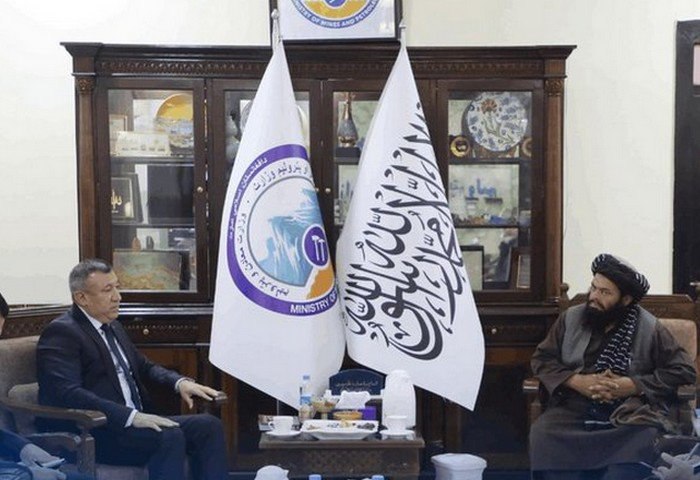
Progress on the Turkmenistan-Afghanistan-Pakistan-India (TAPI) gas pipeline, one of the largest energy infrastructure projects in the region, was the central focus of recent talks between Turkmenistan’s Ambassador to Afghanistan, Khoja Ovezov, and Afghanistan’s Minister of Mining and Petroleum, Hedayatullah Badri.

According to Turkmenistan’s state oil and gas company, Turkmennebit, the Turkmen delegation briefed its Afghan counterparts on the current phase of construction and outlined upcoming steps. Both sides expressed optimism that the pipeline will reach the western Afghan city of Herat by the end of 2026, a key milestone for the project.

The TAPI pipeline is projected to span approximately 1,814 kilometers, with 214 kilometers running through Turkmenistan, 774 kilometers through Afghanistan, and 826 kilometers through Pakistan, ending at the Indian border. The Afghan segment is not only the longest outside of Pakistan but also the most challenging, both logistically and politically.

The most recent development in the project, the opening of the Serhetabat-Herat section, officially named Arkadagyň ak ýoly (“Arkadag’s White Path”), was marked on October 20, 2025.

Once operational, the pipeline is expected to bring substantial economic benefits to the participating countries. Afghanistan could receive over $1 billion annually in transit and related revenues, while Pakistan is projected to earn between $200 million and $250 million. These figures, according to project stakeholders, represent a significant step toward the economic goals of each nation involved.

Preparatory work has already been completed on a 91-kilometer stretch of the TAPI route in Herat province. The necessary infrastructure is in place, and worker camps have been established along the pipeline corridor.

Kazakhstan Plans to Attract More Than $60 Billion in Investments in 2026

Kazakhstan aims to attract $62.7 billion in total investment in 2026, including $25.5 billion in foreign capital. The figures were announced during a government meeting on investment strategy chaired by Prime Minister Olzhas Bektenov.

According to Bektenov, state authorities have been tasked with increasing the inflow of high-quality investments and ensuring the launch of projects with high added value. In line with this strategic goal, Kazakhstan’s Investment Policy Concept has been updated and extended to 2030.

By the end of 2025, investment in fixed capital had reached $45 billion. In 2026, the government plans to implement 475 investment projects worth approximately $32 billion, creating over 1,100 permanent jobs. For comparison, 273 projects valued at $5 billion were launched in 2025.

The government is shifting to a proactive investment model focused on sector-specific targeting and the development of a pre-approved portfolio of investment proposals.

Major projects underway include the CHN Corporation’s $4 billion coal chemical complex in the Karaganda region, Fufeng Group’s $800 million corn deep processing plant, Shandong Yuwang Industrial’s $250 million soybean processing facility, and additional investments from Roca Group and UBM Group.

Investor protection remains a top priority. The investment ombudsman role has been transferred to the Prosecutor General. In addition, the former investment committee has been restructured into the Committee for the Protection of Investors’ Rights. According to the Prosecutor General’s Office; these reforms have led to a 30% reduction in legal disputes involving investors.

Despite this progress, Bektenov emphasized that excessive bureaucracy and delays in local procedures continue to hinder investment, resulting in direct economic losses.

As previously reported by The Times of Central Asia, Kazakhstan was named as one of the leading investment destinations in the Eurasian region, alongside Uzbekistan.

From Central Asia to the World: How a U.S.-Raised Kazakh Founder Is Using AI to Unlock Global Education

For many talented students across Central Asia, admission to the world’s leading universities remains an elusive goal, not due to a lack of ability, but because of complex application procedures, and expensive consulting services. A new AI platform, yoonee.ai, is working to change that. At the heart of the initiative is a woman bridging continents and reconnecting with her cultural roots.

One of the platform’s co-founders is ethic Kazakh Gulmira Sage, who was adopted and raised in the United States. Despite growing up in America, she says her connection to Kazakhstan never waned. Last year, her journey back to Kazakhstan to meet her biological mother captured national attention. Now, she is once again in the spotlight, this time for launching a project that promises to reshape access to global education.

“Coming back to my homeland after many years felt like reclaiming a missing part of myself,” she says. That personal journey now underpins the mission behind yoonee.ai: a platform designed to help students from Central Asia navigate international higher education systems with greater ease and confidence.

From Aviation to AI

Before venturing into the tech sector, Gulmira worked as an analyst at Delta Air Lines, one of the world’s largest carriers. There, she worked with complex datasets, financial models, and global logistics, skills she says sharpened her systems thinking.

“My background is actually in aviation. I worked as an analyst at one of the biggest airlines in the world, dealing with complex data, financials, and the global logistics that keep an airline moving,” she explains. “Aviation connects people physically, and IT does the same thing electronically. Technology connects them digitally.”

That experience fueled her belief that digital tools, and AI in particular, could help eliminate long-standing educational barriers. Together with her co-founders, Feruza and Aidana, she began building yoonee.ai, drawing on their shared academic and professional experiences in the U.S., France, and Kazakhstan.

How the Platform Works

Yoonee.ai allows students to upload academic documents directly into the system. Using AI, the platform translates them with academic accuracy and converts grades into internationally recognized formats. For instance, GPA scores from five-point or 100-point systems are standardized to U.S. benchmarks, allowing students to assess how competitive their profiles are for specific universities.

The platform also offers a “match score” that estimates a student’s compatibility with selected institutions. According to the founders, many qualified applicants are rejected not for academic shortcomings but due to formatting errors or unmet technical requirements.

“Geography Should Not Decide a Student’s Future”

The team sees its mission as the democratization of global education. Their goal is to eliminate what they call the “geographic tax” – the added financial and informational burden on students from developing regions. This is especially relevant in rural parts of Kazakhstan and neighboring countries, where access to U.S.-trained admissions consultants is limited and often unaffordable.

To improve accessibility, the platform will be available in Kazakh, Russian, and Uzbek, allowing students to explore global university options in their native languages, directly from their smartphones.

Cultural Roots, Business Values

Despite her American upbringing, Gulmira says Kazakh cultural values have shaped her approach to leadership.

“In the U.S., business is often purely transactional,” she says. “In Kazakhstan, it’s about relationships and genuine care. I want our project to reflect that, to truly support students, not just process their applications.” She adds that nomadic traits such as resilience, adaptability, and openness continue to guide her both personally and professionally.

Beyond Technology

Looking forward, the yoonee.ai team envisions more than just a tech solution. One long-term goal is to establish a two-way academic exchange model, a kind of “mobile classroom” that not only sends Central Asian students abroad but also brings Western students to Kazakhstan and the wider region.

Such exchanges, the founders believe, could highlight the intellectual and cultural wealth of the modern Silk Road. For Gulmira, the project is a form of cultural diplomacy, using education as a bridge between societies.

“Technology alone isn’t enough,” she says. “But when it’s guided by purpose and cultural understanding, it can change lives.”