• KGS/USD = 0.01144 0%
  • KZT/USD = 0.00195 0%
  • TJS/USD = 0.10861 0.18%
  • UZS/USD = 0.00008 0%
  • TMT/USD = 0.28571 0%
  • KGS/USD = 0.01144 0%
  • KZT/USD = 0.00195 0%
  • TJS/USD = 0.10861 0.18%
  • UZS/USD = 0.00008 0%
  • TMT/USD = 0.28571 0%
  • KGS/USD = 0.01144 0%
  • KZT/USD = 0.00195 0%
  • TJS/USD = 0.10861 0.18%
  • UZS/USD = 0.00008 0%
  • TMT/USD = 0.28571 0%
  • KGS/USD = 0.01144 0%
  • KZT/USD = 0.00195 0%
  • TJS/USD = 0.10861 0.18%
  • UZS/USD = 0.00008 0%
  • TMT/USD = 0.28571 0%
  • KGS/USD = 0.01144 0%
  • KZT/USD = 0.00195 0%
  • TJS/USD = 0.10861 0.18%
  • UZS/USD = 0.00008 0%
  • TMT/USD = 0.28571 0%
  • KGS/USD = 0.01144 0%
  • KZT/USD = 0.00195 0%
  • TJS/USD = 0.10861 0.18%
  • UZS/USD = 0.00008 0%
  • TMT/USD = 0.28571 0%
  • KGS/USD = 0.01144 0%
  • KZT/USD = 0.00195 0%
  • TJS/USD = 0.10861 0.18%
  • UZS/USD = 0.00008 0%
  • TMT/USD = 0.28571 0%
  • KGS/USD = 0.01144 0%
  • KZT/USD = 0.00195 0%
  • TJS/USD = 0.10861 0.18%
  • UZS/USD = 0.00008 0%
  • TMT/USD = 0.28571 0%
18 December 2025

Tajikistan Condemns Fatal Stabbing of Boy in Russia Citing Ethnic Hatred

Tajikistan has condemned what it called an “ethnic hatred” attack in Russia after a 10-year-old boy from a Tajik family was stabbed to death at a school near Moscow, in a rare public rebuke aimed at a key partner for labor migration and security ties. The killing happened on December 16 in the village of Gorki-2 in the Odintsovo district of the Moscow region, according to Russia’s Investigative Committee, which said a minor attacked people at an educational institution, killing one child and injuring a school security guard.

A video of the attack circulated on Russian social media after the incident. According to reporting by Asia-Plus, footage published by the Telegram channel Mash shows the teenage assailant approaching a group of students while holding a knife and asking them about their nationality. The video then shows a school security guard attempting to intervene before the attacker sprays him with pepper spray and stabs him. The assailant subsequently turns the knife on the children, fatally wounding the 10-year-old boy.

A statement released by Tajikistan’s interior ministry said it feared the case could “serve as a pretext for incitement and provocation by certain radical nationalist groups to commit similar crimes.” Tajikistan’s response also drew attention after the foreign ministry said the attack was “motivated by ethnic hatred.” Dushanbe subsequently summoned the Russian ambassador to protest the attack, handing him a missive “demanding that Russia conduct an immediate, objective, and impartial investigation into this tragic incident.”

The condemnation is particularly notable as Tajikistan rarely issues public criticism of Russia, which remains its main destination for migrant labor and a key security partner.

According to Russian media, the attacker, who has admitted their guilt, subscribed to neo-Nazi channels and had sent his classmates a racist manifesto entitled “My Rage,” in which he expressed hostility toward Jews, Muslims, anti-fascists, and liberals, a few days before the incident.

Tajik migrants form one of the largest foreign labor communities in Russia and across Central Asia. Millions of Tajik citizens work abroad each year, most of them in Russia, sending remittances that are a critical source of income for families at home. According to the World Bank, remittances account for roughly half of Tajikistan’s gross domestic product in some years, making labor migration a cornerstone of the country’s economy. Many Tajik migrants work in construction, services, and transport, often in precarious conditions and with limited legal protections. The killing comes as Central Asian migrants in Russia face growing pressure to enlist in the war in Ukraine, with coercion through detention, deportation threats, and promises of legal status having been reported.

The killing has also renewed scrutiny of rising xenophobia in Russia, particularly toward migrants from Central Asia. The Times of Central Asia has previously reported an increase in hate speech, harassment, and violent attacks targeting migrants, especially following major security incidents. Human Rights Watch has warned that Central Asian migrants in Russia face growing discrimination, arbitrary police checks, and racially motivated abuse, trends that have intensified in recent years amid heightened nationalist rhetoric.
U.S. Eases Restrictions on Entry of Turkmenistan Nationals

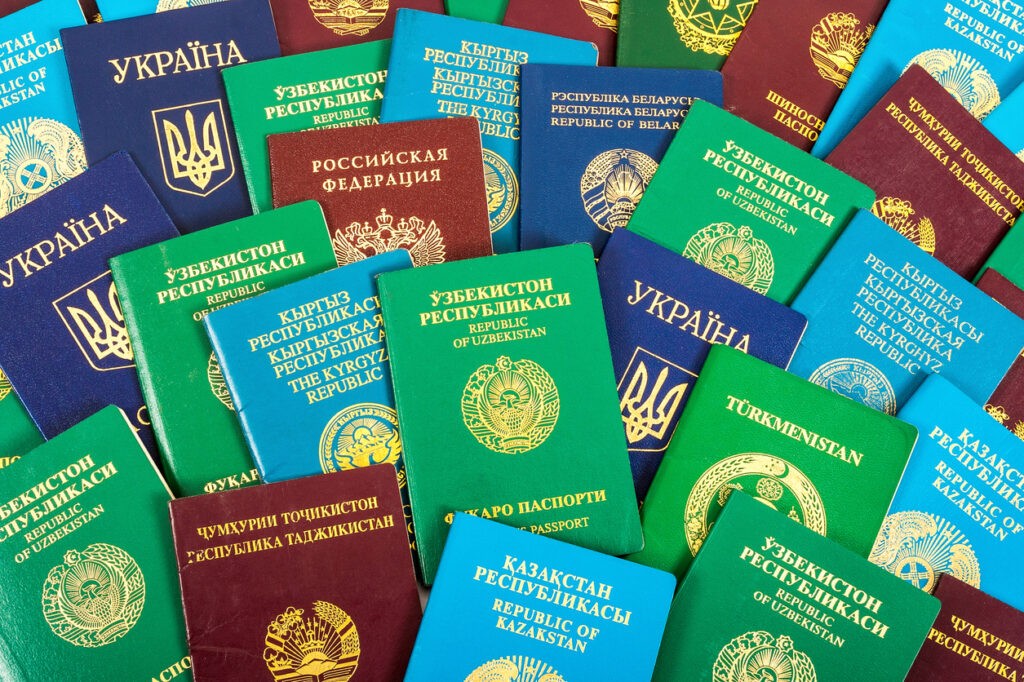
The United States has lifted a suspension on the entry of citizens of Turkmenistan with nonimmigrant visas into the U.S.

The suspension had been imposed under an order signed in June by President Donald Trump that banned or curbed the entry of nationals from 19 countries. On Tuesday, Trump issued another order that expanded entry restrictions on people from countries deemed to have what the White House called “demonstrated, persistent, and severe deficiencies” in screening and vetting.

However, in contrast to other countries that were mentioned, the new order had good things to say about Turkmenistan, one of the most isolated, tightly controlled countries in the world.

Since the suspension announced in June, “Turkmenistan has engaged productively with the United States and demonstrated significant progress in improving its identity-management and information-sharing procedures,” the new order said.

“The suspension of entry into the United States of nationals of Turkmenistan as nonimmigrants on B-1, B-2, B-1/B-2, F, M, and J visas is lifted. Because some concerns remain, the entry into the United States of nationals of Turkmenistan as immigrants remains suspended.”

B-1 (business) and B-2 (tourism) refer to non-immigrant visas for people who want to stay temporarily in the U.S. F, M, and J visas are for non-immigrant visas used by students and other visitors enrolled in exchange programs.

Relatively few people from Turkmenistan seek entry into the United States, possibly because of the tight controls on emigration in their own country.

President Serdar Berdymuhamedov joined other leaders from Central Asia for a summit with Trump in Washington in November.

Financing Agreement for China-Kyrgyzstan-Uzbekistan Railway Project Signed in Bishkek

On December 16, a loan agreement was signed in Bishkek to finance the construction of the China-Kyrgyzstan-Uzbekistan (CKU) railway, an ambitious regional transport project intended to bolster connectivity across Central and South Asia. According to the Kyrgyz government, the agreement was concluded between China-Kyrgyzstan-Uzbekistan Railway Company LLC, a joint venture formed by the three participating countries and a syndicate of Chinese banks, including the China Development Bank and Eximbank.

The CKU railway has been discussed for more than two decades, but repeatedly stalled over financing, route selection, and technical concerns. Momentum increased after 2022 as China sought alternative westbound transport corridors and Central Asian states looked to diversify trade routes and reduce reliance on existing transit pathways.

The total cost of the railway project is estimated at $4.7 billion. Half of that amount, approximately $2.3 billion, will be provided as a 35-year loan from China to the joint project company, which will be responsible for repayment. The remaining $2.3 billion will be contributed to the company’s authorized capital: China will cover 51%, while Kyrgyzstan and Uzbekistan will each provide 24.5%.

The CKU railway is a strategically significant infrastructure initiative spanning 523 kilometers. Construction officially began on December 27, 2024, in Kyrgyzstan’s Jalal-Abad region. Once completed, the railway will link Kashgar in China with Torugart, Makmal, and Jalal-Abad in Kyrgyzstan, and continue on to Andijan in Uzbekistan. A cargo transshipment station and logistics hub are planned in Makmal. The railway is expected to handle up to 15 million tons of cargo annually.

Despite its strategic appeal, the project has raised concerns about debt exposure, particularly for Kyrgyzstan, which already relies heavily on Chinese financing. Officials say the joint-venture structure and long loan maturity will limit fiscal risks, though critics argue projected cargo volumes will need to be met for the railway to be financially sustainable.

Currently, neither Kyrgyzstan nor Uzbekistan has a direct rail link with China; the only such connection in Central Asia runs through Kazakhstan. For Uzbekistan, the railway is expected to shorten transit times to Chinese markets and expand export capacity for industrial and agricultural goods. Officials in Tashkent have argued that the CKU route could reduce delivery times by several days compared with existing rail corridors.

The CKU railway is among the most technically complex projects in the region. It includes the construction of 50 bridges and 29 tunnels, totaling 120 kilometers in length, meaning roughly 40% of the route will consist of bridges and tunnels. The Kyrgyz section alone will cover 304 kilometers.

On December 5, Chairman of the Kyrgyz Cabinet of Ministers Adylbek Kasymaliev visited the construction site of one of the tunnels in the Jalal-Abad region to inspect progress. According to government sources, work has begun on 18 of the 29 planned tunnels and 17 of the 50 bridges. The project currently involves 5,695 pieces of machinery and over 5,000 workers.

For Kyrgyzstan, the CKU railway represents the largest infrastructure project in the country’s history. Authorities view the project as a chance to transform the country into a regional transit hub while generating employment, transit revenue, and long-term economic spillovers.

Once operational, the CKU railway is expected to integrate with broader transport networks linking China to Central Asia, the Middle East, and Europe, reinforcing the region’s role as a key overland transit corridor amid shifting global trade patterns.

Average Annual Investment in Kyrgyzstan Grows by 140%

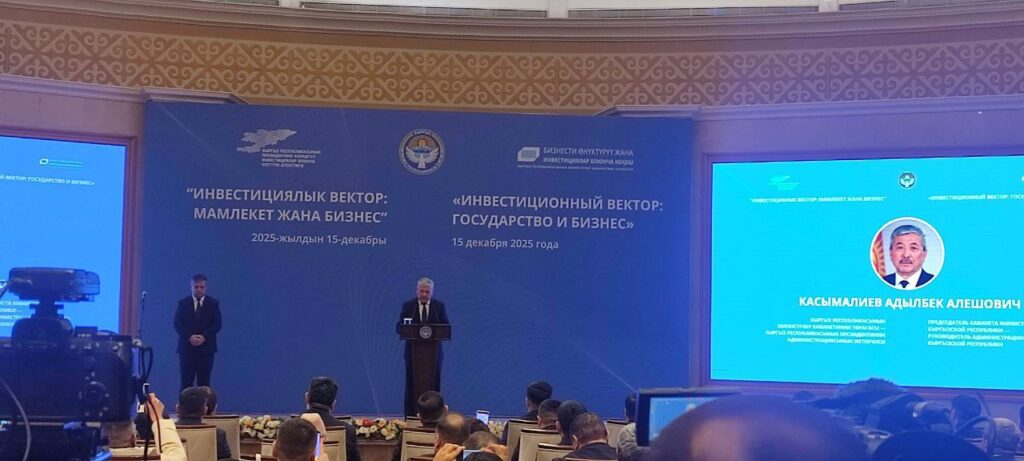
Average annual investment in Kyrgyzstan has increased by 140% in recent years, Prime Minister Adylbek Kasymaliyev announced at an investment forum held in Bishkek.

The event brought together representatives from various sectors of the Kyrgyz economy, including construction, tourism, the agro-industrial complex, the jewelry industry, and associations of suppliers and distributors. Heads of development funds offering preferential financing to domestic businesses also participated.

Kasymaliyev acknowledged that the state’s previous involvement in attracting investment to the private sector had been fragmented. However, this is changing under Kyrgyzstan’s new investment strategy, a comprehensive, state-level framework designed to draw both domestic and foreign capital.

As a result of recent reforms, the prime minister stated that Kyrgyzstan’s gross domestic product has nearly tripled over the past five years. GDP growth for the first 11 months of 2025 stood at 10.2%.

“We expect promising initiatives from you. Only through joint efforts can we lay a solid foundation for a dynamic and competitive economy,” Kasymaliyev said, addressing the business community.

He also emphasized the importance of continuous dialogue between government agencies and the private sector to maintain a stable investment flow.

“For any state, investment is the main source of economic growth, stability, and development. In the current environment, time is the investor’s main asset, and the country’s internal stability is the key to the success of both state and business,” he said.

Kasymaliyev identified several priority sectors for attracting investment, including hydropower, logistics, agriculture, mining, IT, the halal industry, tourism, and pharmaceuticals.

Rustam Baltabaev, Executive Director of the Association for the Development of the Agro-Industrial Complex, told The Times of Central Asia that while relevant legislation is necessary, it alone is not sufficient to foster a favorable investment climate. The decisive factor, he argued, is sustained, constructive dialogue between the government and the business sector.

“The investment climate is defined not by declarations, but by the practical conditions under which businesses operate,” Baltabaev said. “It includes the speed and cost of launching a project, the time required to obtain permits, predictable regulations, protection of property rights, infrastructure, access to financing, human capital, and fair competition. Business associations play a key role by channeling investor concerns into actionable regulatory solutions.”

Participants at the forum noted that entrepreneurs have previously criticized the government for inadequate support. However, many expressed cautious optimism that new approaches and improved cooperation between the public and private sectors could signal a shift.

Both government officials and business leaders agreed that mutual respect and policy consistency are critical to attracting new foreign investors to Kyrgyzstan.

Turkmenistan and Spain Eye Regional Center to Combat Desertification in Central Asia

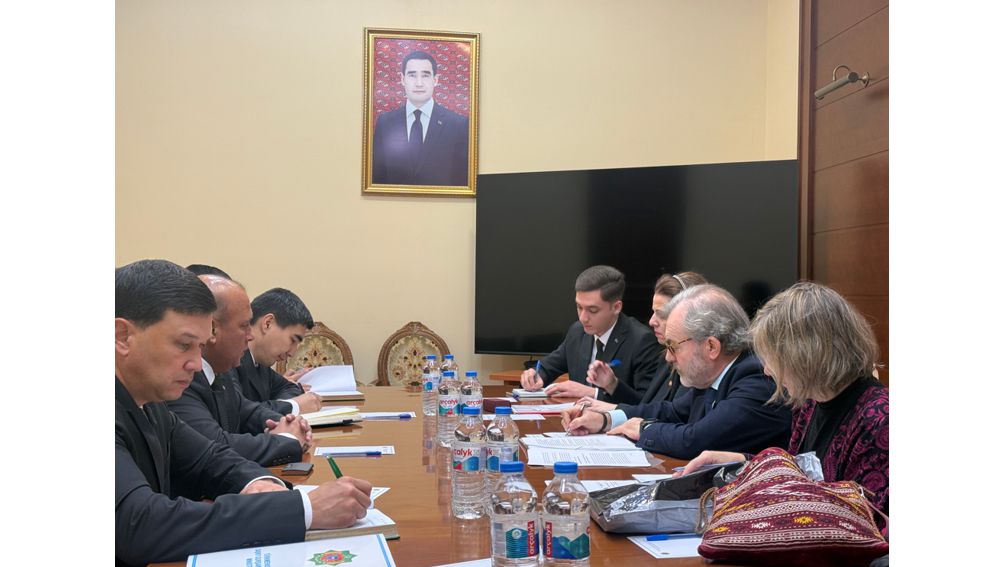
Turkmenistan and Spain have discussed closer cooperation to address desertification in Central Asia, including the possible creation of a regional center focused on land degradation. The talks took place in Ashgabat during a meeting between Turkmenistan’s Minister of Environmental Protection and Spain’s ambassador to Russia, Ricardo Martínez Vázquez, who is also accredited in Turkmenistan.

The discussions followed Turkmen President Serdar Berdimuhamedov’s proposal at the United Nations General Assembly to establish a specialized regional center to combat desertification in Central Asia. The initiative is intended to strengthen cooperation among regional states and attract international expertise and funding.

Image: mineco.gov.tm

Desertification is a growing concern across Central Asia, a region where arid and semi-arid landscapes dominate much of the territory. The United Nations Convention to Combat Desertification defines desertification as land degradation in dry areas caused by climatic variations and human activities.

According to the UNCCD, more than 20% of land in Central Asia is already degraded, affecting around 30% of the population. Much of this damage is linked to unsustainable water use, intensive agriculture, overgrazing, and the long-term effects of climate change.

Spain’s interest in desertification in Turkmenistan is rooted in their shared status as nations on the front lines of climate change. As one of the European countries most vulnerable to soil degradation, Spain co-launched the International Drought Resilience Alliance (IDRA) to export its expertise in “dryland” management and water conservation, which is directly applicable to the arid landscapes of Central Asia. This common challenge has fostered a diplomatic partnership focused on the United Nations Convention to Combat Desertification (UNCCD), where countries exchange strategies for land restoration and drought resilience.

Beyond environmental solidarity, Spain views Turkmenistan as a critical emerging market for its advanced engineering and agricultural sectors. Major Spanish firms, such as TYPSA, are already active in the region, providing technical assistance for massive infrastructure projects, such as desalination plants on the Caspian Sea, and modernizing irrigation systems for thousands of hectares of farmland. This commercial engagement is bolstered by Spain’s support for Turkmenistan’s proposal to host a Regional Center for Climate Change Technologies, which would serve as a hub for Spanish green tech in Central Asia.

The bilateral relationship also aligns with the broader EU Strategy for Central Asia, which prioritizes environmental stability as a means of ensuring regional security. By helping Turkmenistan manage its dwindling water resources and combat the encroaching Karakum Desert, Spain contributes to the EU for a Green Turkmenistan initiative. This cooperation helps prevent resource-driven migration and instability, and strengthens trade ties in a region that is becoming increasingly vital for global energy and logistics.

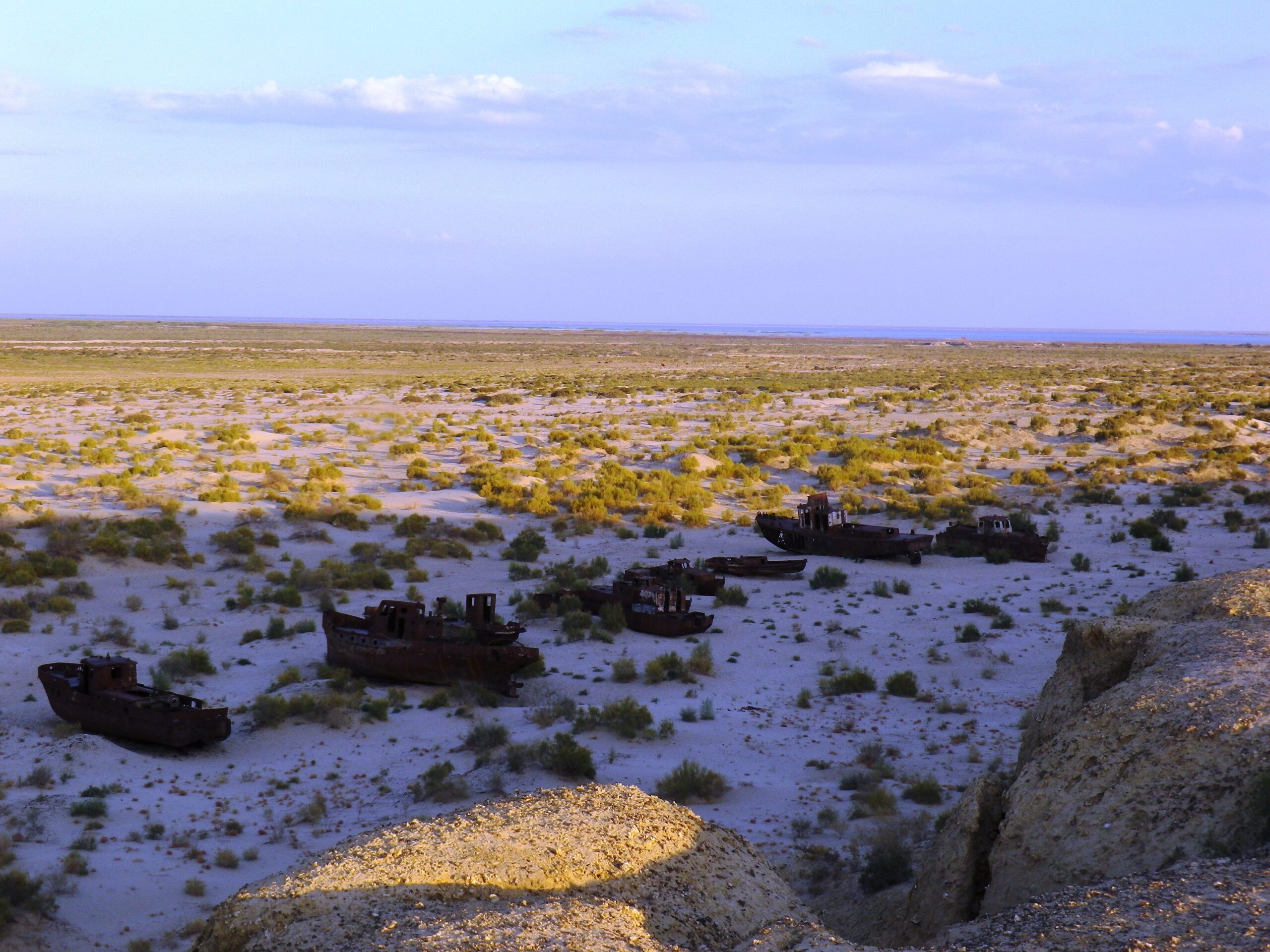
One of the most visible examples of desertification in the region is the collapse of the Aral Sea. Once the world’s fourth-largest inland lake, the Aral Sea began shrinking rapidly in the 1960s after its feeder rivers were diverted for large-scale irrigation projects. By the early 2000s, the sea had lost roughly 90% of its volume.

Desert ships on the former Aral seabed, Moynaq, Uzbekistan; image: TCA, Stephen M. Bland

The retreat of the Aral Sea created a new desert known as the Aralkum, covering more than five million hectares. The exposed seabed generates frequent dust storms that carry salt and chemical residues across Central Asia, damaging farmland and harming human health. The World Bank estimates that tens of millions of tons of dust and sand are lifted annually from the dried seabed.

Beyond the Aral Sea basin, desertification is advancing in steppe and pasturelands across Kazakhstan, Kyrgyzstan, Tajikistan, Turkmenistan, and Uzbekistan. Rising temperatures and more frequent droughts are worsening soil moisture loss and accelerating erosion. According to the World Meteorological Organization’s State of the Climate in Asia 2024 report, Asia is currently warming nearly twice as fast as the global average, a trend that has accelerated heatwaves, droughts, and other climate extremes across the region.

Governments in the region have launched national and regional initiatives to slow land degradation. Both Kazakhstan and Uzbekistan have planted large areas of drought-resistant saxaul shrubs on the bed of the former Aral Sea to help stabilize soil and reduce dust storms. Kazakhstan has also invested in the partial restoration of the North Aral Sea through infrastructure projects that have raised water levels and revived some fisheries.

All five Central Asian countries are parties to the UN Convention to Combat Desertification and have endorsed the global goal of achieving land degradation neutrality by 2030. Regional cooperation mechanisms, including the International Fund for Saving the Aral Sea, are aiming to coordinate environmental responses and attract donor support.

The proposed regional desertification center discussed by Turkmenistan and Spain would add to these efforts by creating a permanent platform for research, training, and policy coordination. While details remain under discussion, officials see the idea as a way to pool expertise and improve long-term resilience in one of the world’s most environmentally stressed regions.

As climate pressures intensify, the success of such initiatives may determine whether Central Asia can slow the spread of deserts and protect livelihoods tied to fragile ecosystems.

Mirziyoyev: Uzbekistan’s Natural Resources Valued at Up to $79,000 Per Person

Uzbekistan’s vast underground wealth has drawn renewed attention following the release of an international ranking of countries by natural resource value per capita, as reported by Uzbek publication Zamin.

According to the ranking, Saudi Arabia tops the list, with natural resources valued at approximately $1 million per person, driven largely by its extensive oil reserves. Canada and Australia follow, each exceeding $700,000 per capita, supported by a combination of oil, forests, minerals, iron ore, coal, and natural gas. Russia ranks fourth, with more than $520,000 in resources per person.

Although accurately assessing Uzbekistan’s total natural resource value remains difficult due to fluctuating global commodity prices and ongoing geological exploration, the country’s long-term potential is considered substantial.

In July 2018, Azam Qadirhodjayev, then Deputy Chairman of Uzbekistan’s State Committee for Geology and Mineral Resources, estimated the total potential value of the country’s mineral resources at approximately $5.7 trillion. Of this, over $1 trillion stemmed from explored and currently developed deposits. At the time, only about 20% of Uzbekistan’s territory had been fully studied, leaving considerable room for new discoveries.

Additional details were provided in December 2023, when Ilyos Jumayev, a representative of the Ministry of Mining Industry and Geology, announced at a press conference that Uzbekistan officially possesses 101 gold deposits and three silver deposits. According to the ministry, the country holds nearly all mineral types found globally, including gold, silver, copper, uranium, oil, natural gas, lithium, molybdenum, tungsten, manganese, nickel, cobalt, tantalum, and niobium. Major gold reserves serve as the raw material base for the Navoi and Almalyk mining and metallurgical complexes, while copper deposits are primarily located in the Tashkent region.

The value of Uzbekistan’s natural resources was also a key topic at the Tashkent International Investment Forum in June 2025. President Shavkat Mirziyoyev stated that the country’s underground wealth is valued at approximately $3 trillion. He emphasized that the global demand for technological minerals is rising amid the fourth industrial revolution and identified strategic reserves of lithium, tungsten, magnesium, graphite, titanium, and vanadium as vital for developing high value-added industries.

Based on the president’s $3 trillion estimate and Uzbekistan’s current population of roughly 38.24 million, the per capita value of natural resources stands at approximately $78,000 to $79,000. While lower than the per capita resource wealth in countries like Saudi Arabia or Canada, officials argue that incomplete geological surveying leaves room for this figure to grow.

Uzbekistan’s resource base includes not only precious and rare earth metals but also energy resources such as oil and natural gas, underscoring the country’s strategic position in the global minerals landscape.